Painter of the Bible
Laurent de La Hyre
Laurent de La Hyre was a leading French painter of the second quarter of the seventeenth century and a principal exponent of the Parisian Atticist school — the small group of Paris-based painters who, in the years betwee…
 Raising of Lazarus
Their faith
Why Laurent de La Hyre painted Christ
Laurent de La Hyre, a prominent French painter of the 17th century, was deeply rooted in his Christian faith, which significantly influenced his artistic journey. Born in Paris in 1606 to painter Étienne de La Hyre, Laurent was immersed in an environment that valued both artistry and spirituality. His commitment to his faith is evident in his work, particularly through his participation in the May commissions for Notre-Dame Cathedral. These commissions, intended as votive offerings, reflect a devotion to the church and a desire to inspire the faithful through art. His active involvement in creating altarpieces and devotional cabinet pictures showcases his dedication to using his talents to glorify God and serve the community, which was a hallmark of his life and work.
De La Hyre's faith profoundly shaped his artistic vision, leading him to produce significant works such as "Saint Peter Healing the Sick with His Shadow" and "The Conversion of Saint Paul." These paintings not only demonstrate his mastery of the Roman classicizing style but also convey powerful biblical narratives that resonate with viewers on a spiritual level. Through his use of a cool chromatic palette and disciplined composition, he captured the essence of divine moments, inviting contemplation and reflection. His legacy continues to inspire, reminding us that through the beauty of sacred art, the artist's devotion to Christ reaches across time, encouraging all who encounter his work to deepen their own faith journey.
Life & work
Laurent de La Hyre was a leading French painter of the second quarter of the seventeenth century and a principal exponent of the Parisian Atticist school — the small group of Paris-based painters who, in the years between the death of Simon Vouet and the rise of Charles Le Brun, developed a distinctive cool classicizing manner that combined Roman Baroque compositional discipline with a particularly French restraint of color and sentiment. Born in Paris in 1606 to the painter Étienne de La Hyre, trained in his father's workshop and then briefly in the orbit of Georges Lallemant, and active in Paris for his entire career (he never traveled to Italy, an unusual choice for a French painter of his generation), he died in Paris in 1656.
His Christian religious work is concentrated in altarpieces, devotional cabinet pictures, and decorative cycles for the Paris churches and the wealthy Parisian aristocratic patrons of the May commissions of the Notre-Dame Cathedral chapter (the annual May altarpiece commissions made by the Confraternity of the Goldsmiths of Paris from 1630 onward, intended as votive offerings hung in the chapels of Notre-Dame). La Hyre produced the great May of 1635 (Saint Peter Healing the Sick with His Shadow, Louvre), the May of 1637 (the Conversion of Saint Paul, Louvre), and the May of 1639 (the Liberation of Saint Peter, Louvre); the May commissions made him one of the most-watched Parisian painters of his generation.
His personal style — combining the Roman classicizing figural discipline he absorbed from prints and from his Paris colleagues with a particularly cool French chromatic palette of grey-blue, pale ivory, and soft umber against luminous classical landscapes — gave him a distinctive position in the Parisian school. He was particularly admired in his lifetime for his small-format cabinet pictures of allegorical and mythological subjects (the Allegory of Music, the Liberal Arts series, the Months of the Year compositions) that French aristocratic collectors hung in their private galleries.
He was a founding member of the French Royal Academy of Painting and Sculpture in 1648, alongside Philippe de Champaigne, Le Brun, and other leading Paris painters. He was buried in the Paris church of Saint-Roch.
Notable works in detail
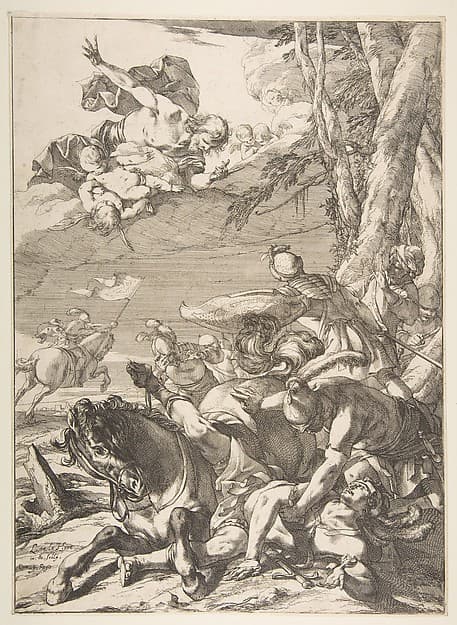
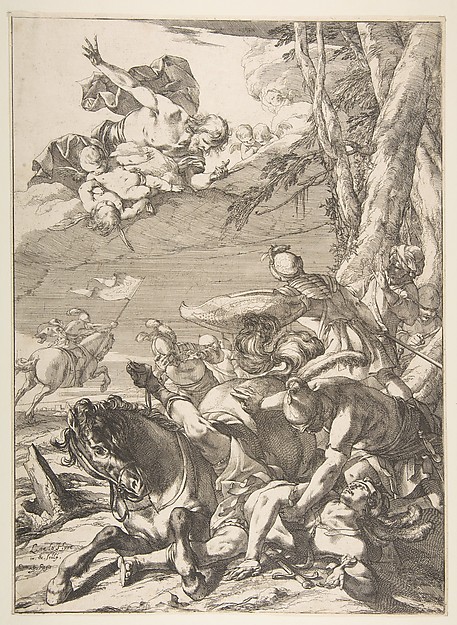
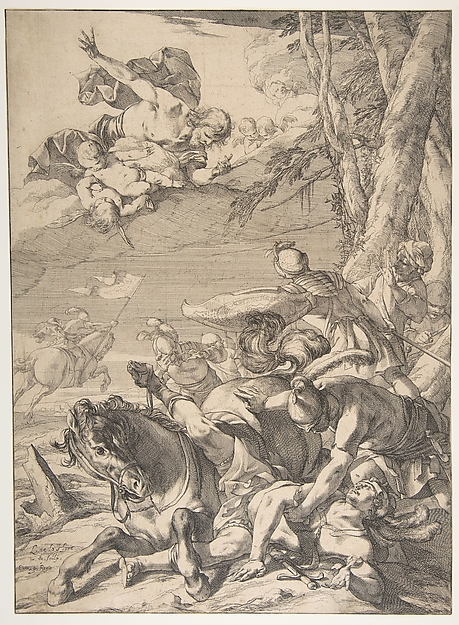
Conversion of Saint Paul, drawn by Laurent de La Hyre around 1632 in pen and brown ink with wash on paper and now in the Metropolitan Museum of Art in New York, illustrates the moment from Acts 9 in which Saul falls from his horse on the road to Damascus blinded by the light from heaven. La Hyre stages the scene with characteristic Atticist compositional restraint: Saul fallen on the ground in the foreground, his horse rearing in alarm beside him, the divine appearing as a foreshortened figure in the upper register. The drawing is one of two La Hyre treatments of the Conversion subject in the Met collection (with the closely related 1637 version) and demonstrates the cool classicizing Paris manner that La Hyre helped establish across the second quarter of the seventeenth century.
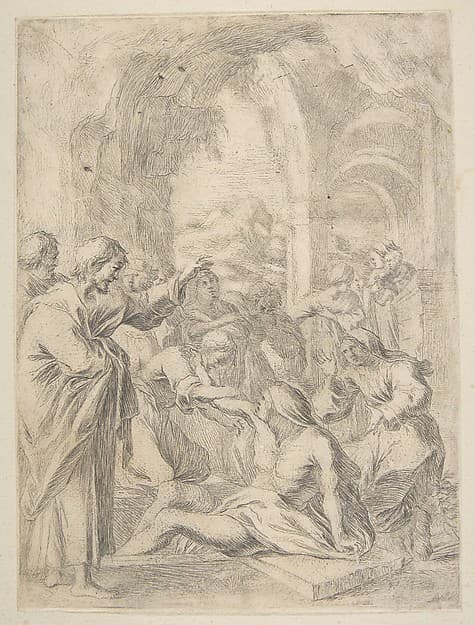
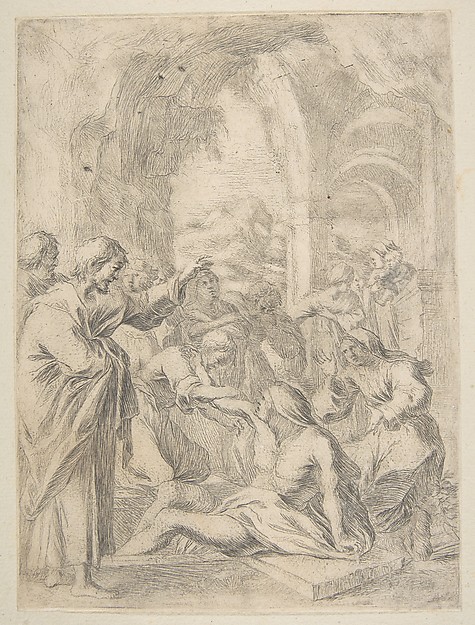
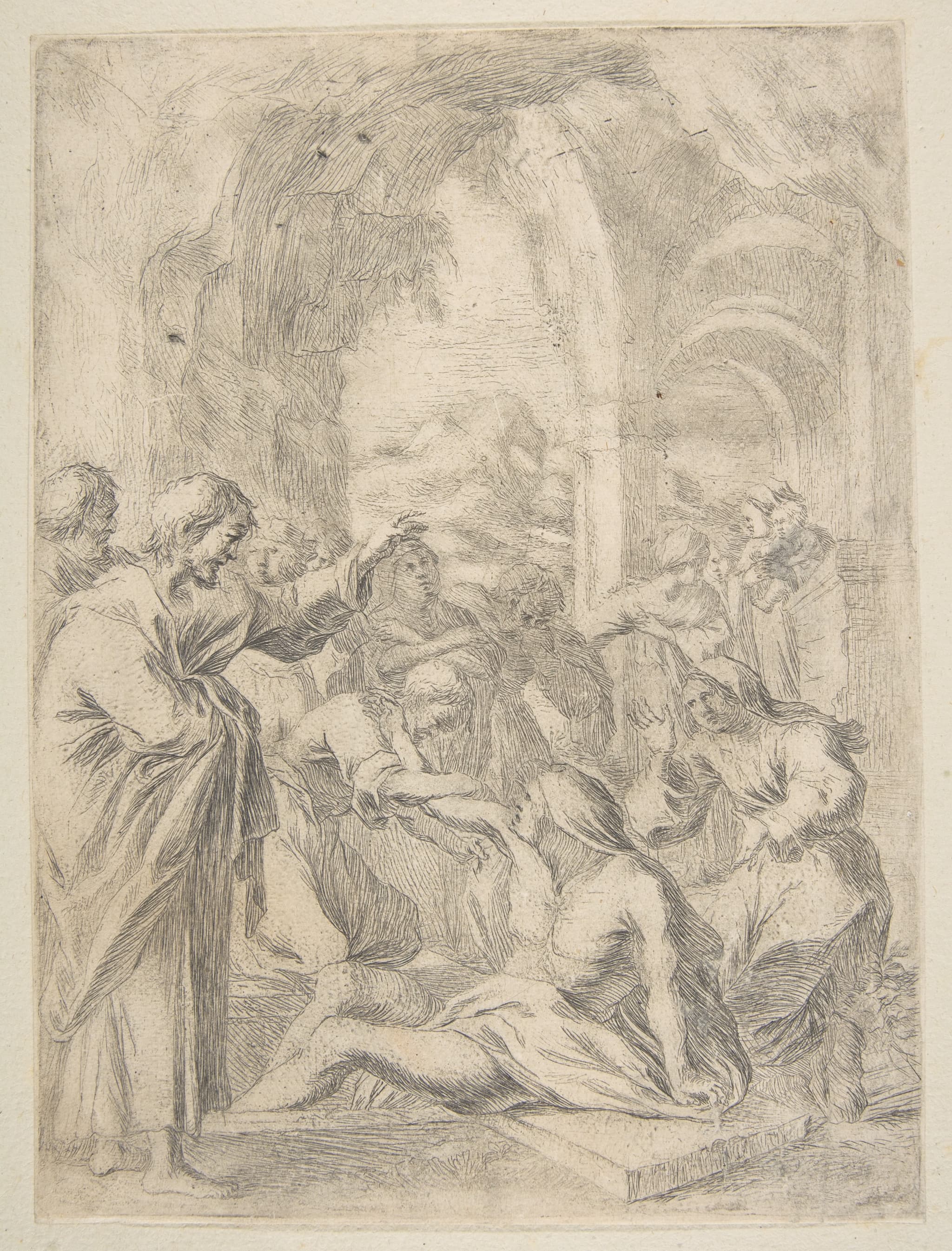
Raising of Lazarus, drawn by Laurent de La Hyre around 1620 in pen and brown ink with wash on paper and now in the Metropolitan Museum of Art in New York, illustrates the climactic miracle of John 11. La Hyre stages the scene with characteristic Atticist compositional discipline: Christ at the lower left with his right arm extended in command, the bound figure of Lazarus emerging upright from the open tomb at the upper right, the sisters Martha and Mary kneeling between them at Christ's feet, a small crowd of witnesses gathered behind. The drawing demonstrates the early La Hyre draughtsmanship before his characteristic cool classicizing manner had fully developed.
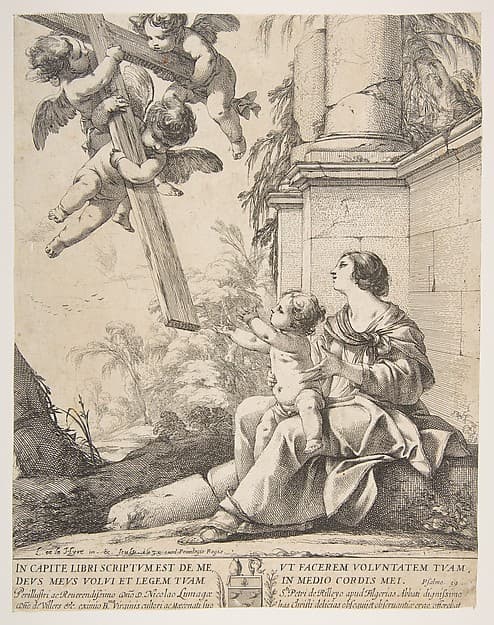
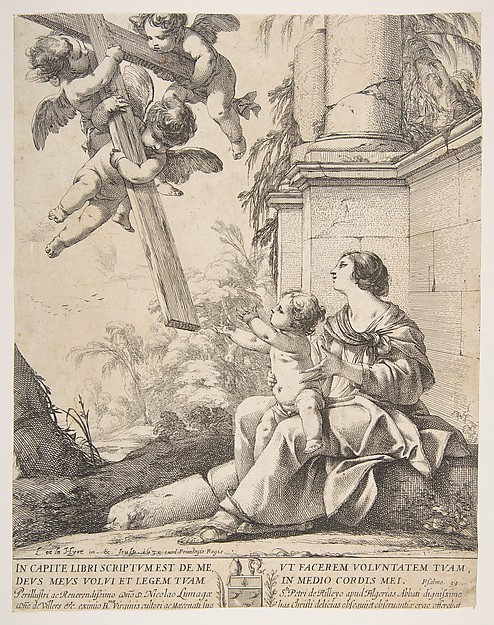
Virgin and Child with Angels, drawn by Laurent de La Hyre around 1639 in pen and ink with wash on paper and now in the Metropolitan Museum of Art in New York, depicts the iconographic subject of the enthroned Virgin holding the Christ Child attended by small music-making angels. La Hyre stages the scene with characteristic cool Atticist compositional restraint: the seated Virgin in three-quarter view holding the standing Christ Child upright on her lap, two small attendant angels lean in at her shoulders. The drawing demonstrates the mature La Hyre Atticist manner — figures composed with classical figural discipline against luminous classical landscapes — that defined the Paris school in the second quarter of the seventeenth century.
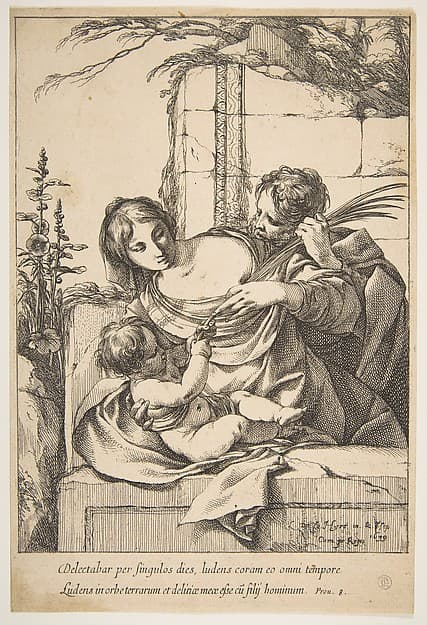
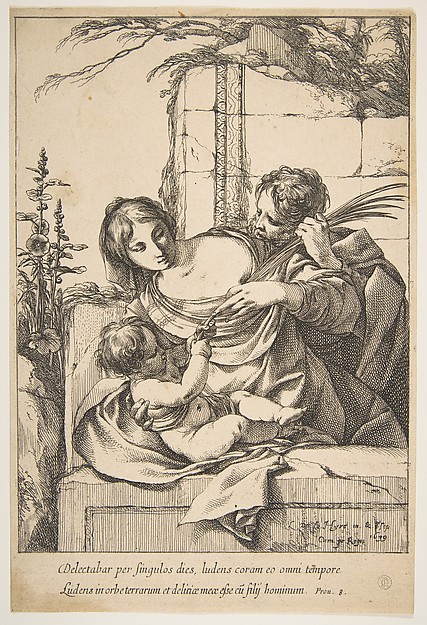
Holy Family with Palm, drawn by Laurent de La Hyre around 1639 in pen and ink with wash on paper and now in the Metropolitan Museum of Art in New York, depicts the iconographic subject of the Holy Family resting under a palm tree (the iconographic detail derives from the apocryphal Pseudo-Matthew narrative of the Flight into Egypt, in which the palm tree bows down to feed the Holy Family with its fruit). La Hyre stages the scene with characteristic Atticist compositional restraint: the seated Virgin holding the Christ Child, Joseph waiting beside the small donkey, the palm tree rising overhead. The drawing demonstrates the cool classicizing Paris manner of La Hyre's mature career.
met-384966
The Virgin and Christ Child Served by Angels, drawn by Laurent de La Hyre around 1640 in pen and ink with wash on paper and now in the Metropolitan Museum of Art in New York, depicts the iconographic subject of the Virgin and Christ Child attended in heavenly service by small ministering angels. La Hyre stages the scene with characteristic cool Atticist compositional restraint: the seated Virgin holding the Christ Child at the center, attendant angels offering small dishes of fruit and bowls of milk, the entire encounter set against a luminous classical landscape with distant hills. The drawing demonstrates the mature La Hyre Atticist manner at full statement and is one of the principal La Hyre Marian devotional drawings in any American collection.