Who was Jonah in the Bible?
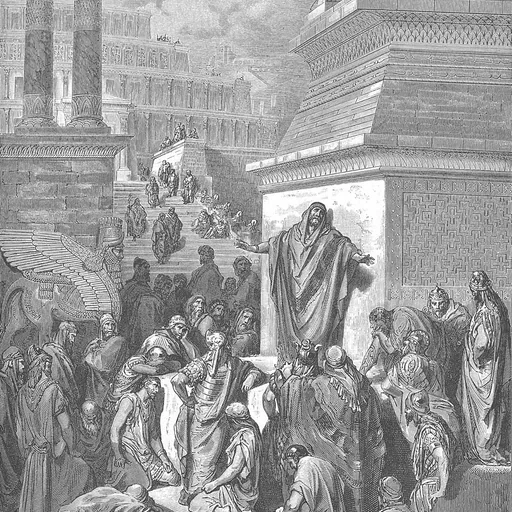
Jonah was a prophet who ran from God’s call, was swallowed by a great fish, and then preached to the city of Nineveh.
Reluctant Prophet to Nineveh
8th century BC
Jonah was a prophet who ran from God’s call, was swallowed by a great fish, and then preached to the city of Nineveh.
Follow the reading trailBEYOND THE NAME
Jonah was a prophet of Israel called by God to preach to Nineveh, the capital of a feared enemy. Instead he fled by sea, was thrown overboard in a storm, and was swallowed by a great fish, from whose belly he prayed and was delivered after three days. He then went to Nineveh, where the whole city repented, and he wrestled angrily with God’s mercy toward people he did not wish to see spared.
Themes in the authored commentary
FOLLOW THE PASSAGES
Selected passages and introductions help you read this person’s story in context.
prophet who flees God’s call by boarding a ship to Tarshish, is identified as the cause of the storm, and is thrown into the sea
Called to go to Nineveh, Jonah travels in the opposite direction. A storm brings his flight into the lives of the sailors. The chapter follows their questions, his confession, and his being cast into the sea.
prays to God from inside the great fish, recounting his near-drowning and vowing thanksgiving
From within the fish, Jonah prays using language of distress, rescue, and thanksgiving. The prayer connects his predicament with his renewed attention to God. The chapter ends with his return to dry land.
obeys God’s second call and proclaims coming judgment throughout Nineveh
Jonah receives the commission again and announces the warning in Nineveh. The people respond, and God does not bring the announced disaster. The city’s response sets up the final chapter’s confrontation with Jonah’s own desires.
angrily protests God’s mercy on Nineveh and sulks outside the city, then is taught through a withered plant
Jonah is angry at the mercy shown to Nineveh. The episode involving the plant exposes the contrast between his concern for his own comfort and God’s concern for the city. The book ends with a question for Jonah and the reader.
THE PEOPLE AROUND THE PERSON
Recorded parents
Relationships follow the source graph. Some are interpretive or uncertain, and individual verse citations are not yet available for every connection.
STUDY & INTERPRETATION
Jonah’s story turns on the surprising reach of God’s compassion, extending even to a great pagan city and frustrating a prophet who would rather see judgment than mercy. His three days and nights in the belly of the fish became, in the words of Jesus, a sign pointing to the Son of Man’s three days in the heart of the earth before rising again. The book ends not with the prophet’s triumph but with God’s tender question about whether He should pity a city of the lost, leaving the reader to feel the width of divine mercy. In Jonah, drawn down into the deep and brought up alive to bring repentance to outsiders, Scripture sketches in shadow the greater deliverance and the wider gathering that would come through Christ.
From the Learn of Christ person commentary. Read alongside the linked Scripture passages.KEEP SCRIPTURE CLOSE
7 authored chapter guides feature this person. This is guide coverage, not an exhaustive count of biblical mentions.
ASK A BETTER QUESTION
Identity, story, early-life sources, family, and where to read.
Names and spellings in the source: Jonah · Jonas
Jonah was a prophet who ran from God’s call, was swallowed by a great fish, and then preached to the city of Nineveh.
Jonah was a prophet of Israel called by God to preach to Nineveh, the capital of a feared enemy. Instead he fled by sea, was thrown overboard in a storm, and was swallowed by a great fish, from whose belly he prayed and was delivered after three days. He then went to Nineveh, where the whole city repented, and he wrestled angrily with God’s mercy toward people he did not wish to see spared.
The individualized passage index associates this Jonah record with 2 Kings, Jonah, Matthew, Luke. There are 24 distinct indexed verse references in the 66-book Bible. Browse the book-by-book list below; it separates this identity from other people who share the name. Source assignments and textual identifications can require interpretation.
A separate childhood account for Jonah is not provided in our current authored profile sources. Begin with 2 Kings 14:25 and the passages linked here for the evidence that is available. The first indexed reference to a name is not a birth record. This profile does not establish a birth date, schooling, or childhood events beyond what its sources state.
Jonah’s source record lists Amittai (father). These are source-graph relationships; legal family, uncertain identifications, and ancestral language require the cautions below. Individual verse evidence is not yet retained for every family edge.
Jonah’s story turns on the surprising reach of God’s compassion, extending even to a great pagan city and frustrating a prophet who would rather see judgment than mercy. His three days and nights in the belly of the fish became, in the words of Jesus, a sign pointing to the Son of Man’s three days in the heart of the earth before rising again.
Answers draw on our existing authored biography and linked chapter studies. Where supplied, verse assignments come from the individualized STEP Bible index. Childhood answers distinguish documented events from gaps in the available sources.
FIND THE PERSON IN THE TEXT
24 distinct verse references in the source’s 66-book index. These are indexed name assignments, rather than every indirect allusion to this person. A name may also refer to descendants, a tribe, or a nation; read each passage to distinguish that usage from the individual.
“He restored the coast of Israel from the entering of Hamath unto the sea of the plain, according to the word of the LORD God of Israel, which he spake by the hand of his servant Jonah, the son of Amittai, the prophet, which was of Gathhepher.”
2 Kings 14:25 · King James Version
“And the LORD spake unto the fish, and it vomited out Jonah upon the dry land.”
Jonah 2:10 · King James Version
“And it came to pass, when the sun did arise, that God prepared a vehement east wind; and the sun beat upon the head of Jonah, that he fainted, and wished in himself to die, and said, It is better for me to die than to live.”
Jonah 4:8 · King James Version
“The men of Nineve shall rise up in the judgment with this generation, and shall condemn it: for they repented at the preaching of Jonas; and, behold, a greater than Jonas is here.”
Luke 11:32 · King James Version
References are adapted from STEP Bible / Tyndale House TIPNR (CC BY 4.0). Deduplicated, matched to this identity, and checked against the bundled KJV’s verse bounds. Interpretive assignments and translation/versification differences may remain. This index is separate from evidence for individual family relationships.
YOUR OWN OBSERVATIONS
Notes, saved people, and study marks stay in this browser. They do not sync to your account.
KEEP EXPLORING
People featured in the same study guides. Sharing a chapter does not establish a family relationship.