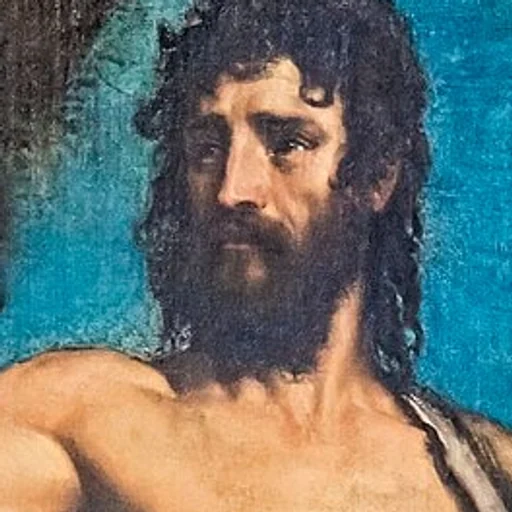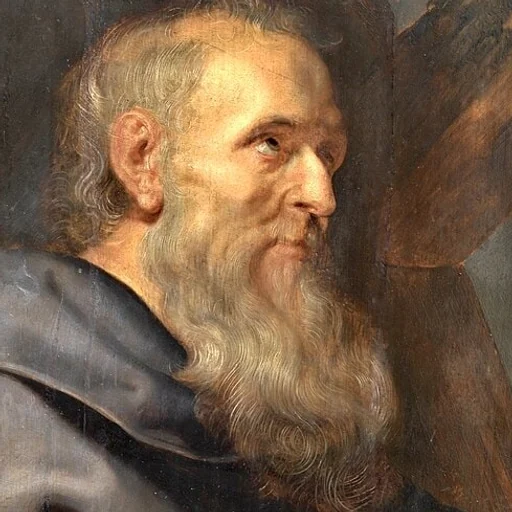
Who was Philip in the Bible?
Philip was one of the twelve apostles, called by Jesus and known for inviting Nathanael to come and see Him.
Apostle Called by Jesus
1st century AD
Philip was one of the twelve apostles, called by Jesus and known for inviting Nathanael to come and see Him.
Follow the reading trailBEYOND THE NAME
Philip, from Bethsaida, was called directly by Jesus with the simple words, “Follow me.” He at once sought out Nathanael and, when met with doubt, answered the objection not with argument but with an invitation: “Come and see.” In later scenes Philip appears testing the cost of feeding the crowd and asking Jesus to show them the Father, drawing from Jesus some of His clearest words about Himself.
Themes in the authored commentary
These are other entries using this name. Compare their source passages before treating them as the same or different historical people.
FOLLOW THE PASSAGES
These are chapter studies associated with this record. Their order follows the books and chapters, rather than a reconstructed timeline of the person’s life.
called by Jesus and immediately goes to find Nathanael
The Gospel according to John opens before Bethlehem, before the manger, in eternity: In the beginning was the Word, and the Word was with God, and the Word was God (v. 1). The other Gospels begin with a genealogy or a manger; John begins before the manger, before time, before there was a single created thing. And he makes the most far-reaching claim a sentence can hold: the Word was with God, and the Word was God - near to God and Himself divine, and through Him everything that exists came to be. All things were made by him; and without him was not any thing made that was made (v. 3). In Him is life, and that life is the light of men (v.
Chapter overview from the authored study guide.questioned by Jesus about feeding the crowd and gives a practical reply about cost
A great multitude is following Jesus, drawn by the signs He has done on the sick. He goes up into a mountain with His disciples, and the Passover is near. Seeing the crowd, He turns to Philip with a question He already knows the answer to: Whence shall we buy bread, that these may eat? (v. 5). It is a test. Philip does the math and despairs - two hundred pennyworth would not give each one a little. Andrew finds a boy with five barley loaves, and two small fishes, and asks the obvious thing: but what are they among so many? (v. 9). Jesus has the people sit, gives thanks, and distributes - as much as they would.
Chapter overview from the authored study guide.approached by Greek seekers wishing to see Jesus, brings the request to Andrew
Six days before the Passover, Jesus comes again to Bethany, where Lazarus was which had been dead, whom he raised from the dead (v. 1). They make Him a supper; Martha serves; Lazarus - a living miracle - reclines at the table. And Mary takes a pound of ointment of spikenard, very costly, anoints His feet, and wipes them with her hair, until the house was filled with the odour of the ointment (v. 3). Judas objects that the perfume should have been sold for three hundred pence and given to the poor - though John tells us the real reason, that he was a thief, and had the bag, and bare what was put therein (v. 6).
Chapter overview from the authored study guide.asks Jesus to show them the Father
It is the last night. Judas has gone out into the dark, Jesus has foretold that Peter will deny Him before the cock crows, and the disciples are reeling. Into that fear He speaks the chapter’s first words, and they set the key for everything that follows: Let not your heart be troubled: ye believe in God, believe also in me (v. 1). He gives them something larger than the loss to hold onto. He speaks of His Father’s house, where there are many mansions, and of His going as a going-ahead to prepare a place for them. And He binds it to a promise of return: I will come again, and receive you unto myself; that where I am, there ye may be also (v.
Chapter overview from the authored study guide.THE PEOPLE AROUND THE PERSON
Relationships follow the source graph. Some are interpretive or uncertain, and individual verse citations are not yet available for every connection.
STUDY & INTERPRETATION
Philip moves through the Gospel of John as a man learning, step by step, who Jesus truly is. His first response to being called was to find another and say “Come and see,” the same open-handed invitation that runs through these chapters. Later, when he asked, “Lord, shew us the Father,” Jesus answered that whoever had seen Him had seen the Father, words that reveal the depth of what Philip had been walking beside all along. His honest questions become the occasion for some of the richest teaching in Scripture, showing how Jesus meets seeking hearts with patient self-revelation.
From the Learn of Christ person commentary. Read alongside the linked Scripture passages.KEEP SCRIPTURE CLOSE
4 authored chapter guides feature this person. This is guide coverage, not an exhaustive count of biblical mentions.
ASK A BETTER QUESTION
Identity, story, early-life sources, family, and where to read.
Philip was one of the twelve apostles, called by Jesus and known for inviting Nathanael to come and see Him.
Philip, from Bethsaida, was called directly by Jesus with the simple words, “Follow me.” He at once sought out Nathanael and, when met with doubt, answered the objection not with argument but with an invitation: “Come and see.” In later scenes Philip appears testing the cost of feeding the crowd and asking Jesus to show them the Father, drawing from Jesus some of His clearest words about Himself.
The individualized passage index associates this Philip record with Matthew, Mark, Luke, John, Acts. There are 15 distinct indexed verse references in the 66-book Bible. Browse the book-by-book list below; it separates this identity from other people who share the name. Source assignments and textual identifications can require interpretation.
A separate childhood account for Philip is not provided in our current authored profile sources. Begin with Matthew 10:3 and the passages linked here for the evidence that is available. The first indexed reference to a name is not a birth record. This profile does not establish a birth date, schooling, or childhood events beyond what its sources state.
The current source graph does not list immediate family for Philip. That is a limit of this data, not evidence that Philip had no relatives. Read the cited passages for the details they actually give.
Philip moves through the Gospel of John as a man learning, step by step, who Jesus truly is. His first response to being called was to find another and say “Come and see,” the same open-handed invitation that runs through these chapters.
Answers draw on our existing authored biography and linked chapter studies. Where supplied, verse assignments come from the individualized STEP Bible index. Childhood answers distinguish documented events from gaps in the available sources.
FIND THE PERSON IN THE TEXT
15 distinct verse references in the source’s 66-book index. These are indexed name assignments, rather than every indirect allusion to this person. A name may also refer to descendants, a tribe, or a nation; read each passage to distinguish that usage from the individual.
“Philip, and Bartholomew; Thomas, and Matthew the publican; James the son of Alphaeus, and Lebbaeus, whose surname was Thaddaeus;”
Matthew 10:3 · King James Version
“Philip findeth Nathanael, and saith unto him, We have found him, of whom Moses in the law, and the prophets, did write, Jesus of Nazareth, the son of Joseph.”
John 1:45 · King James Version
“Philip answered him, Two hundred pennyworth of bread is not sufficient for them, that every one of them may take a little.”
John 6:7 · King James Version
“And when they were come in, they went up into an upper room, where abode both Peter, and James, and John, and Andrew, Philip, and Thomas, Bartholomew, and Matthew, James the son of Alphaeus, and Simon Zelotes, and Judas the brother of James.”
Acts 1:13 · King James Version
References are adapted from STEP Bible / Tyndale House TIPNR (CC BY 4.0). Deduplicated, matched to this identity, and checked against the bundled KJV’s verse bounds. Interpretive assignments and translation/versification differences may remain. This index is separate from evidence for individual family relationships.
YOUR OWN OBSERVATIONS
Notes, saved people, and study marks stay in this browser. They do not sync to your account.
KEEP EXPLORING
People featured in the same study guides. Sharing a chapter does not establish a family relationship.