- Starting price
- Free
- Free tier
- Yes
- Platforms
- iOS · Android
- Developer
- The Lockman Foundation
- Launched
- 2018
- Updated
- May 31, 2026
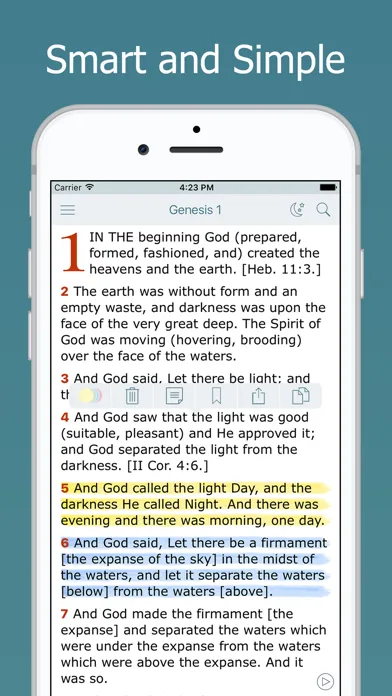
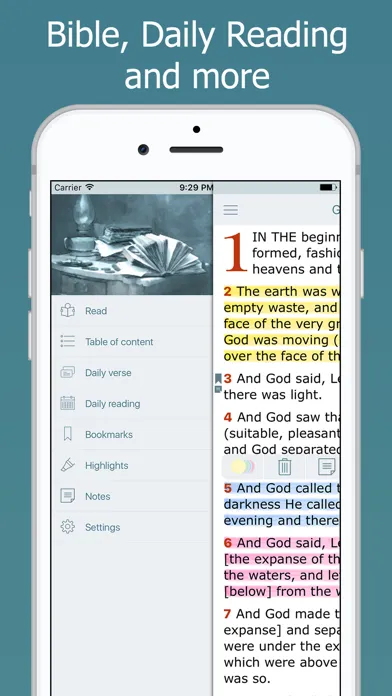
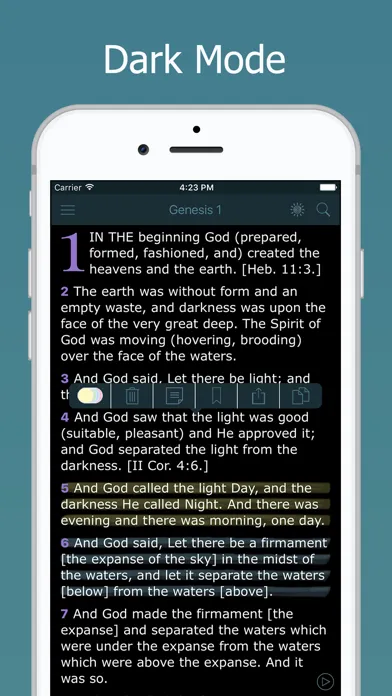
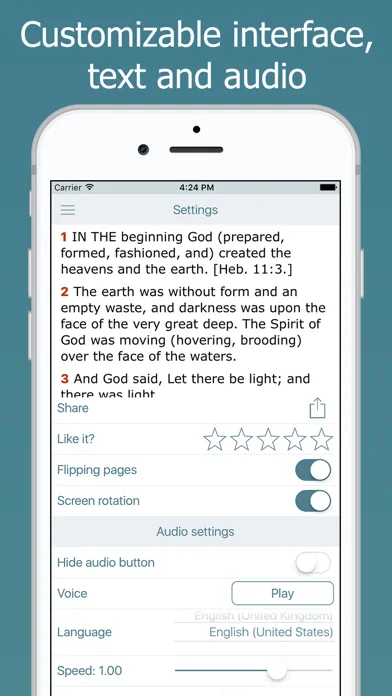
Publisher screenshots from the App Store. These images are separate from our own testing.
The verdict
A genuinely useful idea in translation form: the Amplified Bible builds the word study into the text, expanding key terms with brackets and synonyms so you catch nuances most translations smooth away. The official app is a clean, free home for it - a study-companion reader, not a workstation.
Try Amplified Bible ↗Opens lockman.org
The Amplified Bible app is the official app for the AMP, the translation that does something no other mainstream Bible does: it unpacks the original languages right inside the verse. Where a Hebrew or Greek word carries shades of meaning that a single English word cannot hold, the Amplified Bible adds those shades on the spot - synonyms, definitions, and clarifying phrases set off in brackets, parentheses, or lighter text - so an English reader can see the fuller sense underneath the translation.
Produced jointly by The Lockman Foundation and Zondervan and first completed in 1965, the AMP was updated in 2015 with more amplification in the Old Testament, refined amplification in the New, and - importantly - text that now reads smoothly whether you read the amplifications or skip past them. The app puts that authoritative text in a clean, free reader from its own publisher.
The result is effectively a built-in light word study. You do not have to stop and look up a lexicon to learn that a key term means more than the obvious; the Amplified Bible shows you on the page. That makes it a distinctive study companion - best read alongside a standard translation rather than as your only Bible - and the official app is the cleanest free way to use it.
✓ The good
- A built-in word study - key terms are expanded with synonyms and clarifying brackets right in the verse
- Surfaces nuances most translations smooth away, helping you see the fuller meaning of the originals without a lexicon
- Official and authoritative - the canonical AMP text from The Lockman Foundation, free and ad-free
- The 2015 edition reads smoothly with or without the amplifications, so you can read it either way
- Clean reader with the study basics - navigation, highlights, notes, bookmarks, and verse sharing
- A genuinely different lens that pairs well with a literal or dynamic translation for deeper study
✗ Watch out
- The brackets and inserted words make it cluttered and slow for plain, flowing reading
- Best used alongside a standard translation rather than as your only or primary Bible
- One translation by design - no side-by-side comparison without a multi-version app
- The amplifications reflect translators’ choices about meaning, so it leans interpretive by nature
- Not a study workstation - no commentaries, lexicons, or original-language morphology
Best for
- Readers who want a light word study built into the text
- People studying a passage who want to see a key term’s fuller range of meaning
- Anyone who already reads a standard translation and wants an amplifying companion
- Teachers and small-group leaders looking for nuance to enrich a lesson
Avoid if
- You want a clean, fast, flowing read (the brackets get in the way - use the NLT, ESV, or CSB)
- You want this to be your single everyday Bible (it works best as a companion)
- You need many translations side by side (use YouVersion or Olive Tree)
- You want full original-language study tools (use Logos, Accordance, or Blue Letter Bible)
What Amplified Bible is
The Amplified Bible app is the official mobile app for the AMP translation, published jointly by The Lockman Foundation and Zondervan. It is a free, ad-free reader for a translation whose distinctive feature is amplification: key Hebrew and Greek words are expanded with multiple English equivalents, definitions, and clarifying phrases - shown in brackets, parentheses, or lighter text - so the reader can grasp shades of meaning that a single-word translation would hide.
Around that text the app provides the everyday tools - navigation, reading-progress tracking, highlights, underlines, notes, bookmarks, and verse sharing. The 2015 revision the app carries was specifically reworked so the text reads smoothly with or without the amplifications. It is a focused, single-translation study companion rather than a research workstation with commentaries and lexicons.
Why the Amplified Bible is unlike any other translation
Every translation makes a choice when a Hebrew or Greek word carries more meaning than one English word can hold - it picks one and moves on, and the rest of the meaning quietly disappears. The Amplified Bible refuses to choose. Instead it amplifies: it gives you the additional English equivalents and clarifying notes right in the verse, so the intensity, nuance, or theological weight of the original stays visible. In effect, it bakes a light word study into the reading experience.
That is genuinely valuable and genuinely particular. For someone studying a passage, seeing that a key term means more than the obvious - without stopping to open a lexicon - can open up the text. But it also means the AMP reads differently from any other Bible: denser, more interpretive, and slower. It is at its best as a companion you consult alongside a standard translation, and the official app is the cleanest, free way to keep it at hand.
In-text amplification: the word study on the page
The defining feature is the amplification itself. As you read, key words are expanded with synonyms, short definitions, and clarifying phrases set off by brackets and parentheses, so the fuller range of the original language is right there in the verse. A single ancient word might be rendered with two, three, or four English words to convey the whole sense, and theological or historical nuances that other translations leave implicit are made explicit.
This turns ordinary reading into something closer to studying. You catch the intensity of a verb, the double meaning of a noun, or the connotation behind a phrase that a standard translation would flatten - and you do it without leaving the text for a reference work. It is the entire reason the AMP exists, and the app presents it cleanly.
The 2015 edition: readable with or without the brackets
A long-standing knock on the Amplified Bible was that the amplifications could make it choppy to read straight through. The 2015 revision the app carries addressed exactly that: it added more amplification in the Old Testament, refined it in the New, and reworked the base text so it reads smoothly whether you take in the bracketed material or read past it.
That dual-mode readability matters in practice. It means you can use the app two ways - skim the plain text for the flow of a passage, then slow down and read the amplifications where you want the depth - without fighting the formatting. It softens the AMP’s biggest weakness while keeping its whole point intact.
A clean reader with the study basics
Beyond the translation, the app keeps the everyday tools simple and reliable: navigation between books and chapters, reading-progress tracking, and the marking tools you actually use - highlights, underlines, notes, and bookmarks - plus verse sharing for sending a passage to a friend or group.
It does not try to be a research suite, which is the right call for an amplifying companion. The AMP already does its distinctive work inside the text; the app’s job is to present that text cleanly and let you mark and return to it, and it does that well and for free.
Pricing
Free
Free
The full Amplified Bible (AMP) with its in-text amplifications, plus navigation, reading-progress tracking, highlights, underlines, notes, bookmarks, and verse sharing. No ads.
The Amplified Bible app is free and ad-free. The Lockman Foundation distributes the AMP as part of its nonprofit ministry, so the full translation - amplifications and all - plus the reader’s study basics cost nothing.
There is no premium tier and no paywalled content in the app. You get the complete 2015 Amplified Bible, navigation, reading-progress tracking, highlights, notes, bookmarks, and verse sharing at no cost.
If you want to go deeper, the AMP is also available inside paid study apps like Olive Tree and Logos alongside commentaries and other translations - but for the Amplified text itself, the official free app is all you need.
Where Amplified Bible falls behind
It is cluttered for plain reading. The brackets, parentheses, and inserted words that make the AMP valuable for study also make it slow and busy to read straight through. For a clean, flowing read you will want the NLT, ESV, or CSB instead.
It works best as a companion. Because it is so amplified and interpretive, most readers use the AMP alongside a standard translation rather than as their only Bible - and that means another app or Bible in the mix.
It is one translation. There is no side-by-side comparison in the app, so pairing the AMP with a literal or dynamic version for study requires a multi-translation app.
It leans interpretive by nature. The amplifications are translators’ judgments about a word’s range of meaning. That is the feature, but it does mean the AMP carries more interpretation on its face than a straight translation, which is worth reading with awareness.
No deep study tools. The app has the basics, not commentaries, lexicons, or original-language morphology. For full word studies you will reach for Logos, Accordance, or Blue Letter Bible.
Amplified Bible vs. NASB vs. Blue Letter Bible
These three appeal to the study-minded reader in different ways, so the right one depends on how you want to get at the original meaning.
The NASB is the most literal mainstream translation - it gets you as close to word-for-word as readable English allows, then leaves interpretation to you. It is clean to read and ideal when you want fidelity without commentary baked in. The Amplified, by contrast, hands you the extra meaning directly in the verse.
Blue Letter Bible is the free tool route: it keeps a standard translation clean and puts Strong’s numbers, interlinears, and lexicons one tap away, so you do the word study yourself on demand. It is more powerful and more hands-on than the AMP’s built-in approach.
The Amplified Bible is the middle path - the word study comes to you, expanded right in the text, no tool required. If you want nuance surfaced automatically as you read, nothing else does it like the AMP, and the official free app is the cleanest home for it. Many readers keep the AMP as a companion to a literal translation like the NASB and a tool like Blue Letter Bible for when they want to dig.
The bottom line
The Amplified Bible is one of the most distinctive translations in English, and its official app is the clean, free way to use it. By expanding key words with synonyms and clarifying brackets right in the verse, the AMP turns ordinary reading into a light word study and surfaces nuances most translations smooth away - and the 2015 edition finally reads well with or without the amplifications. It is not the Bible for fast, flowing reading, and it works best as a companion to a standard translation rather than your only one. But if you want the meaning of the originals opened up as you read, the Amplified Bible app delivers exactly that, for free.
Alternatives to Amplified Bible
 NASB BibleThe Lockman Foundation’s most literal translation, clean and word-for-word - the accuracy-first companion to the Amplified’s expanded approach.
 Blue Letter BibleFree original-language tools - Strong’s, interlinear, and lexicons on demand. The do-it-yourself word study versus the AMP’s built-in one.
 YouVersionThe free, multi-translation default - carries the AMP alongside every other major version, with plans, audio, and community.
 Olive Tree Bible AppA clean multi-translation reader with a buy-once library - read the AMP next to literal and dynamic versions and add commentaries you own.
Frequently asked questions
Is the Amplified Bible app free?
Yes - it is free and ad-free, with the full Amplified Bible (AMP) and its in-text amplifications, plus navigation, reading-progress tracking, highlights, notes, bookmarks, and verse sharing. The Lockman Foundation distributes it as part of its nonprofit ministry.
What makes the Amplified Bible different?
It expands key Hebrew and Greek words right in the verse, using synonyms, definitions, and clarifying phrases in brackets and parentheses, so English readers can see shades of meaning that a single-word translation hides. In effect it builds a light word study into the text.
Should the Amplified Bible be my only Bible?
Most readers use it as a study companion rather than their only Bible. Its amplifications make it rich for study but dense for plain reading, so it pairs best with a clean standard translation - a literal one like the NASB or ESV, or a dynamic one like the NLT or CSB - that you read straight through.
What changed in the 2015 Amplified Bible?
The 2015 edition added more amplification in the Old Testament, refined it in the New Testament, and reworked the base text so it reads smoothly whether you read the amplifications or skip past them - addressing the long-standing complaint that the brackets made it choppy.
Who publishes the Amplified Bible?
It was produced jointly by The Lockman Foundation and Zondervan, first completed in 1965 and revised in 2015. The official app comes from The Lockman Foundation, the nonprofit ministry behind the AMP and the NASB.
Does the app have other translations or study tools?
It focuses on the Amplified Bible and includes the study basics - highlights, notes, bookmarks - but not commentaries, lexicons, or many translations. For side-by-side comparison use YouVersion or Olive Tree; for deep word studies use Logos or Blue Letter Bible.
Sources & further reading
More Bible Reading Apps
 Concise BibleConcise Bible arranges selected Scripture passages, introductions, images and audio into a short path through the biblical story in sixteen app languages—a generous free introduction that should lead into the whole Bible, not be mistaken for it.
 SoapBox Super AppSoapBox combines a multilingual Bible, original-language helps, prayer, journaling, sermons, church management, giving, community and ORA AI in one fast-moving platform—but that breadth also concentrates unusually sensitive spiritual and organizational data.
 Sword of the SpiritSword of the Spirit turns Bible reading into an indie role-playing campaign with armor, virtues, enemies, quests and comprehension battles—an imaginative free experiment whose early-access reliability and data documentation still need work.
 FJN – Find Jesus NowFind Jesus Now packages a Bible reader, notes, audio, AI explanations, testimonies, sermons and studies around an evangelism mission—but much of the experience is a live web service with unresolved ad and privacy contradictions.
 BibleShelfBibleShelf replaces deadline-heavy plans with a gentler book-by-book tracker, synchronized web access, an ESV reader and simple memory verses—but it is still a young, English-only tool with little study guidance.
 Bible Speed ReadA focused RSVP reader that can make a familiar chapter feel newly immediate, with thoughtful pacing controls and offline support—but only NIV and ESV are currently confirmed, and speed is not the same as understanding.