Resource Review · Original Language Reference
BDB
The classic Hebrew lexicon, organized by root and still widely used — dated in places, but free in the public domain and built into nearly every Bible study app and site.
- Editor rating
- 4.5 / 5
- Starting price
- Free (public domain); ~$40 print
- Free tier
- Yes
- Platforms
- Print · Web (free) · Apps
- Developer
- Various / Public domain
- Launched
- 1906
The verdict
BDB is the classic lexicon of Old Testament Hebrew — a deeply learned reference, organized by root, that has taught generations of students and is still everywhere because the 1906 edition is public domain. It is dated in places and its root-based arrangement takes practice, but it is free online, often Strong's-keyed, and remains the most accessible serious Hebrew lexicon there is. For most readers it is the place to start; for cutting-edge scholarship, HALOT is the upgrade.
Try BDB ↗Opens blueletterbible.org
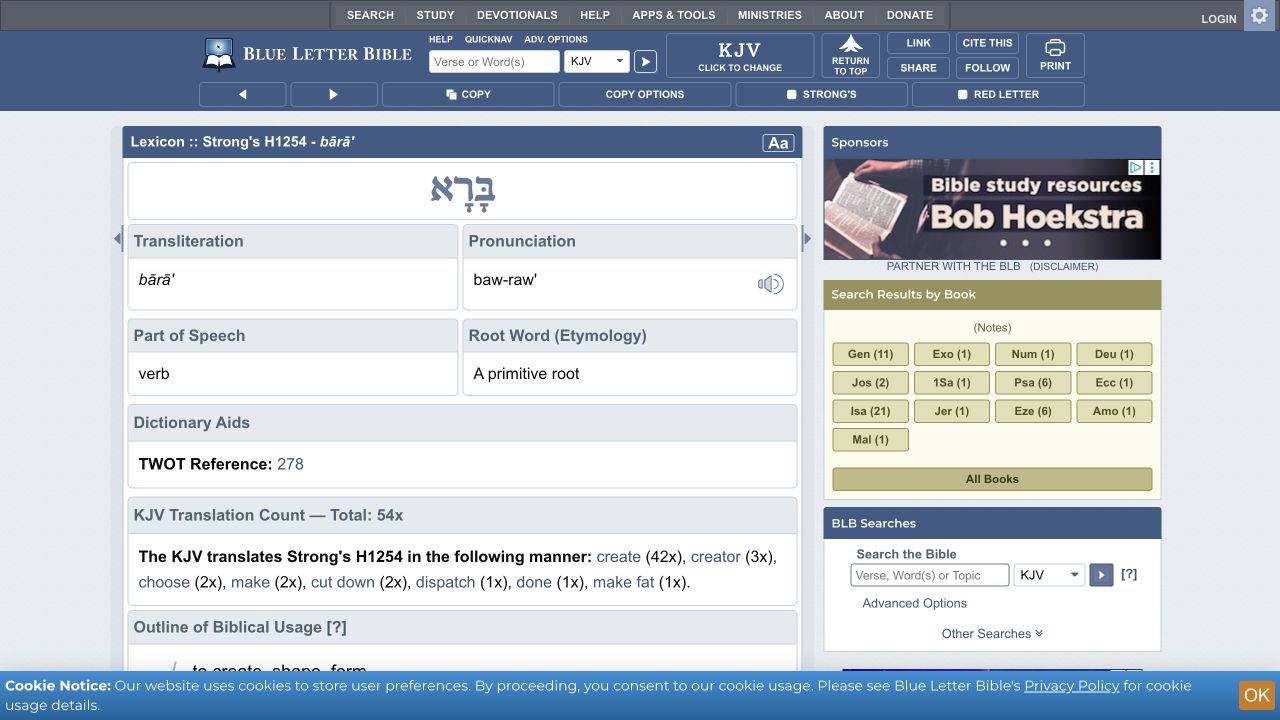
BDB has quietly become the Hebrew lexicon almost everyone has used, even when they have never heard the name. The initials stand for its authors — Francis Brown, S. R. Driver, and Charles Briggs — and the full title is A Hebrew and English Lexicon of the Old Testament. Published in 1906, it was for most of the twentieth century the standard English lexicon of biblical Hebrew, and because that edition is now in the public domain, its data quietly powers the Hebrew lookups in Blue Letter Bible, Bible Hub, e-Sword, and a long list of other apps and sites. When someone taps a Hebrew word in a free study tool and reads a definition, the words are very often Brown, Driver, and Briggs's.
It is not a study Bible, and it does not interpret a passage for you. It does not teach the alphabet. What it does — for the vocabulary of the Hebrew Old Testament and its Aramaic portions — is give a learned account of each word: its meanings, its forms, the verses where it appears, and notes on its derivation and its relatives in other Semitic languages. The arrangement is the thing that surprises new users. Rather than listing every word alphabetically as a standalone entry, BDB groups words under their three-letter Hebrew roots, so related words sit together and you sometimes have to know (or work out) the root to find the word you want.
BDB has a long pedigree. It grew out of the earlier Hebrew lexicon of Wilhelm Gesenius — the foundational nineteenth-century work — translated and heavily expanded by its three editors into the reference that bears their names. For decades it had the field largely to itself, and even now, with the more modern HALOT available, BDB remains in constant use: as the free option built into nearly every study tool, as an inexpensive print volume, and as a classic that many readers still prefer for its richness and its readable, root-by-root logic. It is the resource most people mean when they say they looked up a Hebrew word for free.
✓ The good
- Free and everywhere — the 1906 edition is public domain, so its data is built at no cost into Blue Letter Bible, Bible Hub, e-Sword, and most study apps
- Often Strong's-keyed in apps and online — you can reach a BDB entry by tapping an English word and following its Strong's number, no Hebrew search required
- A deeply learned classic — built on Gesenius and expanded by three major scholars, it remains rich, thorough, and a genuine reference rather than a mere glossary
- Root-based organization groups related words together — once you learn the system, seeing a whole word family at once is a real advantage for word study
- Covers Hebrew and the Aramaic portions of the Old Testament in one reference
- Inexpensive in print — a bound copy runs around $40, far below the cost of a modern scholarly set
- Effectively a lifetime reference — the public-domain text never goes stale the way software subscriptions can
✗ Watch out
- Requires Hebrew for full use — though Strong's-keyed access in apps softens this, the entries assume you can read the script and follow the notation
- Dated in places — published in 1906, it reflects pre-modern lexicography, and the study of Hebrew has advanced since, so some entries lag current scholarship
- Root-based arrangement takes practice — finding a word can mean first identifying its root, which is a real hurdle for newer students
- Less current than HALOT — for the latest comparative-Semitic data and scholarly consensus, the modern lexicon is the stronger reference
- Some etymological and philological judgments are now disputed — the comparative method of its era should be weighed against newer work
- Free public-domain copies can carry old typesetting and abbreviations — clean, modern editions exist but the freely floating text is sometimes rough
Best for
- Students learning Hebrew who want a serious lexicon for free
- Lay readers who study with Strong's-keyed apps and want to go a layer deeper
- Anyone who wants the classic, root-by-root treatment of Old Testament words
- Budget-conscious readers who need a real Hebrew reference without a big purchase
Avoid if
- You need the most current scholarship and comparative-Semitic data
- You want strictly alphabetical entries and find root-based lookup frustrating
- You want a quick gloss rather than a dense, learned lexicon entry
- You only read in English translation and want commentary, not lexicography
What BDB is
BDB is a Hebrew-and-Aramaic-to-English lexicon — a learned dictionary of the vocabulary of the Old Testament, published in 1906 by Francis Brown, S. R. Driver, and Charles Briggs. For each word it documents the meanings, the forms, the verses where it occurs, and notes on derivation and on related words in other Semitic languages. Its defining trait is the arrangement: words are grouped under their three-letter Hebrew roots rather than listed individually in strict alphabetical order, so related words appear together and a reader sometimes has to identify a word's root to find it.
The lexicon grew out of the earlier Hebrew dictionary of Wilhelm Gesenius, which Brown, Driver, and Briggs translated and substantially expanded into the reference that carries their names. Because the 1906 text is in the public domain, it is free online and built into nearly every Bible study app and site, frequently keyed to Strong's numbers so that an English-only reader can reach an entry without searching the Hebrew. Affordable print editions also remain in circulation. It assumes a reader with at least some Hebrew for full use, though its wide, free, Strong's-linked availability makes it the most accessible serious Hebrew lexicon there is.
Why readers still rely on BDB
The single biggest reason BDB is still everywhere is that it is both serious and free. It is not a thin glossary — it is a deeply learned lexicon, built on Gesenius and expanded by three major scholars, with rich entries that document a word's meanings, forms, and relatives. And because the 1906 edition is in the public domain, that depth costs nothing: the data is built into Blue Letter Bible, Bible Hub, e-Sword, and most study apps, frequently keyed to Strong's numbers. The combination — a genuine scholarly reference available at no cost in nearly every tool — is something none of the modern, copyrighted lexicons can match.
For many readers, the Strong's-keyed access is what opens the door. You do not have to search the Hebrew alphabet to reach a BDB entry; in most apps you tap an English word, follow its Strong's number, and arrive at the lexicon's account of the underlying term. That makes BDB the natural next layer for a reader who already uses a Strong's-keyed study tool and wants more than a one-line gloss. The root-based organization rewards a little practice, too — seeing a whole family of related words gathered under one root is a genuine aid to word study once the system clicks. For going one careful step deeper into the Hebrew without a major purchase, nothing is more accessible.
Root-based organization: a word family at a glance
BDB groups its entries under three-letter Hebrew roots rather than listing each word alphabetically on its own. Under a given root sit the verb and the various nouns, adjectives, and related forms that derive from it, so a reader looking up one word sees the whole family it belongs to. For Hebrew, where so much of the vocabulary is built transparently from roots, this arrangement mirrors the way the language actually works and surfaces connections an alphabetical list would scatter across the volume.
It is also the feature that frustrates new users first. To find a word you sometimes have to know or deduce its root, and a beginner who has not yet learned to strip prefixes and suffixes can spend real effort just locating an entry — which is one reason the Strong's-keyed digital versions, where a number takes you straight to the entry, are so widely used. Once the system clicks, though, the root organization becomes an advantage rather than an obstacle: it turns every lookup into a small lesson in how a word relates to its kin, which is exactly the perspective careful word study wants.
Public domain and Strong's-keyed: serious Hebrew for free
Because the 1906 edition is out of copyright, BDB's full text is free to reproduce, and it has been — built into Blue Letter Bible, Bible Hub, StudyLight, e-Sword, Olive Tree, and many more, usually at no cost. Crucially, most of these implementations key BDB to Strong's numbers, so a reader can reach an entry from the English side: tap a word in a Strong's-linked Bible, follow the number, and land on BDB's account of the original term. That bridge lets a reader with little or no Hebrew use a real lexicon, not just a gloss, which is a rare thing to get for free.
This sounds like a licensing footnote. In practice it is the reason a 1906 reference is still in daily use in 2026. A modern, copyrighted lexicon like HALOT is more current, but it has to be bought; BDB is already in the tool you are holding. For the enormous number of readers who study with free apps and Strong's numbers, BDB is the deep reference within reach at the moment they want it, and its constant, no-cost availability across the ecosystem is what keeps it relevant long after a purely scholarly verdict would have retired it.
A learned classic — used with awareness of its date
BDB is a rich, scholarly lexicon, not a simplified study aid. Its entries are detailed and carefully argued, drawing on the comparative-Semitic learning of its day and on the Gesenius tradition behind it, and for a great many words its treatment remains genuinely useful and, in its thoroughness, sometimes preferred even by readers who own newer references. As a serious account of Old Testament vocabulary it has earned its century of use, and it still repays close reading.
It is also a product of 1906, and that should shape how it is used. The study of biblical Hebrew has advanced — through new texts, new comparative data, and refinements in method — so some of BDB's etymological and philological judgments are now disputed or simply superseded, and a careful reader checks its conclusions against more recent work where it matters. None of that erases its value; it locates it. BDB is best treated as a deeply learned classic and an accessible first reference, with a modern lexicon like HALOT consulted alongside it when a question turns on the current state of scholarship.
Pricing
Web (public domain)
Free
The 1906 edition is out of copyright and free on Blue Letter Bible, Bible Hub, StudyLight, and many apps — frequently Strong's-keyed, so you can reach an entry from an English word without searching the Hebrew. For most readers this is all they will ever need.
Bible-software module
~$0–25
BDB is built into e-Sword, Olive Tree, Logos, and Accordance — often free, sometimes a low-cost add-on — where the entries hyperlink to the verses and to Strong's numbers in your library. The most useful free form if you already study in an app.
Print (paperback / hardcover)
~$40
A bound print edition — Hendrickson's being a common one — with the full lexicon in a single volume. Inexpensive for a serious reference, and the form to own if you like working a root-by-root entry on paper.
Strong's-coded print edition
~$45–55
An edition that adds Strong's numbers to each entry, so a reader can move between a Strong's-keyed Bible or concordance and the lexicon directly. Worth the small premium if you study from Strong's numbers rather than Hebrew search.
The free public-domain version is the right choice for almost everyone. The 1906 text is out of copyright and built, searchable and frequently Strong's-keyed, into Blue Letter Bible, Bible Hub, StudyLight, and most study apps at no cost. For the everyday tasks of looking up a Hebrew word and reading a real lexicon entry, that covers it, and most readers will never need to buy anything because the data is free wherever they already study.
The Bible-software modules — in e-Sword, Olive Tree, Logos, and Accordance — are usually free or a low-cost add-on, and they are the most useful free form if you already work in an app, because the entries hyperlink to the verses and to Strong's numbers in your library. For a reader who studies digitally, this turns BDB from a standalone book into a linked part of the workflow without spending anything.
The print editions run around $40 for a standard bound copy — Hendrickson's is a common one — which is inexpensive for a reference of this depth and the form to own if you like working a root-by-root entry on paper. A Strong's-coded print edition, which adds the numbers to each entry, runs a little more (roughly $45–55) and is worth the small premium for a reader who studies from Strong's numbers rather than Hebrew search.
There is no subscription anywhere in this picture and no premium tier to weigh, because the underlying work is public domain. The only real decision is whether you want a physical copy at all, and whether you want the Strong's-coded print version — most readers are well served by the free online or in-app BDB, with an inexpensive print edition on the shelf only if they prefer paper.
Where BDB falls behind
Dated scholarship. BDB was published in 1906, and the study of biblical Hebrew has moved on through new texts, new comparative evidence, and refinements in method. The lexicon remains learned and useful, but some of its etymological and philological judgments are now disputed or superseded, and a careful reader checks its conclusions against more recent work where a question turns on the current consensus. For the latest scholarship, HALOT is the stronger reference.
Root-based lookup. The arrangement under three-letter roots is an advantage once mastered but a genuine hurdle at the start. To find a word you sometimes have to identify its root first, which means stripping prefixes and suffixes a beginner may not yet recognize. The Strong's-keyed digital versions largely solve this by letting a number take you straight to the entry, but the underlying print logic assumes a reader comfortable with Hebrew roots.
Assumes Hebrew for full use. Although Strong's-keyed access in apps lets an English-only reader reach the entries, the content itself assumes you can read the script and follow the notation. A reader with no Hebrew can get value from BDB through a Strong's number, but the depth of an entry — its discussion of forms, derivations, and cognates — is written for someone who works in the language, so the full benefit comes only with some Hebrew behind you.
Rough free copies. Because the public-domain text floats freely across the internet, the version you land on can carry old typesetting, awkward abbreviations, or transcription quirks. Clean, well-formatted editions exist — in the better apps and in modern print — but a reader who grabs the first free PDF may get a rougher experience than a curated implementation like Blue Letter Bible provides.
BDB vs. HALOT vs. Strong's Exhaustive Concordance
Different roles, often used together. BDB is the classic, free, deeply learned Hebrew lexicon — organized by root, dated in places, but rich and available at no cost in nearly every study tool, frequently keyed to Strong's numbers. For a student learning Hebrew, a budget-conscious reader, or anyone who wants the classic treatment, it is the accessible foundation, and many serious readers keep using it for its thoroughness long after they own newer references.
HALOT is the modern standard — more current, with a strong comparative-Semitic apparatus and the scholarly consensus much recent work is keyed to. Where BDB reflects 1906 lexicography, HALOT reflects the present, and for cutting-edge exegesis it is the stronger reference. The trade-off is cost: HALOT must be bought and runs into the hundreds of dollars, where BDB is free. The common pattern is to use BDB as the everyday, in-app reference and reach for HALOT when a question turns on the latest scholarship — which is why many students own both.
Strong's Exhaustive Concordance is not a lexicon but the numbering and index that connect a reader to one. Strong's finds where a word appears and gives each original term a number with a brief gloss; BDB is the fuller Hebrew lexicon that the Strong's number can point you to in most apps. They are natural partners: Strong's gets you from the English word to the right entry, and BDB supplies the learned account of what that Hebrew word means. A reader using a Strong's-keyed tool is, very often, reading BDB on the other end of the number.
The bottom line
BDB is the classic lexicon of Old Testament Hebrew, and more than a century on it is still in daily use because the 1906 edition is public domain — free, frequently Strong's-keyed, and built into nearly every study app and site. It is dated in places and its root-based arrangement takes practice, but it remains a deeply learned reference and by far the most accessible serious Hebrew lexicon there is. Use the free online or in-app version, add an inexpensive print copy only if you like working on paper, and reach for HALOT when a question turns on current scholarship. For going a real layer deeper into the Hebrew without spending anything, nothing else comes close.
Alternatives to BDB
HALOT
The modern standard scholarly lexicon for Old Testament Hebrew and Aramaic — more current than BDB, with deep comparative-Semitic data, but a significant paid purchase.
Strong's Exhaustive Concordance
The numbering and index that connect a reader to a lexicon — the Strong's number that, in most apps, points straight to a BDB entry.
Blue Letter Bible
The free study site that hosts BDB cleanly, Strong's-keyed and cross-linked to interlinears and other lexicons — the digital home where most readers actually use it.
Basics of Biblical Hebrew
A standard beginning Hebrew grammar that teaches the language and the roots BDB is organized around — where a student learns to navigate the lexicon.
Frequently asked questions
- What does BDB stand for?
- BDB is named for its three authors — Francis Brown, S. R. Driver, and Charles Briggs — and the full title is A Hebrew and English Lexicon of the Old Testament. Published in 1906, it grew out of the earlier Hebrew lexicon of Wilhelm Gesenius, which the three editors translated and substantially expanded. For most of the twentieth century it was the standard English lexicon of biblical Hebrew.
- Is BDB free?
- Yes. The 1906 edition is in the public domain, so it is free on Blue Letter Bible, Bible Hub, StudyLight, and most Bible study apps, frequently keyed to Strong's numbers. It is also built into software like e-Sword, Olive Tree, and Logos, often at no cost. Inexpensive print editions run around $40 if you want a physical copy, but most readers never need to buy anything.
- Do I need to know Hebrew to use BDB?
- Not to reach an entry. In most apps BDB is keyed to Strong's numbers, so you can tap an English word, follow its number, and land on the lexicon's account of the underlying Hebrew term. To get the full benefit of an entry — its discussion of forms, derivations, and related words — some Hebrew helps, since the content is written for a reader who works in the language. But a Strong's number alone lets you use BDB as a real reference, not just a gloss.
- Why is BDB organized by root instead of alphabetically?
- Hebrew vocabulary is largely built from three-letter roots, and BDB groups words under their roots so the whole family — verb, related nouns, and other forms — appears together. That mirrors how the language works and helps word study, but it means you sometimes have to identify a word's root to find it, which takes practice. The Strong's-keyed digital versions sidestep this by taking a number straight to the entry.
- BDB or HALOT — which should I use?
- Use BDB as the free, everyday reference — it is in nearly every app, often Strong's-keyed, and remains a deeply learned classic. Reach for HALOT when a question turns on current scholarship, since it is more up to date and has a stronger comparative-Semitic apparatus. BDB reflects 1906 lexicography; HALOT reflects the present, but it must be bought. Many serious students own both and use each for what it does best.
- Is BDB too dated to trust?
- No, but use it with awareness of its date. Published in 1906, BDB is rich and learned, and for a great many words its treatment is still genuinely useful — some readers prefer its thoroughness even when they own newer references. At the same time, the study of Hebrew has advanced, so some of its etymological and philological judgments are now disputed. Check its conclusions against more recent work, such as HALOT, where a question turns on the current consensus.
- Which print edition of BDB should I buy?
- For most readers the free online or in-app version is enough. If you want print, a standard bound edition (Hendrickson's is common) runs around $40 and gives you the full lexicon in one volume. If you study from Strong's numbers, the Strong's-coded print edition — which adds the numbers to each entry — is worth the small premium (roughly $45–55) for moving easily between a Strong's-keyed Bible or concordance and the lexicon.