- Starting price
- Free (older edition)
- Free tier
- Yes
- Platforms
- Print · Kindle · Web (free)
- Developer
- Moody Publishers
- Launched
- 1953
- Updated
- May 31, 2026
The verdict
A small classic that punches above its weight. Fred Wight's Manners and Customs of Bible Lands walks you through the daily life of the biblical world - the houses, the food, the shepherding, the weddings, the rules of hospitality - and in doing so quietly explains the background behind dozens of passages. The 1953 detail shows its age, but as an inexpensive (often free) topical introduction to the culture behind the text, it still earns its place.
Try Manners and Customs of Bible Lands ↗Opens moodypublishers.com
Manners and Customs of Bible Lands has quietly become the book readers reach for when a passage suddenly depends on a detail of daily life they do not share. Why did a host wash a guest's feet? What did it mean to break bread, to tear one's clothes, to leave the corners of a field unharvested? Fred H. Wight gathered the answers into a single topical volume in 1953, organized not by Bible book but by the rhythms of ordinary life - the home, the table, the flock, the field, the wedding, the journey - and Moody Publishers has kept it in print ever since.
It is not a study Bible. It is not a commentary. It is not organized in canonical order at all. What it is is a topical guide to the culture and customs of the biblical world, written for the ordinary reader who keeps bumping into the gap between their own life and the life behind the text. Where a handbook surveys the books of the Bible, Manners and Customs surveys the world those books came from - the way people built houses, kept sheep, grew and ate their food, married, mourned, traveled, and treated strangers.
The category Wight worked in - Bible manners and customs, Bible backgrounds, the daily life of the ancient world - now includes updated and more lavishly produced options, and Wight's own work has been revised (the edition prepared by Ralph Gower is the best-known update). Manners and Customs keeps its place by being the affordable, approachable classic of the genre: short chapters on concrete topics, plain explanations, and a price that is hard to beat - older editions are in the public domain and free to read online, while a print copy runs only around fifteen dollars.
✓ The good
- Topical organization that answers real questions - chapters on homes, food, shepherding, marriage, hospitality, and more, arranged by the rhythms of daily life
- Explains the background behind dozens of passages - once you understand the custom, a hundred verses read differently
- Plain, accessible writing - Wight assumes no scholarship and walks the ordinary reader through each topic clearly
- Genuinely affordable - older editions are in the public domain and free online, and a print copy runs only around $15
- Concrete and memorable - the focus on physical daily life (the bread, the well, the tent, the wedding feast) makes the material stick
- A trusted classic of its genre - in print through Moody for decades and a longtime first recommendation for Bible backgrounds
✗ Watch out
- 1953 scholarship shows its age - some cultural and archaeological detail predates later findings; the Gower revision updates much but not all of it
- Topical, not verse-by-verse - you look up a custom, not a passage, so it complements rather than replaces a commentary
- Single-volume scope - it is an introduction to Bible backgrounds, not the deep, passage-keyed coverage of a dedicated background commentary
- Conservative-evangelical Protestant framing - readers in other traditions will want to pair it with resources from their own tradition
- Some generalizations draw on later Middle Eastern village life to illustrate ancient custom - useful, but not always precisely datable to the biblical period
- Print layout is plain - unlike the photo-rich handbooks, the illustrations are sparse and the design is utilitarian
Best for
- Readers who keep hitting cultural details they don't understand in the text
- Small-group leaders wanting concrete background to bring a passage alive
- Budget-conscious readers who want a free or very cheap backgrounds resource
- Anyone curious about the daily life behind the biblical world
Avoid if
- You want background keyed verse-by-verse to a specific passage
- You need the most current archaeological and cultural scholarship
- You prefer a photo-rich, lavishly illustrated reference
- You want a Catholic, Orthodox, or LDS framing as your primary lens
What Manners and Customs of Bible Lands is
Manners and Customs of Bible Lands is a single-volume topical guide to the daily life and culture of the biblical world. Rather than moving through the Bible book by book, Fred Wight organized it by the patterns of ordinary life - the home and its furnishings, family life and marriage customs, food and its preparation, the work of the shepherd and the farmer, clothing, hospitality, mourning and burial, travel, and more. The aim is to illuminate the background that the biblical writers and their first readers simply assumed, so that a modern reader can catch the meaning of customs the text never stops to explain.
Fred H. Wight first published the book in 1953 through Moody Publishers, the press attached to Moody Bible Institute, and it became a standard first recommendation in the Bible-backgrounds genre. Because the original edition has passed into the public domain, it is freely available online; Moody also keeps print and revised editions in circulation, the best-known update being the edition prepared by Ralph Gower, which modernizes much of the cultural and archaeological material while preserving Wight's topical structure.
Why background-seekers reach for Manners and Customs
The single biggest practical difference between Manners and Customs and a handbook or commentary is the angle of approach. A handbook organizes the Bible by its books; a commentary organizes it by its verses; Manners and Customs organizes it by the furniture of daily life. When you read about a wedding feast, a threshing floor, a city gate, a tent, or a meal, you turn to the chapter on that subject and learn how the thing actually worked in the biblical world. The result is that a single chapter on, say, shepherding will unlock the imagery of dozens of psalms, parables, and prophetic passages at once.
The second difference is concreteness. Wight keeps his attention on physical, tangible life - what a house was made of, how bread was baked, how a flock was led and protected, what a guest could expect from a host. That physicality is what makes the book stick. Abstract theology is hard to remember; the smell of baking bread, the layout of a one-room house, the duties of hospitality are not. For a reader who wants the world behind the text to become vivid rather than vague, the topical, concrete approach is exactly the right tool.
Topical organization - the world behind the text, by subject
The organizing idea of Manners and Customs is its great strength: instead of marching through Scripture book by book, it groups the material by the categories of ordinary life. There are chapters on the dwellings people lived in, on family and marriage, on food and its preparation, on the work of shepherds, on farming, on clothing, on hospitality and its obligations, on mourning and burial, on travel and the hazards of the road, and more. Each chapter gathers the customs of a single domain in one place, with the relevant biblical references woven in, so that a reader can study a whole area of daily life at a sitting.
This structure is what makes the book a different kind of tool from a handbook or commentary. When a passage turns on a custom - a foot-washing, a betrothal, a tearing of garments, a gleaning law - the reader looks up the subject, not the verse, and comes away understanding not just that one passage but the whole pattern of life it belongs to. For small-group leaders and teachers especially, a single topical chapter supplies the background to illuminate many passages at once, which is a more efficient return than chasing the same context verse by verse.
Daily life made concrete - homes, food, shepherding, hospitality
Wight's instinct throughout is to make the material world of the Bible tangible. He describes how a typical house was constructed and laid out, why the roof and the courtyard mattered, and what daily life inside one looked like. He walks through how grain became bread, what people ate and drank, and how meals were shared. He explains the work of the shepherd in detail - leading rather than driving the flock, the rod and the staff, the dangers of predators and theft, the bond between shepherd and sheep - which is the background to some of the Bible's most beloved imagery. And he lays out the customs of hospitality, where receiving a stranger carried weighty obligations that explain countless episodes in the text.
This sounds like a collection of trivia. In practice it is the difference between reading past a passage and reading into it. Once you know that a host was bound to protect and provide for a guest, the hospitality scenes throughout Scripture gain stakes. Once you know how a shepherd actually led a flock, the shepherd imagery stops being a greeting-card sentiment and becomes precise. The concreteness is the engine of the book - it converts customs the original readers took for granted into knowledge a modern reader can carry back into the text.
Free, accessible, and built for the ordinary reader
Manners and Customs was written for the layperson, and that shapes everything about it. The prose is plain and assumes no scholarly background; the chapters are short and self-contained; and the explanations move at the pace of a curious reader rather than a specialist. Because the original 1953 edition has entered the public domain, the full text is freely available to read online on a number of Bible-study sites, which makes it one of the most accessible backgrounds resources in existence - a reader can consult it for nothing, from anywhere, the moment a cultural question arises.
This accessibility is a feature in its own right. A photo-rich, lavishly produced background reference can cost real money and sit unopened on a shelf; a free, plain, topical guide gets used. For readers on a budget, for teachers assembling lesson material, and for anyone who simply wants to check what a custom meant without buying another book, the combination of clear writing and a free edition is hard to beat. Those who want the most current scholarship can step up to the revised print edition, but the free text remains a genuinely useful first stop.
Pricing
Web (older edition)
Free
The original 1953 edition is in the public domain and freely readable on several Bible-study sites. The cheapest way in, and complete - you simply miss the revised edition's updates.
Paperback
~$15
The standard Moody paperback, including the revised material. The version most readers buy and the one to own if you want a copy on the shelf to mark up.
Kindle
~$10
Full text on Kindle apps and devices. Search works well for a topical book like this; the plain layout ports cleanly to a screen.
Revised edition (Gower)
~$18-20
The updated edition prepared by Ralph Gower modernizes much of the cultural and archaeological detail and is the version to choose if currency matters to you.
The free online edition is the right starting point for almost everyone - the original 1953 text is in the public domain and complete, freely readable on several Bible-study sites. For a reader who simply wants to look up a custom, it costs nothing and answers the question, which is hard to argue with.
The paperback at around $15 is the version to buy if you want a physical copy to mark up and keep on the shelf - and it includes revised material the free text does not. For a teacher or a regular reader who returns to the book often, the modest price is well spent on a copy you can annotate and lend.
The Kindle edition around $10 ports cleanly because the book is text-driven rather than layout-heavy, and search is genuinely useful for a topical reference - you can jump straight to the subject you need. It is a good pick for readers who do most of their study on a tablet or phone.
The revised edition prepared by Ralph Gower at around $18-20 is the one to choose if currency matters to you - it modernizes much of the cultural and archaeological detail while keeping Wight's topical structure. Most readers do not need the newest revision to benefit from the book, but if you want the updated scholarship, this is the edition to get.
Where Manners and Customs of Bible Lands falls behind
Dated scholarship. The original text is from 1953, and some of its cultural and archaeological detail predates later findings. The Gower revision updates a good deal of it, but a reader who wants the most current backgrounds scholarship will want a recent academic resource alongside it. As a topical introduction the material holds up; as a final authority on the latest research it does not stand alone.
Topical, not verse-keyed. Because the book is organized by subject rather than by passage, it complements a commentary rather than replacing one. A reader who wants the background to a specific verse, in order, as they read through a book of the Bible will be better served by a background commentary keyed to the text. Manners and Customs answers the question "what did this custom mean?" - not "what is the context of this verse?"
Single-volume scope. As an introduction to Bible backgrounds, the book is broad but not deep. A reader who develops a serious interest in the daily life, archaeology, or social history of the ancient world will outgrow it and want dedicated, passage-keyed background references that a short topical volume was never meant to replace.
Some loosely dated generalizations. Like much older work in the genre, Wight at times illustrates ancient custom with examples drawn from more recent Middle Eastern village life. The comparisons are often illuminating, but they are not always precisely datable to the biblical period, and a careful reader should treat them as suggestive rather than documentary.
Plain production. Unlike the photo-rich handbooks, Manners and Customs is sparsely illustrated and utilitarian in design. A reader who wants to see the biblical world - photographs of sites, artifacts, and reconstructions - will find a visual handbook a better fit. The strength here is the explanation, not the imagery.
Manners and Customs of Bible Lands vs. the IVP Bible Background Commentary vs. the NIV Cultural Backgrounds Study Bible
Different strengths, same goal. Manners and Customs of Bible Lands is the topical, affordable classic - it organizes the daily life of the biblical world by subject (homes, food, shepherding, marriage, hospitality) and explains the customs behind the text in plain language. It is the lightest and cheapest of the three (often free online), and the best for studying a whole area of daily life at once. It is also the oldest, so its scholarship is the least current.
The IVP Bible Background Commentary is the verse-by-verse option. It walks through the Bible passage by passage, supplying the historical and cultural background for each text in order, which is exactly what you want when you are reading through a book and need context as you go. It is more current and more comprehensive than Wight, and keyed to the text rather than to topics. If your question is usually "what is the background of this verse?", it is the better fit.
The NIV Cultural Backgrounds Study Bible folds the same kind of background material directly into a full study Bible - you get the NIV text, verse-by-verse cultural-background notes, book introductions, and visuals in one volume. It is the most convenient if you want the background and the Bible text together and the most polished in production, but also the heaviest and priciest. Many readers use Manners and Customs as a cheap, topical first stop and a background commentary or backgrounds study Bible for passage-by-passage work.
The bottom line
Manners and Customs of Bible Lands is a small classic that still does a job few books do as cheaply or as clearly: it explains the daily life of the biblical world by subject, so that the customs behind the text stop being a blank and start being knowledge you can carry back into your reading. Start with the free online edition, and step up to the revised print edition if you want updated scholarship and a copy to mark up. It will not replace a commentary or the most current backgrounds research, and the 1953 detail shows its age. But for an approachable, affordable tour of the world behind the Bible, Wight's classic is still worth opening.
Alternatives to Manners and Customs of Bible Lands
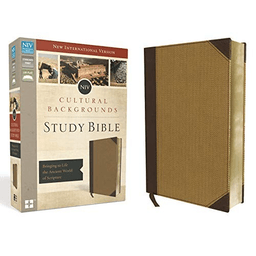 NIV Cultural Backgrounds Study BibleA full study Bible that folds cultural-background notes directly into the NIV text - the background and the Bible together in one polished volume.
 Halley's Bible HandbookThe classic one-volume Bible handbook - a book-by-book survey with outlines, archaeology, and maps; a companion to Wight's topical background work.
 ESV Study BibleA massive study Bible with book introductions, verse-by-verse notes, maps, and charts - combines reference and text in one heavier volume.
Frequently asked questions
Is Manners and Customs of Bible Lands free?
The original 1953 edition is in the public domain and freely readable online on several Bible-study sites, so yes - you can read the complete classic text for nothing. A print paperback runs around $15 and a Kindle edition around $10, and the revised edition prepared by Ralph Gower (~$18-20) adds updated material the free text does not include.
Is it a commentary?
No. It is a topical guide to the daily life and customs of the biblical world, organized by subject - homes, food, shepherding, marriage, hospitality, and so on - rather than by Bible book or verse. It complements a commentary by explaining the cultural background behind passages; for verse-by-verse context you would want a background commentary keyed to the text.
How current is the scholarship?
The original text dates to 1953, so some of its cultural and archaeological detail predates later findings. The revised edition prepared by Ralph Gower updates much of that material while keeping the topical structure. For an introduction to Bible backgrounds it holds up well; for the most current research, pair it with a recent academic resource.
What's the difference between Wight's edition and Gower's?
Fred Wight wrote the original 1953 book. Ralph Gower later prepared a revised edition that modernizes much of the cultural and archaeological detail and refreshes the presentation while preserving Wight's topical organization. The free online text is generally Wight's original; the updated print editions reflect Gower's revisions. Choose Gower's if currency matters to you.
What tradition is it written from?
Wight wrote from a conservative evangelical Protestant perspective, and Moody Publishers, the press of Moody Bible Institute, has maintained it. Readers from Catholic, Orthodox, LDS, or other traditions will find the cultural-background material useful regardless but may want to pair the book with resources from their own tradition for theological framing.
Who is this book best for?
Readers who keep hitting cultural details they do not understand in the text - a custom of hospitality, a detail of shepherding, a marriage practice - and want a clear, affordable explanation. It is especially useful for small-group leaders and teachers who want concrete background to bring a passage alive, and for budget-conscious readers, since a complete edition is free online.
Should I buy this or a backgrounds study Bible?
If you want the background woven verse-by-verse into the Bible text, a resource like the NIV Cultural Backgrounds Study Bible or the IVP Bible Background Commentary is the better fit and more current. If you want an inexpensive, topical guide to study a whole area of daily life at once - and you do not mind older scholarship - Manners and Customs is a great, cheap first stop. Many readers use both.
Sources & further reading
More Bible Reference Books
Halley's Bible HandbookThe 100-year-old pocket reference that taught generations of laypeople how to read the Bible - and still holds up against newer rivals.Eerdmans Handbook to the BibleThe full-color, photo-rich one-volume handbook to the whole Bible - written by an international team of scholars and built to be looked at as much as read.