
- Starting price
- Free; optional donations
- Free tier
- Yes
- Platforms
- Web · iPhone · iPad · Apple Silicon Mac · Apple Vision · Android · CarPlay
- Developer
- Orthodox Christian Ministries, Inc.
- Launched
- 2024 app; 2010 ministry
- Updated
- Aug 2, 2026
The verdict
Patristic Nectar is one of the strongest free audio libraries for English-speaking Orthodox formation. Its catalog, excellent 4.95 store average, CarPlay support, and explicit welcome to inquirers make it easy to recommend within its intended setting. Users should still keep parish catechesis primary, understand that accounts and listening behavior create data, and distinguish the free core library from donor-exclusive and family-channel material.
Try Patristic Nectar ↗Opens patristicnectar.org
Patristic Nectar Publications is a nonprofit Orthodox Christian catechetical ministry built for listening. Its free app gathers theological lecture series, lives of saints through the Synaxarion, Scripture and homilies, conference recordings, the Psalter, and professionally recorded volumes of the Philokalia. The ministry states its perspective without ambiguity: material is intended to edify Orthodox believers and introduce non-Orthodox inquirers to Sacred Tradition as understood through the Church Fathers.
That clarity is a strength. Patristic Nectar is not a general Christianity app or a comparative academic library. It is a formation resource produced from within Eastern Orthodoxy. Someone exploring Orthodoxy can learn how its teachers articulate doctrine and spiritual practice; an Orthodox listener can build an extensive audio routine around saints, patristic texts, and catechesis. A reader from another tradition should evaluate the claims within that stated context rather than expecting balanced representation of Protestant or Catholic interpretations.
The central catalog is free. The official site specifically includes theological lectures, Synaxarion, Philokalia, Psalter, homilies, and conference audio in that promise. The public index dated June 27, 2026 lists 3,549 items across 543 collections, with category counts that overlap rather than add into a clean total. Optional donations support the nonprofit, and recurring donors can receive exclusive material. A separate family channel is promoted through YouTube; its subscription language should not be confused with the free core catalog.
This review is based on the publisher’s current site, library, policies, Global Catechism guidance, and live U.S. App Store metadata as of August 2, 2026. We did not personally operate the app. Store reviews are overwhelmingly positive about the content, while some older 2024 reviews mention blank Synaxarion days, locked searches, or an iPad layout restricted to portrait. The app has received many updates since those reports, including CarPlay and carousel improvements, so those complaints are history to test—not proof of current defects.
✓ The good
- Entire core lecture catalog is free - theological lectures, Synaxarion, Philokalia, Psalter, homilies, and conference audio are not placed behind a subscription
- Exceptional audience response - a 4.95 average from 1,273 U.S. App Store ratings for an app launched only in 2024
- Serious Orthodox depth - patristic works and structured catechesis go far beyond a daily quote or prayer utility
- Clear theological identity - the publisher identifies its fidelity to Orthodox teaching rather than marketing one tradition as generic Christianity
- Designed for listening - mobile apps, CarPlay, Siri support, favorites, search, and a large audio-first catalog fit commutes and repeated study
- Inquirer access - non-Orthodox listeners are explicitly welcomed, and Global Catechism prioritizes people without access to a local parish
- Responsible parish caveat - the free online catechism says it does not replace local in-person formation and asks Orthodox participants to seek a priest’s blessing
✗ Watch out
- One-tradition library - Catholic, Protestant, Oriental Orthodox, and secular academic readings are not represented as equal alternatives
- Account required for library tools - favorites, tags, purchase history, and personalized listening require sharing identity and activity data
- Donor boundary is not fully itemized - recurring donors receive exclusive content, but the public site does not publish a simple tier-and-benefit table
- Family channel is separate - its YouTube subscription and weekly children’s material should not be assumed to be inside the free app catalog
- Older usability complaints exist - early reviewers reported search locks, blank calendar entries, and iPad orientation limits that current users should re-test
- English-only App Store listing - the app’s interface and catalog are not presented as a broad multilingual service
Best for
- Orthodox Christians seeking audio formation
- Inquirers learning how Orthodoxy presents itself
- Listeners studying Church Fathers and saints
- Commuters who prefer lectures to long reading sessions
Avoid if
- You want an ecumenical comparison of traditions
- You need local sacramental or pastoral guidance
- You prefer short guided prayer over lectures
- You do not want an account tied to listening activity
What Patristic Nectar is
Patristic Nectar is an Orthodox Christian audio and video library established as a nonprofit ministry in 2010, with the current mobile app launched in 2024. Its menu organizes material such as The Arena, Synaxarion, theological lectures, Scripture, catechism, patristic books, homilies, and conferences. The public catalog is large enough to function as a long-term formation library rather than a podcast with a handful of series.
An account supports search, favorites, tags, and access to earlier purchases. The ministry also runs Global Catechism, donor programs, and a separate family channel. Those related programs share a mission but do not all have identical access rules, so the phrase “entire lecture catalog free” should be applied to the core categories the publisher names—not every special or future item the organization produces.
Why Orthodox listeners use Patristic Nectar as a formation library
Most Orthodox apps solve a narrow daily task: the lectionary, prayers, fasting calendars, or parish news. Patristic Nectar is closer to an audio seminary shelf. A listener can move from a saint’s life to a multi-part theological series, hear the Psalter, work through the Philokalia, or follow catechetical instruction without building a queue across unrelated podcast feeds.
The library is also accountable to a stated purpose. Patristic Nectar says its work reflects the mind of the Orthodox Church as expressed by the Holy Fathers. That does not make each interpretation indisputable, but it gives users a clear lens and a basis for judging fit. Serious learners should still connect online material to a local priest and parish rather than assembling spiritual direction from recordings alone.
A large catalog of lectures, saints, Scripture, and patristic works
The public index reported 3,549 items across 543 collections in late June 2026. Published category figures included 1,555 videos, 559 lectures, 1,435 podcasts, and 818 Synaxarion entries, but those labels overlap; they should not be added together as separate inventory. The important point is range: this is thousands of entries rather than a marketing promise built around a few flagship courses.
The breadth supports several listening styles. Daily users can follow the Synaxarion or Psalter. Structured learners can complete lecture series or catechism. Readers struggling with dense spiritual texts can hear professional recordings of the first four Philokalia volumes. Search and collections make that abundance more manageable, though the app needs to keep discovery strong as the archive grows.
Global Catechism reaches people without a nearby parish
Global Catechism provides free online classes centered on major Orthodox themes. The program publishes an unusually responsible warning: it is not intended to replace in-person catechism, people already in an Orthodox church should participate with their priest’s blessing, and priority is given to those without local access.
That boundary protects against a common online-formation mistake. Recordings can transmit information, but they cannot receive someone into a parish, provide the sacraments, or respond to a person’s full pastoral situation. Inquirers can use the classes to ask better questions; local clergy remain responsible for actual parish preparation and guidance.
CarPlay and account tools make the archive usable in motion
Version 1.5.1 added CarPlay and improved the app’s content carousels, following earlier additions such as Siri support. Favorites, tags, search, and saved library access help a listener return to long series. That matters for a ministry explicitly trying to reach a generation more inclined to listen than read.
Personalization carries a privacy cost. Apple says email address, name, search history, user ID, and product interaction may be linked to identity for marketing, analytics, personalization, or functionality; diagnostics may be collected without linkage. The publisher says it does not sell information, but its policy is brief. Use a distinct password and assume searches and listening behavior are service-side data.
Pricing
Core online catalog
Free
Includes the publisher’s theological lectures, Synaxarion, Philokalia, Psalter, homilies, conference audio, and other openly listed audio collections.
Global Catechism
Free
Online Orthodox catechetical classes, especially for people without access to a local parish. Registration is required and the program explicitly does not replace parish catechism.
Optional recurring donor
Amount not publicly standardized
Donations support the nonprofit; the site says monthly donors receive exclusive content but does not publish a complete current benefits matrix or minimum amount.
Family channel
Separate YouTube subscription
Weekly saints, Christian children’s storytime, children’s Gospel homilies, and a women’s podcast are promoted separately. Confirm YouTube’s current terms before subscribing.
The central value proposition is straightforward: Patristic Nectar’s named online lecture categories are free. An account is a gate for personalized library functions, not a recurring subscription to hear the basic catalog.
The nonprofit asks for donations because free distribution still has recording, hosting, editing, and app costs. Monthly donors receive exclusive content, so “free” does not mean every piece of ministry output is identical for donors and non-donors.
The public site does not publish a conventional donor plan with a fixed minimum and complete entitlement list. Treat a donation as support, not as a precisely specified media purchase, unless the checkout screen states otherwise.
The family channel has separate subscription language on YouTube. Families should inspect that channel’s current price and catalog instead of assuming it is bundled into the app.
Where Patristic Nectar falls behind
The app needs a clearer access map. The core catalog is free, recurring donors get exclusives, and the family channel is separate. A single official table showing what requires an account, a donation, or a YouTube subscription would prevent confusion.
Early app history was uneven. Some 2024 App Store reviews described blank Synaxarion days, content that appeared locked after searches, and portrait-only iPad behavior. Updates may have resolved some or all of this, but the current 4.95 aggregate should not erase specific older reports users may still care about.
Privacy disclosures are serviceable rather than detailed. Apple’s linked-data list includes identity and behavior categories, while the publisher’s own policy offers broad assurances without a retention schedule, vendor list, or granular explanation of personalization and marketing.
There is no comparative-theology layer. The library’s stated fidelity to Orthodox teaching is exactly why its target audience values it, but an inquirer comparing Eastern Orthodox, Oriental Orthodox, Catholic, or Protestant claims needs primary texts and responsible representatives from each—not one app alone.
Audio formation cannot replace parish life. The Global Catechism page says this explicitly. Users seeking confession, reception into the Church, spiritual direction, or responses to personal crises need accountable local clergy rather than a recording queue.
Patristic Nectar vs. Ancient Faith vs. GOARCH Daily Readings vs. Catena
Patristic Nectar offers the most concentrated free patristic and catechetical audio library of the group. Ancient Faith is the broader English-language Orthodox media network, combining live radio, many independent podcasts, blogs, books, and publishing. GOARCH Daily Readings is a practical daily lectionary, saints, prayers, and fasting app. Catena places excerpts from early Christian commentators alongside biblical verses.
Choose Patristic Nectar for long-form Orthodox lectures and professionally recorded spiritual texts. Choose Ancient Faith for a wider range of contemporary Orthodox voices and shows, GOARCH for a concise daily church calendar and readings, or Catena when the immediate task is comparing patristic comments on a verse.
These products complement rather than replace one another. A listener could check the day’s readings in GOARCH, examine a verse in Catena, and then hear a Patristic Nectar lecture. In every case, an app is a study aid; local parish worship and pastoral accountability remain a different category of Christian life.
The bottom line
Patristic Nectar combines a clear Orthodox identity with unusually generous access. Thousands of indexed items, free lecture and spiritual-text categories, a 4.95 App Store average from 1,273 ratings, and current CarPlay support make it a serious listening library rather than a niche brochure app. Its next trust gains should be a clearer donor/access table and fuller privacy documentation. For Orthodox Christians and respectful inquirers, it is an excellent free starting point—provided online catechesis remains connected to real parish life.
Alternatives to Patristic Nectar
 Catena BibleVerse-linked commentary excerpts from early Christian writers for readers who want patristic context inside a Bible interface.
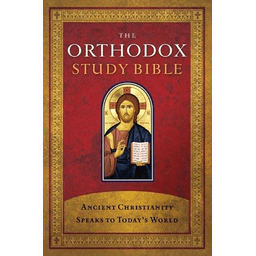 Orthodox Study BibleThe print study Bible for canonical introductions, notes, and page-based Scripture reading within an Orthodox editorial framework.
Frequently asked questions
Is the Patristic Nectar app free?
Yes. The official site says its entire online lecture catalog is free, specifically naming theological lectures, Synaxarion, Philokalia, Psalter, homilies, and conference audio. Optional donations support the ministry, and monthly donors receive some exclusive content.
Do I need an account?
An account is used for the listening library and personalized features such as favorites, tags, and access to earlier purchases. Expect account identity, searches, and product interaction to be processed according to the app’s disclosures.
Is Patristic Nectar only for Orthodox Christians?
No. The nonprofit explicitly creates catechetical material both for Orthodox believers and for non-Orthodox inquirers. Its viewpoint is deliberately Orthodox, so visitors should expect formation from within that tradition rather than a neutral comparison.
What is included in the library?
The current site names theological lectures, Synaxarion, Philokalia, Psalter, homilies, and conference audio. The app also organizes Scripture, catechism, The Arena, and other collections. Public category counts overlap, so they should not be summed as separate items.
Does Global Catechism replace joining a local parish class?
No. Patristic Nectar says the program is especially for people without local access, does not replace in-person catechism, and should be joined with a priest’s blessing by people already connected to an Orthodox church.
Does Patristic Nectar work with CarPlay?
Yes. The June 2026 iOS release notes list CarPlay support. The app also advertises Siri integration, making the audio catalog more convenient while driving.
Is the family channel included?
The family channel is promoted separately through YouTube with subscription language. Do not assume its weekly saints, storytime, children’s homilies, and women’s podcast are all included under the app’s free-catalog promise; check its current YouTube terms.
Sources & further reading
More Orthodox Christian Apps
 Coptic ReaderThe official digital prayer book of the Coptic Orthodox Church, with liturgy, Hours, and the Synaxarion in three parallel languages - and the app a Coptic family is most likely to have open on a Sunday morning.Daily Readings (GOARCH)The official daily companion of the Greek Orthodox Archdiocese of America - today’s appointed readings, the saints commemorated, the fasting rule, and a small library of prayers, all keyed to the Orthodox calendar and given away for free.OrthoPraxA daily-practice companion for the Eastern Orthodox Christian - a prayer book, the liturgical calendar with its feasts and fasts, the lives of the saints, and a library of icons, gathered into one freemium app.English Orthodox PrayersA focused digital prayer book that gathers the prayers of the Eastern Orthodox tradition in English - morning and evening prayers, the prayers around communion, akathists and canons, and prayers for various needs - in one free app.Pray Always!An Eastern Orthodox prayer companion whose name echoes “pray without ceasing” - a structured prayer rule, the Jesus Prayer, the daily prayers, and the liturgical calendar, gathered into one free app to help a daily rhythm of prayer take hold.
 B1 ChurchA genuinely free, open-source church platform - app, website, giving and check-in on one database - run by an Oklahoma nonprofit. The catch is not the price - it is that the vendor own docs call the native app deprecated.