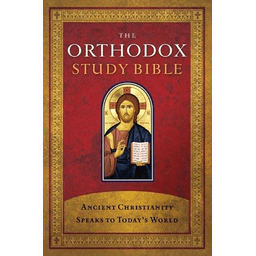
- Starting price
- ~$45 hardcover
- Free tier
- No
- Platforms
- Print · Kindle
- Developer
- Thomas Nelson
- Launched
- 2008
- Updated
- May 31, 2026
The verdict
The standard Eastern Orthodox study Bible in English - a Septuagint-derived Old Testament, the New King James New Testament, the broader Orthodox canon, and study notes built on the Church Fathers and Orthodox worship. For Orthodox readers it is the obvious one-volume choice; for everyone else it is the clearest single window into how the Orthodox Church reads scripture. Just know going in that its Old Testament follows the Greek tradition rather than the Hebrew-based text behind most English Bibles.
Try The Orthodox Study Bible ↗Opens thomasnelsonbibles.com
The Orthodox Study Bible occupies a spot almost nothing else in English fills. There are dozens of evangelical study Bibles and a healthy shelf of Catholic ones, but for most of the modern era an English-speaking Orthodox Christian who wanted a study Bible from inside their own tradition had nowhere to go. Thomas Nelson, working with the St. Athanasius Academy of Orthodox Theology, set out to close that gap - first with a New Testament and Psalms edition in 1993, then with the complete Bible, Old and New Testaments together, in 2008.
It is not a devotional Bible. It does not optimize for a one-year reading plan. It does not try to be a neutral, tradition-free reference. What it does is present the whole of scripture the way the Eastern Orthodox Church receives it - the Greek Old Testament the early Church actually used, the canon the Orthodox Church has always carried, and a layer of commentary that quotes John Chrysostom, Athanasius, Basil the Great, and the other Fathers more often than it quotes modern scholars. The point is to let a reader hear the text through the ears of the Church that produced and preserved it.
Two things make this edition distinctive before you even open the notes. First, its Old Testament is translated and adapted from the Septuagint - the Greek translation of the Hebrew scriptures that the apostles and the early Church most often quoted, and the text the Eastern Orthodox Church regards as its Old Testament. Most English Bibles translate the Old Testament from the Hebrew Masoretic Text instead, so the wording, the versification, and even which books appear will sometimes differ. Second, it follows the broader Orthodox canon, which includes books beyond the Protestant sixty-six. For an Orthodox reader these are the features that make it the right Bible. For a Catholic, Protestant, or Latter-day Saint reader, they are simply things to understand about what you are buying.
✓ The good
- The only complete English study Bible built from inside the Eastern Orthodox tradition - for an Orthodox reader, there is no real substitute
- Septuagint-derived Old Testament - the Greek text the early Church most often quoted, rendered in readable modern English and rarely available elsewhere in a study edition
- Commentary drawn from the Church Fathers - the notes lean on Chrysostom, Athanasius, Basil, and the patristic tradition rather than on modern critical scholarship
- New King James Version New Testament - a familiar, dignified, essentially-literal English text that reads smoothly alongside the Septuagint Old Testament
- Includes the broader Orthodox canon - the additional books are present and annotated, not relegated to an appendix or omitted
- Substantial supporting material - articles on Orthodox doctrine and worship, a lectionary, an introduction to the faith, full-color icons, and a glossary
- One coherent editorial voice - assembled under the St. Athanasius Academy so the notes, articles, and icons all serve the same Orthodox frame
✗ Watch out
- The Septuagint Old Testament differs from the Hebrew-based text behind most English Bibles - a feature for Orthodox readers, but a thing to know if you cross-reference against an NIV, ESV, or KJV
- Notes are introductory rather than exhaustive - this is a study Bible, not a multi-volume patristic commentary, and serious students will outgrow the annotation depth
- The Old Testament translation was completed on a relatively quick timeline - some reviewers wanted more depth and consistency than the schedule allowed
- Two translation streams in one book - a Septuagint-derived Old Testament and an NKJV New Testament means the underlying source texts are not uniform across the volume
- Print-and-Kindle only - there is no first-party app, and the digital footprint is thin compared with the major evangelical study Bibles
- Built for one tradition - readers outside Eastern Orthodoxy will find framing, canon, and emphases that reflect that tradition rather than their own
Best for
- Eastern Orthodox Christians who want one study Bible from inside their own tradition
- Catechumens and inquirers exploring the Orthodox Church and how it reads scripture
- Readers who want an English Old Testament translated from the Septuagint rather than the Hebrew Masoretic Text
- Anyone wanting to see how the Church Fathers and Orthodox worship frame the biblical text
Avoid if
- You want a study Bible from inside the Protestant, Catholic, or Latter-day Saint tradition specifically
- You need an Old Testament translated from the Hebrew Masoretic Text to match other English Bibles you use
- You want exhaustive verse-by-verse commentary - these notes are introductory, not a full reference set
- You want a polished app or deep digital ecosystem - this edition is essentially print and Kindle
What The Orthodox Study Bible is
The Orthodox Study Bible is a single-volume study Bible published by Thomas Nelson with the St. Athanasius Academy of Orthodox Theology, completed in its full Old-and-New-Testament form in 2008. Its Old Testament is translated and adapted from the Septuagint, the Greek translation of the Hebrew scriptures that the Eastern Orthodox Church receives as its Old Testament, and it follows the broader Orthodox canon, which includes books beyond the Protestant sixty-six. The New Testament uses the New King James Version. The biblical text carries running study notes, with additional articles, charts, and reference material throughout.
Beyond the running notes, the volume includes essays on Orthodox doctrine and worship, an introduction to the Orthodox faith, a lectionary for following the Church's cycle of readings, a glossary of terms, and full-color iconographic material. The commentary leans heavily on the Church Fathers - figures like John Chrysostom, Athanasius, and Basil the Great - so that the notes read less like a modern critical apparatus and more like a guided hearing of the text within the Orthodox tradition. The complete edition is available in print, in several bindings, and as a Kindle ebook.
Why Orthodox readers reach for The Orthodox Study Bible
The most-cited reason is simple: it is the only complete English study Bible built from inside the Eastern Orthodox tradition. An Orthodox reader who picks up a typical evangelical study Bible meets a Hebrew-based Old Testament, the sixty-six-book Protestant canon, and notes written from a Protestant frame; a typical Catholic study Bible reflects Catholic emphases. The Orthodox Study Bible is the one volume that matches the text, the canon, and the interpretive tradition an Orthodox Christian already lives inside - the Septuagint Old Testament read aloud in the liturgy, the full canon the Church carries, and commentary that quotes the same Fathers the Church reads on their feast days.
The other reason is the patristic frame. Rather than surveying modern scholarly options, the notes consistently route the reader back to how the Church's teachers historically read a passage. A note on a Psalm might point to how Athanasius or Chrysostom understood it; an article might connect a text to the Church's worship and sacramental life. For a catechumen learning the faith, or a lifelong Orthodox reader who wants their personal study to sound like their parish, that continuity is the whole appeal. It is the thoughtful Orthodox reader's desk Bible, and for that reader nothing else on the shelf does the same job.
The Septuagint Old Testament: the Greek text of the early Church, in English
The defining feature of this edition is its Old Testament, which is translated and adapted from the Septuagint rather than the Hebrew Masoretic Text that most English Bibles use. The Septuagint is the Greek translation of the Hebrew scriptures made before the time of Christ; it is the version the New Testament writers most often quoted and the text the Eastern Orthodox Church has always received as its Old Testament. The St. Athanasius Academy worked from the Septuagint and used the New King James Version as a stylistic reference point, producing an English Old Testament that reads in the same register as the NKJV New Testament that follows it.
In practice this means the wording, the numbering of some Psalms, and even which books and passages appear will sometimes differ from what a reader finds in an NIV, ESV, or KJV. The broader Orthodox canon is present in full rather than tucked into an appendix. For an Orthodox reader, this is exactly the point - the Bible finally matches the text proclaimed in the liturgy. For a reader from another tradition, it is the single most important thing to understand before buying: this is the Greek Old Testament tradition rendered in English, not the Hebrew-based text behind most English Bibles, and the two will not always line up verse for verse.
Patristic commentary: hearing scripture through the Church Fathers
The study notes are built around the Church Fathers. Where an evangelical study Bible tends to survey modern scholarly views and a Catholic one weaves in magisterial teaching, The Orthodox Study Bible routes the reader to how the early and Byzantine Church read a passage - drawing on John Chrysostom, Athanasius, Basil the Great, Gregory of Nazianzus, and the broader patristic tradition. The notes are joined by topical articles on Orthodox doctrine, the sacraments (the Mysteries), the Church's worship, fasting, the Theotokos, and the Christian life, so that the running commentary and the essays reinforce a single, consistent reading.
This is the layer that makes the volume distinctively Orthodox rather than just a Septuagint Bible with footnotes. The notes are introductory by design - they orient a reader inside the tradition rather than exhausting every interpretive question - which is both their strength and their ceiling. A catechumen or a lay reader will find them clarifying and warm; a graduate student or clergy member doing close exegetical work will treat them as an on-ramp and reach for fuller patristic commentaries beyond it. That is the right trade-off for a one-volume study Bible, but it is worth knowing the depth is broad rather than deep.
The full Orthodox apparatus: lectionary, icons, and an introduction to the faith
Around the text sits a complete set of Orthodox reference material. There is a lectionary keyed to the Church's annual cycle of readings, so a reader can follow along with what their parish hears across the liturgical year. There is an introduction to the Orthodox faith and its history, a glossary of terms that a newcomer will not otherwise know, charts and maps, and full-color reproductions of icons placed throughout the volume. Together these turn the book into something closer to a single-volume introduction to Orthodox Christianity than a bare annotated Bible.
For a catechumen or inquirer, this apparatus is often the most useful part of the whole package - the articles and glossary answer the practical questions that come up while learning the faith, and the lectionary connects private reading to the rhythm of corporate worship. For a lifelong Orthodox reader it is a convenient single reference that gathers the Church's framing, its calendar, and its visual tradition between two covers. The icons reproduce well in the print editions; on Kindle they display but lose some of their fidelity, which is one more reason most buyers reach for the hardcover.
Pricing
Hardcover
~$45
The standard edition and the one most buyers should get. Full study apparatus, the complete Septuagint-derived Old Testament and NKJV New Testament, articles, lectionary, and color icons in a durable binding.
Genuine / Bonded Leather
~$70-100
Leather and leather-look editions in a few colorways. Same content as the hardcover; the upgrade is durability and feel, not pages or features. Prices vary by binding and retailer.
Kindle Edition
~$20-25
The full text and notes on Kindle hardware and apps. The cheapest and most portable path in; icons and some layout elements lose fidelity at small screen sizes. Pricing fluctuates.
Hardcover (gift / boxed)
~$50+
Occasional gift-grade and boxed printings appear through Orthodox bookstores and major retailers. Same study content; the difference is presentation. As of writing, availability comes and goes.
The hardcover at around $45 is the right choice for most buyers. You get the complete Septuagint-derived Old Testament, the NKJV New Testament, the full study apparatus, the articles and lectionary, and the color icons in a durable binding. Most readers do not need anything beyond this tier, and the print edition is where the icons and layout look their best.
The leather and leather-look editions, generally in the $70-100 range depending on binding and retailer, are a cosmetic and durability upgrade. Same content, same pagination, longer cover life and a nicer feel. If this is the Bible that will sit on your reading stand for years, the upgrade is reasonable; if you mostly want the text, the hardcover is the value pick.
The Kindle edition, usually somewhere around $20-25 and fluctuating, is the cheapest and most portable way in. The full text and notes are there and searchable; the icons and some layout elements lose fidelity on smaller screens. It is a sensible choice for a reader who travels or prefers to read on a tablet, especially as a companion to a print copy at home.
Prices across all editions move around more than they do for the big evangelical study Bibles, partly because much of the distribution runs through Orthodox bookstores alongside the major retailers. As of writing, the figures above are the right ballpark, but it is worth checking a current listing before you buy.
Where The Orthodox Study Bible falls behind
A Septuagint Old Testament that differs from other English Bibles. This is a deliberate feature for Orthodox readers - the Septuagint is the Old Testament the Eastern Orthodox Church receives - but it is the thing other readers most need to know. The wording, the numbering of some Psalms, and which books appear will not always match an NIV, ESV, NKJV, or KJV, because those translate the Hebrew Masoretic Text instead. If you cross-reference across Bibles, expect the Old Testament to diverge in places.
Introductory notes. The annotation is built to orient a reader inside the tradition, not to settle every exegetical question. Compared with the 20,000-note density of the largest evangelical study Bibles or a dedicated multi-volume patristic commentary, the notes here are broad rather than exhaustive. A close student of a single book will read the introduction, get the patristic framing, and then move on to fuller commentaries.
A quickly completed Old Testament translation. The complete Old Testament was produced on a relatively compressed timeline, and some reviewers have wanted more depth and consistency than that schedule allowed. For everyday reading and study it serves well; readers doing detailed comparative work sometimes note the unevenness.
Two source-text streams. A Septuagint-derived Old Testament sits beside an NKJV New Testament, so the volume is not built on a single uniform translation philosophy end to end. In practice the editorial team kept the English registers close, but the underlying texts are not the same kind of thing, and a reader who values a single consistent base text across the whole Bible should know that.
A thin digital footprint. There is no first-party app and no deep online ecosystem - the edition is essentially print and Kindle. Readers who want their study Bible integrated into a software library, with tappable cross-references and original-language tools, will find the major evangelical platforms far ahead here.
The Orthodox Study Bible vs. the ESV Study Bible vs. a Catholic study Bible
These serve genuinely different readers, and the differences start before the notes. The ESV Study Bible is built from within the broad Reformed evangelical world: a Hebrew-based Old Testament, the sixty-six-book Protestant canon, and an enormous, densely cross-referenced apparatus aimed at pastors, seminarians, and serious lay readers. A Catholic study Bible - the NABRE or RSV-2CE editions, for instance - uses the Catholic canon and reflects Catholic teaching and emphases. The Orthodox Study Bible is the Eastern Orthodox counterpart: a Septuagint-derived Old Testament, the broader Orthodox canon, and patristic commentary that reads scripture through the Church Fathers and Orthodox worship.
The single biggest practical difference is the Old Testament. The ESV and most Protestant and Catholic English Bibles translate the Hebrew Masoretic Text; The Orthodox Study Bible translates the Septuagint. That alone changes wordings, some Psalm numbering, and which books appear. The second difference is the interpretive frame - the ESV surveys modern evangelical scholarship and indicates editorial preferences, a Catholic edition weaves in magisterial teaching, and the Orthodox edition routes you back to Chrysostom, Athanasius, and the patristic tradition. None of these is a more or less faithful Bible; each presents scripture as a particular tradition receives it.
Different strengths. The ESV Study Bible is denser, more heavily cross-referenced, and far stronger as a digital and visual reference. A Catholic study Bible is the natural pick for a Catholic reader who wants the Catholic canon and framing. The Orthodox Study Bible is the only one of the three that gives an English reader the Septuagint Old Testament, the full Orthodox canon, and a patristic study layer in a single volume. For an Orthodox reader, or anyone wanting to understand how the Orthodox Church reads scripture, it is the obvious choice; for readers committed to another tradition, it is best read as a window into Orthodoxy alongside a study Bible from their own.
The bottom line
The Orthodox Study Bible is the standard one-volume study Bible of the Eastern Orthodox Church in English, and for an Orthodox reader there is no real substitute - the Septuagint Old Testament, the broader Orthodox canon, and the patristic notes finally match the tradition they worship inside. At around $45 for the hardcover it is fairly priced for what it gathers between two covers. The notes are introductory rather than exhaustive, and the Septuagint-based Old Testament will diverge from other English Bibles in places - both worth knowing going in rather than dealbreakers. If you are Orthodox, this is the study Bible to own. If you are not, it is still the clearest single window into how the Orthodox Church hears scripture.
Alternatives to The Orthodox Study Bible
 OCA.orgThe Orthodox Church in America's official site - daily readings, lives of the saints, and doctrinal resources from inside the Orthodox tradition.OrthoChristianA large Orthodox news and teaching portal with patristic articles, saints' lives, and commentary - a free complement to the study Bible's notes.
 ESV Study BibleThe flagship evangelical study Bible - a Hebrew-based Old Testament and dense cross-referenced notes; useful as a contrasting reference from a different tradition.
Frequently asked questions
What translation does The Orthodox Study Bible use?
Two streams in one volume. The Old Testament is translated and adapted from the Septuagint, the Greek Old Testament the Eastern Orthodox Church receives, using the New King James Version as a stylistic reference. The New Testament is the New King James Version. The result reads in a consistent English register even though the underlying source texts differ between the testaments.
Why is the Old Testament different from my other Bible?
Because it is translated from the Septuagint rather than the Hebrew Masoretic Text that most English Bibles use. The Septuagint is the Greek translation of the Hebrew scriptures that the early Church most often quoted and that the Orthodox Church receives as its Old Testament. As a result, some wordings, the numbering of certain Psalms, and which books appear will differ. For an Orthodox reader this is the intended feature; for others it is the main thing to know before buying.
What is the theological perspective of The Orthodox Study Bible?
Eastern Orthodox. It was produced by Thomas Nelson with the St. Athanasius Academy of Orthodox Theology, follows the broader Orthodox canon, and its notes and articles read scripture through the Church Fathers and Orthodox worship. Readers from Protestant, Catholic, or Latter-day Saint traditions will find framing, canon, and emphases that reflect Eastern Orthodoxy rather than their own tradition.
Does it include the deuterocanonical or apocryphal books?
Yes. It follows the broader Orthodox canon, which includes books beyond the Protestant sixty-six, and those books are printed and annotated within the volume rather than dropped or relegated to a separate section. The exact set reflects the canon the Eastern Orthodox Church receives.
Is it good for someone new to the Orthodox Church?
Yes - it is one of the most common recommendations for catechumens and inquirers. Alongside the biblical text it includes an introduction to the Orthodox faith, a glossary, articles on doctrine and worship, and a lectionary tied to the Church's calendar, so it doubles as a single-volume orientation to Orthodoxy. The notes are introductory rather than exhaustive, which suits a newcomer well.
How is it different from an evangelical or Catholic study Bible?
The biggest differences are the Old Testament source text, the canon, and the interpretive frame. Most evangelical and Catholic English study Bibles translate the Hebrew Masoretic Text; this one translates the Septuagint and follows the broader Orthodox canon. Its notes route the reader to the Church Fathers and Orthodox worship rather than surveying modern evangelical scholarship or weaving in Catholic magisterial teaching. None is a more or less faithful Bible - each presents scripture as a particular tradition receives it.
Is there an app or digital version?
There is a Kindle edition that contains the full text and notes and is searchable, but there is no dedicated first-party app and no deep online ecosystem around it. The icons and some layout elements lose fidelity on smaller screens, so most buyers prefer the print hardcover and use the Kindle edition as a portable companion.
Sources & further reading
More Study Bibles
ESV Study BibleThe ESV Study Bible has quietly become the default desk Bible for pastors, seminarians, and serious lay readers in the Reformed evangelical world - and the reasons it earned that spot are worth understanding before you buy. NIV Study BibleThe original modern study Bible - over nine million copies sold and still the most balanced one-volume evangelical study Bible most readers will ever own.
 NIV Cultural Backgrounds Study BibleA 2,400-page reference Bible built around one question - what would an ancient reader have heard in this verse?
 NIV Life Application Study BibleThe best-selling study Bible of the last forty years built its name on one idea - notes that tell you what a passage means for your Tuesday, not just what it meant in the first century. Here is what that trade-off actually buys you.
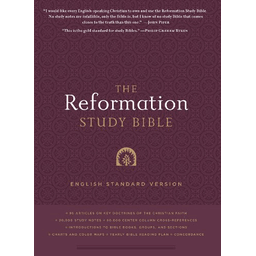 Reformation Study BibleR.C. Sproul's flagship study Bible pairs the ESV text with confessional Reformed notes, historic creeds, and a stack of theology articles - and Ligonier gives the whole apparatus away free online, which changes the buying math.
 Ignatius Catholic Study BibleThe Catholic study Bible that built its reputation one New Testament volume at a time - Scott Hahn and Curtis Mitch on the RSV-2CE - has finally arrived as a complete single volume, and it's worth understanding what it does before you buy.