- Starting price
- Free online
- Free tier
- Yes
- Platforms
- Web reader · Print books · Digital Bible Library
- Developer
- John Dyer
- Launched
- 2023
- Updated
- Aug 16, 2026
The verdict
Y’all Version makes one of biblical language’s most commonly lost English distinctions visible on nearly every page: whether “you” addresses one person or a group. Its YHWH and divine-pronoun typography are equally distinctive. Readers should appreciate the signal without assuming the translation is uniformly mature; its own status notes say the New Testament has received more original work than parts of the Old Testament.
Try Y’all Version ↗Opens yallversion.com
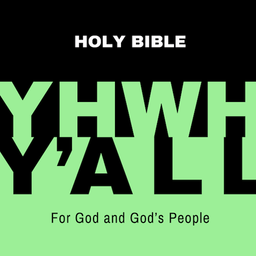
Y’all Version, abbreviated YALL, is an English Bible translation created by John Dyer to distinguish singular second-person forms as “you” from plural forms as “y’all.” That distinction is explicit in biblical Hebrew and Greek but largely invisible in standard modern English.
The translation also renders the divine name as YHWH and uses small-cap styling for pronouns referring to God while retaining ordinary masculine pronouns for the incarnate Jesus. Its stated method balances readable English order with enough word-level consistency to expose repeated source-language vocabulary.
YALL began from the public-domain American Standard Version with selected punctuation and changes from the World English Bible. The creator says the Greek New Testament has developed into a more distinct translation, while the Hebrew Old Testament has a smaller and uneven percentage of edits across books.
We reviewed the free web reader, method, translation-status disclosure, search and dialect controls, format announcements, and faith.tools listing without collating the full text against critical Hebrew and Greek editions. We did not independently assess every rendering, textual decision, typography, print edition, or Digital Bible Library license.
✓ The good
- Plural clarity - “y’all” exposes communal address hidden by modern English “you”
- Divine-name visibility - YHWH makes the covenant name easy to notice and discuss
- Free online access - the full web reader and search are available without subscription
- Method disclosure - the site explains its sources, goals, typography, and uneven revision status
- Memorable identity - distinctive language invites readers to reconsider individualistic interpretation
✗ Watch out
- Uneven revision - Old Testament books have not all received the same depth of translation work
- Dialect reaction - “y’all” can feel regional, informal, humorous, or distracting to some readers
- Typography complexity - small caps and divine-name conventions may affect accessibility and reading aloud
- Single-translator concentration - major choices do not reflect a broad named translation committee
- Base-text legacy - ASV starting language may carry archaism and inherited decisions needing fresh review
Best for
- Readers studying whether biblical commands and promises address one person or a community
- Teachers illustrating second-person number without constant footnotes
- Groups comparing a distinctive translation with established committee versions
- People interested in divine-name rendering and translation philosophy
Avoid if
- You need one primary church Bible backed by a large committee and mature revision process
- The regional register of “y’all” would distract the intended audience
- Screen-reader or typography behavior has not been tested for your setting
- You may assume every Old Testament verse has been freshly translated to the same degree
What Y’all Version is
Y’all Version is a distinctive English Bible translation, not a critical Hebrew or Greek edition, commentary, universal replacement for other translations, denominational authority, or proof that one grammatical distinction settles the interpretation of a passage.
Readers, teachers, and churches remain responsible for comparing translations, checking source-language references, understanding discourse and context, assessing accessibility, respecting licenses, and explaining the translation’s editorial conventions and development status.
Why “y’all” changes how English readers hear Scripture
Many commands and promises that English readers absorb as private messages were addressed to a people, church, or gathered audience. Marking the plural form can restore communal responsibility without a technical footnote in every verse.
Number alone does not solve meaning. Ask who the group is, whether a speaker addresses an individual within it, how pronouns shift, what covenant or situation is in view, and how the passage functions before applying it today.
Singular you and plural y’all: grammar made visible
YALL systematically uses “y’all” for plural second-person forms while reserving “you” for singular address. Possessive and reflexive forms follow the same goal across the text.
Use the signal as a study prompt, then confirm difficult cases with language tools and discourse context. English grammar cannot capture every nuance of Hebrew and Greek person, number, emphasis, and implied subject.
YHWH and divine pronouns: reverence through typography
The translation prints the four-letter divine name as YHWH and uses small-cap pronouns for God, distinguishing them visually from ordinary referents and from the human life of Jesus.
These are editorial theology and style choices rather than features of all manuscripts. Explain them in public reading, test screen readers and copy-and-paste, and compare how other translations handle the divine name.
Web reader, search, and translation status: openness about an evolving work
The official site supports chapter navigation, search, and dialect presentation. YALL is also available in print and through the Digital Bible Library for licensed digital use.
The site candidly describes its ASV and WEB beginnings and uneven Old Testament revision. Preserve that disclosure when recommending it and check version dates because an evolving translation can change.
Pricing
Online Bible
Free
Read and search YALL on the official website.
Digital use
License dependent
The translation is available through the Digital Bible Library; application terms depend on permission.
Print editions
Retail
Print New Testament and other editions are sold through booksellers.
Merchandise
Retail
Optional shirts and other branded items are separate from Bible access.
The official online Bible reader and search are free. No account or subscription is required for ordinary web reading.
Print books and merchandise are sold separately at retailer prices, which vary by region, format, shipping, and seller.
Digital Bible Library availability does not automatically grant unrestricted reuse. Developers and publishers must obtain and follow the applicable license.
Churches should confirm quotation, projection, publication, app, audio, and large-excerpt permissions before institutional use.
Where Y’all Version falls behind
Publish a verse-level revision status and version history showing what has been freshly translated and reviewed.
Name a broader review committee with Hebrew, Aramaic, Greek, theology, style, accessibility, and global English expertise.
Provide full textual basis, translation notes, variants, rationale, and documented correction workflow.
Test and publish screen-reader, braille, dyslexia, small-cap, copy, search, and public-reading accessibility.
Offer a clear licensing page for quotation, churches, classrooms, apps, audio, and derivative formats.
Y’all Version vs. NRSVue vs. NET Bible
YALL foregrounds plural address and YHWH through memorable English. NRSVue is a broad ecumenical committee revision with academic use. NET Bible emphasizes extensive translator notes explaining decisions and alternatives.
Choose YALL as a grammatical comparison, NRSVue for a mature committee translation, or NET for decision transparency. Many readers benefit from using them side by side rather than selecting one winner.
Compare passages where singular and plural shift, inspect textual notes, read aloud, test accessibility, identify committee and revision process, and verify licenses for the intended ministry use.
The bottom line
Y’all Version makes a real contribution by refusing to let modern English hide every plural “you.” That simple choice can expose the corporate shape of biblical commands, promises, warnings, and letters. Its YHWH and divine-pronoun conventions create additional visibility and debate. The translation is also candidly evolving, with more original New Testament work than in parts of the Old Testament and a single creator at its center. Use YALL as a vivid study companion, compare it with mature committee translations, check the source languages when an argument depends on wording, and explain its conventions. It is most valuable when it starts better reading rather than ends discussion.
Alternatives to Y’all Version
 NET BibleModern translation distinguished by extensive notes explaining textual and translation decisions.NRSVueEcumenical committee revision widely used in academic and church settings.Berean Standard BibleFreely available modern translation balancing readability and formal correspondence.World English BiblePublic-domain modern English revision widely usable in software and publishing.
 Literal WordFree Bible app emphasizing original-language data, grammar, and literal study.
Frequently asked questions
What is Y’all Version?
It is an English Bible translation that distinguishes singular “you” from plural “y’all” and prints the divine name as YHWH.
Who created it?
Bible software scholar and developer John Dyer is the named translator and creator.
Is Y’all Version free?
The official web reader is free. Print editions and merchandise are sold separately.
What translation is it based on?
It began from the American Standard Version with some global changes and punctuation from the World English Bible.
Is the whole Bible freshly translated?
The site says the New Testament is more distinct, while Old Testament books have received uneven levels of editing.
Why does it use YHWH?
It prints the consonants of the divine name to make God’s covenant name visible while avoiding a supplied pronunciation.
Should it be my only Bible?
Its grammar is illuminating, but readers should compare mature committee translations and consult source-language tools for close study.
Sources & further reading
More Bible Reading Websites
 route.bibleA free, open-spec routing layer that turns a Bible reference into one stable link or QR code and lets each reader choose a preferred Bible destination—an elegant solution for slides, print, websites, and AI output, provided publishers test reference parsing, redirects, tracking tags, accessibility, and long-term fallback.
 SefariaA Jewish nonprofit quietly rebuilt the entire rabbinic library online - and serious Christian students of the Hebrew Bible keep showing up to use it.
 BibleLinkA polished way to make Bible references readable without sending visitors away—but its noncommercial license and hosted-service dependency deserve attention before installation.
 fetch(bible)Gracious Tech’s free, open-source Scripture platform combines 1,404 translations, a compressed global CDN, developer libraries, and an embeddable reader—exceptionally generous infrastructure whose translation licenses still require your own diligence.
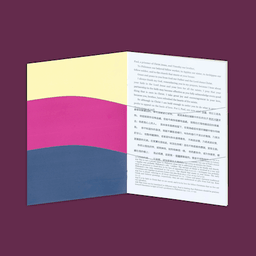 Paper BibleA delightful free generator that turns a chosen Scripture portion into a configurable PDF or folded booklet in hundreds of languages, with presets for reading, study, and notes—but every print project still depends on translation permissions, PDF inspection, and the limits of a remotely generated document.
 Sparks Chinese BibleA rich Chinese-language Bible platform joining many translations, original-language study, courses, media, and community—especially compelling for serious learners who can audit its AI and privacy choices.