
- Starting price
- Free
- Free tier
- Yes
- Platforms
- Web launcher · QR builder · URL integration · Chrome extension · Agent skill
- Developer
- Dylan Price Shade / Selah Tools
- Launched
- 2025
- Updated
- Aug 16, 2026
The verdict
route.bible solves a small but real interoperability problem unusually well: a church can print or publish one passage address without guessing whether the recipient prefers YouVersion, Logos, Bible Gateway, another app, or a browser. The launcher preserves user choice, the QR builder serves physical settings, and the Chrome extension can linkify references without an account or background service worker. Use canonical references, offer visible human-readable text, test every QR at final print size, avoid sensitive tracking parameters, and retain a plain reference and fallback URL in case the routing service changes.
Try route.bible ↗Opens route.bible
route.bible creates canonical URLs for Bible passages, such as a John 3:16 launcher, then directs each visitor toward a preferred Bible app or web reader. The same address can become a QR code for slides, handouts, signs, books, or event material. This separates the publisher’s reference from the reader’s destination.
The integration guide supports developers and content systems that need predictable passage links rather than hard-coding one Bible product. The project also supplies an agent skill intended to teach AI tools to emit portable Bible links. A tracking tag can be appended when a publisher needs campaign attribution, but that choice changes the privacy posture and should be disclosed.
Route Bible for Chrome scans pages for natural references and turns them into launcher links. On Scripture-heavy pages it can infer shorthand from nearby context, preserves existing publisher links, previews a QR on hover, requires no sign-in, and declares no background service worker or data collection. Version 0.1.0 was updated March 12, 2026 and had no public ratings at review.
We reviewed the official launcher, integration and QR surfaces, Chrome listing, creator site, and directory record without testing every Bible book abbreviation, language, destination app, browser, device, QR scanner, extension permission, or redirect. We did not locate an extensive standalone service privacy, security, uptime, archival, or governance document, so organizations should treat the domain as a helpful external dependency rather than permanent infrastructure.
✓ The good
- Reader choice - one publisher link can open the Bible destination a recipient actually uses
- Excellent physical-digital bridge - QR codes make a printed reference immediately actionable
- Free and accountless - basic link creation does not require registration or subscription
- Open integration concept - canonical syntax is easier to generate consistently across sites, slides, and software
- Conservative extension behavior - existing site links are preserved and shorthand inference is context-aware
- Strong extension privacy claim - the listing says no user data is collected and no background worker is installed
- Tiny purpose-built surface - the tool avoids becoming another Bible reader, account, social network, or content platform
✗ Watch out
- External redirect dependency - every shared link relies on the route.bible domain and current launcher logic
- Young extension - version 0.1.0, no ratings, and limited public operational history increase continuity risk
- Reference ambiguity - abbreviations, multi-book names, shorthand ranges, verse order, and deuterocanonical books can parse incorrectly
- Destination variance - Bible apps differ in installed state, editions, URL schemes, regions, login, and verse-range support
- Tracking tags can create data - publisher attribution may reveal campaign or document context even when the core tool is minimal
- QR accessibility limits - a code alone does not help every low-vision, offline, keyboard, screen-reader, or camera-restricted user
- Thin policy layer - retention, logs, subprocessors, correction, abuse, uptime, and succession are not deeply documented publicly
Best for
- Church slides, bulletins, posters, books, courses, and handouts serving users with varied Bible apps
- Christian websites and tools that want consistent app-independent passage links
- Developers and AI workflows able to validate canonical references before publishing
- Readers who want automatic linkification in Chrome and understand extension permissions and early-version risk
Avoid if
- A permanent scholarly citation must work without relying on an external redirect domain
- The audience needs a guaranteed licensed translation, offline text, or one institutionally approved Bible destination
- The material cannot include a visible reference and direct fallback beside the QR code
- The workflow assumes ambiguous natural-language references can be converted without human validation
What route.bible is
route.bible is a passage router, not a Bible publisher. It does not own or license every destination’s text, guarantee that a translation is available, interpret Scripture, or preserve the destination after another app changes its links.
A canonical URL is a durable intention, not a permanent archive. The printed human-readable reference remains the essential fallback and allows a reader to find the passage without the route.
Why a neutral handoff beats choosing one Bible app
A direct Bible Gateway, YouVersion, Logos, or publisher link assumes a platform and sometimes an edition. Route Bible lets the author express “open this passage” while the reader retains control of the final environment.
That neutrality ends at implementation details. Audit which apps and translations appear, how preferences persist, what a failed deep link does, and whether the launcher favors a partner or tracks the user.
Canonical passage links: simple syntax needs validation
A stable reference URL can be generated by people, websites, publishing systems, QR builders, or AI tools and reused across formats.
Normalize book names and ranges, reject impossible references, display the passage in words beside the link, and test cross-chapter or shorthand cases before mass publishing.
QR builder: useful on paper and screens
The QR surface turns a canonical passage into an image that phones can scan from a bulletin, classroom, stage screen, poster, or book.
Use high contrast, sufficient quiet zone and size, a short visible URL, alternative text in digital copies, and a print proof scanned by older and newer devices from the intended distance.
Chrome extension and integrations: convenience at page scale
The extension scans visible text, leaves existing links alone, resolves some local shorthand, and can show QR previews; integrations automate link output in products and agents.
Browser extensions can read page content by necessity. Verify current permissions, source, update ownership, and organization policy, and disable it on confidential internal systems even when the developer claims no collection.
Pricing
route.bible
Free
Canonical passage launchers, link creation, QR tools, integration guidance, and the current Chrome extension are available without a listed fee.
No paid plan, advertising tier, or account requirement was displayed during review.
The lack of price does not guarantee permanent hosting, compatibility, support, or governance.
Organizations embedding the domain widely should monitor it, document the URL specification, and retain replaceable source references.
Campaign tags should be optional and documented; never encode a person, pastoral topic, health condition, or other sensitive information in a public URL or QR.
Where route.bible falls behind
Publish the URL specification, parser tests, redirect rules, destination registry, change policy, and versioning in a durable open repository.
Add a complete privacy and security document covering IP and request logs, preference storage, analytics, tracking tags, processors, retention, abuse, and deletion.
Provide a transparent governance and succession plan for the domain, plus a downloadable or self-hostable resolver.
Document support for languages, canon differences, cross-chapter ranges, app deep links, failure states, and accessible fallbacks.
Commission extension security review and expose source, permission rationale, release notes, reproducible builds, and a vulnerability channel.
route.bible vs. Bible Gateway links vs. YouVersion links vs. printed references
Bible Gateway and YouVersion link directly into substantial reading platforms but choose that platform for the recipient. A printed reference is maximally durable and independent but requires manual lookup. route.bible inserts a user-choice layer and can bridge print with QR.
Choose route.bible when an audience is diverse and the material is replaceable or monitored. Choose a publisher link when a specific licensed edition or experience is essential, and always include plain reference text in durable print.
The best pattern is redundant: “John 3:16,” a route.bible link or QR, and—where context demands—a direct accessible fallback. The reader retains options even if one component fails.
The bottom line
route.bible is an excellent example of software doing one job instead of competing to become another destination. Canonical passage links and QR codes can make Scripture references more useful across church media while respecting reader preference, and the conservative Chrome extension extends the idea across the web. Its small-team, young-service, and policy risks are real but manageable for noncritical links. Publish the reference itself, validate parsing, test QR and destination behavior, avoid sensitive tracking, and retain a migration plan.
Alternatives to route.bible
 Bible GatewayDirect passage links into a broad web Bible and study platform with many translations.
 YouVersion Bible AppDeep links into the world’s largest free Bible app ecosystem.
 Logos Bible SoftwarePowerful passage links and research inside a professional study platform.Bib.lyA longstanding web script for adding Bible verse popups to published pages.Plain printed referenceThe most durable, private, accessible fallback when the reader can use any Bible.
Frequently asked questions
What does route.bible do?
It turns a Bible passage reference into one canonical link or QR code, then helps the reader open the passage in a preferred Bible app or website.
Is route.bible free?
Yes. No paid plan or account requirement was displayed for the launcher, QR tools, integrations, or current Chrome extension.
Does it provide Bible text?
It primarily routes a reference to another Bible destination. Translation text and rights belong to the selected publisher or app.
What does the Chrome extension do?
It scans pages for references, adds launcher links, can infer some shorthand, preserves existing links, and offers QR previews.
Does the extension collect data?
The Chrome Web Store says the developer declares no data collection or use. Organizations should still inspect permissions and current policy.
Are QR codes accessible?
Not by themselves. Include the human-readable reference, a short typed link, adequate contrast and size, and a non-camera path.
Will route.bible links work forever?
No external domain can promise that. Retain the plain passage reference and monitor or replace links in long-lived publications.
Sources & further reading
More Bible Reading Websites
 SefariaA Jewish nonprofit quietly rebuilt the entire rabbinic library online - and serious Christian students of the Hebrew Bible keep showing up to use it.
 BibleLinkA polished way to make Bible references readable without sending visitors away—but its noncommercial license and hosted-service dependency deserve attention before installation.
 fetch(bible)Gracious Tech’s free, open-source Scripture platform combines 1,404 translations, a compressed global CDN, developer libraries, and an embeddable reader—exceptionally generous infrastructure whose translation licenses still require your own diligence.
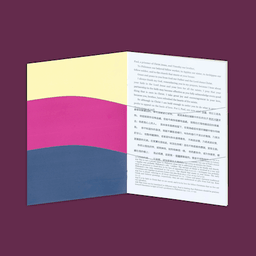 Paper BibleA delightful free generator that turns a chosen Scripture portion into a configurable PDF or folded booklet in hundreds of languages, with presets for reading, study, and notes—but every print project still depends on translation permissions, PDF inspection, and the limits of a remotely generated document.
 Sparks Chinese BibleA rich Chinese-language Bible platform joining many translations, original-language study, courses, media, and community—especially compelling for serious learners who can audit its AI and privacy choices.
 Bible.isA free Bible website and app with Scripture in more than 2,600 languages and roughly 1,800 audio recordings - the most ambitious audio Bible project ever attempted.