2 Kings 3
People in this chapter
Three kings, one desert, and no water. Moab has rebelled, and Jehoram of Israel, Jehoshaphat of Judah, and the king of Edom march the long way around to strike it from behind. Seven days in, the wells run dry - nothing for the men, nothing for the animals. An army can fight an enemy. It cannot fight thirst.1
Tap any highlighted phrase to jump to the commentary that unpacks it.
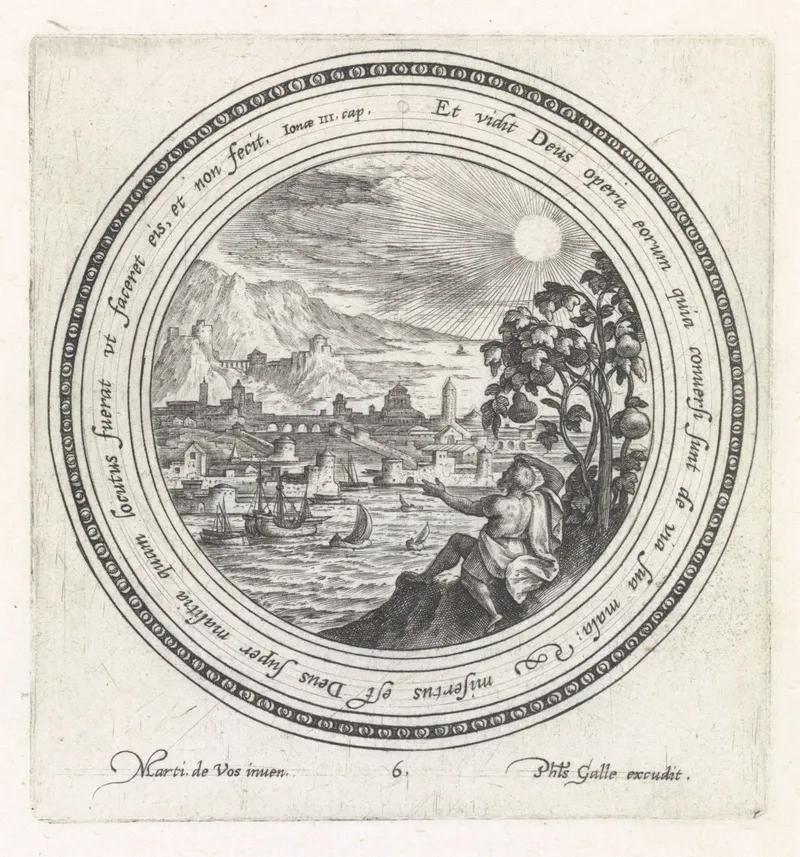
2 Kings 3:1-5Jehoram's Divided Heart, and Mesha the Sheepmaster's Rebellion
1Now Jehoram the son of Ahab began to reign over Israel in Samaria the eighteenth year of Jehoshaphat king of Judah, and reigned twelve years. 2And he wrought evil in the sight of the LORD; but not like his father, and like his mother: for he put away the image of Baal that his father had made. 3Nevertheless he cleaved unto the sins of Jeroboam the son of Nebat, which made Israel to sin; he departed not therefrom. 4And Mesha king of Moab was a sheepmaster, and rendered unto the king of Israel an hundred thousand lambs, and an hundred thousand rams, with the wool. 5But it came to pass, when Ahab was dead, that the king of Moab rebelled against the king of Israel.
The chapter opens with a careful weighing of Jehoram. He is not like his father, and like his mother - not the full-blown Baal patron Ahab was, not the murderous zealot Jezebel was; he even put away the image of Baal that his father had made. And yet: Nevertheless he cleaved unto the sins of Jeroboam… he departed not therefrom. He cleans up the most flagrant idolatry while holding fast to the old calf-worship that split the kingdom from the start.
He is a man of half-measures - reform-minded enough to tear down one image, faithless enough to keep the rest. That divided heart is not a side note; it is the very thing that will make Elisha turn his face away later in the chapter. A king who half-serves God is, in the crisis, no nearer to God than a king who serves Him not at all.1
Mesha king of Moab is introduced with a single vivid word: a sheepmaster. His kingdom's wealth was its flocks, and the tribute he had paid the house of Israel measures both that wealth and the weight of his subjection - an hundred thousand lambs, and an hundred thousand rams, with the wool. It was a crushing levy, the price of a vassal kept under heel. So when Ahab was dead, Mesha seizes the hinge moment that every subject kingdom watches for - the death of the strong king - and rebelled against the king of Israel. His rebellion is not irrational; the burden was real.
But a man may have every earthly reason for a course and still be marching, all unknowing, toward ruin. This same Mesha and this same revolt are remembered outside the Bible, on a stone he himself raised to boast of throwing off Israel's yoke.2
2 Kings 3:6-9The Long Road Through Edom, and No Water for the Host
6And king Jehoram went out of Samaria the same time, and numbered all Israel. 7And he went and sent to Jehoshaphat the king of Judah, saying, The king of Moab hath rebelled against me: wilt thou go with me against Moab to battle? And he said, I will go up: I am as thou art, my people as thy people, and my horses as thy horses. 8And he said, Which way shall we go up? And he answered, The way through the wilderness of Edom. 9So the king of Israel went, and the king of Judah, and the king of Edom: and they fetched a compass of seven days’ journey: and there was no water for the host, and for the cattle that followed them.
Jehoram does what kings do: he numbers his army and sends for an ally. And Jehoshaphat answers with the warmest words of alliance in the Old Testament - I am as thou art, my people as thy people, and my horses as thy horses. It is wholehearted, generous, and, the reader may suspect, unwise; this is the same godly king of Judah who keeps binding himself to the faithless house of Israel. Together with the king of Edom they choose the way through the wilderness of Edom - the long route, swinging south and east of the Dead Sea to strike Moab from behind.
The strategy is sound. But the desert they choose to cross is no respecter of strategy, and the very wilderness that was meant to hide their approach becomes the place where the whole expedition nearly dies.
2 Kings 3:10-12Jehoshaphat Seeks a Prophet of the LORD
10And the king of Israel said, Alas! that the LORD hath called these three kings together, to deliver them into the hand of Moab! 11But Jehoshaphat said, Is there not here a prophet of the LORD, that we may enquire of the LORD by him? And one of the king of Israel’s servants answered and said, Here is Elisha the son of Shaphat, which poured water on the hands of Elijah. 12And Jehoshaphat said, The word of the LORD is with him. So the king of Israel and Jehoshaphat and the king of Edom went down to him.
Seven days into the circuit, the campaign collapses for the one reason no army can overcome. Swords are useless against thirst; the horses Jehoshaphat boasted of are dying. And in this extremity the heart of Jehoram is laid bare. He does not fall to his knees. He turns the disaster into an accusation against God: Alas! that the LORD hath called these three kings together, to deliver them into the hand of Moab. Notice the theology buried in his complaint - he assumes the LORD has actively gathered them in order to destroy them.
The king who would not fully serve God in peace is quick to blame God in trouble. A half-hearted faith sounds like this at the moment of testing: suspicion that God has set a trap, with no thought to pray.
Against Jehoram's accusation stands Jehoshaphat's single, faithful question: Is there not here a prophet of the LORD, that we may enquire of the LORD by him? Dying of thirst in a foreign wilderness, his first instinct is to seek the word of the LORD. This is the dividing line the chapter keeps drawing - the faithless man assumes God is against him and looks no further; the faithful man, in the same desert, goes searching for God's voice.
And the answer comes from an unexpected mouth: one of the king of Israel's servants knows exactly where the prophet is. Here is Elisha the son of Shaphat, which poured water on the hands of Elijah. The description is deliberately humble - Elisha is named by his service, the disciple who did the lowly work of attending the great prophet. The mantle of Elijah now rests on a man who first learned to pour water on another's hands.
And it is fitting that the one who once poured water in service is the one God will use to pour out water in the wilderness.
2 Kings 3:13-15No Word for Jehoram, but Mercy for Jehoshaphat's Sake
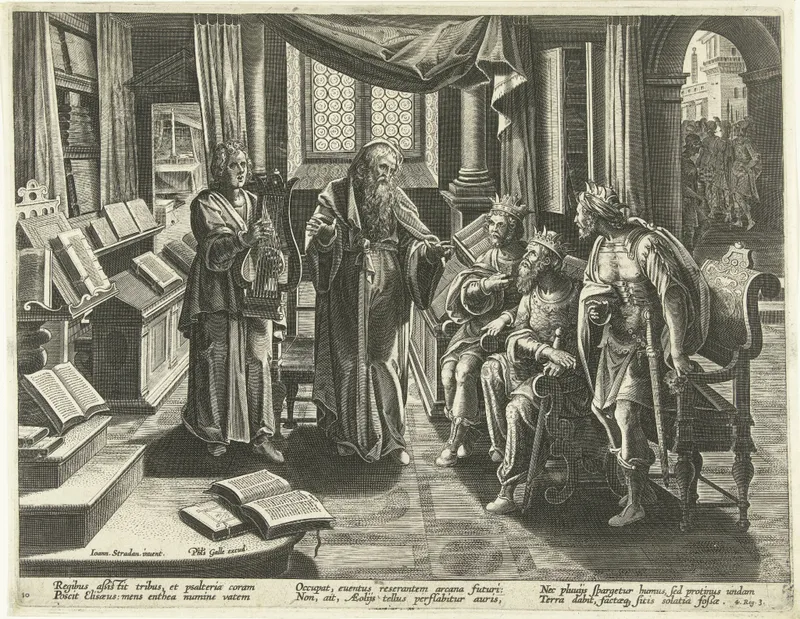
13And Elisha said unto the king of Israel, What have I to do with thee? get thee to the prophets of thy father, and to the prophets of thy mother. And the king of Israel said unto him, Nay: for the LORD hath called these three kings together, to deliver them into the hand of Moab. 14And Elisha said, As the LORD of hosts liveth, before whom I stand, surely, were it not that I regard the presence of Jehoshaphat the king of Judah, I would not look toward thee, nor see thee. 15But now bring me a minstrel. And it came to pass, when the minstrel played, that the hand of the LORD came upon him.
Elisha's first words to Jehoram are a door shut in his face: What have I to do with thee? get thee to the prophets of thy father, and to the prophets of thy mother. It is not bad temper; it is holiness with an edge. Jehoram has kept the calves of Jeroboam and clung to the old idolatry; let him go, then, to the prophets of Baal and Asherah his parents served, and see what help they give in a waterless desert.
The prophet will not lend the word of the LORD to a king who treats the LORD as one option among many, to be consulted only when the pagan gods have failed. And Jehoram's reply is telling - he simply repeats his accusation word for word: the LORD hath called these three kings together, to deliver them into the hand of Moab. Even now, face to face with a true prophet, he has no prayer, no repentance, only the same charge against God.
He has learned nothing from the thirst.
Here is the hinge of the whole deliverance: an entire army about to be saved, and not one drop of it for its own sake. The prophet will not so much as turn his eyes toward Jehoram - were it not that I regard the presence of Jehoshaphat the king of Judah, I would not look toward thee, nor see thee. There is nothing in this king to draw God's help. But one man who fears the LORD is standing in the company, and for his sake the prophet inquires, and for his sake the host lives.
It is one of the clearest pictures in the Old Testament of mercy granted to the many for the sake of the one. The water in the valley, the victory over Moab, the lives of three kings and their armies - none of it earned, all of it flowing to a crowd because a single righteous man stood in their midst.
2 Kings 3:16-18Make This Valley Full of Ditches
16And he said, Thus saith the LORD, Make this valley full of ditches. 17For thus saith the LORD, Ye shall not see wind, neither shall ye see rain; yet that valley shall be filled with water, that ye may drink, both ye, and your cattle, and your beasts. 18And this is but a light thing in the sight of the LORD: he will deliver the Moabites also into your hand.
Before the word comes, Elisha calls for music: bring me a minstrel. And when the minstrel played… the hand of the LORD came upon him. The detail is quiet and striking. The raging accusation of Jehoram has filled the air; the prophet calls for a harp to still it, and in the playing the prophetic word descends. The minstrel speaks no prophecy; he only plays. But the music settles the scene and prepares the prophet, and into that prepared stillness the hand of the LORD comes.
Then the word breaks out with a command: Make this valley full of ditches. Before a drop of water is promised, there is work to be done - dry trenches to be dug in the parched ground. The vessel must be made ready before it can be filled.
2 Kings 3:19-20Water Comes by the Way of Edom, Without Wind or Rain
19And ye shall smite every fenced city, and every choice city, and shall fell every good tree, and stop all wells of water, and mar every good piece of land with stones. 20And it came to pass in the morning, when the meat offering was offered, that, behold, there came water by the way of Edom, and the country was filled with water.
The word does not fail. In the morning, when the meat offering was offered - at the very hour of the daily sacrifice in distant Jerusalem - there came water by the way of Edom, and the country was filled with water. No wind had blown, no rain had fallen where the armies camped; the water came from the direction of Edom, filling the dry valley until the whole land lay flooded. The men drink, the cattle drink, the dying expedition lives.
What the prophet spoke in the evening, the LORD performs by dawn. And the timing - the hour of the morning offering - is a quiet reminder of where the help came from: not from the strategy of kings or the strength of armies, but from the God who is worshipped at the altar, who answers the seeking of the faithful and fills the trenches that faith has dug. The water that saves them is, every drop of it, a gift.
2 Kings 3:21-27Moab Deceived and Routed; the Sober Ending
21And when all the Moabites heard that the kings were come up to fight against them, they gathered all that were able to put on armour, and upward, and stood in the border. 22And they rose up early in the morning, and the sun shone upon the water, and the Moabites saw the water on the other side as red as blood: 23And they said, This is blood: the kings are surely slain, and they have smitten one another: now therefore, Moab, to the spoil. 24And when they came to the camp of Israel, the Israelites rose up and smote the Moabites, so that they fled before them: but they went forward smiting the Moabites, even in their country. 25And they beat down the cities, and on every good piece of land cast every man his stone, and filled it; and they stopped all the wells of water, and felled all the good trees: only in Kirharaseth left they the stones thereof; howbeit the slingers went about it, and smote it.
The same water that saved Israel now destroys Moab, by deceiving the eye rather than drowning the body. The Moabites muster at the border, and at dawn the sun shone upon the water, and the Moabites saw the water on the other side as red as blood. The low morning light, the reddish soil of the region, the standing pools where there should have been none - and the Moabites read it through their own assumptions: This is blood: the kings are surely slain, and they have smitten one another: now therefore, Moab, to the spoil. They expected the uneasy alliance of three kings to turn on itself, and so that is exactly what they see.
Their fear and their hope together paint the water red. There is a sober lesson buried in it: we so often see what we already expect to see, and a heart full of its own assumptions can turn the very mercy of God into a mirage that lures it to ruin. The water that gave Israel life becomes, to eyes that misread it, the bait of a trap.
Believing the field already won, the Moabites break ranks and rush in for plunder - and run straight onto the swords of an army very much alive. The Israelites rose up and smote the Moabites, so that they fled before them. The rout is total; Israel pursues them into their own land, beating down cities, casting stones on every good field, stopping the wells, felling the good trees, until only the fortress-capital of Kir-haraseth stands, ringed by slingers.
The very provision the Moabites misjudged has become the instrument of their defeat. It is a hard turn in the story, and the chapter does not pause to soften it: the water that was pure gift to the thirsting armies of Israel was, to the deceived eyes of Moab, the first step of their undoing. The same act of God can be life to one and snare to another, depending on whether it is received in truth or misread in fear.
26And when the king of Moab saw that the battle was too sore for him, he took with him seven hundred men that drew swords, to break through even unto the king of Edom: but they could not. 27Then he took his eldest son that should have reigned in his stead, and offered him for a burnt offering upon the wall. And there was great indignation against Israel: and they departed from him, and returned to their own land.
Penned in his last stronghold, Mesha makes a final, desperate sortie - seven hundred men that drew swords, trying to cut their way out toward the king of Edom - but they could not. Every road is closed. The kingdom is collapsing, the heir-city falling, the rebel king cornered on his own wall. It is the end of the revolt he had raised so boldly when Ahab died, and the stone he set up to boast of his defiance does not record this hour.
A man may throw off a yoke he found unbearable and still be driven, in the end, into a corner from which there is no breaking out.
What Mesha does then is stated plainly and left unexplained: Then he took his eldest son that should have reigned in his stead, and offered him for a burnt offering upon the wall. It is the act of a doomed pagan king at the absolute end of hope - the worst thing the world he lived in knew how to do, done in the open upon the city wall where both armies could see. The text does not dwell on it, and neither should we; it names the horror in a single line and moves on.
And there was great indignation against Israel: and they departed from him, and returned to their own land. The Scripture does not tell us whose indignation, or precisely why, and it is better not to fill the silence with more than is written. The plain effect is what stands: the momentum of Israel's victory breaks, the siege is lifted, and the armies that had swept everything before them simply withdraw and go home. The chapter that opened with water given in mercy ends in a darker key - a sober, unresolved close that lets the reader feel the weight of a world in which such things happen, and asks for no neat explanation.
Research trail
Sources & further study
These references support the historical, linguistic, manuscript, and contextual notes in this chapter. Scripture remains the primary text; external sources are provided so readers can inspect the research directly.
- 2 Kings 3 - Translators' NotesThe NET Bible's detailed footnotes on 2 Kings 3 - the scale of Mesha's tribute, the route through the wilderness of Edom, the idiom behind “fetched a compass,” the meaning of the ditches and the water arriving without storm, and the difficult final clause about the “great indignation against Israel.”
- The Mesha Stele (the “Moabite Stone”)The basalt victory stele of Mesha king of Moab - the very king of verse 4 - discovered at Dhiban in 1868 and now in the Louvre. In its own words Mesha tells of his rebellion against the house of Omri and his wars to throw off Israel, the same revolt that opens this chapter, and it names the God of Israel by His covenant name.
- 2 Kings 3 · Hebrew + classical Jewish commentaryThe Hebrew text of 2 Kings 3 with Rashi, Radak, and other classical commentators side by side - useful for darash (v. 11, to “enquire” of the LORD), for the digging of the gebim (v. 16, the ditches), and for the language of the valley filled with mayim (v. 17) without wind or rain.
- 2 Kings 3 ↔ Isaiah 43 · Isaiah 55 · John 4 · John 7Traces the threads tying the water given in the desert without wind or rain (vv. 16-20) to rivers in the desert… to give drink to my people (Isa. 43:19-20), and Jehoshaphat's search for a prophet of the LORD to seek ye the LORD while he may be found (Isa. 55:6) and the living water of John 4 and John 7.
Where this echoes in Scripture
Jehoshaphat Seeks a Prophet of the LORD
- Isaiah 55:6Seek ye the LORD while he may be found, call ye upon him while he is near.The seeking Jehoshaphat models in the desert - the LORD near to the one who turns to inquire of Him.
- Jeremiah 29:13And ye shall seek me, and find me, when ye shall search for me with all your heart.The promise behind the verb darash - the LORD found by the one who truly seeks Him.
- 2 Chronicles 20:3And Jehoshaphat feared, and set himself to seek the LORD.The same king, the same instinct - in a later crisis Jehoshaphat again turns first to seek the LORD.
- 1 Kings 19:21Then he arose, and went after Elijah, and ministered unto him.Elisha named here as the one who poured water on Elijah's hands - the servant who became the prophet.
- Isaiah 55:1Ho, every one that thirsteth, come ye to the waters.The open invitation behind the desert deliverance - the thirsty called freely to the water God gives.
Water Comes by the Way of Edom, Without Wind or Rain
- Isaiah 43:19-20I will even make a way in the wilderness, and rivers in the desert… to give drink to my people, my chosen.The signature act of God that verse 17 displays - rivers given in the desert to His chosen people.
- Isaiah 44:3I will pour water upon him that is thirsty, and floods upon the dry ground.The same mayim, poured on the thirsty - the LORD filling dry ground with water.
- John 7:37-38If any man thirst, let him come unto me, and drink… out of his belly shall flow rivers of living water.The water of the wilderness opening into the living water Christ gives to all who thirst.
- Psalm 78:15-16He clave the rocks in the wilderness… He brought streams also out of the rock.Israel's memory of water given in the desert by the word of God - provision with no natural cause.
Moab Deceived and Routed; the Sober Ending
- Deuteronomy 29:29The secret things belong unto the LORD our God: but those things which are revealed belong unto us.The posture for the chapter's unexplained ending - holding the revealed, leaving the secret with God.
- Proverbs 21:31The horse is prepared against the day of battle: but safety is of the LORD.The lesson under Moab's rout - armies and assumptions fail; deliverance belongs to the LORD.
- Micah 6:7Shall I give my firstborn for my transgression, the fruit of my body for the sin of my soul?The desperate pagan logic Mesha enacts - the offering of a child that the LORD never sought and never desired.
- Psalm 20:7Some trust in chariots, and some in horses: but we will remember the name of the LORD our God.The contrast the chapter draws - the seeking of the LORD against the strength and sight of men.