Obadiah 1
People in this chapter
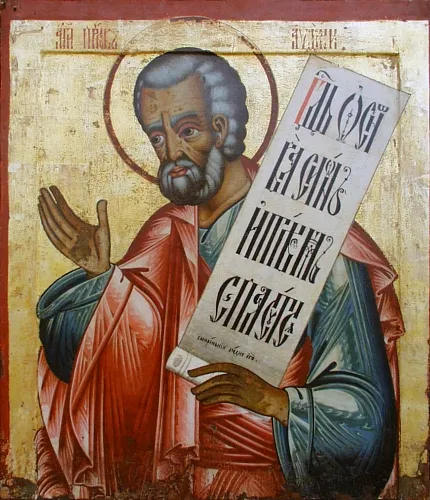
Obadiah is the shortest book of the Old Testament - a single chapter of twenty-one verses, with no narrative frame and almost no biography. It is one concentrated vision concerning Edom, the nation descended from Esau, Jacob's brother. Edom occupied the rugged highlands south of the Dead Sea, a country of red sandstone cliffs and cities tucked into clefts in the rock, hard to reach and easy to defend. That geography bred a confidence that became the nation's undoing.
The book opens with a summons going out among the nations to rise against her in battle (v. 1), and the LORD's own verdict on her self-assurance: The pride of thine heart hath deceived thee… that saith in his heart, Who shall bring me down to the ground? (v. 3).1
Tap any highlighted phrase to jump to the commentary that unpacks it.
Obadiah 1:1-9The Pride of Thine Heart Hath Deceived Thee
1The vision of Obadiah. Thus saith the Lord GOD concerning Edom; We have heard a rumour from the LORD, and an ambassador is sent among the heathen, Arise ye, and let us rise up against her in battle. 2Behold, I have made thee small among the heathen: thou art greatly despised. 3The pride of thine heart hath deceived thee, thou that dwellest in the clefts of the rock, whose habitation is high; that saith in his heart, Who shall bring me down to the ground? 4Though thou exalt thyself as the eagle, and though thou set thy nest among the stars, thence will I bring thee down, saith the LORD.
The whole book hangs on one diagnosis, and it lands in the third verse: The pride of thine heart hath deceived thee. Notice what pride is said to do here. It does not merely offend; it deceives. It is a liar that lives in the heart, whispering a false sense of safety. And the lie has an address. Edom dwelt in the clefts of the rock, whose habitation is high - the red sandstone fortresses of Seir, cities carved into sheer cliffs, reachable only through narrow gorges, all but impregnable to an attacking army.
Out of that geography grew a boast: Who shall bring me down to the ground? Edom looked at its walls of stone and concluded it answered to no one. This is the precise shape pride so often takes - it points to something real (Edom's defenses truly were formidable) and draws from it a conclusion that is false (that no power above could reach them). The LORD answers the boast in its own terms, and the answer is terrible in its simplicity: Though thou exalt thyself as the eagle, and though thou set thy nest among the stars, thence will I bring thee down (v. 4).
Climb as high as you like; there is no altitude beyond His reach. The higher the nest, the longer the fall.1
5If thieves came to thee, if robbers by night, (how art thou cut off!) would they not have stolen till they had enough? if the grapegatherers came to thee, would they not leave some grapes? 6How are the things of Esau searched out! how are his hidden things sought up! 7All the men of thy confederacy have brought thee even to the border: the men that were at peace with thee have deceived thee, and prevailed against thee; they that eat thy bread have laid a wound under thee: there is none understanding in him. 8Shall I not in that day, saith the LORD, even destroy the wise men out of Edom, and understanding out of the mount of Esau? 9And thy mighty men, O Teman, shall be dismayed, to the end that every one of the mount of Esau may be cut off by slaughter.
The prophet drives the verdict home with a pair of images drawn from ordinary life. A thief breaks in and takes only what he wants and can carry; the grape-gatherer, even when stripping a vineyard, leaves a few clusters behind. Even plunder has its limits. But Edom's ruin will be total: How are the things of Esau searched out! how are his hidden things sought up! (v. 6). Nothing will be left, not even the treasures hidden in the rock.
Worse, the blow will come from Edom's own friends: the men that were at peace with thee have deceived thee… they that eat thy bread have laid a wound under thee (v. 7). The very allies Edom trusted will turn on it - a betrayal that mirrors Edom's own betrayal of its brother. And the LORD will strip away the two things Edom counted on most. He will destroy the wise men out of Edom (v. 8) - for Edom and its city of Teman had a reputation for shrewd counsel - and he will dismay its mighty men (v. 9).
Wisdom and strength, the two pillars of any nation's confidence, will both give way. When God moves against the proud, the very defenses they trusted prove hollow.
Obadiah 1:10-14Thy Violence Against Thy Brother Jacob
10For thy violence against thy brother Jacob shame shall cover thee, and thou shalt be cut off for ever. 11In the day that thou stoodest on the other side, in the day that the strangers carried away captive his forces, and foreigners entered into his gates, and cast lots upon Jerusalem, even thou wast as one of them. 12But thou shouldest not have looked on the day of thy brother in the day that he became a stranger; neither shouldest thou have rejoiced over the children of Judah in the day of their destruction; neither shouldest thou have spoken proudly in the day of distress.
Now the prophet reaches the root of the matter: Edom's pride was compounded by Edom's heart toward its kin. For thy violence against thy brother Jacob shame shall cover thee (v. 10). That single word brother changes everything. Edom and Israel were not strangers; they descended from twin brothers, Esau and Jacob, sons of Isaac. The kinship was old and was meant to be honored - Israel had once been forbidden to abhor an Edomite; for he is thy brother. So Edom's sin is the betrayal of blood.
And the indictment is unsparing about how passive cruelty becomes active guilt. In the day that thou stoodest on the other side (v. 11) - at first it sounds like mere bystanding, simply being elsewhere while strangers plundered Jerusalem. But the verse closes the gap: even thou wast as one of them. To stand aside and watch a brother destroyed, to do nothing while the looters work, is to take the looters' side. There is a kind of standing on the other side that God counts as joining the enemy.
Indifference toward a brother in his ruin is complicity.
13Thou shouldest not have entered into the gate of my people in the day of their calamity; yea, thou shouldest not have looked on their affliction in the day of their calamity, nor have laid hands on their substance in the day of their calamity; 14Neither shouldest thou have stood in the crossway, to cut off those of his that did escape; neither shouldest thou have delivered up those of his that did remain in the day of distress.
Eight times in three verses the prophet tolls the same phrase - in the day, in the day of their calamity, in the day of distress - like a bell that will not stop. It fixes the whole charge to a single, terrible occasion: the day Jerusalem fell. And it traces Edom's descent from bad to worse. First it merely looked on, watching a brother's affliction with detached interest (v. 12). Then it rejoiced and spoke proudly, turning suffering into a spectacle to gloat over.
Then it entered into the gate of the broken city and laid hands on their substance, joining the plunder (v. 13). And finally it reached the lowest rung of all: thou shouldest not have stood in the crossway, to cut off those of his that did escape; neither shouldest thou have delivered up those of his that did remain (v. 14). Edom posted itself at the escape routes to catch the fleeing survivors and hand them over.
This is the anatomy of a hardening heart - it begins with watching, slides into gloating, hardens into profiting, and ends in active cruelty to the helpless. The progression is a warning: contempt for a brother, once indulged, rarely stays still. It always wants to go further.
Obadiah 1:15-16As Thou Hast Done, It Shall Be Done Unto Thee
15For the day of the LORD is near upon all the heathen: as thou hast done, it shall be done unto thee: thy reward shall return upon thine own head. 16For as ye have drunk upon my holy mountain, so shall all the heathen drink continually, yea, they shall drink, and they shall swallow down, and they shall be as though they had not been.
Here the vision widens from one nation to all, and states the principle beneath the whole book: For the day of the LORD is near upon all the heathen: as thou hast done, it shall be done unto thee; thy reward shall return upon thine own head (v. 15). Edom is no longer the only defendant; it has become the example case of a justice that reaches every nation. And the rule of that justice is exactness itself - as thou hast done, it shall be done unto thee. The deeds a person sends out come home to roost.
The phrase thy reward shall return upon thine own head pictures evil as a thing that circles back to land on the one who launched it. There is no escaping the symmetry. Verse 16 presses it with the image of a cup: as ye have drunk upon my holy mountain, so shall all the heathen drink. The nations had treated Jerusalem's holy hill as a place to revel and carouse in the hour of its fall; now they will drink the cup of judgment and swallow down until they shall be as though they had not been. What is sobering here is the impartiality of it.
The same measure applies to all. This is the moral order of the universe, and it bends toward no favorite.
Obadiah 1:17-21The Kingdom Shall Be the LORD'S
17But upon mount Zion shall be deliverance, and there shall be holiness; and the house of Jacob shall possess their possessions. 18And the house of Jacob shall be a fire, and the house of Joseph a flame, and the house of Esau for stubble, and they shall kindle in them, and devour them; and there shall not be any remaining of the house of Esau; for the LORD hath spoken it.
One small word turns the whole book: But. But upon mount Zion shall be deliverance (v. 17). Everything before has been descent - pride, betrayal, recompense, ruin. Now the vision lifts its eyes from the doomed mount of Esau to the mount that will stand. Two mountains are set against each other across this chapter, and they end in opposite ways. Edom's high rock, for all its confidence, comes to nothing; Zion, the place that had been trampled and looted, becomes the place of deliverance and holiness. The reversal is total.
The very people who were stripped of everything - whose substance Edom laid hands on - will now possess their possessions, restored to what was theirs. Verse 18 presses the contrast with a vivid image: the house of Jacob and Joseph become a fire and a flame, and the house of Esau becomes stubble - dry, weightless, gone in an instant once the fire touches it. All Edom's vaunted permanence is revealed as straw. The point is not vengeance for its own sake; it is that what sets itself against God and tramples His people has no lasting substance, while what seemed weak and defeated - but belonged to Him - endures.
19And they of the south shall possess the mount of Esau; and they of the plain the Philistines: and they shall possess the fields of Ephraim, and the fields of Samaria: and Benjamin shall possess Gilead. 20And the captivity of this host of the children of Israel shall possess that of the Canaanites, even unto Zarephath; and the captivity of Jerusalem, which is in Sepharad, shall possess the cities of the south. 21And saviours shall come up on mount Zion to judge the mount of Esau; and the kingdom shall be the LORD’s.
The closing verses sketch a sweeping restoration. The people of Judah, scattered and dispossessed, will spread out and inherit again - the south reclaiming the very mount of Esau that had gloated over them, others taking the coastal plain, the fields of Ephraim and Samaria, and Gilead across the Jordan (v. 19). Even the exiles farthest flung - the captivity of Israel, and the captivity of Jerusalem carried away to distant Sepharad - will come home and possess the land again (v. 20).
The names pile up to make one point: the dispossession is reversed, and reversed completely, to the farthest corners. Then comes the final line, and it lifts the whole book to its true horizon: And saviours shall come up on mount Zion to judge the mount of Esau; and the kingdom shall be the LORD'S (v. 21). Notice the direction - the deliverers come up on Zion. The mountain that had been brought low is now the height from which deliverance flows.
And the book that opened with one nation's arrogant little kingdom (Who shall bring me down?) closes with the only kingdom that finally counts. Every proud throne, every fortress in the rock, every nation that exalted itself, gives way at last to this: the rule of all the earth restored to the One to whom it always belonged.2
Research trail
Sources & further study
These references support the historical, linguistic, manuscript, and contextual notes in this chapter. Scripture remains the primary text; external sources are provided so readers can inspect the research directly.
- Obadiah 1 - Translators' NotesThe NET Bible's detailed footnotes on Obadiah - the summons to battle in verse 1, the imagery of the eagle's nest among the stars (v. 4), the string of “in the day” clauses describing Edom's conduct (vv. 11-14), and the difficult geography of the restored possessions in verses 19-20.
- Obadiah 1 ↔ Jeremiah 49 · Psalm 137 · Revelation 11Traces the threads tying Obadiah to the rest of Scripture - the oracle against Edom that runs closely parallel to Jeremiah 49:7-22, the bitter memory of Edom in the fall of Jerusalem (Ps. 137:7), and the kingdom-of-the-LORD close (v. 21) read alongside the kingdoms of this world are become the kingdoms of our Lord (Rev. 11:15).
- Obadiah 1 · Hebrew + classical Jewish commentaryThe Hebrew text of Obadiah with Rashi, Ibn Ezra, and other classical commentators side by side - useful for zedon (v. 3, the “pride” that deceives), for the geography of Edom's clefts of the rock, and for the much-discussed plural moshi'im (“saviours”) and the closing phrase ve-haytah la-YHWH ha-melukah in verse 21.
Where this echoes in Scripture
The Pride of Thine Heart Hath Deceived Thee
- Isaiah 14:13-15For thou hast said in thine heart, I will ascend into heaven... yet thou shalt be brought down to hell, to the sides of the pit.The same boast and the same sentence as verses 3-4 - the high heart that says “I will ascend” brought down.
- Proverbs 16:18Pride goeth before destruction, and an haughty spirit before a fall.The principle Edom embodies - the pride of verse 3 running ahead of the fall of verse 4.
- Jeremiah 49:16Thy terribleness hath deceived thee... O thou that dwellest in the clefts of the rock... though thou shouldest make thy nest as high as the eagle, I will bring thee down.The closely parallel oracle against Edom - almost word for word with verses 3-4.
- James 4:6God resisteth the proud, but giveth grace to the humble.The law behind verse 4 stated as gospel - God set against the high heart, gracious to the low one.
- Luke 14:11For whosoever exalteth himself shall be abased; and he that humbleth himself shall be exalted.The rule of the kingdom that Edom's fall illustrates - the self-exalted brought down.
Thy Violence Against Thy Brother Jacob
- Genesis 25:23Two nations are in thy womb... and the elder shall serve the younger.The origin of the brotherhood Edom betrayed (v. 10) - Esau and Jacob, twins, two nations.
- Psalm 137:7Remember, O LORD, the children of Edom in the day of Jerusalem; who said, Rase it, rase it, even to the foundation thereof.The same crime from Judah's side - Edom cheering the fall that verses 11-14 condemn.
- Proverbs 24:17-18Rejoice not when thine enemy falleth... lest the LORD see it, and it displease him.The sin of verse 12 named directly - gladness at another's fall is itself an offense to God.
- Matthew 5:43-44Love your enemies, bless them that curse you, do good to them that hate you.The reversal of Edom's conduct - the call to seek a brother's good even in his ruin.
- Ezekiel 35:5Because thou hast had a perpetual hatred, and hast shed the blood of the children of Israel by the force of the sword in the time of their calamity.The same charge against Edom (Mount Seir) - violence to a brother in the day of calamity (vv. 10-14).
As Thou Hast Done, It Shall Be Done Unto Thee
- Matthew 7:2For with what judgment ye judge, ye shall be judged: and with what measure ye mete, it shall be measured to you again.The principle of verse 15 as the Lord's own teaching - the measure you use is measured back.
- Galatians 6:7Be not deceived; God is not mocked: for whatsoever a man soweth, that shall he also reap.The law of recompense behind “thy reward shall return upon thine own head” (v. 15).
- Joel 3:14Multitudes, multitudes in the valley of decision: for the day of the LORD is near in the valley of decision.The same “day of the LORD” on all nations announced in verse 15.
- James 2:13For he shall have judgment without mercy, that hath shewed no mercy; and mercy rejoiceth against judgment.The mercy Edom withheld returning upon it - and the mercy that triumphs for those who show it.
- Jeremiah 25:15-16Take the wine cup of this fury at my hand, and cause all the nations... to drink it.The cup of judgment all nations drink (v. 16) - the same image of reeling under God's sentence.
The Kingdom Shall Be the LORD'S
- Revelation 11:15The kingdoms of this world are become the kingdoms of our Lord, and of his Christ; and he shall reign for ever and ever.The fulfillment of verse 21 - the kingdom of all the earth become the LORD'S forever.
- Daniel 7:14And there was given him dominion, and glory, and a kingdom... his dominion is an everlasting dominion, which shall not pass away.The everlasting kingdom toward which “the kingdom shall be the LORD'S” (v. 21) reaches.
- Romans 11:26And so all Israel shall be saved: as it is written, There shall come out of Sion the Deliverer.The Deliverer out of Zion - the saviours coming up on mount Zion in verse 21 brought to their head.
- Joel 2:32For in mount Zion and in Jerusalem shall be deliverance, as the LORD hath said, and in the remnant whom the LORD shall call.The same promise as verse 17 - deliverance located on mount Zion.
- Hebrews 12:22-24But ye are come unto mount Sion, and unto the city of the living God, the heavenly Jerusalem.The mount Zion of deliverance (vv. 17, 21) opened toward the city the redeemed have come to.