Psalms 147
Psalm 147 belongs to the run of Hallelujah psalms that close the Psalter, each one opening and shutting with the same shout - Praise ye the LORD. But this one has a particular genius. It keeps doing the same surprising thing over and over: it sets God's immensity right next to His tenderness and treats the pairing as the most natural thing in the world. In a single stride it moves from He healeth the broken in heart, and bindeth up their wounds to He telleth the number of the stars; he calleth them all by their names (vv. 3-4).
No transition, no apology - as if the God who knows every star by name and the God who kneels beside a crushed heart were so obviously the same God that nothing needs to be explained.1
Tap any highlighted phrase to jump to the commentary that unpacks it.
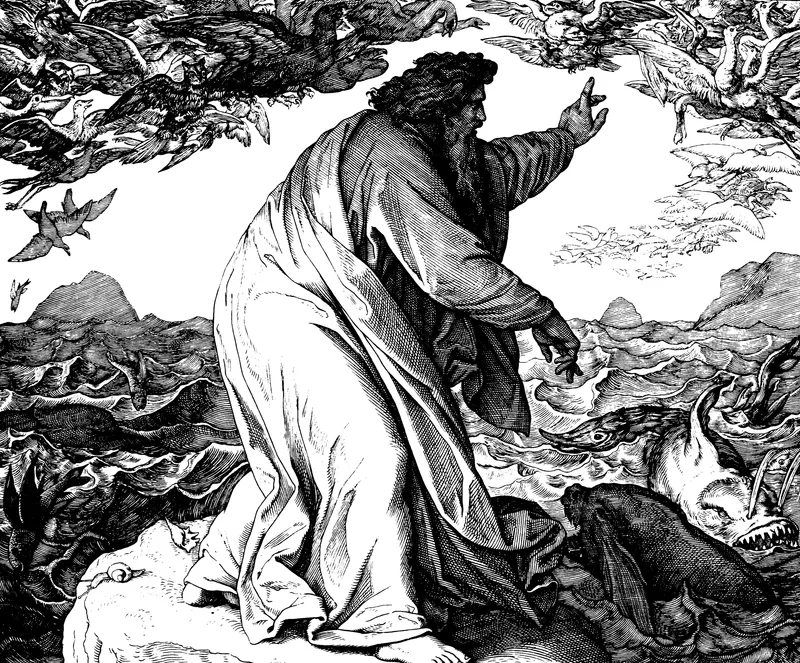
Psalm 147:1-6He Healeth the Broken in Heart
1Praise ye the LORD: for it is good to sing praises unto our God; for it is pleasant; and praise is comely. 2The LORD doth build up Jerusalem: he gathereth together the outcasts of Israel. 3He healeth the broken in heart, and bindeth up their wounds. 4He telleth the number of the stars; he calleth them all by their names. 5Great is our Lord, and of great power: his understanding is infinite. 6The LORD lifteth up the meek: he casteth the wicked down to the ground.
The psalm opens not with a command barked from above but with an invitation that gives three reasons in a single breath: Praise ye the LORD: for it is good to sing praises unto our God; for it is pleasant; and praise is comely. Praise here is not a tax levied on the reluctant. It is good - right and wholesome, the thing the soul was built to do. It is pleasant - a delight, not a duty grudgingly paid.
And it is comely - an old word for fitting, beautiful, becoming, the way a thing looks exactly as it should. The praise this psalm is about to pour out is therefore not anxious flattery aimed at a God who must be kept happy. It is the natural music of creatures who have seen who their Maker is and find that adoring Him is the most fitting and satisfying thing they can do. Notice, too, the warmth of our God. The One about to be praised as the namer of stars and the ruler of weather is not a remote force but a God who has bound Himself to a people in covenant - theirs, and ours.2
From the broken heart the psalm lifts its eyes to the night sky in one astonishing stride: He telleth the number of the stars; he calleth them all by their names (v. 4). To tell here is to count, to tally each one; God knows the sum of the stars not approximately but exactly. And He does more than count them - He calleth them all by their names, the act of an owner, a maker, a master who knows each thing personally.
In the ancient world the stars were objects of dread and worship, vast and untouchable; here they are simply God's, each one known and named like a shepherd knows his sheep. The prophet would later make the same point to a discouraged people: Lift up your eyes on high, and behold who hath created these things, that bringeth out their host by number: he calleth them all by names (Isa. 40:26). But the wonder of this psalm is its placement.
The God who has just been described binding up the wound of one crushed heart is now shown numbering and naming the entire host of heaven - and it is the same care in both. The hand vast enough to name a hundred billion stars is gentle enough to dress a single wound, and the psalm sees no contradiction in this at all.
Verse 5 gathers the wonder into one ringing confession: Great is our Lord, and of great power: his understanding is infinite. Each clause widens the last. He is great - great in a way that admits no rival. He is of great power - His greatness is not idle but mighty, able to do what it wills. And then the summit, the phrase the older translators rendered so beautifully: his understanding is infinite. The Hebrew is even more vivid - literally, of his understanding there is no number. The God who can put a number to every star cannot Himself be numbered; His knowing has no edge, no limit, no bottom.
This is the verse that makes sense of everything around it. How can the One who runs the cosmos also attend to a single broken heart? Because His understanding is infinite - there is no creature too small for His notice, no grief too hidden for His knowledge, no star too distant to be named. An infinite understanding is not stretched thin by attending to the many; it holds the galaxies and the wounded heart with the same complete and undivided attention.
Nothing slips past Him; no one is lost in the crowd.
Psalm 147:7-13He Taketh Pleasure in Them That Fear Him
7Sing unto the LORD with thanksgiving; sing praise upon the harp unto our God: 8Who covereth the heaven with clouds, who prepareth rain for the earth, who maketh grass to grow upon the mountains. 9He giveth to the beast his food, and to the young ravens which cry. 10He delighteth not in the strength of the horse: he taketh not pleasure in the legs of a man. 11The LORD taketh pleasure in them that fear him, in those that hope in his mercy. 12Praise the LORD, O Jerusalem; praise thy God, O Zion. 13For he hath strengthened the bars of thy gates; he hath blessed thy children within thee.
The second movement opens with the harp and then sweeps across the working world of God's providence: Who covereth the heaven with clouds, who prepareth rain for the earth, who maketh grass to grow upon the mountains. He giveth to the beast his food, and to the young ravens which cry (vv. 8-9). Watch how the camera moves - from the high heavens wrapped in cloud, down through the falling rain, to the grass greening on the mountainside, and finally to the open mouths of fledgling ravens.
It descends, every time, to the smallest and least regarded. The young ravens are a striking choice: unclean birds, croaking and unlovely, the kind of creature no one thinks to feed. Yet God hears their cry and gives them their food. There is nothing too low on the scale of being to fall outside His provision. Long after, Jesus would point to the very same birds to settle anxious hearts: Consider the ravens: for they neither sow nor reap; which neither have storehouse nor barn; and God feedeth them: how much more are ye better than the fowls? (Luke 12:24).
The God who feeds the crying raven is making a promise about you.
Now the psalm says something bracing about what does and does not move God: He delighteth not in the strength of the horse: he taketh not pleasure in the legs of a man (v. 10). The war-horse was the tank of the ancient world, the very image of unstoppable force; the legs of a man meant a runner's speed and a soldier's vigour, raw human prowess. These are the things people have always been impressed by - power, strength, the strongest and swiftest in the field.
And God, the psalm says plainly, is simply not impressed. He takes no particular pleasure in any of it. Then comes the turn: The LORD taketh pleasure in them that fear him, in those that hope in his mercy (v. 11). What delights God is not the mighty but the trusting - the person who reverences Him and leans on His mercy rather than on their own muscle. It is a quiet revolution in the idea of greatness.
The qualities the world ranks highest leave heaven unmoved; the quality the world overlooks - humble hope in God's mercy - is the one God treasures. And it ties straight back to verse 3: the God who heals the broken in heart would naturally take His pleasure not in the self-sufficient strong, but in those who know they need His mercy and dare to hope in it.
Psalm 147:14-20His Word Runneth Very Swiftly
14He maketh peace in thy borders, and filleth thee with the finest of the wheat. 15He sendeth forth his commandment upon earth: his word runneth very swiftly. 16He giveth snow like wool: he scattereth the hoarfrost like ashes. 17He casteth forth his ice like morsels: who can stand before his cold? 18He sendeth out his word, and melteth them: he causeth his wind to blow, and the waters flow. 19He sheweth his word unto Jacob, his statutes and his judgments unto Israel. 20He hath not dealt so with any nation: and as for his judgments, they have not known them. Praise ye the LORD.
The final movement turns to winter, and paints it with a strange, glad beauty: He giveth snow like wool: he scattereth the hoarfrost like ashes. He casteth forth his ice like morsels: who can stand before his cold? (vv. 16-17). Snow falls softly and white as fleece; frost is flung abroad like fine grey ash; ice is scattered down in fragments like crumbs of bread. The images are domestic and almost tender - wool, ashes, morsels - and yet the psalm does not pretend winter is harmless.
Who can stand before his cold? The same God whose mercy heals the broken heart sends a cold that no one can withstand by force. But notice who is doing it. The snow is given, the frost is scattered, the ice is cast forth - every verb has God as its subject. What looks to us like mere weather, impersonal and blind, the psalm sees as the direct work of God's hand. He gives the snow as deliberately as He feeds the raven.
And then, just as deliberately, He undoes it: he causeth his wind to blow, and the waters flow. The God who freezes the world can melt it again with a breath. Both the binding cold and the loosing thaw answer to Him.
The psalm ends by narrowing from all the earth to one people, and the move is deliberate: He sheweth his word unto Jacob, his statutes and his judgments unto Israel. He hath not dealt so with any nation: and as for his judgments, they have not known them (vv. 19-20). The same word that runs swiftly to command the snow and the thaw has been shewn - revealed, made known - to a particular people as statutes and judgments, the shape of a life lived with God.
And the psalm frames this not as favouritism but as gift: He hath not dealt so with any nation. Every people on earth could look up and read God's power in the falling snow and the feeding of the ravens; but to this people He gave something more - His word in words, His will made plain, a covenant relationship the surrounding nations did not yet have. It is a sobering and a generous note to end on.
The God of all the earth, who needs no one, chose to make Himself known - to speak, to instruct, to draw near. And the gift was never meant to stay locked behind one border. The word shown to Jacob is the same word that, in the end, would run out to all the nations who had not known it - so that the closing Praise ye the LORD might one day be sung in every tongue.
Research trail
Sources & further study
These references support the historical, linguistic, manuscript, and contextual notes in this chapter. Scripture remains the primary text; external sources are provided so readers can inspect the research directly.
- Psalm 147 - Translators' NotesThe NET Bible's detailed footnotes on Psalm 147 - the structure of the hymn's repeated calls to praise, the imagery of binding up wounds in verse 3, and the way the snow, frost, and ice of verses 16-18 dramatize a word that both freezes and thaws the earth.
- Psalm 147 · Hebrew + classical Jewish commentaryThe Hebrew text of Psalm 147 with Rashi, Ibn Ezra, and other classical commentators side by side - useful for shabar (v. 3, the “broken” in heart) and for the threefold drumbeat of dabar, “word,” that runs through verses 15, 18, and 19.
- Psalm 147 ↔ Isaiah 40 · Luke 4 · John 1 · Hebrews 1Traces the threads tying Psalm 147 to the rest of Scripture - the stars called by name shared with Isaiah 40:26, the healing of the brokenhearted Jesus claims in Luke 4:18, and the creating, world-upholding word the New Testament hears as the eternal Word (John 1:3; Heb. 1:2).
Where this echoes in Scripture
He Healeth the Broken in Heart
- Luke 4:18-21he hath sent me to heal the brokenhearted... This day is this scripture fulfilled in your ears.The healing of the broken heart in verse 3 claimed by the Anointed One as the very reason He was sent.
- Isaiah 40:26Lift up your eyes on high, and behold who hath created these things... he calleth them all by names.The stars numbered and named, as in verse 4 - the same comfort spoken to a discouraged people.
- Isaiah 61:1he hath sent me to bind up the brokenhearted, to proclaim liberty to the captives.The binding up of the broken (v. 3) promised of a coming servant - the line Jesus read in the synagogue.
- Psalm 34:18The LORD is nigh unto them that are of a broken heart; and saveth such as be of a contrite spirit.The same nearness to the broken in heart that verse 3 celebrates - God drawn toward the crushed, not away.
He Taketh Pleasure in Them That Fear Him
- Luke 12:24Consider the ravens... and God feedeth them: how much more are ye better than the fowls?The young ravens fed in verse 9 made an argument against anxiety - if God feeds them, how much more His own.
- John 10:14-16other sheep I have, which are not of this fold: them also I must bring... one fold, and one shepherd.The gathering of the outcasts (v. 2) carried past every border by the Shepherd who will not leave the scattered.
- 1 Corinthians 1:27-29God hath chosen the weak things of the world to confound the things which are mighty.The same reversal as verses 10-11 - God unimpressed by strength, delighting in those who lean on Him.
- Zechariah 4:6Not by might, nor by power, but by my spirit, saith the LORD of hosts.The truth behind verse 10 - God's purposes do not run on human strength.
His Word Runneth Very Swiftly
- John 1:1-3, 14In the beginning was the Word... All things were made by him... the Word was made flesh.The swift, world-making word of verses 15 and 18 named as a Person who came and dwelt among us.
- Hebrews 1:1-3by whom also he made the worlds... upholding all things by the word of his power.The word that runs across the earth (v. 15) identified as the Son through whom the worlds were made.
- Psalm 33:6, 9By the word of the LORD were the heavens made... he spake, and it was done.The effective word behind verses 15 and 18 - when God speaks, the thing is as good as accomplished.
- Isaiah 55:10-11so shall my word be... it shall not return unto me void, but it shall accomplish that which I please.The word that melts the ice (v. 18) likened to rain and snow that never fall in vain.