Psalms 148
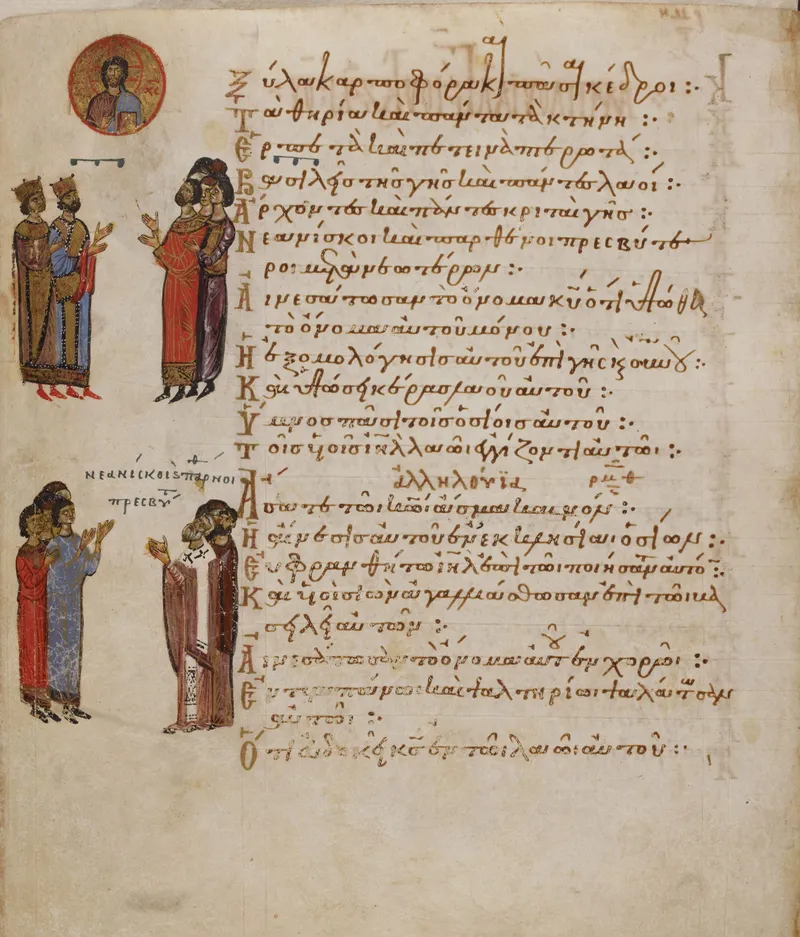
Psalm 148 is the third of the five great Hallelujah psalms that bring the whole book of Psalms to its close - each one opening and shutting with the same shout, Praise ye the LORD. But where another psalm might call a congregation to worship, this one calls the cosmos. Its reach is total. It begins at the very top of creation and works its way down, naming rank after rank of created things and summoning each one by name into a single, universe-wide chorus.
Nothing is too high and nothing too low; nothing too vast and nothing too small to be left out of the song.1
Tap any highlighted phrase to jump to the commentary that unpacks it.
Psalm 148:1-6Praise Him from the Heavens
1Praise ye the LORD. Praise ye the LORD from the heavens: praise him in the heights. 2Praise ye him, all his angels: praise ye him, all his hosts. 3Praise ye him, sun and moon: praise him, all ye stars of light. 4Praise him, ye heavens of heavens, and ye waters that be above the heavens. 5Let them praise the name of the LORD: for he commanded, and they were created. 6He hath also stablished them for ever and ever: he hath made a decree which shall not pass.
The psalm begins where God's glory is most openly displayed: Praise ye the LORD from the heavens: praise him in the heights. It does not start with the worshipper and his feelings, but with the summons going out across the whole of creation, from the top down. The heavens are called first - not because God needs the praise of the sky, but because the sky has, from the beginning, been the great wordless witness to His glory.
The poet is not inventing a strange idea; he is calling creation to be what it already is. Everything that exists points beyond itself to the One who made it, and the psalm simply gives that silent testimony a voice and a command: praise him. Notice the movement built into the opening verses, and held all the way through the psalm - it begins in the heights and will descend, step by step, to the deeps of the sea and the smallest child on earth.
The praise of God is not confined to one altitude. It fills the whole of things, from the highest reach of heaven down to the dust, and the psalm means to leave nothing out of the chorus.
The first ranks summoned by name are the unseen ones: Praise ye him, all his angels: praise ye him, all his hosts. Before the sun is named, before a single earthly creature is called, the psalm turns to the armies of heaven - the messengers and servants who stand in God's presence and do His bidding. They are the beings nearest to His throne, the ones who behold His glory without interruption, and so it is fitting that they lead the song.
The word hosts pictures an ordered multitude, a vast assembly arrayed like an army under its commander - not a disorganised crowd but a disciplined company, every rank in its place. There is a quiet lesson in the order of the verses. The praise of God does not begin with us. It is already underway in heaven, ceaseless and full, long before we open our mouths; and when we praise, we are not starting something but joining something - adding our small voices to a chorus that the hosts of heaven have been singing all along.
After summoning the heavens, the hosts, the sun and moon and stars, and even the waters that be above the heavens, the psalm pauses to give the reason for the whole summons: Let them praise the name of the LORD: for he commanded, and they were created (v. 5). Two things are worth weighing here. First, it is the name of the LORD that is to be praised - not merely His power or His size, but His revealed character, the name by which He has made Himself known.
To praise the name is to honour the One who bears it for who He has shown Himself to be. Second, notice the ground of the call: he commanded, and they were created. The reason the stars must praise is not that praising is pleasant but that they owe their very existence to His word. He spoke, and they came to be. The duty to praise flows straight from the fact of being made: a creature that exists only because God called it into being is, by that very fact, bound to honour the One who called.
The praise asked of the heavens is not an arbitrary demand; it is the only fitting response of the made thing to its Maker.
The heavenly half of the psalm closes with a word about permanence: He hath also stablished them for ever and ever: he hath made a decree which shall not pass (v. 6). The same God who commanded the heavens into being also stablished them - set them firm, gave them their fixed places and faithful courses. The sun keeps its rising, the moon its seasons, the stars their appointed paths, not by chance but because God has fixed them by a decree which shall not pass. There is deep comfort in that old word stablished. The order we see overhead is not fragile or arbitrary; it rests on the settled command of God, as reliable as His own faithfulness.
And there is a quiet logic in pairing this with the call to praise. Creation does not honour its Maker only by existing, but by keeping faith with the decree He laid down - the stars praise Him precisely by holding their courses, the seasons by turning as He ordained. The faithfulness of the heavens is itself a kind of worship: a wordless, unbroken obedience to the One whose word holds them in place. What God establishes, He establishes for ever; His decree does not wear out or pass away.
Psalm 148:7-12Praise Him from the Earth
7Praise the LORD from the earth, ye dragons, and all deeps: 8Fire, and hail; snow, and vapours; stormy wind fulfilling his word: 9Mountains, and all hills; fruitful trees, and all cedars: 10Beasts, and all cattle; creeping things, and flying fowl: 11Kings of the earth, and all people; princes, and all judges of the earth: 12Both young men, and maidens; old men, and children:
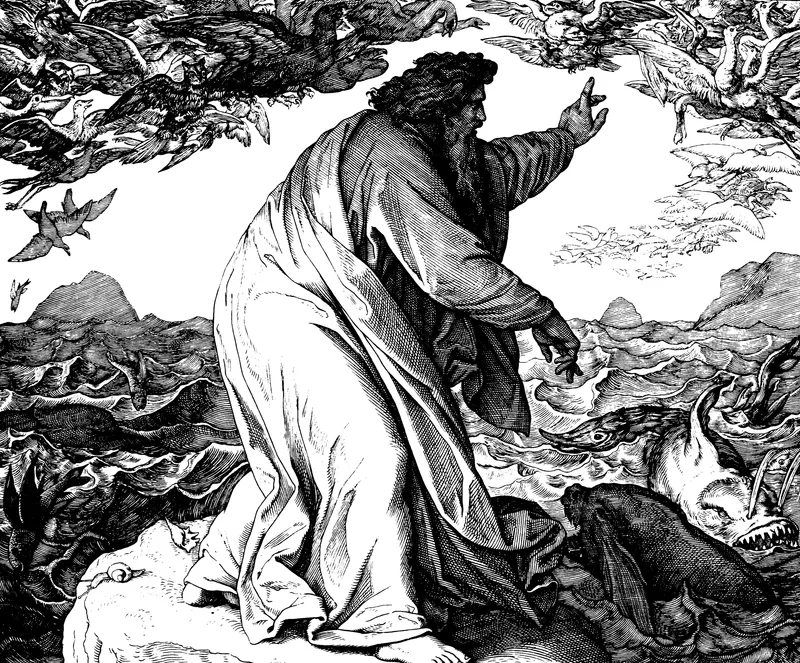
The psalm now turns from the heights to the depths: Praise the LORD from the earth, ye dragons, and all deeps. The second great choir begins at the bottom - in the sea, with the dragons and the deeps. The word rendered dragons names the great creatures of the sea, the largest and strangest things that move in the waters; the deeps are the dark, fathomless places of the ocean that the ancient world regarded with awe and fear, the part of creation that seemed most untamed and remote from human life.1 It is striking that the earthly summons begins precisely here.
The sea and its monsters were, in much ancient thought, the very picture of chaos - the wild edge of the world, the thing most resistant to order. And yet the psalm calls even them to praise. There is no corner of creation so deep, so wild, or so frightening that it stands outside God's rule or falls off the edge of His praise. The God whose decree fixes the stars also holds the deeps; the great creatures that seem to belong to chaos are, in truth, His creatures, summoned by name into the same chorus as the angels above.
Nothing is too wild to be His.
From the deeps the psalm rises to the weather: Fire, and hail; snow, and vapours; stormy wind fulfilling his word (v. 8). Here are the forces that seem most free, most uncontrollable - lightning, hail, snow, the mists, and above all the stormy wind, the gale that levels and scatters and cannot be caught or commanded by any human hand. And yet the psalm says something quietly astonishing about the storm: it is fulfilling his word. The wind that appears to blow wherever it wills is, in fact, doing God's bidding - carrying out His command, accomplishing His purpose.
What looks like raw, blind force is revealed to be obedient service. The storm praises God not by singing but by obeying: it fulfils His word. There is comfort and awe together in that phrase. The weather that can frighten us and undo our plans is never out of God's hand; the same wind that seems chaos to us is, to Him, a servant fulfilling its errand. And there is a pattern here worth catching, for the highest creature on the list - the human being still to come - is called to the very thing the storm already does without resistance: to fulfil the word of God.
Having summoned the deeps, the weather, the mountains, the trees, and every kind of beast and bird, the psalm comes at last to the one creature able to choose: Kings of the earth, and all people; princes, and all judges of the earth: both young men, and maidens; old men, and children (vv. 11-12). And look how the human summons is framed. It begins with kings - the most powerful people on earth, the ones most tempted to imagine they answer to no one - and sets them in the same chorus as everyone else, called to praise the same God.
Earthly authority does not exempt anyone from this; the king and the princes and the judges are creatures too, owing the same praise as the stars and the storms. Then the list opens out to take in everyone the king might overlook: all people, then the whole span of human life - young men, and maidens; old men, and children. No age and no station is left out. The vigorous young and the failing old, the woman and the man, the powerful and the powerless, the child too small to understand - all are summoned alike.
The praise of God is not the special province of the great or the gifted; it is the shared calling of every human being, from the throne to the cradle. Of the whole creation, humankind alone can withhold this praise - and so to humankind alone the call comes as a real summons, asking for a willing voice the stars give without choosing.
Psalm 148:13-14His Name Alone Is Excellent
13Let them praise the name of the LORD: for his name alone is excellent; his glory is above the earth and heaven. 14He also exalteth the horn of his people, the praise of all his saints; even of the children of Israel, a people near unto him. Praise ye the LORD.
Now the whole vast summons gathers to its reason, and the reason is one: Let them praise the name of the LORD: for his name alone is excellent; his glory is above the earth and heaven (v. 13). Every creature from the angels down to the cattle has been called, and here at last is why. It is not that God is lonely for applause, nor that creation's praise adds anything to Him. It is that He alone is worthy of it: his name alone is excellent. The word alone does the heavy lifting.
Among all the names that creatures might lift up - the names of kings, of heroes, of the bright things in the sky that the nations once worshipped - only one name is truly exalted, set high above every rival. And then the reach of His glory is measured against the very creation the psalm has been calling: his glory is above the earth and heaven. The psalm has summoned the heights and the depths, the heavens of heavens and the deeps of the sea - and now it says that the glory of God is higher even than the highest of these, beyond the topmost heaven and the farthest earth.
The whole created order, vast as it is, cannot contain Him; He stands above all of it. That is why the call goes out to every last creature, and why none of them is sufficient by itself: the praise of all creation together is the only fitting answer to a glory that is over all of it.
Research trail
Sources & further study
These references support the historical, linguistic, manuscript, and contextual notes in this chapter. Scripture remains the primary text; external sources are provided so readers can inspect the research directly.
- Psalm 148 - Translators' NotesThe NET Bible's detailed footnotes on Psalm 148 - the structure of its two great calls (from the heavens, vv. 1-6, and from the earth, vv. 7-12), the sense of the waters above the heavens (v. 4) and the dragons of the deep (v. 7), and the meaning of the lifted-up horn in the closing verse.
- Psalm 148 · Hebrew + classical Jewish commentaryThe Hebrew text of Psalm 148 with Rashi, Ibn Ezra, and other classical commentators side by side - useful for the repeated imperative hallelu (the “praise ye” that frames every verse), for shem (vv. 5, 13, the “name” that is praised), and for qeren (v. 14, the “horn” God exalts for His people).
- Psalm 148 ↔ John 1 · Colossians 1 · Luke 1 · Revelation 5Traces the threads tying Psalm 148 to the rest of Scripture - the creation by divine command (v. 5) heard again in all things were made by him (John 1:3) and all things were created by him, and for him (Col. 1:16), the horn exalted for God's people (v. 14) echoed in the horn of salvation of Luke 1:69, and the praise of all creation gathered into the song of Revelation 5:13.
Where this echoes in Scripture
Praise Him from the Heavens
- John 1:3All things were made by him; and without him was not any thing made that was made.The creating command of verse 5 - the Word through whom all things were made.
- Colossians 1:16For by him were all things created, that are in heaven, and that are in earth... all things were created by him, and for him.The heavens and hosts of verses 1-5 named as created by him and for him.
- Psalm 19:1The heavens declare the glory of God; and the firmament sheweth his handywork.The wordless praise of the heavens that this psalm calls by name.
- Genesis 1:14-16And God said, Let there be lights in the firmament... And God made two great lights... he made the stars also.The sun, moon, and stars of verse 3 - created by the command the psalm praises.
- Jeremiah 33:25If my covenant be not with day and night, and if I have not appointed the ordinances of heaven and earth.The fixed decree of verse 6 - the ordinances of heaven that shall not pass.
Praise Him from the Earth
- Psalm 104:25-26So is this great and wide sea... There go the ships: there is that leviathan, whom thou hast made to play therein.The deeps and their great creatures of verse 7 - the sea and its monsters as God's own handiwork.
- Psalm 107:25For he commandeth, and raiseth the stormy wind, which lifteth up the waves thereof.The stormy wind of verse 8 - raised and stilled at God's command, fulfilling His word.
- Isaiah 55:12the mountains and the hills shall break forth before you into singing, and all the trees of the field shall clap their hands.The mountains and trees of verse 9 joining the chorus of creation's praise.
- Philippians 2:10That at the name of Jesus every knee should bow, of things in heaven, and things in earth, and things under the earth.The whole creation - heaven, earth, and the deeps - gathered to one act of worship.
- Psalm 150:6Let every thing that hath breath praise the LORD. Praise ye the LORD.The same all-embracing summons that gathers every creature, named here rank by rank.
His Name Alone Is Excellent
- Revelation 5:13And every creature which is in heaven, and on the earth... Blessing, and honour, and glory, and power, be unto him that sitteth upon the throne, and unto the Lamb.The two choirs of this psalm - heaven and earth - gathered into one boundless song.
- Luke 1:69And hath raised up an horn of salvation for us in the house of his servant David.The exalted horn of verse 14 named as a horn of salvation in David's line.
- Luke 19:40I tell you that, if these should hold their peace, the stones would immediately cry out.The creation that cannot finally keep silent - if people hush, the very stones will praise.
- 1 Samuel 2:1My heart rejoiceth in the LORD, mine horn is exalted in the LORD.Hannah's song of the exalted horn - strength lifted up by God, as in verse 14.
- Deuteronomy 4:7For what nation is there so great, who hath God so nigh unto them.The wonder of verse 14 - a people kept near unto the God whose glory is above all.