Psalms 8
People in this chapter
Psalm 8 is the first psalm in the book addressed entirely to God in praise - no enemies to escape, no sin to confess, just wonder. And it is built with deliberate care: the very first line and the very last line are identical, O LORD our Lord, how excellent is thy name in all the earth! Everything the psalm has to say about the dignity of human beings is set inside that frame, so that man's greatness is never left standing on its own; it is bracketed, top and bottom, by the greatness of God.
We are crowned - but the crown, and the praise, run back to Him.
Tap any highlighted phrase to jump to the commentary that unpacks it.
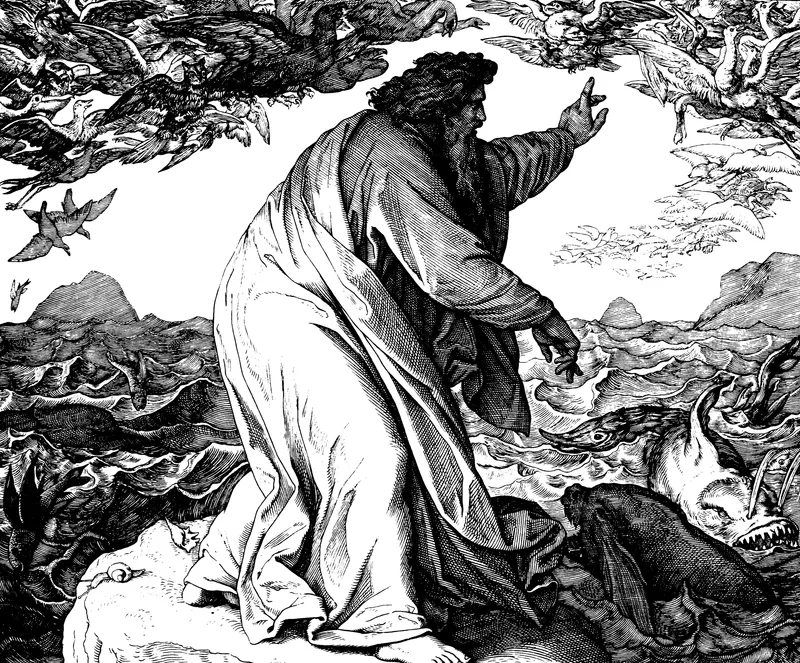
Psalm 8:1-2O LORD Our Lord, How Excellent Is Thy Name
1O LORD, our Lord, how excellent is thy name in all the earth! who hast set thy glory above the heavens. 2Out of the mouth of babes and sucklings hast thou ordained strength because of thine enemies, that thou mightest still the enemy and the avenger.
The psalm opens by saying the same thing twice - O LORD our Lord - and the doubling is not a stutter. The first word is the personal name of God, the covenant name; the second is the title of a master over his household. So the line holds together two truths the rest of the psalm will need: this is the infinite God of all the earth, and He is ours, near, owned and owning.
His name - which in this language means not a label but the whole of who He is, His character made public - is excellent in all the earth; and then, as if the earth were too small a stage, the praise leaps higher still: who hast set thy glory above the heavens. His splendor does not stop at the edge of the sky. The stars themselves are beneath it. From that immense height the psalm will, astonishingly, bend down to look at a human child.
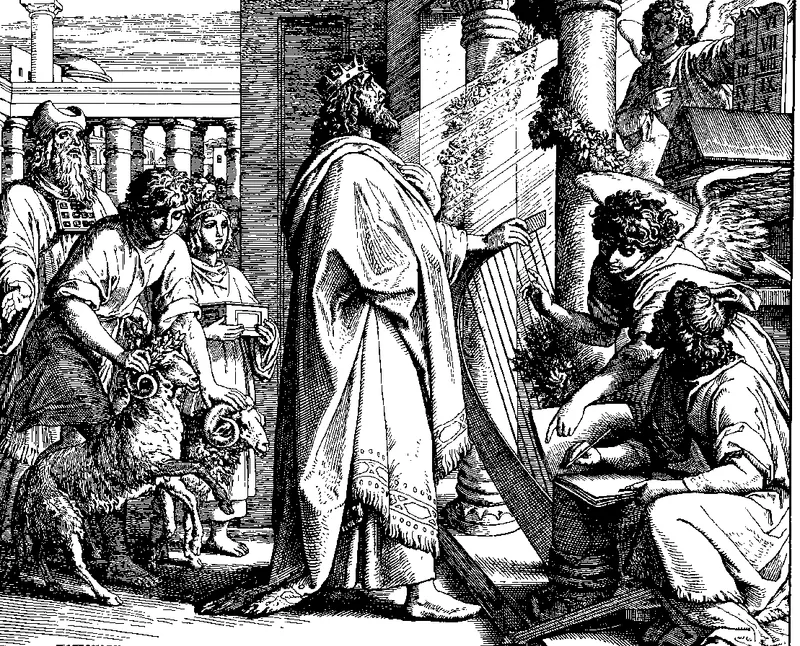
Psalm 8:3-4What Is Man, That Thou Art Mindful of Him?
3When I consider thy heavens, the work of thy fingers, the moon and the stars, which thou hast ordained; 4What is man, that thou art mindful of him? and the son of man, that thou visitest him?
Now we learn where David is standing. He is out under the night sky - when I consider thy heavens - and the word for consider means to look long and hard, to study a thing until it works on you.
What works on him is a sense of scale. He calls the heavens the work of thy fingers, and the phrase is almost playful in its understatement: not God's mighty arm, not even His hand, but His fingers - the moon and the stars arranged as delicately as a craftsman sets the smallest pieces of his work.
If the galaxies are mere fingerwork, what then is a man? The question that rises is not bitter but staggered: in a cosmos this vast, beside lights this old and this far, how is it that the Maker should bend down and think of me? The psalm has set the stars high precisely so that the stooping of God will look as low, and as tender, as it truly is.
Psalm 8:5-9Crowned with Glory and Honour
5For thou hast made him a little lower than the angels, and hast crowned him with glory and honour. 6Thou madest him to have dominion over the works of thy hands; thou hast put all things under his feet: 7All sheep and oxen, yea, and the beasts of the field; 8The fowl of the air, and the fish of the sea, and whatsoever passeth through the paths of the seas. 9O LORD our Lord, how excellent is thy name in all the earth!
Having looked at man and called him small, the psalm now turns and crowns him. Thou hast made him a little lower than the angels, and hast crowned him with glory and honour. The very words used a moment ago of God - glory and honour - are now set on the head of man, not seized but bestowed.
And with the crown comes a kingdom: thou madest him to have dominion over the works of thy hands; thou hast put all things under his feet. This is the language of Eden, where the first humans were told to have dominion over fish and fowl and every living thing (Gen. 1:26-28). Dominion here is not license to ruin but a royal stewardship - to rule creation the way its true King would, as one who must answer for it.
The list that follows - flocks and wild beasts, birds, fish, the deep mysterious creatures that swim the paths of the seas - is the realm entrusted to this small, crowned creature. Man is set, in the order of things, just under heaven and over the earth: a king who is also a subject, a ruler who is himself ruled.
The psalm ends exactly where it began - word for word: O LORD our Lord, how excellent is thy name in all the earth! But we do not return to it unchanged. The first time we read that line we had seen only the heavens; now we have seen the crowning of man and the Son of Man crowned, and the same words land deeper.
This is the psalm's final wisdom: all the dignity it has heaped on humanity is gathered up, in the last breath, and given back to God. Man is great - but the sentence about man's greatness is not allowed to be the last sentence. The frame snaps shut on the Name. Our glory was always on loan from His, and the truest thing a crowned creature can do is to turn and say it: how excellent is thy name.
Research trail
Sources & further study
These references support the historical, linguistic, manuscript, and contextual notes in this chapter. Scripture remains the primary text; external sources are provided so readers can inspect the research directly.
- Psalm 8 - Hebrew & Classical CommentariesThe Hebrew text of Psalm 8 with Rashi, Ibn Ezra, and the classical Jewish commentators side by side - useful for addir (vv. 1, 9, “how majestic”), the verb paqad (v. 4, “visit / attend to”), and the much-discussed elohim of verse 5 (“a little lower than…”).
- Psalm 8 ↔ Matthew 21 · Hebrews 2 · 1 Corinthians 15 · Ephesians 1Traces how the New Testament takes up Psalm 8: the children's praise in the temple (Matt. 21:16), and “all things under his feet” applied to the risen Christ (Heb. 2:6-9; 1 Cor. 15:27; Eph. 1:22).
- Psalm 8 - Translators' NotesThe NET Bible's detailed footnotes on Psalm 8 - including the range of elohim in verse 5 (“God,” “gods,” or “heavenly beings / angels”) and the way the ancient Greek translation, which Hebrews follows, renders it.
Where this echoes in Scripture
O LORD Our Lord, How Excellent Is Thy Name
- Matthew 21:15-16Out of the mouth of babes and sucklings thou hast perfected praise.Jesus quotes Psalm 8:2 to defend the children praising Him in the temple.
- Exodus 15:11Who is like unto thee, O LORD... glorious in holiness, fearful in praises?The same wonder at the incomparable Name (v. 1), sung at the Red Sea.
- 1 Corinthians 1:27God hath chosen the weak things of the world to confound the things which are mighty.Strength ordained out of weakness (v. 2) - the pattern Paul sees in the cross.
What Is Man, That Thou Art Mindful of Him?
- Luke 1:68, 78he hath visited and redeemed his people... the dayspring from on high hath visited us.The visiting of the son of man (v. 4) reaches its height when God comes in the flesh.
- Psalm 144:3LORD, what is man, that thou takest knowledge of him!David asks the same wondering question (v. 4) again, almost word for word.
- Genesis 21:1And the LORD visited Sarah as he had said.The verb paqad (v. 4): God comes near and acts, He does not merely observe.
Crowned with Glory and Honour
- Hebrews 2:6-9But we see Jesus... made a little lower than the angels for the suffering of death, crowned with glory and honour.The psalm's crowned man (vv. 5-6) is seen, at last, in the risen Christ.
- Genesis 1:26-28let them have dominion... over all the earth.The dominion of verse 6 is the mandate first given to humanity in Eden.
- 1 Corinthians 15:27For he hath put all things under his feet.Paul reads “all things under his feet” (v. 6) of the reigning, risen Christ.
- Ephesians 1:22And hath put all things under his feet, and gave him to be the head over all things.The same line again, now describing Christ's exaltation over the church.