Sirach 17
People in this chapter
What is a human being, and why does it matter how we live? Sirach 17 steps back from the close-up counsel of the chapters around it and tells the whole story at once. God created man of the earth and made him after His own image. He gave him a measured span of days, dominion over the beasts and the birds, and a body equipped with a tongue, eyes, ears, and a heart to think and choose.
Then He went further still: He filled the human heart with understanding, showed it good and evil, set His own eye upon it, and gave it the law of life as an inheritance. This is no small creature drifting through a meaningless world. This is a being made in the image of God and entrusted with the knowledge of how to live.
Tap any highlighted phrase to jump to the commentary that unpacks it.
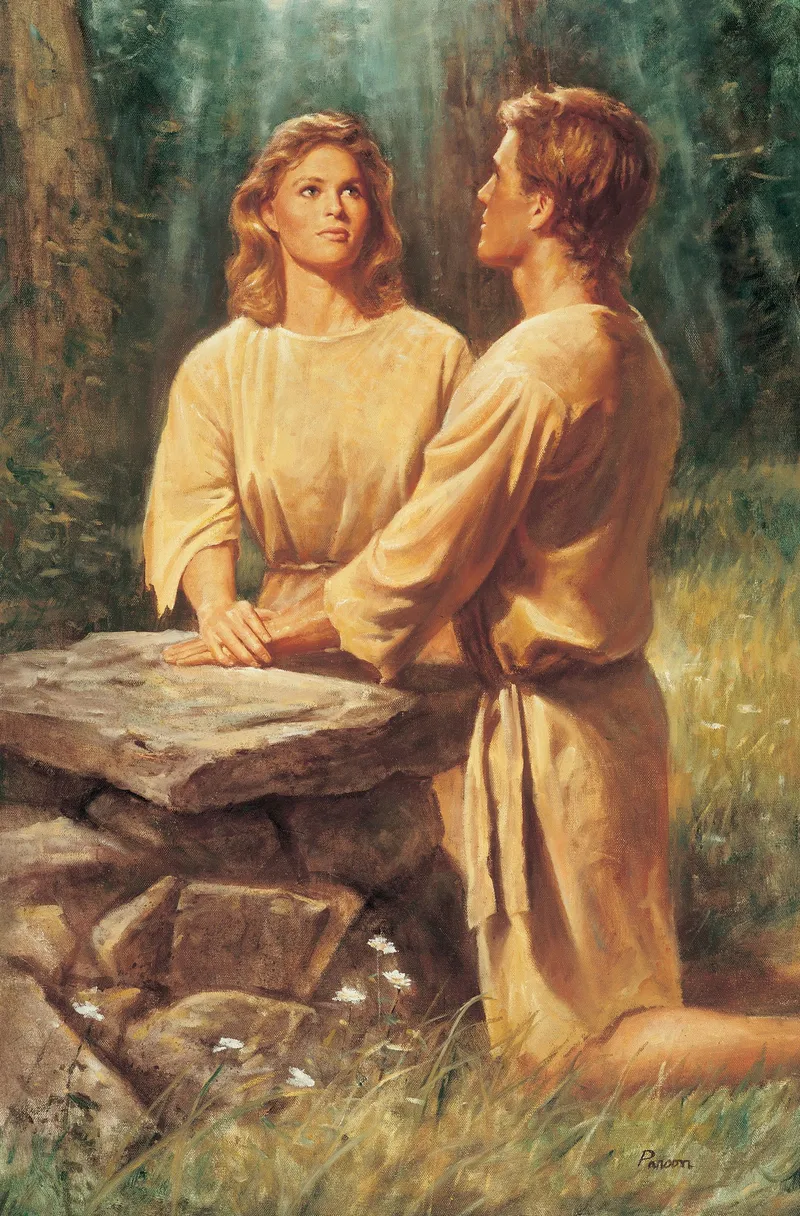
Sirach 17:1-5Made of the Earth, Stamped with His Image
1God created man of the earth, and made him after his own image. 3He gave him the number of his days and time, and gave him power over all things that are upon the earth.
The chapter opens by holding two truths together that the rest of it will never let go. God created man "of the earth," from the dust of the ground, lowly in his origin and bound to the soil he was taken from. And in the same breath, God "made him after his own image," stamping the creature of dust with a likeness to his Maker. Humanity is at once humble and exalted: drawn from the ground, yet bearing the image of God.
This is the very note Genesis sounds when it says God formed man "of the dust of the ground" and made him "in his own image" (Genesis 1:27; 2:7). To understand a human being you must hold both halves at once, the earth and the image, and never let go of either.
God "gave him the number of his days and time," a measured span of life, and "gave him power over all things that are upon the earth." The two gifts belong together. Our days are numbered, which keeps us mindful that life is a trust and not a possession, and within that span we are given real dominion, a genuine charge over the living world. This is the stewardship Genesis describes, the human placed in the garden "to dress it and to keep it" (Genesis 2:15).
The authority is not ownership but trusteeship, exercised under the God who granted it and who counts the days in which it is held.
5He created of him a helpmate like to himself: he gave them counsel, and a tongue, and eyes, and ears, and a heart to devise: and he filled them with the knowledge of understanding.
The chapter lingers over the gifts woven into our very making: a tongue to speak, eyes to see, ears to hear, and "a heart to devise," a mind able to reason, weigh, and choose. Then it crowns the list: God "filled them with the knowledge of understanding." These are not neutral tools. Each one is a capacity for relationship and for wisdom, a way of receiving the world and responding to God within it. The tongue can bless, the eyes can behold His works, the ears can hear His voice, and the heart can choose His way.
To be human is to be equipped, from the first, for a life lived consciously before God.
Sirach 17:6-10Shown Good and Evil, Made to Praise
6He created in them the science of the spirit, he filled their heart with wisdom, and shewed them both good and evil. 7He set his eye upon their hearts to shew them the greatness of his works:
Among all the gifts, this one carries the most weight: God "shewed them both good and evil." Humanity is not left to stumble blindly. We are shown the difference between right and wrong, given an inward knowledge of the two roads and the power to recognise which is which. With that showing comes responsibility, for the creature who can tell good from evil is a creature who can be summoned to choose the good. Sirach states the matter even more plainly elsewhere, that God "hath set before thee fire and water," life and death, "and which thou shalt choose shall be given thee" (Sirach 15:17-18).
The chapter keeps the same conviction here: God shows us both, and the showing makes the choice ours.
God "set his eye upon their hearts," not to spy but to reveal, "to shew them the greatness of his works." The eye of God turned toward the human heart is here an act of grace, opening our inward sight so that we can behold the majesty of what He has made. We were given senses and a mind precisely so that creation would not pass us by unnoticed. The heavens, the seas, the order of the seasons, all of it is set before a creature able to see and to wonder.
God made a world worth marvelling at, and then made beholders who could marvel.
8That they might praise the name which he hath sanctified: and glory in his wondrous acts, that they might declare the glorious things of his works. 10He made an everlasting covenant with them, and he shewed them his justice and judgments.
Now the purpose of it all comes clear. God opened our eyes to His works "that they might praise the name which he hath sanctified," and "declare the glorious things of his works." The seeing is for the sake of praising. We were given the capacity to behold creation so that beholding would rise into worship, so that the marvel in the heart would find its way to the lips. This is why a human being exists in a world so full of wonders: to notice them, to trace them back to their Maker, and to give Him the glory.
Praise is not an interruption of our purpose. It is the purpose, brought to its proper end.
The chapter rises higher still: God "made an everlasting covenant with them, and he shewed them his justice and judgments." Beyond creation and beyond the knowledge of good and evil, God binds Himself to humankind in covenant, entering a lasting relationship and making His ways known. He does not remain a distant Maker who set the world spinning and withdrew. He draws near, commits Himself, and teaches His people what is right. The God who formed us of dust stoops to make a covenant with dust, and that willingness to bind Himself to us is the deep current that runs through the whole of Scripture, all the way to its fulfilment.
Sirach 17:11-15The Law of Life, and the Voice That Said: Beware
9Moreover he gave them instructions, and the law of life for an inheritance. 11And their eye saw the majesty of his glory. and their ears heard his glorious voice, and he said to them: Beware of all iniquity.
God gave His people "the law of life for an inheritance." The phrase is striking. The commandments are called a law of life, not a burden laid on but a treasure handed down, an inheritance meant to lead to life. This is how the wisdom writers consistently see the instruction of God: as the path of the living, given for our flourishing. "He that keepeth the commandment keepeth his own soul," Proverbs says (Proverbs 19:16).
The law is framed here as a gift from a Father to His children, the wisdom of how to live well, passed on so that those who walk in it may find life rather than ruin.
The chapter pictures the giving of the law as an encounter: "their eye saw the majesty of his glory, and their ears heard his glorious voice." This recalls the great moment at the mountain, where the people saw the glory and heard the voice of God (Exodus 24:17; Deuteronomy 4:12). And the first word of that voice, distilled here, is a warning rooted in love: "Beware of all iniquity." God does not warn us away from sin because He is stingy with our pleasure.
He warns because He knows what iniquity does, how it deforms the image we bear and leads away from the life He intends. The caution is the kindness of a Father who has shown us both roads and wants us on the one that leads home.
12And he gave to every one of them commandment concerning his neighbour. 13Their ways are always before him, they are not hidden from his eyes.
Notice where the law turns first: God "gave to every one of them commandment concerning his neighbour." The life God calls us to is not a private spirituality sealed off from other people. It runs straight out into how we treat the person beside us. To bear the image of God is to be bound to those who also bear it, and the law of life is shot through with our duties to one another.
This is the very heart Jesus names when He gathers the commandments into love of God and love of neighbour (Matthew 22:39). The reverence Sirach commends always lands in the world of flesh and blood, in honesty, fairness, and mercy toward the neighbour God has placed within our reach.
Here the chapter pivots toward the summons that will dominate its second half: "Their ways are always before him, they are not hidden from his eyes." The God who gave us the law also sees how we keep it. Nothing in our conduct lies outside His gaze. For the one bent on hiding, this is a sobering word; for the one longing to be known, it is a comfort. The Psalmist makes it his refuge, that God has "searched me, and known me," that He understands our thought afar off (Psalm 139:1-2).
The same searching eye runs through Sirach 17, and it sets up everything that follows: precisely because God sees all our ways, His call to turn and His mercy to the penitent carry such weight.
Sirach 17:19-23His Eyes on Our Ways, and the Way Opened to the Penitent
16And all their works are as the sun in the sight of God: and his eyes are continually upon their ways. 18The alms of a man is as a signet with him, and shall preserve the grace of a man as the apple of the eye:
The chapter intensifies its picture of the seeing God: our works are "as the sun in the sight of God," fully lit, nothing in shadow, and "his eyes are continually upon their ways." There is no off moment in the attention of God, no hour when our conduct slips unnoticed past Him. This is the truth the whole second half of the chapter rests on. It could terrify, and for the unrepentant it is meant to sober.
Yet Sirach is bending it toward hope, because the same unbroken gaze that sees our sin also sees the first stirring of our return, and the God who never looks away is the God who is ready to meet the one who turns.
Into this lit world Sirach sets a quiet image of mercy that does not go unseen: "The alms of a man is as a signet with him," precious to God as a signet ring, guarded "as the apple of the eye." Kindness shown to those in need is not lost in the shuffle of life; it is treasured before God, kept and remembered. The God whose eyes are continually upon our ways notices the cup of water given, the burden lifted, the help quietly offered.
Sirach speaks of this elsewhere too, that mercy to the poor is laid up before the Most High (Sirach 29:12). What we give away in love is the part of our lives God holds most carefully.
20But to the penitent he hath given the way of justice, and he hath strengthened them that were fainting in patience, and hath appointed to them the lot of truth. 23Return to the Lord, and turn away from thy injustice, and greatly hate abomination.
Here the chapter turns from seeing to saving: "to the penitent he hath given the way of justice." For the one who turns back, God does not merely overlook the past; He opens a road, a "way of justice" to walk forward in. He "strengthened them that were fainting," holding up those whose resolve had failed, and gave them "the lot of truth," a portion in what is real and lasting. Repentance, in Sirach, is never met with a shut door.
The God who sees all our ways has prepared a way back, and He lends His own strength to the weak knees of the one who chooses it.
The call grows urgent and concrete: "Return to the Lord, and turn away from thy injustice, and greatly hate abomination." Turning to God is not a vague sentiment; it has a direction. It means turning away from the wrong we have done and coming to hate what God hates, not with a mild distaste but greatly, with the whole heart set against it. True repentance changes our affections, teaching us to love what is good and recoil from what destroys.
Sirach asks not only for a change of behaviour but for a change of desire, so that the heart itself leans, at last, the right way.
Sirach 17:24-29Turn to the Lord, and Forsake Thy Sins
21Turn to the Lord, and forsake thy sins: 22Make thy prayer before the face of the Lord, and offend less. 26Tarry not in the error of the ungodly, give glory before death. Praise perisheth from the dead as nothing.
The chapter reaches its heart in a single clear command: "Turn to the Lord, and forsake thy sins." Everything has been moving toward this. The God who made us in His image, gave us the law of life, and watches all our ways now calls us to come back, and the turning has two motions that belong together. Turn toward the Lord, and turn away from sin; draw near to God, and leave behind what has held you.
Then comes the gentle, realistic counsel: "Make thy prayer before the face of the Lord, and offend less." Sirach does not demand instant perfection. He calls us to come, to pray, and to begin offending less, to start moving in the right direction under the patient gaze of God.
A note of urgency enters: "Tarry not in the error of the ungodly, give glory before death." Do not linger in a wrong path, Sirach pleads, as though there were endless time to turn. Give glory to God now, in the days when you can. There is a window for praise and repentance, and it is the window of this life. The chapter is not morbid; it is honest, pressing the reader to make today count rather than presuming on a tomorrow that may not come.
The proper response to a God who has given us so much is not delay but a turning that does not wait, a glory given while breath remains.
27Give thanks whilst thou art living, whilst thou art alive and in health thou shalt give thanks, and shalt praise God, and shalt glory in his mercies. 28How great is the mercy of the Lord, and his forgiveness to them that turn to him!
The summons turns warm and bright: "Give thanks whilst thou art living... and shalt glory in his mercies." Repentance in Sirach is not a grim duty but a doorway into thanksgiving. The life given back to God becomes a life of praise, glorying in His mercies. This is the destiny the chapter has aimed at from its first verse: the creature made to see and to praise, having turned from sin, now lifts grateful hands while there is breath to lift them.
Gratitude is the native language of a redeemed life, and the time to speak it is now, while we are alive and able.
Then the chapter sets down the line that holds its whole hope: "How great is the mercy of the Lord, and his forgiveness to them that turn to him!" After all the searching eyes and the call to forsake sin, the last word is not judgment but mercy, and mercy that is great. The God who sees everything is the God whose forgiveness reaches as far as His sight. There is no sin too deeply known to be forgiven, no path too far wandered for the way of justice to reach.
The one condition is the turning. To them that turn to Him, the mercy of the Lord is wide enough to cover all the chapter has revealed about who we are and what we have done.
Where this echoes in Scripture
Made of the Earth, Stamped with His Image
- Genesis 1:27So God created man in his own image, in the image of God created he him; male and female created he them.The foundation Sirach is drawing on: humanity made in the image of God.
- Psalm 8:5-6For thou hast made him a little lower than the angels, and hast crowned him with glory and honour. Thou madest him to have dominion over the works of thy hands.The same wonder: a lowly creature crowned with honour and given dominion.
- Colossians 1:15Who is the image of the invisible God, the firstborn of every creature.Christ is the perfect Image after whom we were patterned.
Shown Good and Evil, Made to Praise
- Deuteronomy 30:15See, I have set before thee this day life and good, and death and evil.God sets the two paths before us, the showing of good and evil Sirach describes.
- Psalm 19:1The heavens declare the glory of God; and the firmament sheweth his handywork.The works God opens our eyes to behold, so that we might praise Him.
- Romans 1:20For the invisible things of him from the creation of the world are clearly seen, being understood by the things that are made.Creation set before us so His greatness can be seen and honoured.
The Law of Life, and the Voice That Said: Beware
- Deuteronomy 4:12And the LORD spake unto you out of the midst of the fire: ye heard the voice of the words, but saw no similitude; only ye heard a voice.The voice and glory at the mountain that Sirach recalls in the giving of the law.
- Leviticus 19:18Thou shalt love thy neighbour as thyself: I am the LORD.The commandment concerning the neighbour, at the centre of the law of life.
- Psalm 139:1-3O LORD, thou hast searched me, and known me... and art acquainted with all my ways.Our ways always before Him, exactly as Sirach declares.
His Eyes on Our Ways, and the Way Opened to the Penitent
- Isaiah 55:7Let the wicked forsake his way... and let him return unto the LORD, and he will have mercy upon him.The same summons: turn back, and find the way of mercy opened.
- Proverbs 15:3The eyes of the LORD are in every place, beholding the evil and the good.His eyes continually upon our ways, as Sirach declares.
- Matthew 6:3-4But when thou doest alms... thy Father which seeth in secret himself shall reward thee openly.The alms God treasures and remembers, kept as the apple of His eye.
Turn to the Lord, and Forsake Thy Sins
- Joel 2:13Turn unto the LORD your God: for he is gracious and merciful, slow to anger, and of great kindness.The same call and the same promise: turn, and meet a God of great mercy.
- Luke 15:20But when he was yet a great way off, his father saw him, and had compassion, and ran, and fell on his neck, and kissed him.How great the mercy to them that turn: the father runs to the returning son.
- Mark 1:15The time is fulfilled, and the kingdom of God is at hand: repent ye, and believe the gospel.Jesus opens His ministry with Sirach's own summons to turn.