Sirach 31
Sirach 31 begins where many sleepless nights begin: with money. "Watching for riches consumeth the flesh, and the thought thereof driveth away sleep." The chapter does not sneer at wealth or pretend the poor have it easy. It looks hard at what the love of gold actually does to a person, how many it has dragged down, and how rare it is to find someone rich who has kept his soul intact. That rare man, "found without blemish," who "could have transgressed, and hath not," is held up not with envy but with wonder.
Here is someone whose treasure never owned him, and the chapter says his reward is glory that lasts.
Tap any highlighted phrase to jump to the commentary that unpacks it.
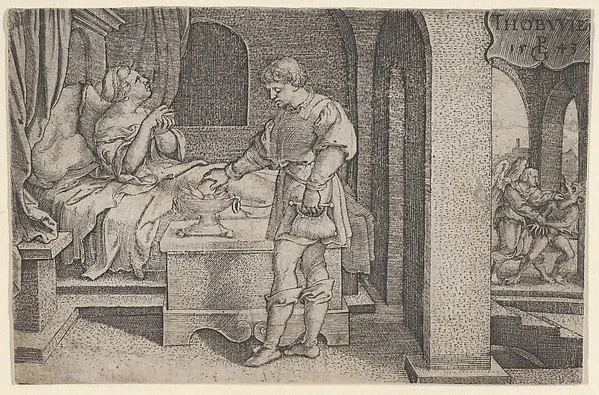
Sirach 31:1-5Watching for Riches Drives Away Sleep
1Watching for riches consumeth the flesh, and the thought thereof driveth away sleep. 2The thinking beforehand turneth away the understanding, and a grievous sickness maketh the soul sober.
The chapter opens not with a sermon against wealth but with a portrait of what wealth does to the one who hoards it: it wears the body down and steals sleep. The Douay calls it "watching for riches," the restless vigilance of a mind that cannot let go, calculating in the dark while others rest. There is a bitter irony here that the whole book loves to expose. The thing pursued to make life secure is the very thing that makes life anxious.
The rich man lies awake guarding what he has, while the gift of sleep, which money cannot buy, slips away from him.
3The rich man hath laboured in gathering riches together, and when he resteth he shall be filled with his goods. 4The poor man hath laboured in his low way of life, and in the end he is still poor.
With unflinching honesty the chapter sets the two side by side. The rich man labors and is filled; the poor man labors and remains poor. Sirach does not paper over the hardness of this. It states the plain inequity of the world without rushing to resolve it. What follows will not promise that the poor become rich, nor that riches are evil in themselves. It will instead turn the question inward, away from how much a person has and toward what a person has become. The next verse opens that door.
5He that loveth gold, shall not be justified: and he that followeth after corruption, shall be filled with it.
Here the chapter names its real subject. The danger is never the metal but the love of it. "He that loveth gold, shall not be justified," for the heart that gives itself to gold has bent its worship toward a thing that cannot save. The second line states the law of all desire: a person is filled with what he chases. Pursue corruption and you will have your fill of corruption. The verse stops short of explaining how a soul comes to be set right; it simply warns that the love of gold is no road there.
What it means to be justified, and on what terms, Scripture unfolds across many pages, and the reader is left to weigh it.
Sirach 31:6-11Blessed Is the Rich Man Found Without Blemish
6Many have been brought to fall for gold, and the beauty thereof hath been their ruin. 7Gold is a stumblingblock to them that sacrifice to it: woe to them that eagerly follow after it, and every fool shall perish by it.
The chapter does not deny that gold is beautiful. It grants the attraction and then exposes where the attraction leads: "the beauty thereof hath been their ruin." What dazzles can destroy. The peril of wealth is precisely that it is desirable, that it draws the eye and bends the will before the mind has weighed the cost. Many have fallen, the verse says, not stumbling into something ugly but reaching for something lovely. The warning is sharper for being so honest about the lure.
The image turns devotional and damning at once: gold becomes a "stumblingblock to them that sacrifice to it." To sacrifice is to worship, and the chapter pictures people laying their lives on an altar of gold, only to trip over the very idol they serve. This is the deep folly the wisdom books return to again and again, that a person can pour out everything for what cannot hold them up. The word "woe" lands like a prophet's cry. What is meant to enrich becomes the snare in the path, and the fool perishes on the thing he chased.
8Blessed is the rich man that is found without blemish: and that hath not gone after gold, nor put his trust in money nor in treasures. 9Who is he, and we will praise him? for he hath done wonderful things in his life.
Now the chapter turns from warning to wonder. It does not say "blessed is the poor man," as though wealth itself were guilt. It blesses the rich man who has passed through the fire of riches and come out "without blemish," who has not chased gold or anchored his trust in his treasures. The question in the next line, "Who is he, and we will praise him?" carries real astonishment. Such a person is rare enough that finding him is cause for praise.
To possess much and not be possessed by it, to hold wealth with an open hand, the chapter calls this one of the "wonderful things" a life can do.
10Who hath been tried thereby, and made perfect, he shall have glory everlasting. He that could have transgressed, and hath not transgressed: and could do evil things, and hath not done them: 11Therefore are his goods established in the Lord, and all the church of the saints shall declare his alms.
Wealth, the chapter says, is a trial, a testing fire, and the one who passes through it is "made perfect," brought to completeness. Notice how the test is framed: "He that could have transgressed, and hath not." The blessing belongs not to the person who lacked the chance to do wrong but to the one who had every opportunity and refused it. Real virtue is forged where temptation is genuine. The man with means to sin and the freedom to choose, who chooses well, is the one Sirach honors. His reward is named without hesitation: "glory everlasting."
The portrait closes with the fruit of a wealth rightly held. Because this man trusted the Lord and not his treasures, "his goods are established in the Lord," set on a foundation that does not crumble. And the whole assembly of the faithful, "the church of the saints," tells of his alms, the generosity that flowed from a heart unenslaved to gold. Scripture speaks often and warmly of the giving that springs from such a heart, and Christians have long pondered how deeply such mercy is woven into a life that pleases God.
The chapter sets the picture before us: open hands, an established house, and a name remembered for kindness.
Sirach 31:12-18At a Great Table, Do Not Be the First to Reach
12Art thou set at a great table? be not the first to open thy mouth upon it. 14Remember that a wicked eye is evil. 15What is created more wicked than an eye? therefore shall it weep over all the face when it shall see.
The chapter now leaves the heights of wealth and sits the reader down at a shared meal, and the wisdom becomes wonderfully small and concrete. "Art thou set at a great table? be not the first to open thy mouth upon it." The point is not etiquette for its own sake but the heart that etiquette reveals. The one who lunges first at the food has let appetite lead. Restraint at the table is a daily, low-stakes rehearsal of the self-mastery the whole chapter is teaching.
How a person behaves over a plate of food tells the truth about whether their desires serve them or rule them.
The "wicked eye" was a common way of speaking about greed, the grasping, covetous look that measures everything for itself. Sirach calls it the most dangerous thing about us at a feast: the eye that sees the abundance and wants it all. In the Gospels Jesus uses the same image, calling a generous person one whose "eye is single" and a greedy one whose "eye is evil" (Matthew 6:22-23). The greedy eye, the chapter says, will at last "weep over all the face," for the appetite that grasps everything is never satisfied and ends in grief.
To guard the eye is to guard the soul.
16Stretch not out thy hand first, lest being disgraced with envy thou be put to confusion. 18Judge of the disposition of thy neighbour by thyself.
The counsel grows even more specific: do not be the one whose hand shoots out first. The grasping gesture exposes a grasping heart, and the chapter warns that it brings shame. There is a deep courtesy at work here, an awareness that others are at the table too, and that the one who reaches first treats the meal as though it were his alone. To wait, to let others be served, to take your portion without seizing it, is a small daily death to self that makes room for everyone else.
Here the chapter gives the principle beneath all its table manners, and it is nothing less than a form of the golden rule: "Judge of the disposition of thy neighbour by thyself." Your neighbour is as hungry as you are, wants his share as much as you want yours, feels a slight as keenly as you would. The whole etiquette of the feast flows from this single act of imagination, putting yourself in the other's place.
Centuries later Jesus would gather all such counsel into one line: "all things whatsoever ye would that men should do to you, do ye even so to them" (Matthew 7:12).
Sirach 31:19-31Sound Sleep Belongs to the Moderate
19Use as a frugal man the things that are set before thee: lest if thou eatest much, thou be hated. 20Leave off first, for manners’ sake: and exceed not, lest thou offend.
The wisdom now becomes a quiet rule of life: take what is set before you "as a frugal man," with measure rather than abandon. There is a striking social awareness in the warning that overindulgence makes a person "hated." Gluttony is not pictured as a private failing but as a kind of greed that crowds others out, and people resent it. The companion line is one of the most practical sentences in the book: "Leave off first."
Stop while you still want more. The person who knows when to push the plate away has learned the freedom the whole chapter is after, the freedom of a desire that obeys.
22How sufficient is a little wine for a man well taught, and in sleeping thou shalt not be uneasy with it, and thou shalt feel no pain. 24Sound and wholesome sleep with a moderate man: he shall sleep till morning, and his soul shall be delighted with him.
Notice the phrase "a man well taught." Moderation, in Sirach, is not native to us; it is learned, the fruit of instruction and practice. The well-taught person finds that "a little" is "sufficient," and so he sleeps untroubled and wakes without pain. The chapter is building a deliberate contrast with how it began. There the anxious rich man could not sleep for all his abundance. Here the temperate man sleeps soundly on little. Wisdom, not wealth, is what gives rest.
The reward of restraint is drawn in gentle, almost tender terms: "Sound and wholesome sleep with a moderate man: he shall sleep till morning, and his soul shall be delighted with him." There is a quiet self-friendship in that last phrase. The moderate person wakes glad to be himself, at peace in his own body, not nursing the regrets of excess. This is the everyday harvest of self-control, not grim self-denial but a life that feels good to live in. The chapter commends temperance by showing how pleasant it is.
26Hear me, my son, and despise me not: and in the end thou shalt find my words. 28The lips of many shall bless him that is liberal of his bread, and the testimony of his truth is faithful.
The teacher leans in: "Hear me, my son, and despise me not: and in the end thou shalt find my words." It is the voice of a father who knows that counsel about appetite is easy to wave away in the moment and proved true only later, when the young have lived long enough to see it. "In the end thou shalt find my words" is a humble, confident appeal, not to obey out of fear but to remember, and to discover for oneself that wisdom was right all along.
After all the counsel about restraint at the table, the chapter turns outward to generosity beyond it. "The lips of many shall bless him that is liberal of his bread." The same person who governs his own appetite is free to share with others, and the city that murmurs against the stingy man speaks well of the open-handed one. Restraint and generosity are two sides of one coin here. The one who is not ruled by his own hunger has bread to give away, and his reputation for kindness becomes a "faithful testimony," a true word the whole community can vouch for.
Sirach 31:32-42Wine Was Created to Make the Heart Glad
35Wine was created from the beginning to make men joyful, and not to make them drunk. 36Wine drunken with moderation is the joy of the soul and the heart. 37Sober drinking is health to soul and body.
The chapter ends on wine, and its judgment is balanced and clear-eyed. Wine is not condemned as an evil to be shunned. It is named a good gift, "created from the beginning to make men joyful." That phrase reaches all the way back to the Psalmist's praise of "wine that maketh glad the heart of man" (Psalm 104:15). The good gifts of creation are good, and the chapter refuses to pretend otherwise.
But it adds the boundary in the same breath: "and not to make them drunk." The gift is given for gladness, and excess perverts the very purpose for which it was made.
Held within its measure, wine is "the joy of the soul and the heart," and "health to soul and body." Sirach is doing something careful here. It honors the gift fully, even gladly, without letting that honor become a license. This is the whole posture of the chapter toward every good thing, food, wealth, drink. None of them is the enemy. The enemy is the loss of measure that turns a gift into a master. Received with gratitude and held within bounds, the gift blesses the one who receives it.
30Challenge not them that love wine: for wine hath destroyed very many. 38Wine drunken with excess raiseth quarrels; and wrath, and many ruins. 40The heat of drunkenness is the stumblingblock of the fool, lessening strength and causing wounds.
The other side is stated just as plainly: "wine hath destroyed very many." The chapter does not soften the toll. Excess "raiseth quarrels, and wrath, and many ruins"; it lessens strength and leaves wounds. Notice too the social wisdom of verse 30: do not provoke or goad those who love wine, do not press a drink on someone. There is a care for the weaker brother here, a refusal to lead another into a snare.
The same word, "stumblingblock," that the chapter used of gold now falls on drunkenness. Both are good things, or harmless things, made deadly by a heart without measure.
"The heat of drunkenness is the stumblingblock of the fool." The chapter has now traced the same arc twice, once with gold and once with wine, and the lesson rhymes. What dazzles can destroy; what gladdens can enslave. The fool is the one who cannot stop, who lets the gift overrun its bounds until it trips him and lays him low. Wisdom is not the rejection of God's good gifts but the strength to hold them rightly, to enjoy the wine and keep the soul.
The chapter closes its long meditation by handing the reader that strength as the thing most worth having.
Where this echoes in Scripture
Watching for Riches Drives Away Sleep
- 1 Timothy 6:10For the love of money is the root of all evil: which while some coveted after, they have erred from the faith, and pierced themselves through with many sorrows.Paul names the same root: not money, but the love of it.
- Ecclesiastes 5:12The sleep of a labouring man is sweet... but the abundance of the rich will not suffer him to sleep.The same sleepless rich man, drawn a thousand years apart.
- Matthew 6:24No man can serve two masters... Ye cannot serve God and mammon.Jesus draws the line the love of gold cannot cross.
Blessed Is the Rich Man Found Without Blemish
- 2 Corinthians 8:9For ye know the grace of our Lord Jesus Christ, that, though he was rich, yet for your sakes he became poor, that ye through his poverty might be rich.The truest answer to "Who is he?" - the One who held all and let it go.
- Matthew 6:20-21But lay up for yourselves treasures in heaven... For where your treasure is, there will your heart be also.Jesus relocates the treasure the chapter warns us not to trust.
- Proverbs 11:28He that trusteth in his riches shall fall: but the righteous shall flourish as a branch.The same contrast: trust in treasure falls, the righteous are established.
At a Great Table, Do Not Be the First to Reach
- Philippians 2:3-4Let nothing be done through strife or vainglory... Look not every man on his own things, but every man also on the things of others.The same heart: counting others, not grasping first.
- Luke 14:8-10When thou art bidden... sit not down in the highest room... but... go and sit down in the lowest room.Jesus teaches the same table humility Sirach urges.
- Matthew 7:12Therefore all things whatsoever ye would that men should do to you, do ye even so to them.The golden rule is exactly "judge thy neighbour by thyself."
Sound Sleep Belongs to the Moderate
- Proverbs 23:20-21Be not among winebibbers; among riotous eaters of flesh: For the drunkard and the glutton shall come to poverty.The same pairing of gluttony and drink, and the same warning.
- 1 Corinthians 10:31Whether therefore ye eat, or drink, or whatsoever ye do, do all to the glory of God.Even the table becomes worship when appetite is rightly ordered.
- Proverbs 22:9He that hath a bountiful eye shall be blessed; for he giveth of his bread to the poor.The blessing on the one "liberal of his bread," stated plainly.
Wine Was Created to Make the Heart Glad
- Psalm 104:15And wine that maketh glad the heart of man, and oil to make his face to shine, and bread which strengtheneth man's heart.The source of the chapter's claim: wine is a gift for gladness.
- Ephesians 5:18And be not drunk with wine, wherein is excess; but be filled with the Spirit.Paul draws the same boundary and names the better filling.
- John 2:9-10When the ruler of the feast had tasted the water that was made wine... thou hast kept the good wine until now.Christ blesses the feast and keeps the best for last.