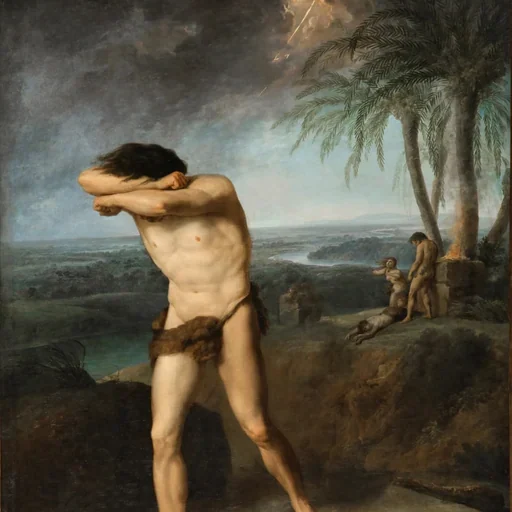
Who was Adam in the Bible?
Adam was the first man, formed by God from the dust and given life by God’s own breath.
The First Man
Primeval
Adam was the first man, formed by God from the dust and given life by God’s own breath.
Follow the reading trailBEYOND THE NAME
God formed Adam from the ground, breathed life into him, and placed him in the garden to tend it and to walk with his Maker. Given one command, he and his wife disobeyed and so brought consequence and exile upon themselves and their descendants. The seer of 2 Esdras 3 looks back to Adam as the source of the burdened heart that has troubled humanity ever since.
Themes in the authored commentary
FOLLOW THE PASSAGES
Selected passages and introductions help you read this person’s story in context.
first man, formed from dust and placed in the garden to tend it
Genesis describes the man formed from the ground, placed in the garden, and given work and a command. The creation of the woman introduces companionship and marriage before the account turns to the rupture of those relationships.
eats the forbidden fruit, answers God’s questions, and leaves the garden
Adam and Eve’s disobedience changes their relationship with God and with one another. The chapter follows their hiding, questioning, judgment, and departure from the garden; it provides the narrative setting for the family stories that follow.
the first name in the genealogy, father of Seth
This genealogy traces a line from Adam through Seth toward Noah. Its repeated pattern of years, children, and death connects individual lives across generations. Read it alongside Genesis 4, which describes a different branch of the early family.
THE PEOPLE AROUND THE PERSON
Relationships follow the source graph. Some are interpretive or uncertain, and individual verse citations are not yet available for every connection.
STUDY & INTERPRETATION
Adam stands at the head of the human family, made in God’s image and entrusted with the care of creation, the man through whom the whole story of humanity begins. In 2 Esdras 3 the seer traces the grief of the nations back to Adam, lamenting that an evil heart entered the world through his transgression and was not taken away. Paul takes up the same figure when he names Adam as the one through whom death entered, setting him in deliberate contrast with the One who brings life. So Adam becomes the first half of Scripture’s great pairing, the man of the dust whose fall awaits the coming of the last Adam, in whom the broken image is restored and life is given again.
From the Learn of Christ person commentary. Read alongside the linked Scripture passages.KEEP SCRIPTURE CLOSE
14 authored chapter guides feature this person. This is guide coverage, not an exhaustive count of biblical mentions.
ASK A BETTER QUESTION
Identity, story, early-life sources, family, and where to read.
Names and spellings in the source: Adam · the Adam
Adam was the first man, formed by God from the dust and given life by God’s own breath.
God formed Adam from the ground, breathed life into him, and placed him in the garden to tend it and to walk with his Maker. Given one command, he and his wife disobeyed and so brought consequence and exile upon themselves and their descendants. The seer of 2 Esdras 3 looks back to Adam as the source of the burdened heart that has troubled humanity ever since.
The individualized passage index associates this Adam record with Genesis, 1 Chronicles, Job, Hosea, Luke, Romans, 1 Corinthians, 1 Timothy, Jude. There are 19 distinct indexed verse references in the 66-book Bible. Browse the book-by-book list below; it separates this identity from other people who share the name. Source assignments and textual identifications can require interpretation.
A separate childhood account for Adam is not provided in our current authored profile sources. Begin with Genesis 2:20 and the passages linked here for the evidence that is available. The first indexed reference to a name is not a birth record. This profile does not establish a birth date, schooling, or childhood events beyond what its sources state.
Adam’s source record lists Eve (spouse), Cain (child), Abel (child), Seth (child). These are source-graph relationships; legal family, uncertain identifications, and ancestral language require the cautions below. Individual verse evidence is not yet retained for every family edge.
Adam stands at the head of the human family, made in God’s image and entrusted with the care of creation, the man through whom the whole story of humanity begins. In 2 Esdras 3 the seer traces the grief of the nations back to Adam, lamenting that an evil heart entered the world through his transgression and was not taken away.
Answers draw on our existing authored biography and linked chapter studies. Where supplied, verse assignments come from the individualized STEP Bible index. Childhood answers distinguish documented events from gaps in the available sources.
FIND THE PERSON IN THE TEXT
19 distinct verse references in the source’s 66-book index. These are indexed name assignments, rather than every indirect allusion to this person. A name may also refer to descendants, a tribe, or a nation; read each passage to distinguish that usage from the individual.
“And Adam gave names to all cattle, and to the fowl of the air, and to every beast of the field; but for Adam there was not found an help meet for him.”
Genesis 2:20 · King James Version
“And Adam lived an hundred and thirty years, and begat a son in his own likeness, after his image; and called his name Seth:”
Genesis 5:3 · King James Version
“Which was the son of Enos, which was the son of Seth, which was the son of Adam, which was the son of God.”
Luke 3:38 · King James Version
“And Enoch also, the seventh from Adam, prophesied of these, saying, Behold, the Lord cometh with ten thousands of his saints,”
Jude 1:14 · King James Version
References are adapted from STEP Bible / Tyndale House TIPNR (CC BY 4.0). Deduplicated, matched to this identity, and checked against the bundled KJV’s verse bounds. Interpretive assignments and translation/versification differences may remain. This index is separate from evidence for individual family relationships.
YOUR OWN OBSERVATIONS
Notes, saved people, and study marks stay in this browser. They do not sync to your account.
KEEP EXPLORING
People featured in the same study guides. Sharing a chapter does not establish a family relationship.