
- Starting price
- Free
- Free tier
- Yes
- Platforms
- Web - Android - Windows - Linux - installable PWA
- Developer
- Bohuslav Pavlyshynets
- Launched
- 2019
- Updated
- Jul 26, 2026
The verdict
Bolls Bible is the best free multi-translation reader most people have never heard of, and its API is the easiest Scripture endpoint on the web to call. Use it as a reader without hesitation. Think hard before shipping a product on it, because the site's whole copyright policy is one sentence on a disclaimer page, and it carries NIV, ESV, NASB and The Message with no licence notice on any of them.
Try Bolls Bible ↗Opens bolls.life
Bolls Bible is a one-developer project out of Khust, in the Zakarpattia region of western Ukraine. The footer credits Bohuslav Pavlyshynets and a copyright range of 2019 to the present, the code sits on GitHub under GPL-3.0, and the funding is a donate page listing a Monobank jar, a PayPal address, five crypto wallets and three IBANs in the developer's own name. No company, ministry, board or grant. The homepage tagline reads "A web app for reading the Bible with full emphasis on the God`s Word only. Sola scriptura", and the product matches it: no devotionals, no plans, no video, no feed.
What it does have is text. The index the site publishes at languages.json returns 146 translations under 31 language headings, 40 of them English. The list runs from Young's Literal and the 1599 Geneva through the modern majors - NIV 1984 and NIV 2011 as separate entries, ESV, NASB 1995, LSB, NLT, CSB, AMP, The Message - and on to Catholic editions including NABRE and the New Jerusalem Bible, Messianic and Jewish texts including the Complete Jewish Bible, and original-language sources including the Leningrad text and the Septuagint.
The reader is genuinely good. It is an Imba and Django single-page app that installs as a PWA, caches translations for offline use, syncs bookmarks and notes across devices behind a free optional account, opens any number of translations in parallel, and hangs Brown-Driver-Briggs, Thayer's and Gesenius lexicon entries off Strong's numbers. Search became semantic in July 2026, using vector similarity by default and lexical matching when match_case or match_whole is set.
The reason to write a review rather than a listing is the API. Bolls publishes a full endpoint reference - chapters, verses, parallel verses, random verse, dictionary lookup, and whole translations as single JSON or ZIP files - with no API key, no registration, no published rate limit and CORS open to any origin. That is unusually generous. It is also unusually bare, because nowhere does anyone state what you are licensed to do with the text you just downloaded.
✓ The good
- 146 translations in 31 language groups, all free - 40 are English, more English versions than most paid study apps carry.
- The API needs no key, no signup and no quota - endpoints are plain GET URLs and CORS is open to any origin, so a chapter request works from a browser console in one line.
- Whole translations download as one file - a single JSON or ZIP at a predictable static URL, and the ESV archive is 2.4 MB including its cross-references.
- No advertising anywhere in the product - no ad slots, no interstitials, no sponsored panels, no email capture and no premium tier, which is not true of the large free Bible sites.
- Real offline reading and cross-device sync at no cost - translations and dictionaries cache locally, and a free account syncs bookmarks, notes, highlights and tags.
- The code is open and inspectable - the whole stack is on GitHub under GPL-3.0, so the reader and the API layer can be self-hosted rather than depended on.
✗ Watch out
- The entire copyright policy is one sentence - the disclaimer page reads, in full, "If you find any copyright infringement, please report the developer, it will be removed as soon as possible", with no per-translation licence notice anywhere.
- There is no terms of service - the privacy policy cites "the Terms of service posted on our Website", but the footer links only Privacy Policy and Disclaimer and /terms/ returns 404.
- The infrastructure is one small server and the developer says so - the API docs warn that scraping the verse endpoints may "cause performance issues" and crash his "single core" machine, priced at 14 euros.
- Bus factor of one - a single maintainer, personal PayPal and IBANs, a personal Telegram as the support channel, no organisation behind any of it.
- The privacy policy describes a different company - dated 18 October 2020 and credited to a policy generator, it discusses "employees, contractors and affiliated organisations", "our blog" and "appropriate advertising".
- No audio, no reading plans, no commentaries - the product is text and lexicons only, so devotional and listening use has to go elsewhere.
Best for
- Developers who need Scripture text in a side project today
- Multilingual readers comparing many translations at once
- Offline and low-bandwidth Bible reading
- Readers who want a Bible site with no advertising
Avoid if
- Commercial products needing a written text licence
- Teams that require an uptime or support commitment
- Listeners who want audio Bible and reading plans
- Organisations with a formal vendor review process
What Bolls Bible is
Bolls Bible is a browser-first Bible reader with a public read API attached. The reading surface loads a translation index, lets you pick from 146 translations across 31 language groups, and renders chapters with optional cross-reference notes. Translations and dictionaries download into the browser for offline reading, which also makes the site installable as a PWA. A free account is optional and exists only to sync bookmarks, notes, highlights and tags; nothing is gated behind it.
Packaged builds exist for Android on Google Play, Windows on the Microsoft Store and Linux on Flathub, but they wrap the same web app, and Google Play reports only 1,000-plus installs against a 4.8 rating from 75 votes. The web is where the product lives. The interface labels the halves of the canon HEBREW-ARAMAIC SCRIPTURES and GREEK SCRIPTURES rather than Old and New Testament, and offers Robert Young's chronological book order as an alternative sort.
The API is the product, and there is no gate on it
Most large Bible sites treat their text as inventory. Bible Gateway lists 240 online Bibles in 78 languages and does not hand them over programmatically. BibleStudyTools has no public API. The NET Bible has one, but its documentation states that use "must comply with the NET Bible Copyright". Bolls goes the other way: one markdown file of docs, every endpoint a plain URL, no key to request, no quota, no terms to accept, and access-control-allow-origin set to a wildcard so browser code calls it directly.
It goes further than access. The documentation steers you away from per-verse fetching and towards bulk download: "If you want to get the whole Bible just download the translation in JSON or ZIP format and use and abuse it on your side however you want." Those files are real and unauthenticated - the ESV archive is 2.4 MB. For a hobby project that is a gift. For anything you intend to sell, "use and abuse" is the developer speaking about his own server load, not a grant of rights in the text, and no document on the site turns it into one.
The translation library, and two different counts of it
The machine-readable index at bolls.life/static/bolls/app/views/languages.json is the authoritative list, and on 26 July 2026 it held 146 translations under 31 language headings. English carries 40, Portuguese 16, Ukrainian and Church Slavonic 12, Spanish 7, Russian 7, German 6, Chinese 6, Hebrew 5, French 5. Each entry exposes four fields only: short_name, full_name, an updated timestamp and an optional right-to-left flag.
The developer's own store listings tell a smaller story. Google Play, the Microsoft Store and Flathub all carry the same line - "Over a hundred translations in 29 languages are available" - two languages and at least forty-odd translations behind what the API returns. Both figures are the vendor's own, and the reader publishes no count at all. The dictionaries index shows the same drift in miniature: it returns three lexicons, Brown-Driver-Briggs with Thayer's, a Russian Strong and Dvoretsky, and Gesenius, while the API reference documents only the first two.
What the site publishes about rights, and what it does not
Read this part carefully before building anything. The site publishes two policy documents, both linked from the settings footer. The Disclaimer is one sentence: "If you find any copyright infringement, please report the developer, it will be removed as soon as possible." The Privacy Policy, effective 18 October 2020, covers cookies and personal data and says nothing about Scripture text. The GPL-3.0 licence on GitHub covers the source code, which says nothing about the content served through it.
So there is no licence page, no permissions page, no attribution requirement and no per-translation copyright line - the translations index has no copyright field at all - behind a library including NIV 1984 and 2011, ESV, NASB 1995, LSB, NLT 2015, CSB 2017, AMP 2015, The Message, NKJV, NABRE and GNT, each a modern in-copyright work with a named rights holder. This review takes no view on the legal position and makes no allegation. It records that the position is not published, and that the disclaimer reads as a takedown offer rather than a grant.
Pricing
Free
Free
Everything: all 146 translations, three lexicons, parallel reading, semantic search, offline caching, an optional account syncing bookmarks and notes, the Android, Windows and Linux builds, and the full API with no key and no quota. There is no paid tier, premium translation or usage billing. Funding is donation only - the donate page lists a Monobank jar marked international, PayPal, SOL, XRP, ETH, USDT and BTC wallets, and USD, EUR and GBP IBANs for transfers to Pavlyshynets Bohuslav in Khust, Ukraine. No suggested amount or funding goal is published.
There is one price and it is zero. No tier, no trial, no premium translation, no per-call API charge, no seat count, no church licence. All 146 translations, three lexicons, offline caching, parallel reading, semantic search and cross-device sync sit in the free product, and so does the entire API.
Funding is donations to an individual. The donate page lists a Monobank jar marked international, PayPal, wallets for SOL, XRP, ETH, USDT and BTC, and behind a "SWIFT TRANSFER" accordion, IBANs for USD, EUR and GBP with the receiver named as Pavlyshynets Bohuslav in Khust. No amount is suggested and no target published, so there is no way to judge from outside how much of the running cost is covered.
The in-app support panel puts it more bluntly than most free projects do: "Donate. This app is not free. There is always cost for hosting and development time..." That sits oddly beside a product free on every surface it ships on, and is best read as a statement about the developer's costs rather than your price. The API docs supply the figure, describing the box as a single core server priced at 14 euros. Read as a monthly rate - an assumption the docs never state - 14 euros x 12 = 168 euros a year.
Because nothing is metered, there is nothing to negotiate. No enterprise plan, no support contract, no SLA, no invoice. For a personal project that removes all friction. For a funded product it removes what procurement needs most, a counterparty who has agreed to something in writing.
Where Bolls Bible falls behind
No published licence for the text it serves. Bible Gateway and the NET Bible both publish permissions pages naming quotation limits and required attribution, and the NET Bible API documentation makes compliance with the NET copyright an explicit condition of use. Bolls publishes a one-sentence takedown offer. If your use case needs a document to point at, this product does not have one.
No terms of service at all, despite the privacy policy citing one. That policy says it operates "together with the Terms of service posted on our Website", yet no such page exists - /terms/ returns 404 and the footer offers only Privacy Policy and Disclaimer. An API with no terms of use is not the same thing as an API with permissive terms of use.
A privacy policy that describes a different business. Generated from a template in October 2020, it refers to "employees, contractors and affiliated organisations", to "our blog", and to cookies used to display "appropriate advertising", and this is a single-developer project with no blog and no ads. Meanwhile the web bundle ships a Sentry error-reporting SDK pointing at an ingest.de.sentry.io endpoint, which the policy never names, while the Google Play Data safety panel declares that no data is shared with third parties.
Version and packaging drift. The live footer reports v3.3.9 dated 15 June 2026, the newest tagged release on GitHub is v3.1.0, and Flathub still distributes 3.3.2. The web app is the maintained surface; the store builds trail it, and Google Play's last update is recorded as 27 April 2025.
Bolls Bible vs. Bible Gateway vs. NET Bible vs. BibleStudyTools vs. OpenBible
On library size Bolls is second of these five and not close to first: Bible Gateway advertises 240 online Bibles in 78 languages against Bolls' 146 in 31. BibleStudyTools, a Salem Media Group property, calls itself the largest free online Bible website and markets "over 100 translations and languages" while its version picker offers "over 30 to choose from". The NET Bible is one translation with an enormous notes apparatus, and OpenBible.info is a cross-reference dataset rather than a reader.
On terms the ordering reverses completely. OpenBible.info licenses its cross-reference data under Creative Commons Attribution 4.0 and hands you the zip. The NET Bible publishes a copyright page granting specific free non-commercial uses in writing and naming the attribution string you must carry. Bible Gateway and BibleStudyTools license their versions from publishers and offer no bulk text access. Bolls offers the most access and the least paper: no licence page, no terms of service, no per-translation notice, one sentence on a disclaimer.
On reading experience Bolls beats Bible Gateway and BibleStudyTools on the thing readers notice, which is that both of those are advertising businesses and Bolls has no ads, no email capture and no upsell. The honest split: read in Bolls, cite from NET or OpenBible when you need a licence, and go to Bible Gateway for audio, plans or a version Bolls lacks.
The bottom line
Bolls Bible is a remarkable piece of solo work - 146 translations, three lexicons, semantic search, offline reading, cross-device sync and a documented public API, free, ad-free and open source, funded by a PayPal address and a Monobank jar. As a reader it beats every ad-supported Bible site on speed. As a foundation for a product it asks you to accept a risk it never describes: modern in-copyright translations, an API inviting you to download and "use and abuse" them, no licence page, no terms of service, and a copyright policy that is an offer to remove things on request. Read it freely. Ship on it only with your eyes open.
Alternatives to Bolls Bible
 Bible GatewayAdvertises 240 online Bibles in 78 languages with audio and reading plans, each version licensed from its publisher. Ad-supported, with a paid Plus tier and no open bulk text API.
 NET BibleOne translation with tens of thousands of translators' notes, plus an API whose documentation makes compliance with the published NET copyright an explicit condition of use.
 OpenBible.infoTopical Bible and cross-reference datasets released under Creative Commons Attribution 4.0 and downloadable as a zip. Not a reader, but the licensing model Bolls lacks.
 BibleStudyToolsSalem Media Group site with commentaries, dictionaries and devotionals alongside the text. Heavily ad-supported, sells an ad-free PLUS subscription, no public API.
 Bible HubFree parallel-translation and interlinear site with lexicons, concordance and multiple commentaries per verse. Deeper on original languages, far worse to read on a phone.
Frequently asked questions
How many translations does Bolls Bible actually have - and why do two numbers circulate?
Two counts are both published by the developer and they disagree. The index at bolls.life/static/bolls/app/views/languages.json returned 146 translations under 31 language headings on 26 July 2026, 40 of them English. The app description on Google Play, the Microsoft Store and Flathub says "Over a hundred translations in 29 languages are available". The API list is what the software reads, so 146 in 31 is the operative figure. The reader itself publishes no count.
Is the API free, and is there a rate limit?
It is free, with no published rate limit, no API key, no registration and no billing. Endpoints are plain GET URLs plus two POST endpoints for multi-verse and parallel requests, and access-control-allow-origin is a wildcard so browser code can call it directly. What the docs publish is a request rather than a limit: do not use get-text or get-chapter to fetch the whole Bible, because it "may cause performance issues" and crash the developer's single core server. Download the translation as JSON or ZIP instead.
What does Bolls Bible say about the copyright of the translations it serves?
One sentence, on a page called Disclaimer, and that is all of it: "If you find any copyright infringement, please report the developer, it will be removed as soon as possible." There is no licence page, no permissions page, no attribution requirement, and no copyright field in the translations index. The GPL-3.0 licence on GitHub applies to the source code, not the Scripture text. Yet the library includes NIV 1984 and 2011, ESV, NASB 1995, LSB, NLT, CSB, AMP, The Message and NABRE, all modern in-copyright works with named rights holders. This review takes no position on the legal question; it records only that no document here grants you rights.
Who runs it and how is it funded?
One person: Bohuslav Pavlyshynets, credited in the footer beside a 2019-to-present copyright line, reachable by email and Telegram, based in Khust in the Zakarpattia region of Ukraine according to both the privacy policy and the donate page bank details. Funding is voluntary donations with no suggested amount - a Monobank jar, PayPal, five crypto wallets, and USD, EUR and GBP IBANs for transfers to him personally. No company, ministry, denomination or grant is named anywhere, and the product carries no advertising.
Are there terms of service?
No, and the gap is self-documented. The privacy policy states that it operates "together with the Terms of service posted on our Website", but no such page is published - /terms/ returns 404 and the footer links only Privacy Policy and Disclaimer. That policy is dated 18 October 2020, credits a policy generator in its own text, and describes a business that does not match the product: "employees, contractors and affiliated organisations", "our blog", and "appropriate advertising".
What is missing compared with the big free Bible sites?
Everything beyond text. No audio Bible, no reading plans, no devotionals, no topical index, no interlinear view, and no commentary beyond the cross-references bundled inside some translations. Offline reading and cross-device sync are both there and free, but Bolls is deliberately narrow: text, parallel reading, search and lexicons.
Sources & further reading
More Bible Reading Websites
 route.bibleA free, open-spec routing layer that turns a Bible reference into one stable link or QR code and lets each reader choose a preferred Bible destination—an elegant solution for slides, print, websites, and AI output, provided publishers test reference parsing, redirects, tracking tags, accessibility, and long-term fallback.
 SefariaA Jewish nonprofit quietly rebuilt the entire rabbinic library online - and serious Christian students of the Hebrew Bible keep showing up to use it.
 BibleLinkA polished way to make Bible references readable without sending visitors away—but its noncommercial license and hosted-service dependency deserve attention before installation.
 fetch(bible)Gracious Tech’s free, open-source Scripture platform combines 1,404 translations, a compressed global CDN, developer libraries, and an embeddable reader—exceptionally generous infrastructure whose translation licenses still require your own diligence.
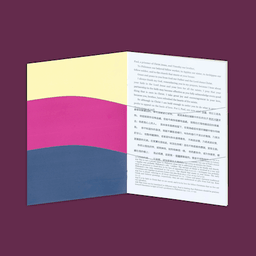 Paper BibleA delightful free generator that turns a chosen Scripture portion into a configurable PDF or folded booklet in hundreds of languages, with presets for reading, study, and notes—but every print project still depends on translation permissions, PDF inspection, and the limits of a remotely generated document.
 Sparks Chinese BibleA rich Chinese-language Bible platform joining many translations, original-language study, courses, media, and community—especially compelling for serious learners who can audit its AI and privacy choices.