- Starting price
- Free
- Free tier
- Yes
- Platforms
- Gospel Library app · Print · Kindle · Audiobook · Web
- Developer
- The Church of Jesus Christ of Latter-day Saints
- Launched
- 1830
- Updated
- May 31, 2026
The verdict
For Latter-day Saints, the Book of Mormon is foundational scripture - read daily, taught weekly, and held alongside the Bible as a second witness of Jesus Christ. It is genuinely free in every modern format, generously distributed in print, and supported by some of the best free study tooling of any scripture on the market. For a curious newcomer, it is a substantial read in King-James-style English that rewards a reading guide; for a member, it is simply home.
Try The Book of Mormon ↗Opens churchofjesuschrist.org
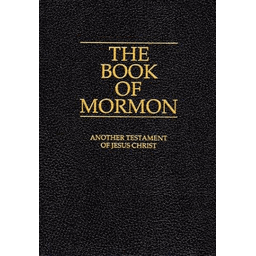
The Book of Mormon is the scripture that gave the Latter-day Saint movement its everyday nickname, and for the millions of Latter-day Saints who read it, it is not a supplement to faith - it is one of its load-bearing walls. First published in 1830, it carries the subtitle “Another Testament of Jesus Christ,” added in 1982, and that subtitle is the whole frame: Latter-day Saints read it as a second scriptural witness of Christ, studied side by side with the Bible rather than in place of it.
In the Latter-day Saint account, the book is a translation. Latter-day Saints believe Joseph Smith translated it “by the gift and power of God” from ancient golden plates, and that it records the dealings of God with covenant peoples who lived anciently in the Americas - principally the Nephites and Lamanites, with an earlier people called the Jaredites. Its narrative spans roughly a thousand years of prophets, migrations, wars, and sermons, and its center - the moment the whole book builds toward - is the appearance of the resurrected Jesus Christ to those peoples, where he teaches, heals, and establishes his church among them.
What you actually hold is a single volume of around 530 pages, organized into named books - 1 Nephi through Moroni - much the way the Bible is organized into Genesis through Revelation. The language deliberately echoes the King James Bible: “it came to pass,” “behold,” “wherefore.” For a member who grew up with it, that cadence is the sound of scripture itself. For a first-time reader, it is a register that takes a few chapters to settle into, and a reading guide helps.
This review treats it the way this site treats every resource - with practical notes on which edition to get, where to read it for free, and what to expect going in. It is sacred text to a large and active community, and it is also, in plain buyer terms, one of the most accessible and best-supported volumes of scripture you can pick up.
✓ The good
- Genuinely free, everywhere - the full text is free in the Gospel Library app and on churchofjesuschrist.org, free in print from missionaries, and free as audio, with no premium tier and no upsell
- Foundational scripture for a large, active tradition - for Latter-day Saints it is read daily, taught in weekly Come Follow Me lessons, and treated as a second witness of Jesus Christ alongside the Bible
- Christ-centered narrative arc - the book builds toward the resurrected Jesus ministering to the peoples it describes, and that central section (3 Nephi) is the part most readers return to
- Exceptionally well-supported for study - footnotes, a topical guide, chapter summaries, and free audio narration ship with the official editions, and independent reader and study editions add maps, context, and modern formatting
- Cheap to own in print - at-cost paperbacks run only around $3-5, and leather and gift editions exist for those who want a keepsake copy
- Memorable, much-loved set pieces - King Benjamin’s address, Alma’s sermon on faith as a seed, the brother of Jared, and Moroni’s closing promise are widely quoted and easy to find
- Reads well aloud - the King-James cadence that can slow a silent reader is an asset in the free audio edition, which many readers use to get through it the first time
✗ Watch out
- The 1830 translation uses King-James-style English - “it came to pass,” “wherefore,” and long archaic sentences can slow modern readers who are new to that register
- Many similarly named figures and places - Nephi, Nephihah, Nephites; Mosiah, Mormon, Moroni, Moronihah - and a non-chronological compiler’s structure mean newcomers can lose the thread without a chart
- Long stretches of war narrative - the middle books (much of Alma) move through extended military history that some readers find harder going than the sermons around them
- Newcomers usually want a study edition or reading guide - the plain official text is complete but sparse on context, so first-time readers often do better with a reader’s edition, the Come Follow Me schedule, or a companion
- It is distinctive to the Restoration tradition - it is not part of the biblical canon used by Catholic, Orthodox, or Protestant Christians, so readers from those backgrounds are encountering an unfamiliar text rather than a familiar one
Best for
- Latter-day Saints of any age reading daily or working through the weekly Come Follow Me curriculum
- Investigators and curious neighbors who want to read what Latter-day Saints actually study from
- Returned missionaries and lifelong members building a long-term annotated study copy
- Readers of scripture and religious literature who want to understand a text central to a major American faith
Avoid if
- You want only the 66-book Protestant (or Catholic/Orthodox) biblical canon and nothing outside it
- You strongly prefer contemporary, plain-English prose and bounce off King-James-style scripture
- You want a short read - this is a 500-plus-page volume, not a single-sitting book
- You want a heavily annotated critical apparatus by default rather than seeking out a dedicated study edition
What The Book of Mormon is
The Book of Mormon: Another Testament of Jesus Christ is a volume of scripture in the Latter-day Saint tradition, first published in 1830 by what is today The Church of Jesus Christ of Latter-day Saints. In the Latter-day Saint account, Joseph Smith translated it by the gift and power of God from ancient golden plates, and it records God’s dealings with covenant peoples - chiefly the Nephites and Lamanites, and the earlier Jaredites - who lived anciently in the Americas. Its narrative centers on the ministry of the resurrected Jesus Christ to those peoples, and Latter-day Saints read it alongside the Bible as scripture, a second witness of Christ.
Physically it is one book of around 530 pages, organized into smaller books from 1 Nephi to Moroni, each divided into chapters and verses like the Bible. As neutral buyer information: it is scripture distinctive to the Restoration tradition and is not part of the biblical canon used by Catholic, Orthodox, or Protestant Christians - a difference in which books a tradition counts as scripture, stated plainly and without any implication of more or less. The official editions include study aids - footnotes, chapter summaries, a topical guide, and audio - and a range of independent reader and study editions exist for those who want maps, historical context, and modern typesetting.
Why Latter-day Saints read the Book of Mormon daily
The single biggest practical difference between the Book of Mormon and most religious books a newcomer might pick up is that, for Latter-day Saints, it is not a book about scripture - it is scripture, and it is woven into the rhythm of ordinary life. Members are encouraged to read from it daily, often individually and again as a family. It anchors the weekly Come Follow Me curriculum on its rotation year. Its closing chapter contains a promise - Moroni’s invitation to ask God whether the book is true - that Latter-day Saints take as a direct, personal call to read and pray about it for themselves.
That changes how the book functions in practice. A member does not approach it the way one approaches a one-time read; they approach it the way a lifelong Bible reader approaches the Psalms or the Gospels - returning, re-marking, memorizing favorite passages, hearing the same chapters in a new season of life. The text is built to support that: short, named books; quotable sermons; a clear narrative spine that runs toward the visit of the resurrected Christ. For the reader inside the tradition, the Book of Mormon is less a book you finish than a book you live in.
A Christ-centered narrative that builds toward 3 Nephi
The Book of Mormon is structured as a long history - roughly a thousand years of prophets, migrations, kings, wars, and preaching among the peoples it describes - but readers quickly notice that the whole arc is built to point somewhere. That somewhere is 3 Nephi, the section in which the resurrected Jesus Christ appears to the people, teaches them a version of the Sermon on the Mount, blesses their children, heals their sick, and establishes his church among them. Latter-day Saints often describe this as the climax and the key of the entire volume, the passage that gives the subtitle - Another Testament of Jesus Christ - its meaning.
Around that center sit the set pieces members quote most: King Benjamin’s farewell address on service and the love of God; Alma’s sermon comparing faith to a seed you plant and tend; Lehi’s teaching that there must be “opposition in all things”; and Moroni’s closing promise. For a first-time reader, knowing the book is heading toward 3 Nephi gives the early chapters a destination. For a longtime member, 3 Nephi is the chapter they reach for when they want the heart of the book in one place.
Free in every format, with study tooling that ships in the box
Access is where the Book of Mormon is unusually generous. The complete text is free in the Gospel Library app and on churchofjesuschrist.org, in dozens of languages, with no premium tier and nothing paywalled. Missionaries will hand or mail you a print copy at no cost. The audio edition - a full narrated reading - is free as well, which matters more than it sounds: the King-James cadence that can slow a silent reader becomes an asset heard aloud, and many readers get through the book the first time by listening. At-cost paperbacks run only around $3-5 for those who want a physical copy to mark up.
Just as notable is how much study support comes built in. The official editions carry footnotes, chapter summaries, a topical guide, and cross-references, all linked inline in the app. On top of that, the Come Follow Me curriculum supplies a free week-by-week reading schedule with lesson helps. For deeper study, independent editions add their own apparatus - Grant Hardy’s Reader’s Edition reformats the text into readable paragraphs with section headings, the Maxwell Institute study edition adds scholarly notes, and Royal Skousen’s Yale critical text reconstructs the earliest available wording. Few volumes of scripture are this well-supported for free.
Editions for every reader, from at-cost paperback to critical text
Because the Book of Mormon has been printed continuously since 1830, the edition landscape is rich. The official Church editions are the standard reference: an at-cost paperback for everyday use (around $3-5), bonded- and genuine-leather gift editions (roughly $25-60, often gilt-edged and thumb-indexed), and the free digital text in Gospel Library that most members actually read from day to day. These all share the same versification and footnoting, so a quotation keys cleanly across them.
For readers who want help with the prose or the history, the independent editions are worth knowing. Grant Hardy’s “The Book of Mormon: A Reader’s Edition” reflows the verses into paragraphs and adds headings and notes, which many newcomers find makes the narrative far easier to follow. The Maxwell Institute study edition layers in scholarship for close reading. Royal Skousen’s “The Earliest Text” (Yale) is the critical edition for those interested in the textual history of the translation itself. None of these is required - the free text is complete - but a first-time reader who wants a reading guide, or a serious student who wants apparatus, has excellent options at every price.
Pricing
Free - Gospel Library & web
Free
The complete text in the Gospel Library app and at churchofjesuschrist.org, with footnotes, chapter summaries, the topical guide, and free audio narration. No account needed to read; a free account syncs highlights and notes.
Free print copy
Free
Missionaries and the Church will mail or hand-deliver a paperback at no cost. The single most common way a new reader gets their first copy.
At-cost paperback
~$3-5
The standard softcover, sold roughly at printing cost through Church distribution. The everyday copy most members keep in a bag or backpack.
Leather / gift edition
~$25-60
Bonded- and genuine-leather editions, often gilt-edged and indexed - the copy given at a baptism, mission farewell, or graduation.
Reader’s / study edition
~$15-40
Independent editions such as Grant Hardy’s Reader’s Edition, the Maxwell Institute study edition, and Royal Skousen’s Yale critical text (The Earliest Text) - modern formatting, notes, and context for close study.
The headline is simple: the Book of Mormon is free, and not in a freemium sense. The full text lives in the Gospel Library app and on churchofjesuschrist.org with nothing gated - footnotes, chapter summaries, the topical guide, and a complete free audio narration are all included. A free Church account adds syncing highlights and notes across devices, but you do not need one to read. Mark the free digital tier as the everyday default; it is the copy most members actually use.
Print is nearly free too. Missionaries and the Church will provide a paperback at no cost, which remains the most common way a new reader receives their first copy. If you would rather just buy one, at-cost paperbacks run only around $3-5 through Church distribution - about the price of a coffee for a 500-plus-page volume.
Gift and keepsake copies move up the scale. Bonded- and genuine-leather editions - often gilt-edged, indexed, and sometimes personalized - typically run somewhere around $25-60 depending on binding, and they are the natural pick for a baptism, a mission farewell, or a graduation. The Kindle text is available as well, generally inexpensive or free.
If you want help reading rather than a nicer binding, put the difference toward an independent study or reader’s edition (roughly $15-40). Grant Hardy’s Reader’s Edition is the friendliest on-ramp for the prose; the Maxwell Institute edition and Skousen’s Yale critical text are for deeper and more technical study. Most readers do not need any of these - the free official text is complete - but for a first-timer who wants context, a reader’s edition is money well spent.
Where The Book of Mormon falls behind
King-James-style English. The 1830 translation deliberately echoes the cadence of the King James Bible - “it came to pass,” “wherefore,” long subordinate clauses - and a reader who has never spent time in that register will need a few chapters to acclimate. It is not a flaw so much as a feature you sign up for, but it is the most common reason a newcomer sets the book down early. Reading the free audio alongside the text, or starting with a reader’s edition, smooths this out considerably.
Easy-to-confuse names. The narrative is populated by figures and places with closely related names - Nephi and Nephihah, Mosiah and Moroni and Moronihah, Mormon and Moron - and the compiler’s structure is not strictly chronological, with one writer abridging and quoting others. First-time readers can lose track of who is speaking and when. A simple character chart, or the chapter summaries built into the official text, keeps the thread.
Stretches of war narrative. The middle of the book - much of Alma - moves through extended military history: campaigns, fortifications, captains, and dissensions. Readers who came for the sermons sometimes find these chapters slower going. They reward patience and reread well once the cast is familiar, but a newcomer should know the terrain shifts from preaching to battlefield and back.
Sparse default context. The plain official text is complete and lightly footnoted, but it does not, by itself, supply the maps, timelines, and historical framing that a modern study Bible-style reader might expect. That gap is exactly what the independent reader and study editions fill. It is a reason many guides point first-time readers toward a reader’s edition or the Come Follow Me schedule rather than the bare text.
The Book of Mormon among the Restoration scriptures
Within the Latter-day Saint canon, the Book of Mormon is one of several volumes of scripture, and it helps to know where it sits. Latter-day Saints read what they call the standard works: the Bible (King James Version in English), the Book of Mormon, the Doctrine and Covenants, and the Pearl of Great Price. The Book of Mormon is the narrative scripture of the four - a continuous history of peoples and prophets - and it is the one a newcomer is almost always handed first.
Different volumes, different jobs. The Doctrine and Covenants is largely a collection of revelations and instructions given in the modern era of the Church, organized by section rather than story. The Pearl of Great Price is a short compilation that includes the Book of Moses, the Book of Abraham, and Joseph Smith’s history. Where those two are mostly doctrinal and documentary, the Book of Mormon is narrative and devotional - it tells a sweeping story and builds toward the ministry of the resurrected Christ, which is why it functions as the everyday reading scripture for most members.
If you are evaluating where to read rather than what, the companion question is the app. Gospel Library is the official, free home for all of these texts together; ScripturePlus is an independent app built specifically around Book of Mormon study with extra media; and Scripture Central is a website hosting scholarship and study resources for the text. The book is the same in each - the question is which reading and study environment fits how you work.
The bottom line
The Book of Mormon is foundational scripture for a large and active faith, and on the practical terms this site cares about it is hard to beat: it is genuinely free in print, app, web, and audio; it is supported by some of the best free study tooling attached to any scripture; and it carries a clear, Christ-centered narrative arc that rewards both a first read and a lifetime of rereading. A newcomer should expect King-James-style English and a big cast of similar names, and would do well to start with a reader’s edition or the audio. For a Latter-day Saint, none of that needs saying - it is simply the book they live in.
Alternatives to The Book of Mormon
 Doctrine and CovenantsThe volume of modern-era revelations in the Latter-day Saint canon - doctrinal and documentary where the Book of Mormon is narrative.
 Pearl of Great PriceA short compilation including the Books of Moses and Abraham and Joseph Smith’s history - the fourth of the LDS standard works.
 Gospel LibraryThe official free app of The Church of Jesus Christ of Latter-day Saints - the easiest place to read the Book of Mormon with footnotes and audio.
 ScripturePlusAn independent study app built around the Book of Mormon, layering maps, media, and commentary onto the text.
Frequently asked questions
What is the Book of Mormon?
It is a volume of scripture in the Latter-day Saint tradition, first published in 1830, subtitled “Another Testament of Jesus Christ.” In the Latter-day Saint account, Joseph Smith translated it by the gift and power of God from ancient golden plates, and it records God’s dealings with covenant peoples - chiefly the Nephites and Lamanites, and the earlier Jaredites - in the ancient Americas, centering on the ministry of the resurrected Jesus Christ among them. Latter-day Saints read it alongside the Bible as scripture.
Is it part of the Bible?
No - it is a separate volume. Latter-day Saints read the Book of Mormon alongside the Bible as a second witness of Christ, not as a book of the Bible. It is scripture distinctive to the Restoration tradition and is not part of the biblical canon used by Catholic, Orthodox, or Protestant Christians. That is simply a difference in which books a tradition counts as scripture.
How much does the Book of Mormon cost?
For most readers, nothing. The complete text is free in the Gospel Library app and at churchofjesuschrist.org, free as audio, and free in print from missionaries. If you would rather buy a copy, at-cost paperbacks run only around $3-5, with leather and gift editions roughly $25-60 and independent reader/study editions around $15-40.
Where should I start reading?
Most guides suggest starting at the beginning with 1 Nephi, since the book builds as a continuous story. Readers who want the heart of the book first sometimes start with 3 Nephi, where the resurrected Jesus Christ appears and teaches. Following the Come Follow Me weekly schedule, or using a reader’s edition, gives a first-time reader a clear path and helpful context.
Is it hard to read?
It takes a little acclimating. The 1830 translation uses King-James-style English - “it came to pass,” “wherefore” - and there are many similarly named figures, so newcomers sometimes find the first chapters slow. The free audio edition helps a lot, since the cadence reads beautifully aloud, and a reader’s edition reformats the text into easier-to-follow paragraphs.
How is it organized and how long is it?
It runs around 530 pages and is divided into named books - 1 Nephi through Moroni - each split into chapters and verses, much like the Bible. The books are not all chronological; later writers abridge and quote earlier records, which is part of why a character chart can help a first read.
Which edition should I get?
For everyday reading, the free Gospel Library text is the default - complete, footnoted, with audio. For a physical copy, the at-cost paperback (~$3-5) is the value pick and leather editions make good gifts. If you want help with the prose or history, Grant Hardy’s Reader’s Edition is the friendliest, the Maxwell Institute edition adds scholarship, and Royal Skousen’s Yale critical text (The Earliest Text) is for textual study.
Sources & further reading
More Latter-day Saint Books
The Doctrine and CovenantsThe volume of modern revelations at the center of Latter-day Saint scripture - 138 sections, two Official Declarations, and the founding document of a still-growing church.The Pearl of Great PriceThe shortest of the four Latter-day Saint standard works - five short texts that hold the First Vision account, the Articles of Faith, and some of the tradition’s most-quoted scripture. The Standard Works (Quad)The four-in-one scripture set most Latter-day Saints carry - King James Bible, Book of Mormon, Doctrine and Covenants, and Pearl of Great Price, bound with one of the most thorough study apparatuses in print.
 Jesus the ChristJames E. Talmage's 1915 study of the life and mission of Jesus Christ - for over a century the standard Latter-day Saint treatment of the Messiah, and now free in the public domain.
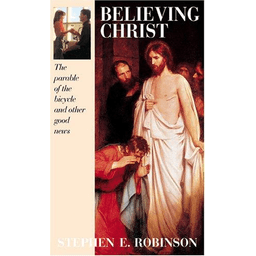 Believing ChristThe short Latter-day Saint book on grace that quietly reframed how a generation of readers understood the Atonement - built around one homely parable about a girl, a bicycle, and a father.
 Come, Follow MeThe official home-centered, church-supported study curriculum of the Church of Jesus Christ of Latter-day Saints - the weekly reading schedule the whole Church follows together, free in Gospel Library and in print.