- Starting price
- Free
- Free tier
- Yes
- Platforms
- Gospel Library app · Print · Kindle · Audiobook · Web
- Developer
- The Church of Jesus Christ of Latter-day Saints
- Launched
- 1851
- Updated
- May 31, 2026
The verdict
The Pearl of Great Price is the smallest of the four Latter-day Saint standard works and, for its size, one of the most quoted. In roughly sixty pages it gathers the Book of Moses, the Book of Abraham, Joseph Smith - Matthew, Joseph Smith - History, and the thirteen Articles of Faith. For Latter-day Saint readers it is foundational scripture; for everyone else it is the shortest door into how the Restoration tradition tells its own founding story.
Try The Pearl of Great Price ↗Opens churchofjesuschrist.org
The Pearl of Great Price is the book most people underestimate by its thickness. It is the slimmest of the four standard works of The Church of Jesus Christ of Latter-day Saints - the Bible, the Book of Mormon, the Doctrine and Covenants, and this - yet pound for pound it carries some of the most-cited passages in the entire Latter-day Saint canon. Inside roughly sixty pages sit the Articles of Faith that members memorize as children, the First Vision account that opens the tradition’s history, and language about the creation, about Enoch, and about premortal life that Latter-day Saint teachers return to constantly.
It did not arrive as a single composition. It is an anthology. Franklin D. Richards, a Church leader serving in Britain, gathered a set of shorter revelations and translations Joseph Smith had produced and published them together in Liverpool in 1851 for the Saints abroad. The collection was revised over the following decades, and in 1880 a general conference of the Church canonized it as scripture. So the Pearl of Great Price is best understood not as one book with one argument but as a curated shelf - five distinct texts bound together because each was treasured.
What you actually get is five components. The Book of Moses is a revealed expansion of the opening chapters of Genesis. The Book of Abraham, a translation Joseph Smith produced in connection with a set of Egyptian papyri, presents an account of Abraham, the creation, and a premortal council. Joseph Smith - Matthew is a revealed rendering of Matthew 24. Joseph Smith - History is Joseph Smith’s first-person narrative of the events the tradition counts as its beginning. And the Articles of Faith are thirteen short statements of belief - the closest thing the Church has to a creed-length summary.
This review is written for two readers. A Latter-day Saint already studies these texts and may want a clean map of the five parts and the best free way to read them with footnotes and audio. A reader outside the tradition may be curious what their Latter-day Saint neighbors mean when they cite “the Articles of Faith” or “the First Vision,” and want a fair, short orientation. There is a real answer for both, and the book’s brevity makes it the most approachable place to start.
✓ The good
- The shortest standard work - roughly sixty pages, readable in an afternoon, which makes it the most approachable entry point into Restoration scripture
- Holds the Articles of Faith - thirteen short statements that Latter-day Saints widely memorize and that serve as a compact summary of the tradition’s beliefs
- Contains Joseph Smith - History - the first-person narrative of the First Vision and the coming forth of the Book of Mormon, the founding account in the tradition’s own words
- The Book of Moses opens Genesis outward - a revealed expansion of the creation and early chapters that teachers reference constantly for its language on Enoch and premortal life
- Completely free in every format that matters - the full text, footnotes, cross-references, and narrated audio are all free in Gospel Library and on the Church’s website
- Beautifully cross-referenced - footnotes link the five texts to the Bible, the Book of Mormon, and the Doctrine and Covenants, so a verse rarely sits in isolation
- Bound into the Triple Combination and the Quad - most members already own it inside a single volume with the other Restoration scriptures
✗ Watch out
- It is brief and assumes context - the five texts presuppose familiarity with the Bible and the wider Latter-day Saint story, so a newcomer reading cold will have questions the book does not pause to answer
- The five components are diverse in genre - a Genesis expansion, an account of Abraham, a Gospel rendering, a personal history, and a list of beliefs do not read as one continuous work, and the jump between them can feel abrupt
- Newcomers benefit from a guide - most readers get far more out of it paired with an institute manual or the Come, Follow Me curriculum than reading it unaided
- Distinctive to the Restoration tradition - these texts are not part of the Catholic, Orthodox, or Protestant Bible, so a reader expecting standard biblical material will find unfamiliar content
- Light on its own navigation - as an anthology, there is no single table-of-contents logic tying the parts together beyond their common origin
Best for
- Latter-day Saints studying the standard works who want a clean map of the five parts
- Anyone wanting the First Vision and the Articles of Faith in their original canonical setting
- Curious readers outside the tradition seeking a short, fair orientation to Restoration scripture
- Seminary, institute, and Come, Follow Me students working through the text on schedule
Avoid if
- You want a long, continuous narrative rather than a short anthology of distinct texts
- You are looking only for the Protestant, Catholic, or Orthodox biblical canon
- You prefer to read scripture with no assumed background and no companion guide
- You want extensive scholarly apparatus and commentary inside the volume itself
What The Pearl of Great Price is
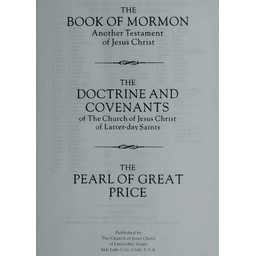
The Pearl of Great Price is a short anthology of five texts that the Church of Jesus Christ of Latter-day Saints accepts as scripture, ranking it alongside the Bible, the Book of Mormon, and the Doctrine and Covenants as one of the four standard works. The components are the Book of Moses (a revealed expansion of early Genesis), the Book of Abraham (a translation of an account of Abraham produced in connection with Egyptian papyri), Joseph Smith - Matthew (a revealed rendering of part of Matthew’s Gospel), Joseph Smith - History (Joseph Smith’s first-person account of the tradition’s founding events), and the Articles of Faith (thirteen short statements of belief). Together they run only about sixty pages.
It exists because the early Saints valued these shorter pieces and wanted them gathered in one place. Franklin D. Richards first compiled and published the collection in Liverpool in 1851; the contents were revised over the next several decades, and a general conference of the Church canonized the book as scripture in 1880. These texts are distinctive to the Restoration tradition and are not part of the Catholic, Orthodox, or Protestant Bible - a matter of canon, not a claim about which writings are richer.
Why Latter-day Saints treasure such a small book
For its length, the Pearl of Great Price carries an outsized share of the passages Latter-day Saints quote in everyday life. The thirteen Articles of Faith are learned by children and recited from memory; the First Vision account in Joseph Smith - History is the narrative every member can summarize; the Book of Moses supplies language about Enoch, the worth of souls, and the work of God that surfaces constantly in talks and lessons. A book you can read in an afternoon ends up doing a remarkable amount of the tradition’s teaching work.
It is also the book that most directly tells the Restoration story in its own voice. Where the Book of Mormon and the Doctrine and Covenants are large and wide-ranging, the Pearl of Great Price is compact and foundational - the place a member points to for how the tradition began and what it most concisely believes. That combination of brevity and weight is why it is often the first standard work handed to someone who asks where to even start. It is short enough to finish and central enough to matter.
Joseph Smith - History: the founding account in the tradition’s own words
Joseph Smith - History is the first-person narrative that opens the Latter-day Saint story. In it Joseph Smith recounts his early religious searching as a young man in upstate New York, the experience the tradition calls the First Vision, and the events leading to the coming forth of the Book of Mormon. It is written as testimony - Joseph telling, in plain narrative, what he says happened to him. For Latter-day Saints these are not background documents; they are scripture that grounds the claims the whole movement rests on.
What makes the text matter beyond the tradition is that it is the primary source members themselves read. When a Latter-day Saint speaks of “the First Vision,” this is the canonical telling they have in mind. Reading it directly is far more accurate than encountering it secondhand, and its brevity means a curious outsider can absorb the founding account in fifteen minutes rather than working through a biography. The tone is personal and unadorned, which is part of why it remains the text most often shared with someone learning about the faith.
The Articles of Faith: thirteen sentences that work like a summary
The Articles of Faith are thirteen short statements drawn from a letter Joseph Smith wrote in 1842, each beginning “We believe.” They move briskly through belief in God, the Father, His Son Jesus Christ, and the Holy Ghost; the Atonement; ordinances such as baptism; the organization of the Church; spiritual gifts; scripture; continuing revelation; the gathering of Israel; and a closing affirmation - borrowing a line from the Apostle Paul - of seeking after things virtuous, lovely, of good report, or praiseworthy. They are the most compact summary of the tradition’s beliefs in its own canon.
Their practical role is enormous. Latter-day Saint children memorize them, missionaries lean on them to introduce the faith, and members cite individual Articles the way other Christians cite a catechism question or a creed line. Because they are short, declarative, and free of technical vocabulary, they are also the single most efficient thing a non-member can read to understand, in the tradition’s own framing, what Latter-day Saints affirm. Few documents this brief carry this much weight in the life of a religious community.
The Book of Moses and the Book of Abraham: scripture that opens the ancient world
The first two and longest components are expansive in scope. The Book of Moses is a revealed enlargement of the opening chapters of Genesis - it retells the creation, the account of Adam and Eve, and the story of Enoch, adding material Latter-day Saints prize for its teaching on the purposes of God and the worth of every soul. The Book of Abraham presents an account of the patriarch Abraham, including his own narration of the creation and a description of a premortal council, and it includes facsimiles - printed reproductions of illustrations - with explanatory notes. Joseph Smith produced it as a translation in connection with a set of Egyptian papyri, and the precise nature of that translation is a subject of ongoing scholarly discussion.
Within the tradition both texts are heavily used. The Book of Moses supplies some of the most-quoted lines in Latter-day Saint devotion, and the Book of Abraham contributes distinctive teaching on premortal existence and the cosmos. For a reader outside the tradition, they are the components that feel least like ordinary biblical material and most like the Restoration’s particular contribution - which is why they reward slow, footnoted reading rather than a quick skim. The cross-references built into the official editions help here, tying each chapter back to related passages across the standard works.
Pricing
Gospel Library / Web
Free
The full text with footnotes, cross-references, study tools, and narrated audio, free in the Gospel Library app and on churchofjesuschrist.org.
Triple Combination
~$15-$30
The Book of Mormon, Doctrine and Covenants, and Pearl of Great Price bound in one volume - how most members own it. Price varies by binding.
Quad (Quadruple Combination)
~$30-$60
All four standard works - the Bible plus the Triple Combination - in a single bound set. Leather editions run higher.
Standalone print / Kindle
~$5-$12
The Pearl of Great Price published on its own in paperback or e-book, for readers who want only this text.
Audiobook
Free - ~$10
Narrated audio is free in Gospel Library; standalone commercial audio editions are also sold for a few dollars.
The Pearl of Great Price is free in every format that counts. The complete text - with footnotes, cross-references, the Book of Abraham facsimiles, study helps, and narrated audio - is available at no cost in the Gospel Library app and on churchofjesuschrist.org. For most readers, members and curious outsiders alike, that free official edition is not a stripped-down version; it is the best version, and it is the one this review recommends starting with.
If you want it in print, you almost never buy it alone. Most Latter-day Saints own it inside the Triple Combination - the Book of Mormon, Doctrine and Covenants, and Pearl of Great Price in one volume - which runs roughly $15 to $30 depending on binding, or inside the Quad, which adds the Bible for a complete four-standard-works set at around $30 to $60. Leather and premium bindings cost more and are common gifts for baptisms, missions, and graduations.
Standalone editions do exist. A paperback or Kindle copy of just the Pearl of Great Price runs only a few dollars, reasonable if you want this text on its own shelf, and commercial audiobook editions sell for a handful of dollars - though the free Gospel Library narration covers the same ground at no cost. As of writing these figures are approximate, since bindings, sellers, and editions vary.
The bottom line on price is simple: there is no paywall on the scripture itself. You pay only for paper, leather, or a particular commercial recording. The balanced default for almost everyone is the free official app, with a printed Triple Combination if you prefer reading on paper or want the version most members carry to church.
Where The Pearl of Great Price falls behind
Brevity that assumes context. At roughly sixty pages the Pearl of Great Price does not pause to orient a newcomer. It presupposes familiarity with the Bible and with the wider Latter-day Saint story, so a reader arriving cold will meet names, events, and ideas the text does not stop to explain. That is a feature for members and a hurdle for first-timers - worth knowing going in rather than discovering halfway through.
Diversity of genre across the five parts. A revealed expansion of Genesis, an account of Abraham, a rendering of part of Matthew, a personal history, and a list of beliefs are five very different kinds of writing. They were gathered for their value, not for narrative flow, so moving from one to the next can feel like changing books rather than turning a page. Readers expecting a single continuous work should reset that expectation.
Better with a guide than without one. Most readers get substantially more from the text paired with an institute manual, a seminary lesson, or the Come, Follow Me schedule than reading it unaided. The official editions are richly cross-referenced, but they are scripture, not commentary - the explanatory scaffolding lives in the Church’s study resources, which are free but separate.
Distinctive to one tradition’s canon. These texts are not part of the Catholic, Orthodox, or Protestant Bible, so a reader expecting familiar biblical material will encounter content unique to the Restoration tradition. That is a fact of canon rather than a shortcoming, but it shapes who the book is for and what to expect.
The Pearl of Great Price vs. the Book of Mormon vs. the Doctrine and Covenants
These three make up the distinctively Restoration portion of the Latter-day Saint canon - the standard works beyond the Bible - and they do different jobs. The Book of Mormon is the large narrative scripture, a centuries-spanning account that the tradition presents as a companion witness to the Bible and the text members read most. The Doctrine and Covenants is a collection of revelations and declarations addressing the organization, governance, and ongoing direction of the Church. The Pearl of Great Price is the short anthology - five compact texts that hold the founding history, the Articles of Faith, and key revealed expansions of ancient scripture.
Different strengths. The Book of Mormon is the deepest and longest read and the natural center of personal study. The Doctrine and Covenants is the most administrative and forward-looking, the place for how the Church understands its own structure and mission. The Pearl of Great Price is the most concentrated - the fastest to read and, for its size, the densest with quoted and memorized material. If you want to understand the Restoration story and its briefest statement of belief, start with the Pearl of Great Price; if you want the tradition’s central narrative scripture, read the Book of Mormon.
All three are studied together by Latter-day Saints, most often inside a single Triple Combination and on the same weekly Come, Follow Me schedule, with footnotes that constantly cross-link the four standard works. A reader outside the tradition who wants the shortest fair orientation will find the Pearl of Great Price the most efficient of the three, simply because it is the smallest.
The bottom line
The Pearl of Great Price punches far above its sixty pages. It is the shortest of the four Latter-day Saint standard works and, for its size, the most quoted - the home of the Articles of Faith, the First Vision account, and revealed expansions of Genesis and the story of Abraham. For Latter-day Saint readers it is foundational scripture best studied with the Come, Follow Me schedule and the free Gospel Library tools. For curious readers outside the tradition it is the most approachable door into how the Restoration tells its own story. Either way, the official free edition is the place to begin.
Alternatives to The Pearl of Great Price
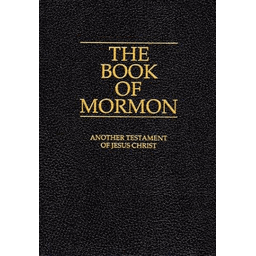 The Book of MormonThe central narrative scripture of the Latter-day Saint canon - the longest of the standard works and the text members study most.
 Doctrine and CovenantsThe collection of revelations and declarations on the organization and ongoing direction of the Church - read alongside the Pearl of Great Price.
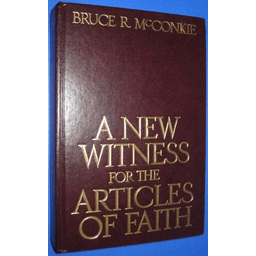 The Articles of Faith (Talmage)James E. Talmage's classic book-length exposition of the thirteen Articles found in the Pearl of Great Price - the deep-dive companion.
 Gospel LibraryThe official free app of The Church of Jesus Christ of Latter-day Saints - the best way to read the Pearl of Great Price with footnotes and audio.
Frequently asked questions
What is in the Pearl of Great Price?
Five short texts: the Book of Moses (a revealed expansion of early Genesis), the Book of Abraham (an account of Abraham, the creation, and a premortal council), Joseph Smith - Matthew (a revealed rendering of part of Matthew’s Gospel), Joseph Smith - History (Joseph Smith’s first-person account of the tradition’s founding), and the Articles of Faith (thirteen short statements of belief). The whole book runs only about sixty pages.
Why is it called the Pearl of Great Price?
The title comes from Jesus’s parable in Matthew 13 about a merchant who finds one pearl of great price and sells everything to buy it. The name reflects how the early Saints regarded these gathered texts - small in size but greatly treasured. Franklin D. Richards first published the collection under this title in 1851.
Is the Pearl of Great Price part of the Bible?
No. It is one of the four standard works of The Church of Jesus Christ of Latter-day Saints, alongside the Bible, the Book of Mormon, and the Doctrine and Covenants. Its texts are distinctive to the Restoration tradition and are not part of the Catholic, Orthodox, or Protestant Bible - a matter of canon rather than a claim about which writings are richer.
What are the Articles of Faith?
They are thirteen short statements of Latter-day Saint belief, each beginning “We believe,” drawn from a letter Joseph Smith wrote in 1842. They cover God, Jesus Christ, the Holy Ghost, the Atonement, ordinances, Church organization, scripture, continuing revelation, and more. Latter-day Saints widely memorize them, and they serve as the most compact summary of the tradition’s beliefs.
Where can I read the Pearl of Great Price for free?
The complete text - with footnotes, cross-references, the Book of Abraham facsimiles, study helps, and narrated audio - is free in the Gospel Library app and on churchofjesuschrist.org. For most readers the free official edition is also the best edition, so it is the natural place to start.
How long does it take to read?
It is the shortest of the four standard works, around sixty pages, and a focused reader can get through it in an afternoon. Most readers, however, get more out of it spread over time and paired with a study guide such as the Come, Follow Me curriculum or an institute manual, since the texts assume some background.
What is the Book of Abraham?
It is one of the five components, presenting an account of the patriarch Abraham - including his narration of the creation and a description of a premortal council - along with facsimiles and explanatory notes. Joseph Smith produced it as a translation in connection with a set of Egyptian papyri, and the precise nature of that translation is a subject of ongoing scholarly discussion. Within the tradition it is accepted as scripture and is a source of distinctive teaching on premortal life.
Sources & further reading
More Latter-day Saint Books
The Doctrine and CovenantsThe volume of modern revelations at the center of Latter-day Saint scripture - 138 sections, two Official Declarations, and the founding document of a still-growing church. The Standard Works (Quad)The four-in-one scripture set most Latter-day Saints carry - King James Bible, Book of Mormon, Doctrine and Covenants, and Pearl of Great Price, bound with one of the most thorough study apparatuses in print.
 Jesus the ChristJames E. Talmage's 1915 study of the life and mission of Jesus Christ - for over a century the standard Latter-day Saint treatment of the Messiah, and now free in the public domain.
 Believing ChristThe short Latter-day Saint book on grace that quietly reframed how a generation of readers understood the Atonement - built around one homely parable about a girl, a bicycle, and a father.
 Come, Follow MeThe official home-centered, church-supported study curriculum of the Church of Jesus Christ of Latter-day Saints - the weekly reading schedule the whole Church follows together, free in Gospel Library and in print.The Book of Mormon Study GuideA single-volume, verse-by-verse companion that walks a Latter-day Saint reader through the entire Book of Mormon - background, commentary gathered from Church leaders and scholars, maps, and helps, all keyed to the text you read alongside it.