- Starting price
- Free (public domain)
- Free tier
- Yes
- Platforms
- Gospel Library app · Print · Kindle · Audiobook · Web
- Developer
- Deseret Book
- Launched
- 1899
- Updated
- May 31, 2026
The verdict
The Articles of Faith is the classic systematic statement of Latter-day Saint doctrine - a chapter-by-chapter exposition written by an apostle, James E. Talmage, at the assignment of the Church's First Presidency, and organized around the 13 Articles of Faith penned by Joseph Smith. For Latter-day Saint readers it served for generations as a doctrinal textbook and remains a touchstone. For readers outside the tradition it is the single clearest map of how Latter-day Saints define their beliefs, set out in dignified (if formal) 1899 prose. Long, dense, and methodical, but deservedly a classic.
Try The Articles of Faith ↗Opens churchofjesuschrist.org
The Articles of Faith has quietly become one of the most enduring doctrinal works in the Latter-day Saint tradition. Written by James E. Talmage - a trained scientist, university president, and an apostle of The Church of Jesus Christ of Latter-day Saints - and first published in 1899, it set out to do something a narrative life of Christ never attempts: lay out an entire system of belief, doctrine by doctrine, in a single connected volume. For generations it was used as a textbook in the Church's classrooms and seminaries, and it remains a reference readers in the tradition reach for when they want a careful, thorough statement of what Latter-day Saints hold.
The book did not begin as a book. It began as a series of lectures Talmage delivered to a theology class, and the First Presidency of the Church then assigned him to expand and refine those lectures into a comprehensive written exposition. He organized the whole work around the 13 Articles of Faith - the concise statements of belief Joseph Smith first set down in an 1842 letter - treating each Article as the seed of a chapter or group of chapters. The result runs roughly 500 pages depending on edition. It does not skim. It does not gesture at doctrine and move on. It states each principle, defines its terms, and supports it from scripture with a deliberateness that feels almost legal.
What you actually get is a full-length doctrinal treatise that walks, in order, through the great themes the Articles name: the Godhead; faith, repentance, baptism, and the gift of the Holy Ghost; the organization and officers of the Church; spiritual gifts; scripture and continuing revelation; the gathering of Israel and the millennial hope; and the call to honest, virtuous, and benevolent living. Talmage writes in formal, elevated, turn-of-the-century English - closer to a Victorian lecture than a modern paperback - and he footnotes heavily, anchoring each claim in chapter and verse. It is, plainly, a Latter-day Saint apostle's systematic exposition of his faith, written from within that tradition and for readers within it, and it has earned its standing as a classic of that tradition.
✓ The good
- The classic systematic statement of Latter-day Saint doctrine - for generations it has been the standard, most-cited single-volume exposition of the faith's beliefs, written by an apostle at the Church's assignment
- Genuinely comprehensive - it works through the whole architecture of belief the 13 Articles name, defining each doctrine and supporting it from scripture rather than touching on highlights
- Carries unusual doctrinal weight - because Talmage was an apostle writing under assignment from the First Presidency, Latter-day Saint readers treat it as an authoritative exposition, not just one author's opinion
- Built on a clear, memorable scaffold - organizing the book around the 13 Articles of Faith gives it a structure readers already know, so each section has an obvious home
- Heavily sourced and cross-referenced - extensive footnotes tie every point to scripture and to the sources Talmage worked from, which makes it usable as a study reference
- Free for everyone - the full text is public domain and available at no cost through the Gospel Library app, churchofjesuschrist.org, and free e-text editions
- The single clearest window for outsiders - a reader of any background who wants to understand how Latter-day Saints define their beliefs will learn more here than from almost any summary
✗ Watch out
- The 1899 prose is formal and dense - long sentences, elevated diction, and a lecturing cadence that asks more patience than a modern reader is used to giving
- It is long - roughly 500 pages, and the methodical, doctrine-by-doctrine pace means it is a commitment rather than a quick read
- The scholarship reflects its era - Talmage wrote from the historical, scientific, and textual assumptions available at the turn of the twentieth century, and some of that supporting material has been revised by later study
- It teaches from Latter-day Saint doctrine throughout - readers outside the tradition will encounter it as one tradition's systematic statement rather than a neutral survey of Christian belief, and that framing runs through the whole, not optional
- Not a quick reference - there is no concise summary mode, so a reader who wants a fast answer on a single point has to find and read the relevant chapter in full
- No modern study apparatus in the public-domain text - the free editions are the original work, without the charts, sidebars, and updated notes a contemporary study volume would add
Best for
- Latter-day Saints who want the classic, in-depth statement of their doctrine
- Anyone curious how the Latter-day Saint tradition defines its beliefs
- Readers who enjoy a careful, systematic walk through a faith doctrine by doctrine
- Study groups, teachers, and missionaries wanting a thorough, well-sourced reference
Avoid if
- You want a short, modern-prose introduction to Latter-day Saint belief
- You want a tradition-neutral comparative survey of Christian doctrine
- You bounce off formal turn-of-the-century English
- You need a quick-reference summary rather than a full systematic treatment
What The Articles of Faith is
The Articles of Faith is James E. Talmage's systematic exposition of the doctrine of The Church of Jesus Christ of Latter-day Saints, first published in 1899. It grew out of a series of theology lectures Talmage gave and was then expanded, at the assignment of the Church's First Presidency, into a full-length book of roughly 500 pages. It is organized around the 13 Articles of Faith - the concise statements of belief Joseph Smith penned in 1842 - treating each Article as the framework for a chapter or set of chapters that defines the doctrine, traces its terms, and supports it from scripture.
The book is written from within the Latter-day Saint faith and for readers within it. Talmage draws on the Bible, on the additional scripture the tradition holds as canon, and on the historical and theological learning of his day, footnoting heavily throughout. It is a doctrinal treatise rather than a devotional or a comparative survey - the author is an apostle of the Church writing under Church assignment, and the work carries that weight. For generations it functioned as the tradition's standard single-volume statement of belief and was widely used as a course of study in Church classrooms.
Why Latter-day Saint readers still reach for Talmage
Most introductions to a faith are written by a scholar or teacher offering one informed reading among many. The Articles of Faith occupies a different kind of ground inside its tradition. Talmage was an apostle, and the book was produced at the direction of the Church's First Presidency - so Latter-day Saint readers approach it not as a single author's interpretation but as an authoritative, carefully vetted exposition of their doctrine. That institutional standing is rare, and it is the main reason the book has stayed central for well over a century while countless other doctrinal titles came and went.
The other reason is its architecture. By hanging the whole work on the 13 Articles of Faith, Talmage gave readers a structure they already carry in memory - recited, memorized, and printed at the back of the tradition's scriptures. Each Article becomes a doorway into a fuller treatment, so the book reads as both a continuous system and a set of self-contained studies. For a reader who already shares that framework, the result connects the scattered pieces of belief into one ordered whole in a way few resources attempt. It is the volume a teacher reaches for when preparing a lesson, the one a new member is handed to go deep, and the one that shaped how a tradition taught its doctrine for generations.
Built on the 13 Articles of Faith, doctrine by doctrine
The spine of the book is its scaffold. Rather than inventing its own outline, The Articles of Faith takes the 13 statements Joseph Smith set down in 1842 and treats each as the framework for a chapter or group of chapters. The opening sections address the Godhead - the Father, the Son, and the Holy Ghost - and the nature of humanity. The middle chapters work through the first principles and ordinances the Articles name: faith, repentance, baptism, and the gift of the Holy Ghost, followed by the organization of the Church, its officers, and the spiritual gifts. The closing chapters take up scripture and continuing revelation, the gathering of Israel, the millennial hope, and the call to honest and virtuous living that the thirteenth Article frames.
This Article-by-Article design is what makes the book usable as both a continuous read and a reference. A reader can start at the first Article and walk the entire system of belief in order, or open directly to the chapter on, say, baptism or the gifts of the Spirit and find a self-contained, thorough treatment. The deliberate pace - Talmage rarely hurries a doctrine - means the book rewards patience over speed. It is built to be studied across weeks or months, the way it was originally used as a course of study, rather than skimmed in an afternoon.
Definition and scriptural support on every page
Talmage does not assert doctrine and move on; he defines and demonstrates. When he reaches a principle - faith, the Atonement, the authority to administer ordinances, the canon of scripture - he stops to clarify its terms, distinguish it from ideas it might be confused with, and then marshal the scriptural passages the tradition reads as supporting it. The footnotes carry much of this weight, expanding points, reconciling passages, and pointing the reader to chapter and verse. The effect is a study that is constantly building its case, brick by brick, rather than simply stating conclusions.
For a reader inside the tradition, this is the book's core value: it presents Latter-day Saint belief as an ordered, internally connected whole, each doctrine grounded in scripture and tied to the principles around it. For a reader outside the tradition, the same feature is the clearest available map of how Latter-day Saints define their terms and where they locate their doctrine in the text - what they emphasize, how they read particular passages, and where their canon shapes the conclusion. Either way, the careful definition is not an aside. It is the method of the book, and it is present on nearly every page.
Free, complete, and built into Gospel Library
Because the 1899 text is in the public domain, the full book is available to anyone at no cost. The most polished free edition lives inside the Gospel Library app and on churchofjesuschrist.org, where the complete work is searchable, cross-linked to scripture, narrated in audio, and able to sync a reader's highlights and notes across devices. Free public-domain e-text versions - EPUB, plain text, and web pages - also circulate widely, though their formatting quality varies by source. For readers who prefer paper, Deseret Book sells standard print editions, and commercial audiobook recordings exist as well.
This matters because a roughly 500-page doctrinal classic is exactly the kind of book that benefits from digital access. Full-text search turns a dense treatise into a reference you can query in seconds, audio makes a heavy book commutable, and synced annotations make it practical to study over the long haul. The result is unusual for a work this old: the definitive edition is also the free one. A reader can begin The Articles of Faith tonight, on a phone, at no cost, with audio and search included - and only buy a print copy later if they decide they want one on the shelf.
Pricing
Gospel Library / Web (free)
Free
The complete text, free in the Gospel Library app and on churchofjesuschrist.org - searchable, with audio narration and synced highlights.
Free e-text
Free
Public-domain editions (EPUB, plain text, web) circulate widely because the 1899 work is out of copyright. Quality of formatting varies by source.
Paperback
~$15-25
Deseret Book prints standard editions. The copy most readers keep on the shelf for marking up and study.
Hardcover
~$25
A gift-grade bound edition. The natural pick if you are giving it to a student, a missionary, or a new member.
Audiobook
Free-$20
Narrated editions exist; the Gospel Library audio is free, while commercial audiobook recordings are sold separately.
The Articles of Faith is, in its most useful form, free. Because the 1899 text is public domain, the complete book is available at no cost through the Gospel Library app and on churchofjesuschrist.org, where it is searchable, narrated, cross-linked to scripture, and able to sync your highlights - call that the everyday default and, for most readers, the best edition there is.
Free public-domain e-text editions also turn up across the web in EPUB, plain-text, and web formats. They cost nothing and are perfectly readable, but formatting and footnote handling vary from source to source, so the Church's own free edition is usually the cleaner choice if you want the apparatus intact.
For paper, Deseret Book prints the work in paperback (around $15 to $25) and hardcover (around $25). The paperback is the copy most readers mark up; the hardcover is the one you give as a gift to a missionary, a student, or a new member. Audiobook options range from the free Gospel Library narration to commercial recordings sold separately.
Most readers do not need to spend anything. The free digital edition is complete and well-built, and a print copy is a preference - for marking, gifting, or shelf presence - rather than a requirement. Start free; buy paper only if you find you want it in your hands.
Where The Articles of Faith falls behind
Dated prose. Talmage wrote in formal, elevated turn-of-the-century English, and a modern reader will feel it - long periodic sentences, archaic diction, and a lecturing rhythm that asks for patience. None of it is impenetrable, but a reader expecting brisk contemporary paragraphs will need to adjust their pace in the opening chapters.
Length and density. At roughly 500 pages moving methodically through an entire system of doctrine, this is a commitment, not a quick read. There is no abridged mode inside the work itself, so a reader wanting a fast overview of Latter-day Saint belief will find the thoroughness that serious students prize feels like a wall instead.
Period scholarship. Talmage wrote from the historical, scientific, and textual assumptions available in 1899. Much of the doctrinal substance is unaffected, but some of the supporting material drawn from the learning of his day has been revised by later study, and the public-domain editions carry no updated notes flagging where. Readers using it as a reference on those specifics should pair it with more recent work.
A single tradition's frame. The book teaches throughout from Latter-day Saint doctrine and the tradition's full canon, by design and by assignment. For readers within that tradition that is the point; for readers outside it, the book reads as one tradition's systematic statement of belief rather than a neutral or comparative survey, and that framing is woven through the whole rather than confined to a section you can skip.
No modern study extras. The original 1899 text - which is what every free edition reproduces - predates the charts, diagrams, sidebars, and reader aids a contemporary study volume would include. The Gospel Library edition adds search, audio, and scripture links, but the underlying book is the unadorned original.
The Articles of Faith vs. Jesus the Christ vs. modern introductions to the faith
Within Talmage's own work, the natural companion is Jesus the Christ (1915), his comprehensive study of the Savior's life. The two do different jobs. The Articles of Faith is topical - it organizes around doctrines themselves, working through the principles and ordinances of the faith Article by Article. Jesus the Christ is narrative - it follows the life of the Savior episode by episode and draws doctrine out of the story as it goes. A reader who wants the framework of belief reaches for the former; a reader who wants the life of Christ reaches for the latter. Many readers in the tradition keep both.
Different strengths. The Articles of Faith is the most systematic and complete statement of Latter-day Saint doctrine from within the tradition, and its institutional standing - an apostle writing under First Presidency assignment - gives it a weight no modern introduction matches. Newer introductions to the faith are shorter, written in contemporary prose, and easier to start, and they fold in more than a century of additional scholarship; what they lack is Talmage's thoroughness and his settled place in the tradition. If you want the classic, complete exposition, it is The Articles of Faith. If you want a quick, modern on-ramp, a contemporary title will get you moving faster.
For readers outside the Latter-day Saint tradition, the comparison is simpler: The Articles of Faith is the most thorough single book for understanding how Latter-day Saints define their beliefs, while a tradition-neutral or comparative survey of Christian doctrine will give you the broader landscape without a confessional frame. They answer different questions, and which you want depends on what you are trying to learn.
The bottom line
The Articles of Faith has earned its standing as a classic. Written by an apostle at the assignment of the First Presidency and built on the 13 Articles of Faith, it is the Latter-day Saint tradition's definitive single-volume statement of doctrine - systematic, well-sourced, and shaped by generations of use as a textbook. The 1899 prose is formal and the book is long, but those are the costs of its thoroughness, not flaws in it. For a Latter-day Saint reader it is close to essential; for a reader outside the tradition it is the clearest window into how Latter-day Saints define their beliefs. And because the full text is free, the only thing it asks of you is your time.
Alternatives to The Articles of Faith
 Jesus the ChristTalmage's other classic - a comprehensive, chapter-by-chapter study of the life and mission of Jesus Christ, the narrative companion to his doctrinal exposition.
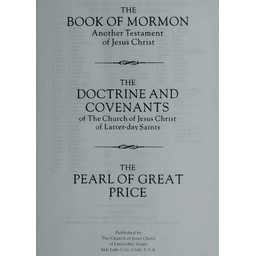 The Pearl of Great PriceThe volume of Latter-day Saint scripture where the 13 Articles of Faith are canonized, alongside the books of Moses and Abraham and Joseph Smith's history.
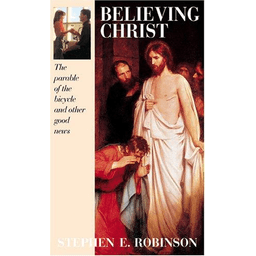 Believing ChristStephen E. Robinson's widely loved book on grace and the Atonement - far shorter and in plain modern prose than Talmage.
 Gospel LibraryThe official Latter-day Saint study app, and the free home of the full Articles of Faith text with search and audio.
Frequently asked questions
Who wrote The Articles of Faith, and when?
James E. Talmage, an apostle of The Church of Jesus Christ of Latter-day Saints, wrote it, and it was first published in 1899. It grew out of a series of theology lectures he gave and was expanded into a full-length book at the assignment of the Church's First Presidency.
What are the 13 Articles of Faith the book is built on?
They are 13 concise statements of Latter-day Saint belief that Joseph Smith first set down in an 1842 letter, covering the Godhead, the first principles and ordinances of the faith, Church organization, spiritual gifts, scripture and continuing revelation, the gathering of Israel, the millennial hope, and the call to honest and virtuous living. Talmage organizes the whole book around them, treating each Article as the framework for a chapter or group of chapters.
How long is the book?
Roughly 500 pages depending on the edition, organized around the 13 Articles of Faith. It is a thorough, methodical treatment rather than a quick read, and it was used for generations as a course of study in the Church.
Is The Articles of Faith free?
Yes. The 1899 text is in the public domain, so the complete book is available at no cost - most cleanly through the Gospel Library app and churchofjesuschrist.org, where it is searchable and narrated, and also through various free public-domain e-text editions. Deseret Book sells print and there are paid audiobook recordings, but you can read the whole thing for free.
Is this a Latter-day Saint book, or a general survey of Christian doctrine?
It is a Latter-day Saint exposition, written by an apostle from within that faith and drawing on the tradition's full canon and doctrine. It is comprehensive and carefully argued, but it teaches from a specific tradition throughout rather than presenting a tradition-neutral or comparative survey, so readers outside that tradition will read it as one tradition's systematic statement of belief.
Can someone who is not a Latter-day Saint get value from it?
Yes. It is arguably the single clearest book for understanding how Latter-day Saints define their beliefs - what they emphasize, how they read particular passages, and where their canon shapes their conclusions. A reader of any background curious about that perspective will learn a great deal, provided they go in understanding the book's confessional frame.
Which edition should I read?
For most readers the free Gospel Library edition is the best - the full text, searchable, with audio and synced highlights, at no cost. Choose a Deseret Book paperback (around $15 to $25) if you like to mark up paper, or the hardcover (around $25) as a gift. Free public-domain e-texts work too, though their formatting varies.
Sources & further reading
More Latter-day Saint Books
 The Doctrine and CovenantsThe volume of modern revelations at the center of Latter-day Saint scripture - 138 sections, two Official Declarations, and the founding document of a still-growing church.The Pearl of Great PriceThe shortest of the four Latter-day Saint standard works - five short texts that hold the First Vision account, the Articles of Faith, and some of the tradition’s most-quoted scripture.
 The Standard Works (Quad)The four-in-one scripture set most Latter-day Saints carry - King James Bible, Book of Mormon, Doctrine and Covenants, and Pearl of Great Price, bound with one of the most thorough study apparatuses in print.Jesus the ChristJames E. Talmage's 1915 study of the life and mission of Jesus Christ - for over a century the standard Latter-day Saint treatment of the Messiah, and now free in the public domain.Believing ChristThe short Latter-day Saint book on grace that quietly reframed how a generation of readers understood the Atonement - built around one homely parable about a girl, a bicycle, and a father.
 Come, Follow MeThe official home-centered, church-supported study curriculum of the Church of Jesus Christ of Latter-day Saints - the weekly reading schedule the whole Church follows together, free in Gospel Library and in print.