
- Starting price
- Free (digital)
- Free tier
- Yes
- Platforms
- Gospel Library app · Print (Quad / Triple) · Web
- Developer
- The Church of Jesus Christ of Latter-day Saints
- Launched
- 2013
- Updated
- May 31, 2026
The verdict
The Standard Works is the bound, cross-referenced scripture set at the center of Latter-day Saint study - four volumes in one cover with footnotes, a Topical Guide, a Bible Dictionary, and chapter headings keyed to read together. Digitally it is free and fully searchable in Gospel Library; in print the decision is mostly about binding, size, and how much you write in the margins. For most members the question is not whether to own it but which edition.
Try The Standard Works (Quad) ↗Opens store.churchofjesuschrist.org
Ask a Latter-day Saint what they bring to church and the answer, for generations, was a single thick book: the Quad. Inside one cover sit four separate volumes of scripture - the King James Bible, the Book of Mormon, the Doctrine and Covenants, and the Pearl of Great Price - bound together and cross-referenced so a footnote in one can send you straight into another. It is the format the tradition built its study habits around, and it is still the book in a lot of laps on Sunday.
This review treats the Standard Works the way a careful reader would treat a study Bible: not as a question of what the texts say, but as a question of edition and format. Which binding holds up. Whether the print set still earns its place now that the same four volumes are free and fully linked on a phone. What the study apparatus actually does. It is not a reading plan. It is not a devotional. It is not an app you check in the morning. It is the curated, footnoted, indexed scripture library the whole tradition organizes around.
The current editions trace to a major project finished decades ago - the LDS edition of the King James Bible appeared in 1979, the Triple Combination in 1981 - and were given a careful update in 2013 that corrected typography, refreshed some study helps, and tightened the cross-references. The texts themselves were not rewritten; the scholarship around them was cleaned up. That 2013 edition is what you buy today, whether you pick it up in simulated leather for the price of a paperback or in personalized genuine leather with your name stamped on the cover.
What makes the set worth a proper review is the apparatus. The footnotes, the cross-references between volumes, the Topical Guide, the Bible Dictionary, the chapter and section headings, the index in the back - these are the parts that turn four books into one study instrument, and they are the parts that differ most from a Protestant study Bible a member might also own. Understanding what they do, and where they stop, is most of what a buyer needs to know.
✓ The good
- Four volumes in one cover, fully cross-referenced - a footnote in the Book of Mormon can send you straight to a verse in Isaiah or a section of the Doctrine and Covenants without closing the book
- The study apparatus is genuinely deep - footnotes, a Topical Guide, a Bible Dictionary, chapter and section headings, and a combined index, all keyed to be used together
- Completely free in digital form - every word of all four volumes, fully linked and searchable, lives in the Gospel Library app at no cost
- Print editions span a wide price range - from simulated-leather sets around the cost of a hardcover up to personalized genuine-leather editions, so the binding decision is yours to make
- The 2013 update tightened typography and cross-references without altering the text - current editions are the most polished the set has ever been
- A durable physical copy is built for marking up - generations of members annotate, tab, and color-code their print set in ways a screen does not invite
- Multiple sizes, from compact to large print, so the same set works for a backpack, a study desk, or a reader who needs bigger type
✗ Watch out
- The full Quad is heavy and large - a complete four-volume set in a sturdy binding is a real brick to carry, which is why many members now leave the print copy at home
- Genuine-leather and personalized editions get pricey - once you add indexing, premium leather, and name stamping you are well past the cost of the text itself, and the digital version is free
- The apparatus is keyed to Latter-day Saint study - the footnotes, Topical Guide, and Bible Dictionary are built for this tradition and differ from the notes in a Protestant or Catholic study Bible (it is a different toolset, not a worse one)
- Print cross-references are static - following a footnote across volumes means flipping pages, where the app does it in a tap, so heavy cross-reference users often prefer digital
- The King James Version is the only Bible translation included - readers who want modern-English phrasing alongside it will reach for a second resource or the app
- No audio, search, or note-sync in the print set - the things a phone does effortlessly are exactly the things paper cannot, so a print-only reader gives those up
Best for
- Latter-day Saints who want one bound set for church, class, and home study
- Readers who annotate heavily and want a durable physical copy to mark up
- Anyone who prefers paper for focused study and the app for everything else
- Gift buyers choosing a leather or personalized edition for a baptism, mission, or milestone
Avoid if
- You do most of your reading on a phone and want search, audio, and synced notes
- You travel light and find a full Quad too heavy to carry regularly
- You want a modern-English Bible translation rather than the King James Version
- You are outside the Latter-day Saint tradition and only need the Bible on its own
What The Standard Works (Quad) is
The Standard Works are the four books of scripture recognized in the Latter-day Saint tradition: the King James Bible, the Book of Mormon, the Doctrine and Covenants, and the Pearl of Great Price. Bound together in one volume they are commonly called the Quadruple Combination, or "Quad." A Triple Combination drops the Bible and binds the other three together, since many members already own a Bible separately. All four are scripture distinctive to the Restoration tradition alongside the King James Bible, and the bound set is the form most members carry.
What you are buying in a print edition is not just the text but the study apparatus the Church publishes with it: footnotes on nearly every verse, cross-references that link the four volumes to one another, a Topical Guide, a Bible Dictionary, chapter and section headings that summarize what follows, and an index. The 1979 Bible and 1981 Triple Combination were updated in 2013 - typography refreshed, helps revised, cross-references tightened - and that edition is the current one in print and in the app.
Why the bound set still matters in a digital age
Every word of the Standard Works is free in Gospel Library, fully searchable and linked, so the honest question is why anyone buys the print set at all. The answer is the same one that keeps paper study Bibles in print across every tradition: a physical book invites a kind of attention a screen does not. Members tab it, underline it, write in the margins across decades, and hand it down. A phone does many things, but it does not become a record of how one person read scripture over a lifetime. The print Quad does, and that is most of why it endures.
The set is also built to be read as a whole rather than as four separate books. The cross-references are the point - a heading or footnote in one volume routinely sends the reader into another, and the Topical Guide and Bible Dictionary are designed to be consulted alongside the text, not instead of it. That integrated apparatus is keyed specifically to Latter-day Saint study, which makes it different from the notes in a Protestant or Catholic study Bible. It is not a competing set of footnotes; it is a different toolset for a reader in this tradition, and the bound edition is where it all sits in one place.
Four volumes, cross-referenced as one library
The defining feature of the Quad is that the four texts are bound and footnoted to work together. A passage in the Book of Mormon that echoes Isaiah carries a footnote to the relevant chapter in the King James Bible; a verse in the Doctrine and Covenants links to related passages across all four volumes. The Triple Combination does the same for the three Restoration volumes when a member is carrying their Bible separately. The cross-references are dense and deliberate, and learning to follow them is a large part of how study works in this tradition.
In print, that web of links is something you navigate by hand - a footnote marker, a flip to the back of the relevant book, a finger holding your place. It rewards a reader who slows down and follows the thread. In Gospel Library the same links are a tap, which is genuinely faster for heavy cross-reference work, and it is the main reason many members now study in the app and reserve the print set for church and quiet reading. The links themselves are identical; what changes is how much effort it takes to chase them.
The study helps: Topical Guide, Bible Dictionary, and headings
Beyond the footnotes, the LDS editions include a substantial reference section. The Topical Guide is an extensive subject index that gathers passages from all four volumes under thousands of topics - a member looking up "faith" or "repentance" finds a curated list of verses across the whole set. The Bible Dictionary provides entries on people, places, and terms, written for this tradition's reading of scripture. Chapter and section headings summarize what is coming, and a combined index sits in the back. Together these turn the bound set into a self-contained study instrument.
These helps are the part of the set most worth understanding before you buy, because they are also where the Standard Works differs most from a study Bible a member might own alongside it. The Topical Guide and Bible Dictionary are keyed to Latter-day Saint study and reflect how this tradition reads the texts; a Protestant study Bible's notes are keyed to its own tradition. Neither is a substitute for the other. A reader who wants both perspectives keeps both books - which is common, and entirely workable, since the apparatuses answer different questions.
The format decision: Quad vs. Triple, print vs. app, binding by binding
Buying the Standard Works is really three decisions stacked together. First, Quad or Triple: the Quad gives you all four volumes in one cover, while the Triple Combination omits the Bible for members who carry it separately and want a lighter book. Second, print or digital: the digital set in Gospel Library is free, fully searchable, and synced across devices, while the print set is the durable, markable, screen-free copy. Many members own both and use each for what it does best.
Third, the binding, which is where the price range lives. A simulated-leather set runs around the cost of a hardcover and holds up to daily use; genuine leather, thumb indexing, and name personalization push the price higher and produce the gift-grade edition given for a baptism, a mission, or a milestone. Sizes range from compact to large print. Because the text is free digitally, the print purchase is a preference rather than a necessity - which is freeing, since it means you can buy the edition that fits how you actually study rather than the one you feel obligated to own.
Pricing
Gospel Library (digital)
Free
All four volumes, fully cross-referenced and searchable, in the official app and on the web. The complete set at no cost.
Simulated-leather set
~$25-40
The low-cost bound Quad or Triple Combination. Durable enough for daily use and the copy most members start with.
Indexed / mid-tier leather
~$40-60
Genuine or higher-grade leather, often with thumb indexing for faster navigation between volumes.
Premium / personalized
~$60-80+
Genuine leather with indexing and name personalization stamped on the cover. The gift-grade edition for a milestone.
Large print
~$40-70
Bigger type and a larger trim size for easier reading. Heavier and bulkier, but far easier on the eyes.
The Standard Works is free in the form most people now read it. Every word of all four volumes, fully cross-referenced and searchable, lives in the official Gospel Library app and on the Church's website at no cost. For a reader who does not need paper, that is the entire purchase - there is nothing to buy.
Print sets start low. A simulated-leather Quad or Triple Combination runs roughly $25-40 - about the cost of a hardcover novel - and is durable enough for years of daily use. It is the copy most members begin with and, for many, the only print edition they ever need.
From there the price climbs with the binding rather than the content. Genuine or higher-grade leather, often with thumb indexing for faster navigation, lands in the rough $40-60 range. Premium editions with name personalization stamped on the cover run higher still, roughly $60-80 and up, and are the natural gift for a baptism, a mission call, or a graduation. Large-print editions sit across that range depending on binding. Most readers do not need a premium set - the simulated-leather copy is the balanced default, and the free app covers everything else.
Where The Standard Works (Quad) falls behind
Weight and bulk. A full four-volume Quad in a sturdy binding is heavy, and a large-print edition more so. It is built to sit on a desk or in a lap, not to be carried everywhere, which is precisely why so many members now keep the app on their phone and leave the print set at home.
Static cross-references. The footnotes and links between volumes are the heart of the set, but in print following them means flipping pages and holding your place. The app does the same jump in a tap. For a reader who chases cross-references constantly, paper is slower by design, and that gap only widens the more you use the apparatus.
One Bible translation. The set includes the King James Version and only the King James Version. A reader who wants modern-English phrasing alongside it - for clarity, for comparison, for reading aloud - needs a second resource or the app, where other tools live. It is the expected choice for this tradition, but it is a real limit of the bound book on its own.
Tradition-specific apparatus. The footnotes, Topical Guide, and Bible Dictionary are built for Latter-day Saint study and differ from the notes in a Protestant or Catholic study Bible. That is by design and not a defect - but a buyer who wants a different tradition's commentary will not find it here and should plan to keep a second study Bible alongside.
No screen features in print. Search, audio narration, adjustable type, and synced highlights are things paper cannot do. A print-only reader gives all of them up. Most members solve this by treating the print set and the free app as a pair rather than choosing between them.
The Standard Works vs. Gospel Library vs. ScripturePlus
These three deliver the same scripture in different containers, and they do genuinely different jobs. The Standard Works is the bound, physical set - the durable, markable, screen-free copy with the full study apparatus printed in the back. Gospel Library is the Church's official free app, which carries the identical four volumes fully linked and searchable, plus manuals, magazines, conference talks, and audio. ScripturePlus is a third-party study app that layers additional commentary, maps, images, and media onto the same scriptural text for readers who want a richer digital study environment.
Different strengths. The print set is best for focused, annotated, distraction-free study and for handing down. Gospel Library is the broadest free digital home - it is where most members read, search, and listen day to day, and it covers far more than scripture alone. ScripturePlus is the choice for a reader who wants extra study media stacked on top of the text in one app. The text underneath all three is the same; what differs is the form and the surrounding tools.
For most members the realistic setup is not one of these but two: the free app for daily reading, search, and audio, and a print Quad for church, class, and the kind of slow study that rewards a pen in the margin. The print purchase then comes down to binding and size, since the words themselves cost nothing in the app.
The bottom line
The Standard Works is the scripture set at the heart of Latter-day Saint study, and the buying decision is refreshingly simple once you separate text from format. The text is free and fully searchable in Gospel Library, so no one has to buy anything to read all four volumes. The print set earns its place as the durable, markable, distraction-free copy with the full apparatus in hand - and there the choice is just Quad or Triple, what size, and which binding. Start with the free app, add a simulated-leather Quad if you study on paper, and step up to leather or a personalized edition only when it is a gift worth marking the occasion.
Alternatives to The Standard Works (Quad)
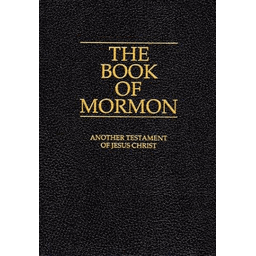 Book of MormonOne of the four volumes on its own - available free in print and digitally. The natural single-volume starting point for a first-time reader in the tradition.
 Doctrine and CovenantsThe volume of modern revelations, included in both the Quad and the Triple Combination. Often studied on its own during the year it appears in the Come, Follow Me curriculum.
 Pearl of Great PriceThe shortest of the four volumes, bound into every Quad and Triple Combination. Compact enough that few buy it alone, but central to the set.
 Gospel LibraryThe Church's official free app - the same four volumes fully cross-referenced and searchable, plus manuals, magazines, conference talks, and audio. The digital equivalent of the bound set.
Frequently asked questions
What are the four Standard Works?
The four Standard Works are the King James Bible, the Book of Mormon, the Doctrine and Covenants, and the Pearl of Great Price. In the Latter-day Saint tradition these are the recognized books of scripture, and the bound set that combines them is the form most members carry.
What is the difference between a Quad and a Triple Combination?
A Quadruple Combination - the "Quad" - binds all four volumes in one cover, including the King James Bible. A Triple Combination binds only the Book of Mormon, Doctrine and Covenants, and Pearl of Great Price, leaving out the Bible. Many members own a Bible separately and prefer the lighter Triple Combination for that reason.
Is the Standard Works available for free?
Yes. All four volumes, fully cross-referenced and searchable, are free in the official Gospel Library app and on the Church's website. A print set costs money, but the complete text at no cost lives in the app, which is where most members now read it.
What study helps come with the print edition?
The LDS editions include an extensive study apparatus: footnotes on nearly every verse, cross-references linking the four volumes, a Topical Guide (a large subject index), a Bible Dictionary, chapter and section headings, and a combined index. These helps are keyed to Latter-day Saint study and are what turn the four texts into one study instrument.
What changed in the 2013 edition?
The 2013 update revised the editions first published in 1979 (the LDS King James Bible) and 1981 (the Triple Combination). It refreshed typography, corrected minor errors, updated some study helps, and tightened cross-references. The scriptural text itself was not rewritten - the changes were to the apparatus and presentation.
Which print edition should I buy?
For everyday use, a simulated-leather Quad or Triple Combination (around $25-40) is the right default - durable and affordable. Choose genuine leather, thumb indexing, or name personalization (roughly $40-80 and up) when you want a gift-grade edition for a baptism, mission, or milestone. Pick large print if you want bigger type. Since the text is free in the app, the print choice is mostly about binding and size.
Should I use the print set or the Gospel Library app?
Many members use both. The free Gospel Library app is best for search, audio, synced notes, and daily reading on a phone, and it carries far more than scripture. A print set is best for focused, annotated, distraction-free study and for marking up over time. They complement each other, so the common setup is the app for daily use and a print Quad for church and slow study.
Sources & further reading
More Latter-day Saint Books
The Doctrine and CovenantsThe volume of modern revelations at the center of Latter-day Saint scripture - 138 sections, two Official Declarations, and the founding document of a still-growing church.The Pearl of Great PriceThe shortest of the four Latter-day Saint standard works - five short texts that hold the First Vision account, the Articles of Faith, and some of the tradition’s most-quoted scripture. Jesus the ChristJames E. Talmage's 1915 study of the life and mission of Jesus Christ - for over a century the standard Latter-day Saint treatment of the Messiah, and now free in the public domain.
 Believing ChristThe short Latter-day Saint book on grace that quietly reframed how a generation of readers understood the Atonement - built around one homely parable about a girl, a bicycle, and a father.
 Come, Follow MeThe official home-centered, church-supported study curriculum of the Church of Jesus Christ of Latter-day Saints - the weekly reading schedule the whole Church follows together, free in Gospel Library and in print.The Book of Mormon Study GuideA single-volume, verse-by-verse companion that walks a Latter-day Saint reader through the entire Book of Mormon - background, commentary gathered from Church leaders and scholars, maps, and helps, all keyed to the text you read alongside it.