- Starting price
- ~$17 paperback
- Free tier
- No
- Platforms
- Print · Kindle · Audiobook
- Developer
- Crossway
- Launched
- 2011
- Updated
- May 31, 2026
The verdict
A genuinely clarifying book on why Christian parenting can quietly turn into behavior management with a Bible verse stapled on - and a real corrective to it. The grace-vs-moralism thesis is the reason it has lasted and the reason it travels well across very different homes; the lighter coverage of day-to-day discipline mechanics is why most parents pair it with a more practical book.
Try Give Them Grace ↗Opens crossway.org
Give Them Grace has quietly become the book Christian parents reach for when they realize they have been raising well-mannered children who don't actually need a Savior. Written by Elyse Fitzpatrick - a longtime author and counselor in Reformed-evangelical circles - together with her daughter Jessica Thompson, it landed in 2011 and named something a lot of parents had felt but couldn't articulate: that a great deal of earnest Christian parenting had slid into moralism. Be good. Obey. Make better choices. The gospel had become a footnote, and the daily project had become behavior.
The thesis is direct and, for many readers, freeing. Parenting is not first about producing obedience. It doesn't terminate in a polite child. It doesn't measure success by how the kid behaves in the pew. It doesn't end when the rules are followed. The target, the authors argue, is the child's heart and the child's need for grace - the recurring discovery that they cannot keep the law, that they need a rescuer, and that the rescuer has already come. Every correction, in this framing, is a chance to point a child past their own effort to Christ.
That framing has resonated across an unusually wide range of homes - including parents who do not share the authors' Reformed-evangelical theology. It has also drawn its share of pushback, mostly practical: critics and even sympathetic readers note that the book is far stronger on the why (grace, the gospel, the heart) than on the how (the actual mechanics of consequences, structure, and day-to-day discipline). This review covers both - what the book actually argues, why so many parents love it, and where the contested and thin edges are.
✓ The good
- The grace-vs-moralism thesis - names the way well-meaning Christian parenting drifts into behavior management and reframes the whole project around the child's need for Christ
- Mother-daughter co-authorship - Jessica Thompson writes as a younger parent in the trenches, which keeps Elyse Fitzpatrick's counseling framework grounded in real kid-level moments
- Honest about parental failure - the book is unusually candid that parents can't save their kids and don't have to perform perfectly, which lands as relief rather than guilt
- Reframes obedience as a gospel opportunity - every correction becomes a place to show a child both the law and the grace that meets them when they break it
- Sample dialogues throughout - concrete scripts for talking to children about sin, grace, and the cross at different ages, not just abstract principle
- Short and readable - around 200 pages, finishable in a weekend, which is rare in a genre full of doorstops
- Travels across traditions - the core insight about grace over performance is portable enough that parents well outside the authors' circle quote it
✗ Watch out
- Lighter on day-to-day discipline mechanics - strong on the why and the heart, thinner on the practical how of consequences, structure, and routines than many parenting books
- Assumes a gospel vocabulary - the book leans on terms like law, grace, justification, and the gospel without much on-ramp, which can lose readers new to that language
- Written from a Reformed-evangelical frame - the law-and-grace structure reflects a specific theological tradition, and readers outside it may want to adapt the framing
- Can read as repetitive - the central point (point them to grace, not performance) is made many times, and some readers feel the book could be a long essay
- Light on ages and stages - it is less systematic than books that break guidance down by developmental stage, so parents of teens get less targeted help
- Thin on structure and consequences - parents who want a clear system for follow-through will need to bring that framework from elsewhere
Best for
- Parents tired of behavior-only Christian parenting
- Gospel-centered and Reformed-evangelical households
- Parents of younger children learning to talk about grace
- Church small groups and parenting classes
Avoid if
- You want a step-by-step discipline and consequences system
- You're new to gospel vocabulary and want an on-ramp
- You want age-by-age developmental guidance
- You prefer a warm, story-driven narrative over a thesis-driven book
What Give Them Grace is
Give Them Grace is a gospel-centered parenting book built around one central claim: that the goal of Christian parenting is not a well-behaved child but a child who knows they need grace. Elyse Fitzpatrick and Jessica Thompson argue that much of conservative Christian parenting has quietly become moralism - discipling children toward good conduct rather than toward Christ - and they set out to rebuild the daily parenting conversation around the gospel: the law that exposes a child's need, and the grace that meets it.
The book sits in the Reformed-evangelical, grace-centered stream associated with writers like Tullian Tchividjian (who wrote the foreword) and the broader gospel-centered movement of the early 2010s. It is short, thesis-driven, and written for parents rather than scholars - closer to an extended pastoral argument than a how-to manual, with sample dialogues, scripture, and candid stories from the authors' own family and counseling practice woven throughout.
Why gospel-centered parents prefer Give Them Grace
The single biggest practical difference between Give Them Grace and most other Christian parenting books is what it identifies as the danger. Most parenting books worry that you will fail to control your child. This book worries about the opposite - that you will succeed, and end up with a tidy, obedient child who has never felt their need for a rescuer because the rules were doing the work the gospel was supposed to do. Obedience, in this framing, is not the finish line. It is the place where a child either discovers they can keep the law on their own (and grows self-righteous) or discovers they can't (and grows toward grace).
For parents in the gospel-centered and Reformed-evangelical tradition, that framing is the reason the book has lasted. It treats parenting as a constant chance to preach the gospel to a small person, not a project of moral training. It refuses to let the parent rest in technique, and it refuses to let the child be reduced to their conduct. Whatever a reader concludes about the practical chapters, the central move - point them past their performance to Christ - has shaped how a wide range of Christian parents think about correction, including many who would never label themselves Reformed.
The grace-vs-moralism thesis: the reason the book has lasted
The authors' core move is to draw a sharp line between two kinds of Christian parenting that can look identical from the outside. Both produce a child who says please and thank you, who shares, who sits still in church. But one is doing it by teaching the child that good behavior earns approval - from parents, from God, from the room - and the other is doing it while constantly reminding the child that they can't earn anything, that they break the law daily, and that grace has already covered them. Fitzpatrick and Thompson call the first one moralism, and they argue it is the default drift of even the most sincere Christian home, because behavior is visible and the heart is not.
This is the chapter - and the framing - that has carried the book across very different homes. Parents who would never adopt the authors' full theology still quote the grace-vs-moralism distinction because the diagnostic is portable. The question 'am I training my child to perform, or am I pointing my child to a Savior' is one almost any Christian parent can sit with. It also reframes the parent's own posture: if the goal is grace rather than a flawless kid, then the parent's failures and the child's failures both become occasions for the gospel rather than evidence the system is broken.
Gospel scripts for everyday correction: grace at kid level
Where the book gets concrete is in its sample dialogues. Throughout, the authors take an ordinary moment - a child who lied, a sibling who hit, a kid melting down over a toy - and model how a parent might walk it toward grace rather than just toward consequences. The recurring pattern is to name the behavior honestly (this was wrong, this broke the rule, this hurt your sister), connect it to the heart and the law (none of us can keep this on our own), and then turn deliberately to the cross (this is exactly why Jesus came; he kept the law you and I can't, and he loves you even now). The point is not to skip discipline but to refuse to let discipline be the last word.
For families already inside the gospel-centered world, these scripts are the most-used part of the book - the place where the thesis becomes something you can actually say at 7 a.m. on a hard morning. For readers outside that world, the scripts can feel either clarifying or heavy depending on how much they want every correction routed through explicit gospel language. They are also, by the authors' own admission, more illustrative than exhaustive: the book shows you the move, but it leaves a lot of the structure, follow-through, and age-specific calibration for the parent to work out.
Freeing the parent: you are not your child’s savior
A quieter but equally central theme is what the book does for the parent. Fitzpatrick and Thompson are candid that Christian parenting culture can pile an enormous, unspoken weight on mothers and fathers - the sense that if they just parent well enough, pray hard enough, and stay consistent enough, they can guarantee how their children turn out. The book gently dismantles that. Parents are commanded to be faithful, not to be effective in the sense of controlling outcomes. The child's heart belongs to God, not to the parenting method, and that is presented as relief rather than fatalism.
This is the part many readers say they didn't know they needed. The grace the title promises is aimed at the child, but it lands on the exhausted parent too - the one keeping score of their own failures and their child's. By insisting that the gospel is for parents as much as for kids, the book reframes a bad day not as a verdict on your competence but as one more place you and your child both need the same Savior. Readers across traditions return to these chapters specifically because they treat parents as people in need of grace, not just dispensers of it.
Pricing
Paperback
~$17
The standard Crossway trade paperback - the version most readers own and quote.
Kindle
~$12
Same content, searchable, easy to highlight - good for note-takers and small-group leaders pulling quotes.
Audiobook
~$15
Unabridged audio edition - useful for parents who do their reading in the car or on walks.
Study Guide
~$10
A companion study guide with discussion questions - paired with the main book for small-group and class use.
The paperback is the version almost everyone owns and quotes - the Crossway trade edition, around $17, and the best value for most readers. The Kindle edition runs a few dollars cheaper and is the right call if you highlight aggressively or you're a small-group leader pulling quotes for a handout.
The audiobook (around $15) is genuinely useful for parents who do their reading in the car or while pushing a stroller. The book's tone is conversational and pastoral, and it reads aloud well.
For small groups, the companion study guide (around $10) is the format that actually moves the book through a church class or moms' group. Most parenting groups that use Give Them Grace use the guide to give the discussion structure, since the book itself is more argument than curriculum.
Used copies are common - the book has been in print since 2011 and sold widely. Thriftbooks, library sales, and church giveaway shelves regularly turn up clean copies for a few dollars.
Where Give Them Grace falls behind
Light on day-to-day discipline mechanics. The book is strong on the heart and the why, but a parent looking for a concrete system - how to set consequences, how to follow through, how to structure a household - will find that the practical scaffolding is thinner here than in books built around method. Many readers love the framing and then go elsewhere for the mechanics.
Assumes a gospel vocabulary. Terms like law, grace, justification, and the gospel do a lot of load-bearing work, and the book doesn't spend much time defining them. Readers new to that language can feel like they walked into the middle of a conversation, and a parent outside the Reformed-evangelical tradition may want to translate the framing into their own.
Less systematic by age and stage. The book is organized around its thesis rather than around developmental stages, so it doesn't give the kind of age-by-age guidance that stage-based parenting books do. Parents of teenagers in particular get less targeted help than parents of younger children.
Can feel repetitive. The central point - point them to grace, not performance - is genuinely important and genuinely returned to, again and again. Some readers find the repetition reinforcing; others feel the core insight could have been a long essay and that the chapters circle the same ground.
Thin on structure and follow-through. Closely related to the discipline gap: the book is more interested in what a correction means than in how to make it stick. Parents who need help being consistent will have to bring that discipline framework from another source.
Give Them Grace vs. Shepherding a Child's Heart vs. Parenting (Paul Tripp)
These three are the books that keep getting handed out in gospel-centered parenting conversations, and they sit in a clear relationship. Different strengths.
Shepherding a Child's Heart (Tedd Tripp, 1995) is the foundational heart-not-behavior text and the more discipline-focused of the group - it grounds parenting in biblical-counseling categories and includes a detailed, and widely debated, framework for correction including corporal punishment. Give Them Grace is in many ways the direct response to where that tradition can drift: Fitzpatrick (who has counseled in the same circles) keeps the heart emphasis but argues that conservative Christian parenting has too often slid into moralism, and she rebuilds the conversation around grace, the cross, and the child's need for a Savior rather than around the rod. Many parents read Shepherding for the heart framing and Give Them Grace for the grace framing.
Parenting: 14 Gospel Principles That Can Radically Change Your Family (Paul Tripp, 2016) sits closest to Give Them Grace in spirit - both are gospel-saturated and big-picture rather than method-driven. Tripp's book is broader and more comprehensive, organized around fourteen principles that reframe the parent's whole posture; Give Them Grace is shorter, narrower, and more pointed in its single argument against moralism. If you want one comprehensive gospel-parenting book, Tripp is the fuller volume. If you want the sharpest statement of the grace-over-performance case specifically, Give Them Grace is the one. All three are read widely across gospel-centered and Reformed-evangelical homes, and all three assume the reader will bring some practical discipline framework of their own - which is why parents often pair any of them with a more mechanics-focused book.
The bottom line
Give Them Grace has earned its place in the gospel-centered parenting shelf because the grace-vs-moralism thesis is genuinely clarifying - it changes how parents see correction, how they handle a hard morning, and how much weight they put on their own performance. The lighter treatment of day-to-day discipline mechanics is the part most readers supplement, and a mature use of the book today usually means pairing its framing with a more practical discipline framework. Real gaps, but they're worth knowing about going in rather than dealbreakers - and the core argument is well worth the price of the paperback.
Alternatives to Give Them Grace
 Shepherding a Child's HeartTedd Tripp's foundational heart-not-behavior parenting text - more discipline-focused and the book Give Them Grace is most often read alongside as a counterpoint.Parenting (Paul Tripp)Paul Tripp's fourteen gospel principles for the family - the broader, more comprehensive gospel-parenting volume in the same spirit as Give Them Grace.
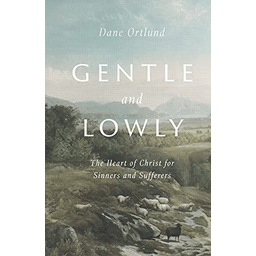 Gentle and LowlyDane Ortlund on the heart of Christ for sinners and sufferers - not a parenting book, but the clearest companion read for the grace Give Them Grace is built on.Habits of the HouseholdJustin Whitmel Earley's rhythms-based family discipleship book - the practical, structure-and-routine complement to Give Them Grace's grace-centered framing.
Frequently asked questions
What is the main idea of Give Them Grace?
That the goal of Christian parenting is not a well-behaved child but a child who knows they need grace. Elyse Fitzpatrick and Jessica Thompson argue that much sincere Christian parenting drifts into moralism - training kids toward good behavior rather than toward Christ - and they rebuild the daily parenting conversation around the gospel: the law that exposes a child's need and the grace that meets it.
Who wrote Give Them Grace?
Elyse Fitzpatrick and her daughter Jessica Thompson, published in 2011 by Crossway. Fitzpatrick is a longtime author and counselor in Reformed-evangelical circles; Thompson writes as a younger parent in the day-to-day, which keeps the framework grounded in real kid-level moments. The mother-daughter co-authorship is part of the book's appeal.
Is Give Them Grace a practical, how-to parenting book?
Only partly. It is strong on the why - grace, the gospel, the heart - and includes sample dialogues for talking to children about sin and grace. It is lighter on the how: the mechanics of consequences, structure, and follow-through. Many parents love the framing and pair it with a more method-driven book for the practical discipline scaffolding.
How is it different from Shepherding a Child's Heart?
Tedd Tripp's Shepherding (1995) is the foundational heart-not-behavior text and is more discipline-focused, including a debated framework for correction. Give Them Grace keeps the heart emphasis but argues that conservative Christian parenting has too often slid into moralism, and it reframes the conversation around grace and the child's need for a Savior. Many parents read both - Shepherding for the heart framing, Give Them Grace for the grace framing.
Do I need to be Reformed to get value from this book?
No. The book is written from a Reformed-evangelical, gospel-centered perspective and leans on terms like law and grace, but the central insight - that parenting can quietly become performance training rather than pointing kids to Christ - is portable. Parents well outside that tradition quote the grace-vs-moralism distinction. Readers new to the vocabulary may want to translate the framing into their own.
Is there a study version for small groups?
Yes - a companion study guide with discussion questions is available and pairs with the main book for parenting classes, church small groups, and moms' groups. Since the book itself is more argument than curriculum, most groups use the guide to give the discussion structure.
Is Give Them Grace still relevant in 2026?
Yes - the grace-vs-moralism thesis is the reason it has lasted and is still one of the most-cited gospel-centered parenting frameworks. The dated part isn't the argument; it's that the book was never meant to be a full discipline manual, so most readers continue to pair its framing with a more practical, mechanics-focused parenting book.
More Marriage & Family Books
 The 5 Love LanguagesGary Chapman's slim paperback has quietly become the most-recommended marriage book of the last thirty years - and the rare Christian title that crossed fully into the secular mainstream.ParentingPaul David Tripp's 2016 parenting book reframes the whole project around 14 gospel principles - and argues that God is using your kids to change you as much as He's using you to change them.Habits of the HouseholdJustin Whitmel Earley’s field guide to forming Christian families one daily rhythm at a time - and why a Richmond lawyer’s parenting book quietly became the most-recommended title in young-parent small groups.Boundaries in MarriageCloud and Townsend take their five-million-copy Boundaries framework and point it straight at the marriage relationship - arguing that owning your own life is what makes loving your spouse possible.Don’t Make Me Count to ThreeGinger Hubbard's 2003 toddler-discipline book has quietly become the go-to gift for new moms in evangelical circles - short, practical, and aimed at the child's heart rather than just the meltdown in aisle four.The Mission of MotherhoodSally Clarkson's 2003 book reframes motherhood as a high and intentional calling rather than a holding pattern - the vision-casting classic that launched a whole movement of home-discipleship writing.