
- Starting price
- Free to read · network fees to confirm
- Free tier
- Yes
- Platforms
- Web · Optimism Mainnet · open-source code
- Developer
- Nathan / Websculpt
- Launched
- 2024
- Updated
- Aug 9, 2026
The verdict
Gospel Onchain proves its engineering claim: a complete KJV text can be stored in smart-contract state, read and searched through a web interface, inspected in an explorer, and confirmed verse by verse through wallet transactions. It does not prove that Scripture becomes universally available or canonically correct. The current text was uploaded by one person before public confirmations, the contract and chain are only part of an access stack, wallet actions are permanent and public, and the KJV has territorial rights complications in the United Kingdom. Developers and digital-preservation students can learn from it; ordinary readers will get safer, faster, more accessible, and equally verifiable study from a reputable Bible app plus offline copies and published checksums.
Try Gospel Onchain ↗Opens gospelonchain.com
Gospel Onchain asks whether blockchain storage can preserve a Bible text against editing and censorship. The developer placed the King James Version into contracts on Optimism Mainnet, an Ethereum layer-two network, and announced completion of the entire Bible on November 21, 2024. The site provides a reader, text search, a wallet-connected confirmation page, developer and contract-debug tools, an explorer link, donation details, and the open-source application repository. It explicitly says the project is not an NFT sale.
The preservation property is precise: once contract data is finalized under the network’s rules, ordinary website administrators cannot silently rewrite those bytes in place. Anyone with the necessary technical access can compare contract output, transaction history, code, and events. That is useful for provenance experiments. It is not the same as guaranteeing that the uploaded text was correct, that the interface displays it faithfully, that a person can reach an Optimism node, that every future network participant preserves history, or that no government, provider, domain registrar, wallet, RPC service, or user device can block access.
The project’s author is unusually candid about the central limitation. The current books were stored first and offered for confirmation afterward. The About page says a better design would have a council verify a sentence or verse before it is committed, because immutability makes mistakes difficult rather than harmless. A separate Council repository explores unanimous approval before text enters a final book, but the live project remains a single-uploader proof of concept. Confirmations show that wallet addresses approved entries after the fact; they do not automatically establish qualifications, identity, independence, edition, quorum, or full textual collation.
We reviewed the live home, About, read, search, confirm, and developer pages; public repositories and metadata; current contract link; official Optimism explanations of block production, transaction finality, and forced inclusion; and UK government copyright guidance on August 9, 2026. We did not connect a wallet, pay gas, confirm a verse, run an archival node, reproduce a complete KJV collation, audit the smart contracts or front end, verify every deployment and subgraph, test RPC censorship or disaster recovery, assess accessibility, trace donations, or give legal, copyright, security, financial, or investment advice.
✓ The good
- Concrete proof of concept - the entire KJV is represented on Optimism rather than merely hashed or linked from conventional storage
- Open-source application - the MIT-licensed repository exposes contracts, front-end code, deployment structure, and issue history for inspection
- Public provenance - explorer transactions and contract addresses make the upload timeline more independently inspectable than a private database
- Free reading and search - a visitor can use the public interface without purchasing a token or Bible subscription
- No NFT confusion in project copy - the homepage explicitly says the Scripture storage is not an NFT project
- Author acknowledges limitations - the project openly calls itself a proof of concept and explains why post-upload confirmation is not ideal
- Experiment reports real costs - approximate first-book and later batch fees give developers useful evidence about direct onchain storage
- Confirmation is independently attributable - a wallet transaction can leave a durable public record that an address approved a verse
✗ Watch out
- Immutability can preserve errors - one uploader committed the text before community confirmation, so a typo or edition mismatch cannot simply be corrected in place
- “Unbannable” and “available to all” are overstatements - the domain, interface, RPC, explorer, sequencer path, wallet, internet, and local law remain possible access chokepoints
- Confirmation does not prove authority - wallet ownership, reviewer identity, competence, independence, edition, and review method are not established by a transaction alone
- Wallet actions expose a permanent public trail - confirming or donating can connect an address and transaction history with religious activity
- The reader is less mature than mainstream Bible apps - public fallback content, accessibility, notes, audio, plans, parallel versions, export, and offline resilience are limited
- Repository documentation has drift - its README still highlights an older John-only production branch and older contract while the live site says the complete Bible is elsewhere
- KJV rights are jurisdiction-sensitive - the text is broadly public domain outside the UK, but official UK guidance says printing and publishing rights are licensed by the Crown
- Chain permanence has dependencies - Optimism relies on protocol governance, a sequencer and forced-inclusion system, Ethereum data, node software, RPC access, and people willing to retain history
Best for
- Blockchain developers studying direct text storage, event indexing, public verification, and wallet-based attestation
- Digital-preservation classes comparing content, hashes, signatures, replicated archives, and smart-contract immutability
- Technically capable readers independently checking contract bytes, deployment history, code, and a known source edition
- Open-source contributors improving collation, provenance, accessibility, documentation, or decentralized front ends
- Small non-financial experiments using a separate low-value wallet and accepting that transactions are public and irreversible
Avoid if
- You need the simplest, fastest, offline, accessible, or child-friendly way to read and study the Bible
- You interpret the site’s existence as proof that its KJV bytes match a named authoritative edition verse for verse
- Religious activity linked to a public wallet could endanger you or another person
- You are considering buying cryptocurrency or moving meaningful funds solely to confirm a verse or donate
- Your organization needs a professionally audited preservation system, formal governance, legal clearance, service levels, and documented recovery
What Gospel Onchain is
Gospel Onchain is a decentralized-application experiment around a specific English Bible text. Smart contracts hold text, an index or subgraph supports retrieval and search, a Next.js-style front end makes it readable, and additional transactions record confirmations. Explorer and source links let technically capable users inspect more of the system than an ordinary closed Bible website.
It is not a new translation, manuscript-critical edition, canonical authority, universal anti-censorship guarantee, investment, tokenized Bible, or replacement for a local copy. “Onchain” describes where bytes and state live. It does not settle which source text should be stored, who verified it, how readers safely reach it, or how an error should be superseded without misleading later users. A contract address is part of the citation in this setting: screenshots, a project name, or a shortened 0x prefix are not enough for independent verification.
Why developers may explore Gospel Onchain: provenance becomes part of the public object
A normal Bible website can update its database without exposing a durable, signed history of every import. Gospel Onchain makes contract addresses, transactions, code, and confirmations part of the artifact. A verifier can query the chain instead of trusting only the visible page. If the source edition, byte encoding, build, and deployment are all documented, that produces a reproducible provenance trail and a stable target for independent archives.
The missing piece is a complete verification package. Publish the exact source edition and license, original source files, normalization rules, book and verse schema, encoding, full-text hash, per-book hashes, deterministic import script, deployed bytecode and verified source, owner and upgrade permissions, contract-address registry, independent collations, and a version or supersession policy. Without those, permanence is easy to observe but correctness still depends heavily on the uploader.
Onchain KJV reader and search: the interface is convenient, the contract is the evidence
The site exposes a familiar Bible-reading route and a search page that queries the KJV corpus. The live footer points to a complete-Bible contract beginning 0x3dce on Optimism. Contract storage makes it possible for another front end or script to recover content without using GospelOnchain.com, provided the reader has network data, an RPC or node, the contract interfaces, and enough technical skill.
A resilient reader should not silently rely on one domain, hosted RPC, subgraph, or JavaScript bundle. The project could publish a static text export, deterministic command-line verifier, IPFS or torrent package, downloadable checksums, multiple community front ends, public RPC instructions, archive-node guide, and a plain HTML fallback. Conventional signed files mirrored across libraries and devices may achieve broader real-world availability at far lower complexity, even if they lack transaction-level spectacle.
Verse confirmations and proposed council: attestations need identity and procedure
The Confirm page asks a wallet user to compare a verse against the original and pay a small Optimism fee to attest to it. The developer envisions a council that would approve text before final storage and has published a separate experimental repository for unanimous voting. This recognizes that immutable publishing should move verification earlier in the workflow.
A robust council must define “original,” edition, reviewer qualifications, conflicts, quorum, independence, collation method, change control, compromised keys, inactivity, disagreement, error escalation, and public evidence. Unanimity among unknown wallet addresses can be one person controlling several keys; popularity can certify a copied error. Cryptographic signatures prove a key took an action, not that its owner had expertise or followed a valid review protocol.
Optimism and censorship resistance: durable state still has layers and operators
Optimism lowers the cost of storing and confirming data compared with Ethereum mainnet. Official documentation explains that OP Mainnet block production is primarily managed by a single sequencer run by the Optimism Foundation, while transaction batches and state commitments ultimately use Ethereum. Users can submit through Ethereum to force inclusion and mitigate sequencer censorship, though it costs more and can take time during outages.
That architecture is more resilient than one private database but not magic global access. A direct transaction to the sequencer is not itself censorship resistant; forced inclusion requires knowledge, funds, Ethereum access, and functional infrastructure. Readers can be blocked from a domain or RPC even while data remains in history. Protocol upgrades, key governance, software bugs, chain reorganizations before finality, provider filtering, and archival economics all belong in the threat model. Say “harder to alter and independently recoverable,” not “unbannable.”
Pricing
Read and search
Free
The public website offers reading and search without a subscription. Access still depends on the site, network endpoints, browser, and internet unless you run or reconstruct the stack independently.
Confirm a verse
Optimism network fee
A wallet-connected transaction costs gas and permanently exposes the confirming address and action. The page characterizes the cost as pennies, but fees and wallet risk vary.
Developer use
Open source
The code is MIT licensed. Running, deploying, indexing, hosting, auditing, and storing new contract data require engineering effort and can incur infrastructure and network costs.
Donate
Optional crypto transfer
The site publishes an ENS name and wallet address. A blockchain transfer is public and generally irreversible; independently verify the address and never send funds needed for living expenses.
Reading through the hosted front end is free. That makes the project approachable for curiosity, although it does not make it a better everyday reader than mature free Bible services.
Confirmations are paid blockchain transactions. The project reports later upload batches ranging from a few cents to roughly $1.10 for 100 verses, but current confirmation gas can change. Wallet setup and asset acquisition add friction and risk beyond the quoted fee.
The developer reports that the first book, John, cost about $30 across nine transactions, and later batching reduced costs. This is useful proof that direct L2 storage of a large public-domain-style text can be financially feasible for a hobby experiment. It is not a durable price quote: data pricing, compression, gas, network policy, contract design, and asset value can all change.
The real preservation cost includes far more than gas: source collation, contract auditing, reproducible tools, node and index availability, front ends, governance, legal review, key security, monitoring, and future migrations. A credible budget also funds independent maintainers and periodic recovery exercises so the artifact remains discoverable after the founder, domain, or favored framework disappears.
Do not treat an optional donation as an investment or expect a financial return. Verify the address through multiple official paths, use a low-value separate wallet if appropriate, understand taxes and law, and assume an incorrect transfer cannot be reversed.
Where Gospel Onchain falls behind
Publish a canonical deployment registry that reconciles the live complete-Bible contract with the older README, branch, John-only contract, subgraphs, environments, owners, and deprecated deployments.
Publish the full textual provenance package: exact KJV source and edition, territorial rights analysis, source files, normalization, encoding, hashes, deterministic import, independent collation, known differences, and correction process.
Verify smart-contract source and deployed bytecode consistently, commission an independent security review, document admin and upgrade powers, key custody, pause behavior, indexer trust, RPC dependencies, and incident response.
Replace absolute “unbannable,” “unburnable,” “unchangeable,” and “available to all” language with a layered threat model covering website, network, sequencer, Ethereum, providers, wallets, devices, law, and archival access.
Define confirmation governance: qualified reviewers, identity or pseudonym policy, sybil resistance, quorum, conflicts, review evidence, source edition, key replacement, disputed text, supersession, and council accountability.
Add wallet and donation safety notices, network and contract confirmation, transaction preview, exact data written, public-privacy warning, gas estimate, phishing guidance, and a non-wallet reading path.
Improve reader usability with server-rendered text, keyboard and screen-reader testing, offline download, citations, copy and export, font controls, low-bandwidth mode, multiple front ends, and published recovery instructions.
Gospel Onchain vs. YouVersion vs. signed text files vs. printed Bibles
Gospel Onchain offers public transaction provenance and direct smart-contract storage. YouVersion offers far better everyday reading, audio, plans, accessibility, apps, offline versions, and many translations, but users trust its platform and licensors. A signed text file with published hashes can verify exact bytes, copy cheaply to countless mirrors, and open without a blockchain. Printed Bibles require no device or network and can survive institutional or technical failure, though individual copies can be destroyed and editions can differ.
Preservation works best in layers. Keep reviewed printed editions, ordinary digital exports, cryptographic hashes and signatures, geographically diverse mirrors, libraries and archives, peer-to-peer packages, and—if useful—an onchain timestamp or copy. Rehearse recovery without the original website, indexer, browser wallet, or hosted RPC; otherwise the preservation claim has never been operationally tested. A blockchain is one durable catalog and attestation layer, not the whole preservation plan. Gospel Onchain is most valuable when it prompts that systems thinking rather than claiming one contract has solved censorship.
The bottom line
Gospel Onchain is a successful proof of one narrow proposition: a complete KJV can be written into smart contracts on an inexpensive Ethereum layer two and exposed through a useful reader, search, explorer, code repository, and public attestation flow. The project deserves credit for open code, real cost reporting, no NFT pitch, and an About page that admits its confirmation design should have verified text before committing it. Its rhetoric stretches beyond the proof. Bytes on Optimism are harder for one website owner to change, but readers still need domains, RPCs or nodes, software, networks, and safe legal access. The original uploader remains a trust anchor. Public confirmations prove keys acted, not that the KJV edition was expertly collated. Immutability can fossilize mistakes. Wallet actions reveal religious behavior permanently and can be clustered with other financial activity. Developers should inspect, reproduce, compare, and improve the experiment, ideally starting from a named source file and publishing a one-command verifier. Everyday readers should use a mature Bible app or offline text. Preservation programs should combine printed copies, downloadable files, hashes, signatures, institutional archives, peer-to-peer mirrors, and perhaps onchain evidence. The blockchain can strengthen provenance; it should not be mistaken for Scripture’s authority or an all-purpose guarantee of access.
Alternatives to Gospel Onchain
 YouVersion Bible AppA mature free reader with many translations, audio, plans, accessibility, community features, and offline support.
 Bible GatewayA familiar web reader and search platform with numerous licensed versions and far stronger everyday usability.
 STEP BibleA free scholarly reader with deep language tools and downloadable or offline-oriented options, without wallet complexity.eBible.orgDownloadable Scripture files and open translation formats that are easy to mirror, inspect, and use in many readers.Signed and mirrored text archivesSimple files plus checksums, signatures, libraries, and peer-to-peer mirrors can deliver broad verification and resilience cheaply.
Frequently asked questions
Is the whole Bible stored on Gospel Onchain?
The project announced the complete KJV on Optimism Mainnet on November 21, 2024, and the live site points to a complete-Bible contract. Independently verifying every verse still requires a full collation against a named source edition.
Is Gospel Onchain an NFT?
No. The homepage explicitly says it is not an NFT project. The text is stored in smart contracts; wallet transactions are used for verse confirmations and optional donations.
Is it free?
Reading and searching the hosted site are free. Confirming a verse requires an Optimism transaction and gas. Running infrastructure, deploying code, or storing new text can also cost money.
Can the onchain Bible ever be changed?
Existing finalized contract state cannot usually be edited like a database row, but a new contract, interface, index, or version can supersede how users see it. Upgrade and ownership details must be checked in the deployed code.
Does a confirmed verse prove it is correct?
No. It proves a wallet address submitted the confirmation transaction. Correctness also requires a named source edition, reviewer identity or qualifications, method, independence, complete collation, and governance.
Is it really censorship-proof?
It is more difficult for one site owner to erase finalized chain data, and Optimism offers an Ethereum forced-inclusion path. Access can still be filtered at the domain, network, RPC, wallet, device, or legal layer, so “censorship-resistant” is more accurate than “unbannable.”
Are there copyright issues with the KJV?
The KJV is generally treated as out of copyright in many countries, but UK government guidance says rights to print, publish, and distribute the Authorized Version are licensed by the Crown. Deployers should obtain jurisdiction-specific advice.
Sources & further reading
- Gospel Onchain live project ↗
- Gospel Onchain project explanation and costs ↗
- Gospel Onchain reader and search ↗
- Gospel Onchain verse-confirmation interface ↗
- Gospel Onchain developer tools ↗
- Gospel Onchain source repository ↗
- Experimental council repository ↗
- Optimism protocol overview and sequencer model ↗
- Optimism forced-transaction documentation ↗
- UK Intellectual Property Office copyright term notice ↗
More Bible Reading Websites
 route.bibleA free, open-spec routing layer that turns a Bible reference into one stable link or QR code and lets each reader choose a preferred Bible destination—an elegant solution for slides, print, websites, and AI output, provided publishers test reference parsing, redirects, tracking tags, accessibility, and long-term fallback.
 SefariaA Jewish nonprofit quietly rebuilt the entire rabbinic library online - and serious Christian students of the Hebrew Bible keep showing up to use it.
 BibleLinkA polished way to make Bible references readable without sending visitors away—but its noncommercial license and hosted-service dependency deserve attention before installation.
 fetch(bible)Gracious Tech’s free, open-source Scripture platform combines 1,404 translations, a compressed global CDN, developer libraries, and an embeddable reader—exceptionally generous infrastructure whose translation licenses still require your own diligence.
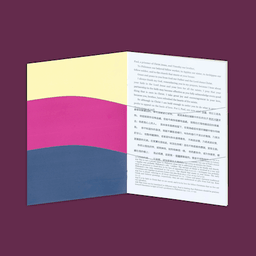 Paper BibleA delightful free generator that turns a chosen Scripture portion into a configurable PDF or folded booklet in hundreds of languages, with presets for reading, study, and notes—but every print project still depends on translation permissions, PDF inspection, and the limits of a remotely generated document.
 Sparks Chinese BibleA rich Chinese-language Bible platform joining many translations, original-language study, courses, media, and community—especially compelling for serious learners who can audit its AI and privacy choices.