
- Starting price
- $99 one time per couple
- Free tier
- No
- Platforms
- Web · On-demand video · Printable workbook
- Developer
- Britt and Kyler Nixon
- Launched
- 2020
- Updated
- Aug 16, 2026
The verdict
Love Your First Year is an approachable starting framework for an engaged Christian couple who wants structured conversations without coordinating weekly appointments. The one-time price, two logins, short lessons, printable exercises, and lifetime access are unusually straightforward. Buy it for shared preparation and discussion—not because a two-hour course can diagnose trauma, coercion, addiction, financial complexity, sexual pain, or a dangerous relationship. Confirm any church requirement beforehand and add a qualified counselor when the issues call for one.
Try Love Your First Year Premarital Course ↗Opens loveyourfirstyear.com
Love Your First Year is a self-paced Christian premarital course created by Britt and Kyler Nixon. The current sales page organizes twenty-two short video modules into seven sections: marriage myths; healthy marriage and biblical roles; family backgrounds and in-laws; communication, conflict, and apologies; expectations; finances; and sexual and spiritual intimacy. Both partners receive separate logins, so long-distance couples can watch independently and discuss by video call. The package also includes a downloadable or printable workbook, quizzes, expectation flashcards, a budget builder, date ideas, a wedding-night and honeymoon guide, and a first-year devotional.
The practical format is the product’s strongest feature. A couple can watch a five- or ten-minute lesson, stop, write separately, compare expectations, and return after the wedding. The sample lesson on apology languages shows the intended tone: conversational, candid, application-oriented, and explicitly biblical rather than academic or clinical. The founders describe themselves as SYMBIS Certified Marriage Facilitators. That is relevant training, but the public course page does not present them as licensed mental-health clinicians, financial advisers, physicians, or attorneys.
Several details on the same page have not been synchronized. The price card advertises about two and a half hours of video and an 85-plus-page workbook; nearby copy says two hours, the FAQ says just under two hours, and an older answer still says a 60-plus-page workbook with an earlier bonus set. These differences do not change the basic value, but they mean the live checkout and member area should control over a copied feature list. The refund language is clearer: the page promises a thirty-day guarantee, while the terms require an emailed request within thirty days, a reason, and no terms violation.
This is a researched review of the public curriculum, sample, pricing, FAQ, terms, and related publisher pages. We did not purchase the private course, complete its exercises as a couple, assess teaching outcomes, or verify testimonials. Content, promotions, and bonuses can change. Couples facing abuse, threats, coercive control, severe addiction, suicidal thoughts, or urgent medical concerns should use appropriate local professional and emergency help rather than a prerecorded course.
✓ The good
- One transparent household price - $99 buys the course for both partners without an ongoing subscription
- Built for conversation - separate logins and a large workbook encourage each partner to answer before comparing expectations
- Broad premarital scope - conflict, in-laws, money, sex, faith, roles, family history, and expectations all receive a defined place
- Low scheduling friction - short on-demand lessons work for busy and long-distance couples
- Lifetime access - couples can revisit material after the wedding instead of losing it when a cohort ends
- Meaningful preview and guarantee - a public sample module and thirty-day refund window reduce purchase risk
- Explicitly Christian positioning - prospective buyers are told that every section takes a biblical, faith-based approach
✗ Watch out
- Too brief for complex situations - roughly two to two and a half video hours cannot provide individualized assessment or care
- Not licensed therapy - facilitator certification should not be confused with a clinical counseling relationship
- Sales-page inconsistencies - runtime, workbook length, and bonus descriptions disagree within the current page
- No live mediator - a prerecorded lesson cannot slow an escalating argument, notice fear, or challenge one partner privately
- One theological frame - couples should confirm that teaching on marriage, sex, and roles fits their convictions and church
- Limited public policy detail - the terms reference a privacy policy, but the course footer does not make a separate privacy notice easy to find
Best for
- Engaged Christian couples wanting a guided, self-paced conversation framework
- Long-distance couples who need separate accounts and asynchronous lessons
- Couples supplementing meetings with a pastor, mentor, or counselor
- Newly married couples returning to expectations, conflict, or budgeting basics
Avoid if
- Either partner feels unsafe, controlled, threatened, or unable to answer honestly
- A church requires a specific assessment, counselor, or number of live sessions
- You need licensed trauma, addiction, sexual-health, financial, or mental-health care
- You want a live cohort, private clinician feedback, or denominationally tailored instruction
What Love Your First Year Premarital Course is
Love Your First Year is recorded education for couples, not an assessment-driven counseling platform. It supplies a sequence, vocabulary, prompts, and printable exercises so two people discuss important subjects before a wedding. The content is personal and practical, with the Nixons teaching directly to camera and repeatedly sending couples back to conversation.
The publisher says dating and already-married couples may use it, but recommends taking it after engagement, often three to six months before the wedding. Some churches may accept it as preparation; the course does not promise universal acceptance. Ask the officiating church before relying on it to meet a formal requirement.
Why long-distance and schedule-limited couples choose it
Many premarital programs assume that a couple can appear together in an office every week. Love Your First Year removes that dependency. Each partner can log in separately, watch the same short module, write answers privately, and then meet in person or by phone. Lifetime access also permits a second pass once hypothetical expectations become real household decisions.
Convenience should improve preparation, not isolate the couple. The workbook can reveal a serious disagreement without helping the couple negotiate it safely. A wise workflow is to complete sections separately, compare answers, record unresolved issues, and carry the hardest ones to a trusted pastor or credentialed counselor who can ask follow-up questions.
Seven-section curriculum: useful breadth in a compact package
The course moves from assumptions about marriage into family-of-origin patterns, communication, conflict, expectations, money, and intimacy. That breadth functions as a checklist against the classic mistake of planning a wedding while avoiding the marriage. Short modules make the material approachable and easier to revisit.
Breadth also creates a ceiling. A finance module cannot replace debt disclosure and an actual budget; an intimacy module cannot diagnose pain or trauma; an in-law module cannot establish a safety plan. Treat every topic as an invitation to disclose, investigate, and seek help where needed.
Workbook and two accounts: the application layer matters most
The advertised 85-plus-page workbook adds questions, checklists, and exercises to the videos. Separate accounts are particularly valuable when one partner tends to adopt the other person’s answer. Writing independently can expose different assumptions about spending, household labor, family boundaries, children, conflict, faith practice, and sex.
A workbook is only as honest as the conditions around it. Couples should agree that disclosure will not be punished and that either person can pause an unsafe conversation. Store completed files carefully because relationship, financial, and sexual answers are sensitive even if the blank download is ordinary course content.
Bonuses and lifetime access: generous, but verify the current bundle
The current price card names a first-year devotional, budget builder, expectation flashcards, quizzes, one hundred love-language date ideas, and a wedding-night and honeymoon guide. The FAQ still lists an older workbook length and fourteen-day prayer resource, so the page appears to contain legacy copy alongside newer packaging.
Take a screenshot of the checkout offer if a particular bonus matters. “Lifetime” generally means for the life of the service and under a revocable personal-use license, not a guarantee that hosting will exist forever. Download permitted workbook materials and keep the purchase receipt.
Pricing
Sample module
Free preview
The public page offers a short module on apology languages. Use it to judge the presenters, pace, production, and theological tone before purchasing; it is not a free course tier.
Premarital Course
$99 one time per couple
Includes separate logins, twenty-two modules, seven curriculum sections, lifetime on-demand access, the digital or printable workbook, and the bonuses currently shown on the sales page.
Money-back guarantee
30 days
The terms say to email the publisher within thirty days, provide a reason, and remain compliant with the terms. Approved refunds are returned to the original method within ten business days.
At $99 per couple, the course is cheaper than most multi-session private counseling and more expensive than a marriage book. The fair comparison is a structured two-person workshop with reusable exercises, not clinical treatment.
There is no advertised monthly subscription or permanent free tier. Both partner logins are included, which avoids the awkward choice between sharing a password and paying twice.
The thirty-day refund policy is useful, but the sales phrase “no questions asked” is looser than the terms, which request a reason and make eligibility conditional on compliance. Request promptly by email and retain the correspondence.
Promotional banners may offer temporary discounts. Evaluate the ordinary $99 value because a stale banner or coupon can disappear, and confirm the exact workbook and bonus bundle at checkout.
Where Love Your First Year Premarital Course falls behind
Align the product copy. Publish one current runtime, workbook page count, module count, and bonus inventory across the price card, FAQ, checkout, and member area.
Clarify credentials and scope. State plainly that facilitator certification is not licensed therapy, define emergencies the course cannot serve, and link qualified referral options.
Publish a visible privacy notice. Explain the course platform, payment processor, account data, viewing progress, workbook handling, retention, deletion, and whether partners can see each other’s activity.
Add structured escalation. A referral directory or optional live professional session would help couples who uncover addiction, abuse, trauma, debt, infertility questions, or entrenched conflict.
Document accessibility. Publicly state caption, transcript, keyboard, screen-reader, audio-description, and printable-format support instead of leaving couples to discover barriers after paying.
Love Your First Year vs. SYMBIS vs. Prepare/Enrich vs. pastoral counseling
Love Your First Year is content-first: both partners receive the same teaching and prompts for one fixed price. SYMBIS and Prepare/Enrich are assessment-centered systems typically interpreted with a trained facilitator. They can surface differences through reports and norms, while this course relies more heavily on self-recognition and honest conversation.
Pastoral counseling can connect preparation to a couple’s church, vows, theology, and community. A licensed couples therapist can assess patterns and clinical needs that a course cannot. Both require scheduling and usually cost more. The most robust use of Love Your First Year is as preparation for those meetings: complete the lessons, then bring disagreements and questions to a capable human guide.
Books such as The Meaning of Marriage provide a deeper theological argument at lower cost, but no shared login, paced video sequence, or integrated worksheet system. Choose the course when completion structure is the barrier; choose assessment or live care when insight and mediation are the barrier.
The bottom line
Love Your First Year packages the conversations many engaged couples postpone into twenty-two short Christian lessons, a substantial workbook, separate partner access, and one $99 lifetime purchase. It is friendly, direct, logistically easy, and broad enough to expose important assumptions. Its own page’s inconsistent runtime and workbook details need cleanup, and no prerecorded program should carry the weight of personalized counseling. Use it several months before the wedding, answer independently, slow down over disagreement, confirm your church’s requirements, and involve a qualified pastor or clinician when the material reveals more than a worksheet can safely resolve.
Alternatives to Love Your First Year Premarital Course
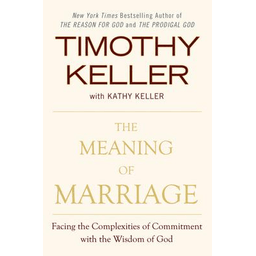 The Meaning of MarriageTimothy and Kathy Keller’s book provides a fuller theological foundation for marriage at low cost, but without course accounts, assessments, or live guidance.
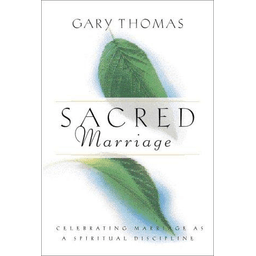 Sacred MarriageGary Thomas frames marriage as spiritual formation. Strong for discussion, though it is a book rather than a comprehensive premarital workflow.
 LastingA relationship app with guided sessions and ongoing habit support for couples who prefer mobile interaction and a continuing subscription.
 Love NudgeA free relationship-habit app based on the Five Love Languages, useful after preparation but much narrower than a premarital curriculum.Prepare/EnrichA facilitator-led assessment ecosystem that identifies couple strengths and growth areas; better when personalized interpretation is the priority.
Frequently asked questions
How much does Love Your First Year cost?
The current public price is $99 once per couple. It includes separate logins for both partners and advertised lifetime on-demand access. Temporary coupon banners may change the checkout total.
How long is the course?
The sales page conflicts: the price card says approximately 2.5 hours, another line says two hours, and the FAQ says just under two hours. It contains twenty-two short modules across seven sections; verify the current member-area runtime if the distinction matters.
Is Love Your First Year premarital counseling?
It is self-paced premarital education. The founders advertise SYMBIS facilitator certification, but a prerecorded course does not create an individualized licensed counseling relationship or provide crisis care.
Can long-distance couples use it?
Yes. Both partners receive individual logins and can watch separately, then discuss by phone or video. The publisher specifically identifies long-distance couples as a reason the course was created.
Does it have a refund policy?
Yes. The terms offer a thirty-day money-back guarantee. They instruct buyers to email within thirty days, provide a reason, and remain compliant with the terms; processing may take up to ten business days.
Will a church accept it for premarital requirements?
Some may, but the publisher does not promise universal acceptance. Ask the pastor or officiant before purchase if completion must satisfy a formal church requirement.
Is the course only for Christians?
Non-Christians may enroll, but the publisher says every section uses a biblical, faith-based approach and warns that participants may disagree with some teaching.
Sources & further reading
More Teaching & Theology Websites
 Life.Church Open NetworkOne of the church world’s most generous resource libraries, serving leaders since 2006 with free sermons, curriculum, creative files, worship material, training, partner content, and ministry apps—but “free” is a tightly scoped noncommercial license, not open ownership or permission to edit and repost everything.
 The Odin ProjectA completely free, open-source path from web-development beginner to portfolio-building full-stack learner—excellent for disciplined self-study, demanding in time and independence.
 BibleProjectA nonprofit studio that turned the entire Bible into animated explainers, free seminary-grade courses, and a deep-dive theology podcast - and somehow gave it all away.
 Lessons.ChurchA genuinely free, open-source curriculum platform with 1,167 video lessons from preschool through adult, printable resources, classroom scheduling, presenter mode, TV caching, and volunteer access—but each church still needs to review doctrine, permissions, safeguarding, account governance, and recovery before Sunday depends on it.
 Christian Classics Ethereal LibraryThe Christian Classics Ethereal Library is possibly the oldest Christian site on the internet, and it is still the single best free source for the public-domain canon - from Augustine to Spurgeon, with the entire 38-volume Ante-Nicene and Nicene-and-Post-Nicene Fathers in the middle.
 Christian History InstituteThe quiet workhorse of popular church history publishing for forty years - and almost everything they have ever printed is sitting online for free.