
- Starting price
- Free
- Free tier
- Yes
- Platforms
- iOS - Android
- Developer
- The Moody Bible Institute of Chicago
- Launched
- 2012
- Updated
- Jul 26, 2026
The verdict
Love Nudge is a well-built free shell around a framework whose evidence base is weaker than its sales suggest, and it earns its place only if both partners keep it installed. Recommended for couples who already own the book and need follow-through; skip it if your spouse will not link an account, or if what you need is help with conflict rather than reminders to be affectionate.
Try Love Nudge ↗Opens 5lovelanguages.com
Love Nudge is the official app of the 5 Love Languages brand, published by The Moody Bible Institute of Chicago under the Love Language Brand imprint. It has been on the App Store since 29 January 2012 and is free on both stores with no subscription. Apple shows 4.6 stars from 18,354 ratings; Google Play shows 4.1 from 11.2K reviews across more than a million downloads. Both samples are large enough to trust, and the half-star gap between them is itself a finding.
The premise is simple. Chapman's book argues that people register love mainly through one of five channels - words of affirmation, quality time, receiving gifts, acts of service, physical touch - and that couples miss each other because each speaks their own. Love Nudge takes the taxonomy and adds mechanics: the quiz in-app, a linked partner profile, goals phrased in your partner's language, nudges you can send, and a love tank meter each of you sets.
There is no marriage or couples category in this site's taxonomy, so this review files Love Nudge under devotional apps, next to Lasting. That is the closest honest fit, not an accurate label. Love Nudge is not devotional software: no Scripture, no prayer, no reading plan, no explicit theology. It is a relationship habit tracker from an evangelical publisher, and a couple of any faith or none could use it unchanged.
The substantive problem is not the engineering. It is that the framework the app implements has been tested repeatedly and has not held up well - the five categories do not separate cleanly, most people value all five, and matching languages does not reliably predict a happier marriage. That does not make the app useless, and the claim that the book has helped millions of couples is not empty. Both are true at once.
✓ The good
- Genuinely free with no subscription - both stores print Free, and no premium tier gates the quiz, nudges, goals, tracking or love tank
- The quiz is built in - the 30 paired-statement assessment runs inside the app, so a couple gets from install to two linked profiles in a few minutes
- Percentages rather than a label - results come back as a distribution across all five languages, which is closer to what the research supports than a single verdict would be
- Goal suggestions do the hard part - the app proposes concrete actions in your partner's language, and inventing acts of service on demand is harder than agreeing you should perform them
- The love tank is a low-friction check-in - a self-set number gives couples something to discuss instead of the harder opening question of whether anything is wrong
- Fourteen years of continuity - shipped 2012, still maintained, owned by the publisher that holds the trademarks rather than a clone that can disappear
✗ Watch out
- Requires a live internet connection, by the vendor's own admission - the store description warns it will not perform as it should if you launch it offline or disconnect mid-session
- The core features need a linked partner - the vendor calls linking the way to unlock extra features, which is the polite framing of the fact that nudges, shared goals and the partner love tank have nothing to attach to if you install it alone
- The two store listings disclose different data practices - Apple lists Contact Info and User Content as linked to you, partly for developer advertising; Google Play's Data safety section reports collection including location and sharing of Device or other IDs; the vendor's app page discloses neither
- Apple flags in-app purchases the marketing page never mentions - the listing reads Free with in-app purchases and the 5.2 notes name Book Purchasing, while the official page says only that it is free
- English only, phone-shaped, and unchanged since July 2024 - one language code, no iPad screenshots, and 5.2.8 shipped with notes reading miscellaneous updates
Best for
- Couples who already own and like the book
- Partners who will both keep an app installed
- Newlyweds wanting concrete weekly actions
- Long-distance couples needing structured check-ins
Avoid if
- Only one of you will install it
- You want evidence-based couples therapy
- You need offline or non-English use
- You are looking for Scripture or devotional content
What Love Nudge is
Love Nudge is a two-player habit tracker built on one book. Each partner installs it, takes the 30-item quiz in-app, and links to the other. From there it uses both answers asymmetrically: it shows you goals in your partner's language, not your own. You mark actions complete, it tracks progress, and either of you can send a nudge - a short prompt asking for something specific, or a request that your partner report their love tank level.
The love tank is a reporting layer, not a measurement. Each partner sets it themselves, so it is a conversation prompt rather than a diagnostic. Nothing in the product is Scripture-based; the publisher is evangelical, the content is secular relationship advice.
The only app the book's own publisher ships
Plenty of apps borrow the five love languages. This is the one the rights holder built, and that cuts both ways. The in-app quiz is the official instrument rather than a lookalike, and a publisher with a fourteen-year record stands behind the servers. It also means the app is a funnel: it is free because Moody sells books, workbooks, a card game and a $34-to-$39 premium assessment on the other side of it.
The good design decision is asymmetry. A weaker version of this app would show you a checklist of your own love language and let you feel understood. Love Nudge shows you your partner's and gives you specific things to do about it. That inversion is the most useful thing the product does - and it is also the part any couple can replicate free with two printed quiz results and a shared note.
The assessment, and what it actually returns
The quiz is 30 forced-choice pairs in the couples, singles and teen versions, with a 20-question edition for children aged 8 to 12. A primary language surfaces after roughly 15 questions. The identical quiz is free on the web, with an email requested only to revisit the full breakdown later.
The output is more honest than the branding. Instead of one label it returns a percentage spread across all five languages - which matters, because the strongest objection to the framework is precisely that people do not have a single language. The app hands you the more accurate answer, then builds its interface around the less accurate one.
Nudges, goals and the love tank
A nudge is a short in-app message: a request for something in your language, a playful prompt, or an ask to update the love tank. Goals are recurring commitments phrased in your partner's language, drawn from the app's suggestion library - the feature users single out most, because the common failure of the book is agreeing with it and then not knowing what to do on a Tuesday.
All three depend on the link. A nudge needs a recipient, a shared goal needs a witness, a partner love tank needs a partner. Installed alone you keep the quiz, a profile and a private goal list - a reminders app with a relationship theme. Notification reliability is also the most common Play Store complaint, with reviewers reporting pushes and cross-platform messages failing to arrive.
What the framework itself will and will not support
The book has sold over 20 million copies, and Impett, Park and Muise's 2024 review in Current Directions in Psychological Science exists because the popularity outruns the evidence. They find three core assumptions unsupported. The categories do not separate: factor analyses return three, four or five factors depending on the study, and the five intercorrelate at roughly r = .54 to .75. Forced-choice instruments of the kind Love Nudge uses predict continuous ratings poorly, undercutting the idea of one primary language - unforced, people rate all five highly. And matching fails: couples whose languages match do not reliably report higher satisfaction, while all five expressions correlate positively with it. The authors propose a balanced diet as the better metaphor.
The gender critique is separate and older. Chapman built the taxonomy from counselling heterosexual churchgoing couples, and the sampling shows: the illustrative marriages assume traditional role divisions, and the advice can read as asking a wife to keep serving a husband who has stopped reciprocating. That is a limitation of scope and framing, worth stating plainly and then leaving alone. The counterweight comes from clinicians. Michele Weiner-Davis, in Psychology Today, concedes there are more than five languages and that matching was never the point, but argues the framework earns its keep because the core insight - people default to giving love the way they like to receive it - is simple and teachable. A tool can rest on a shaky taxonomy and still get couples talking.
Pricing
Love Nudge
Free
The entire app: quiz, partner linking, nudges, goals, progress tracking, love tank. Both stores print Free. Apple additionally flags in-app purchases and the 5.2 notes name Book Purchasing, so the likeliest reading is a storefront for Chapman titles rather than a paywall on features. Funded by Moody, whose publishing arm sells the books the app points at.
Love Language Quiz on the web
Free
Not part of the app, and the reason the app is optional. Thirty paired statements, free, primary language surfaced after roughly 15 questions, email requested only to save the full five-language percentage profile. Everything the framework asks of a couple is available here in ten minutes with no install.
The 5 Love Languages Premium Assessment
$39 on the product page, $34.00 in the store index
A separate paid product, not an app upgrade. One-time purchase, about 20 minutes, returning a 15-page personalised report with love language dialects, a love skills analysis, 12 videos, love tank drainers and a gift matrix. The product page prints $39 marked 29% off $55; the store index prints $34.00 marked 38% off. Both are the vendor's own figures.
Free means free in the way that matters. No subscription, no trial, no locked tier. Every feature the marketing names is available at zero cost to both partners.
One asterisk. Apple's listing reads Free with in-app purchases and version 5.2's notes name Book Purchasing, so the likeliest explanation is a storefront for Chapman titles rather than a paywall on functionality. The vendor's own app page mentions no purchases at all; Apple's disclosure is the more complete of the two.
The real money is adjacent, and the vendor cannot agree with itself on one price. The brand sells the book at $12.99, the workbook at $10.40, a bundle at $25.00 and a card game at $19.99 across 105 store listings. The Premium Assessment product page prints $39, described as 29% off a $55 list; the store index prints $34.00, described as 38% off. Thirty-eight percent off $55 is $34.10, so the index figure is internally consistent and the product page figure is not - a shopper sees a $5 difference depending on where they land. Both are reported here as printed.
Arithmetic worth doing first: the free web quiz plus the $12.99 paperback covers the whole framework the app implements. The Premium Assessment at $34 to $39 is 2.6 to 3.0 times the price of the book that introduced the ideas it elaborates.
Where Love Nudge falls behind
No offline mode, and the vendor says so before you do. The store description warns that Love Nudge relies on a consistent internet connection and will not perform as it should if you launch it disconnected or drop connection mid-session. For an app whose job is prompting small daily actions, needing connectivity to open a checklist is a real constraint - and unusually candid disclosure.
A half-star gap between the stores that nobody explains. Apple: 4.6 from 18,354 ratings. Google Play: 4.1 from 11.2K reviews on 1M+ downloads. Same app, same publisher, roughly 29,500 votes, 0.5 apart. Play reviews cluster on notification delivery and Android-to-iOS message failures, which points at the build rather than the concept. Android users should read recent Play reviews before installing.
Two store listings that disclose different data practices. Apple lists Contact Info and User Content as linked to you, with uses including developer advertising or marketing, analytics and personalisation. Google Play's Data safety section reports collection that includes location and sharing of Device or other IDs with third parties. Those are not the same disclosure, the vendor's app page makes neither, and couples entering intimate relational data deserve one consistent answer.
English only, and development that has effectively stopped. The metadata lists one language code while the same publisher sells Aprendiendo The 5 Love Languages at $13.99, and the current release is 5.2.8 from 19 July 2024 with notes reading miscellaneous updates.
Love Nudge vs. Lasting vs. Sacred Marriage
These three sit on one axis: how much structure you want imposed on your marriage. Love Nudge is the lightest - it assumes you accept one taxonomy, then automates reminders against it, free, for two linked phones. Lasting is the most clinical: session-based programmes drawing on couples-therapy research, with a subscription behind most of it. Sacred Marriage is not software; Gary Thomas argues marriage exists to make you holy rather than happy, a claim no tracker can measure.
Which is right depends on the problem. If you both know what to do and do not do it, Love Nudge is the correct tool and costs nothing. If you do not know what to do - recurring conflict, communication breakdown, damaged trust - Lasting is built for that and Love Nudge is not, because a prompt to bring flowers does not address stonewalling. If the problem is expecting marriage to deliver a happiness it was never going to deliver, Sacred Marriage is the one that will say so.
The relationship that matters most, though, is with the book. Love Nudge is worthless without The 5 Love Languages: the app is a scheduling shell around a framework it never teaches, and someone who installs it having never met Chapman's argument gets a quiz result and some chores. The framework works perfectly well without the app - a free web quiz, a $12.99 paperback and a conversation cover it. That one-sided dependency should set the order of purchase: read the book, and add the app only if follow-through is what you are missing.
The bottom line
Love Nudge is a competent free app doing an honest job for a framework that deserves more scepticism than it usually receives. If you both own the book, both agree with it, and both keep the app installed, it is the cheapest way to convert agreement into action. If your spouse will not link an account, if you are on Android and depend on notifications arriving, or if you need a way through conflict rather than a reminder to be affectionate, look at Lasting instead - and read the book first, because the app is the accessory and the book is the product.
Alternatives to Love Nudge
 Ultimate IntimacyA Christian-friendly marriage app for consenting adults, with conversation prompts, customizable intimacy games, non-graphic education and couple tools. Much more explicit than Love Nudge.
 The 5 Love LanguagesThe book Love Nudge exists to serve. $12.99 from the publisher, in print since 1992, over 20 million copies. The app is inert without it; the framework works fine without the app. Read this first.
 LastingThe closest clinical alternative - structured couples sessions drawing on relationship research rather than one taxonomy. Costs money where Love Nudge does not, and addresses conflict where Love Nudge only addresses affection.
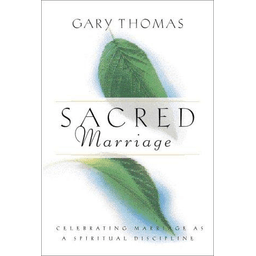 Sacred MarriageGary Thomas argues marriage is for holiness rather than happiness. No app, no metrics, and a direct challenge to the assumption under every relationship tracker - that a fuller love tank is the goal.
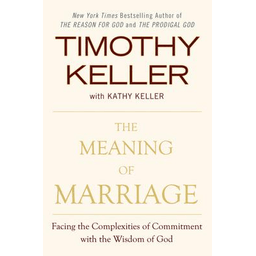 The Meaning of MarriageTim and Kathy Keller on marriage as covenant, for readers who want theology rather than technique. Denser than Chapman and far less actionable, but it answers the why that Love Nudge simply assumes.
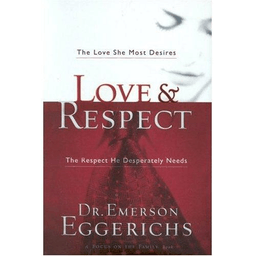 Love and RespectThe other enormously popular evangelical marriage framework, and the one whose gender assumptions have drawn sharper criticism than Chapman's. Listed for completeness rather than recommendation.
Frequently asked questions
Is Love Nudge really free?
Yes. Both stores print Free and no premium tier sits over the quiz, nudges, goals or love tank. Apple's listing does flag in-app purchases and the 5.2 notes name Book Purchasing, so the app appears able to sell you Chapman titles - the official app page does not mention this. The Premium Assessment is a separate product, priced $39 on its own page and $34.00 in the store index.
Do both partners need the app?
For anything that matters, yes. The vendor describes linking as what unlocks extra features, and nudges, shared goals and the partner love tank all need someone on the other end. Solo, you keep the quiz, your percentage profile and a private goal list. If your partner will not install it, take the free web quiz together and skip the download.
How does the assessment work?
Thirty forced-choice pairs in the couples, singles and teen versions, with a 20-question edition for children aged 8 to 12. A primary language surfaces after roughly 15 questions, and the finished profile returns a percentage across all five rather than one label. The same quiz is free on the web, where an email is requested only to save the full breakdown.
What exactly is a nudge?
A short in-app message to your linked partner: a request for something in your language, a playful prompt, or an ask to update the love tank. The love tank is self-reported rather than calculated, so treat it as a conversation opener, not a score. Unreliable push notifications are the most frequent Play Store complaint, which is a real risk for a product built on timely prompts.
Is the 5 Love Languages framework scientifically supported?
Not on its specific claims. Impett, Park and Muise's 2024 review in Current Directions in Psychological Science finds three core assumptions unsupported: the categories do not separate cleanly, intercorrelating at roughly r = .54 to .75; people rate all five highly when not forced to choose, weakening the idea of one primary language; and matching languages does not reliably predict higher satisfaction, while all five correlate positively with it. Against that, clinicians including Michele Weiner-Davis argue in Psychology Today that the framework still earns its place as a starting point, because the insight that people give love the way they prefer to receive it is simple, teachable and changes behaviour. A framework can be empirically shaky and practically useful at once.
Is Love Nudge a Christian app?
The publisher is; the app is not, in content terms. It is published by The Moody Bible Institute of Chicago under the Love Language Brand and contains no Scripture, prayer, devotional reading or explicit theology - which is why this review files it under the closest available category rather than an accurate one. Chapman is a Baptist pastor and the framework came out of counselling heterosexual churchgoing couples, and critics reasonably note the illustrative marriages assume traditional role divisions.
Sources & further reading
- Love Nudge app page, 5lovelanguages.com ↗
- Love Nudge on the App Store (id 495326842) ↗
- Love Nudge on Google Play, with Data safety section ↗
- The official Love Language Quiz ↗
- The 5 Love Languages Premium Assessment product page ↗
- The 5 Love Languages store index ↗
- Impett, Park and Muise, Current Directions in Psychological Science 33(2), 2024 ↗
- Weiner-Davis, The Case for the Five Love Languages, Psychology Today ↗
More Devotional Apps
 365 Christian Men365 Christian Men delivers short, memorable stories of faith and courage across history, now inside the broader 365 Christian Stories ministry—most useful as a free conversation starter when biography is sourced, contextualized and never confused with Scripture.
 Contagious Disciple MakingThe Contagious Disciple Making app gathers free stories, training, Scripture lists and community tools around Discovery Bible Study and DMM—useful as a doorway when coaching, local church accountability and participant safety remain larger than the app.
 Overflow Quiet Time CompanionOverflow is a free iPhone companion for turning a Bible, devotional or Christian app into a five-minute quiet-time rhythm—but its thoughtful simplicity comes with a tiny public track record and few recent feature additions.
 ReflectReflect builds a calm two-minute rhythm from Scripture, a personalized AI reflection, prayer and one honest question, with strong privacy documentation and no ads—but intimate context still reaches cloud services, and generated theology needs human judgment.
 Following JesusFollowing Jesus gives new believers a free pocket companion for seven Christian foundations, devotionals, Bible reading, worship and video—useful immediately, though its iOS build and privacy label lag the much newer Subsplash Android app.
 helloHOPEhelloHOPE offers free Scripture-centered encouragement, prayer, calming music and stories for families facing a child’s diagnosis—but advertising and cross-app tracking labels are a poor match for such a sensitive moment.