1 Chronicles 19
People in this chapter
A king is dead, and David wants to do something kind. Nahash of Ammon once showed him a good turn, so David sends comforters to console the grieving son. No army. No demand. Nothing in the messengers' hands but sympathy.1 But the welcome is poisoned. Hanun's advisors cannot believe a powerful king sends comfort for its own sake, so they read spies into it. The young king listens. He seizes David's ambassadors, shaves them, cuts their robes off short, and sends them home disgraced.
Tap any highlighted phrase to jump to the commentary that unpacks it.
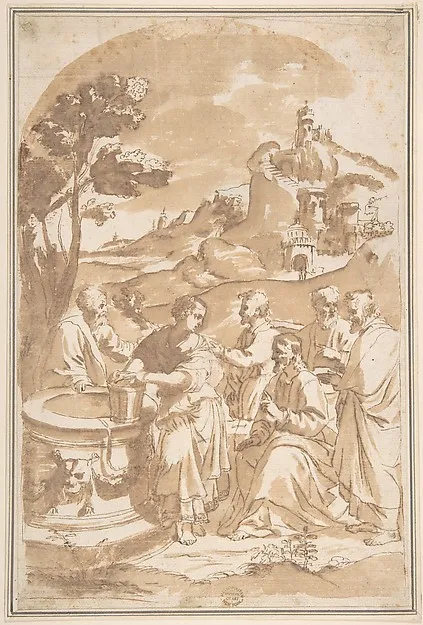
1 Chronicles 19:1-5The Kindness Intended, and the Insult Given
1Now it came to pass after this, that Nahash the king of the children of Ammon died, and his son reigned in his stead. 2And David said, I will shew kindness unto Hanun the son of Nahash, because his father shewed kindness to me. And David sent messengers to comfort him concerning his father. So the servants of David came into the land of the children of Ammon to Hanun, to comfort him. 3But the princes of the children of Ammon said to Hanun, Thinkest thou that David doth honour thy father, that he hath sent comforters unto thee? are not his servants come unto thee for to search, and to overthrow, and to spy out the land? 4Wherefore Hanun took David’s servants, and shaved them, and cut off their garments in the midst hard by their buttocks, and sent them away. 5Then there went certain, and told David how the men were served. And he sent to meet them: for the men were greatly ashamed. And the king said, Tarry at Jericho until your beards be grown, and then return.
A death reaches David, and his response is the surprise. A lesser king would have noted the change of throne in Ammon and moved on; David resolves to shew kindness unto Hanun the son of Nahash, because his father shewed kindness to me. Somewhere in David's earlier life - perhaps in the long years of flight from Saul - Nahash of Ammon had done him a good turn, and David has not forgotten it. Now Nahash is dead, his son is grieving, and David means to repay the old debt by sending comforters across the border.
The gesture is sympathy, plain and unarmed: David sent messengers to comfort him concerning his father. A secure king can afford to be kind; David, established on his throne, reaches out a hand to a rival's heir for no reason but loyalty and grief shared. It is one of the gentlest acts in the whole record of his reign.2
But the kindness falls into the hands of frightened men. Hanun's princes cannot conceive of unguarded sympathy from a powerful neighbor; they assume the worst, and they make their young king assume it too. Thinkest thou that David doth honour thy father, that he hath sent comforters unto thee? are not his servants come unto thee for to search, and to overthrow, and to spy out the land? In their mouths, comfort becomes reconnaissance and condolence becomes a plot.
The accusation builds in stages - to search… to overthrow… to spy out - until innocent mourners have been turned, in the telling, into an invasion force. This is the peculiar blindness of suspicion: it cannot read a gift as a gift, because it projects its own fear and calculation onto everyone else. The princes assume David must be as cynical as they would be in his place. And so a kindness offered in good faith is answered as if it were an act of war, entirely because of what the men receiving it could not believe.
Every detail of the shaming is an assault on a man's honor, and Hanun chooses each one. In that world the beard was a mark of dignity and free manhood; to shave a man forcibly was to unmake him, to treat a grown elder like a slave or a captive.2 And to cut his long garment off at the buttocks was to send him home half-naked, his shame exposed to every eye on the road.
Hanun does not kill the messengers - that might have been more merciful. He strips them of the outward marks of their manhood and sends them back as walking humiliations, living insults to the king who sent them. It is contempt made visible, a message scrawled on the bodies of the men who carried David's sympathy. The envoys came offering comfort and went home covered in disgrace, having done nothing at all but cross a border in good faith.
What David does when the news reaches him is the hinge of the whole opening. He does not, in this moment, summon the army or vow vengeance. His first thought is for the men themselves. He sent to meet them: for the men were greatly ashamed. And the king said, Tarry at Jericho until your beards be grown, and then return. David will not parade his disgraced servants through the capital; he will not let them face the eyes of Jerusalem until they can stand as whole men again.
He gives them a place to heal - Jericho, away from the court - and time for the marks of their honor to grow back. There is great tenderness in this. The king bends his attention to the wound before the war, telling his servants without quite saying it: you are still my men; wait until you can show your faces whole. A ruler who can be insulted through his servants and whose first response is to guard their dignity is a rare and gracious thing.
Before David lifts a hand against Ammon, he covers the shame of his own.1
1 Chronicles 19:6-9Made Odious to David, Ammon Hires the Syrians
6And when the children of Ammon saw that they had made themselves odious to David, Hanun and the children of Ammon sent a thousand talents of silver to hire them chariots and horsemen out of Mesopotamia, and out of Syriamaachah, and out of Zobah. 7So they hired thirty and two thousand chariots, and the king of Maachah and his people; who came and pitched before Medeba. And the children of Ammon gathered themselves together from their cities, and came to battle. 8And when David heard of it, he sent Joab, and all the host of the mighty men. 9And the children of Ammon came out, and put the battle in array before the gate of the city: and the kings that were come were by themselves in the field.
Too late, the consequences come into focus. Ammon realizes it has made itself odious to David - the word means rancid, stinking, a stench in the nostrils - and this is something no apology will smooth over. They had treated an offered kindness as an act of war; now they brace for the war they have invited. There is a grim honesty in the phrase. The text does not say David made them his enemies. It says they made themselves a stench to him.
The breach is their own doing, the fruit of their own contempt. And their response is telling. They do not send an envoy of apology. They hire an army. Having sown insult, they spend a fortune trying to buy protection from the harvest - the reflex of fear that will not own its fault, throwing money and force at a problem that began in the heart.1
The scale of the hiring is staggering. Hanun and the children of Ammon sent a thousand talents of silver to hire them chariots and horsemen - an immense sum, poured out to draw mercenaries from across the region: Mesopotamia, Syria-maachah, Zobah. So they hired thirty and two thousand chariots, and the king of Maachah and his people; who came and pitched before Medeba. The war-chariot was the heavy armor of the age, the most fearsome weapon a field army could put forward, and Ammon assembles them by the tens of thousands.2 On paper the coalition is overwhelming - vast in silver, vast in iron, a confederation of kings drawn together against Israel.
But notice what all that purchased might rests on: borrowed loyalty. The Syrians do not fight for Ammon's cause; they fight for Ammon's silver. It is an army with no heart in the quarrel, hired to die for a grievance that is not its own - and that hollowness at the center will tell when the fighting comes.
David answers without panic. He does not raise a hasty levy; he sends Joab at the head of the mighty men, his seasoned commander leading his finest soldiers. And the enemy's disposition sets the trap the next section will spring. The Ammonites hold the city gate at Joab's front; the hired Syrian kings deploy separately, by themselves in the field. Between them, Israel's army stands in danger of being caught between two forces.
The reader who knows war can feel the jaws of it closing. Everything now depends on the man David sent - on whether Joab can see what is happening fast enough, and whether the soldiers of Israel have something in them that thirty-two thousand hired chariots do not.
1 Chronicles 19:10-11Joab Sees the Trap, and Divides the Host
10Now when Joab saw that the battle was set against him before and behind, he chose out of all the choice of Israel, and put them in array against the Syrians. 11And the rest of the people he delivered unto the hand of Abishai his brother, and they set themselves in array against the children of Ammon.
Joab's first act is to see. Now when Joab saw that the battle was set against him before and behind - he reads the trap at a glance. The Ammonites hold the line before him at the city gate; the Syrian mercenaries are arrayed behind, in the field. A lesser commander, caught between two forces, would freeze or break. Joab does neither. He divides his army to meet both threats at once: he chose out of all the choice of Israel, and put them in array against the Syrians, and the rest of the people he delivered unto the hand of Abishai his brother against the Ammonites.
And mark which enemy Joab takes for himself - the Syrians, the hired professionals, the more dangerous foe. He keeps the choice men and the harder fight under his own command and gives his brother the rest. This is leadership that does not spare itself the heaviest burden. The commander steps to the front of the greater danger and sends his brother to the lesser, dividing the weight so that the army is not crushed by facing everything in one place.1
1 Chronicles 19:12-13Mutual Help, and Joab's Word of Courage and Trust
12And he said, If the Syrians be too strong for me, then thou shalt help me: but if the children of Ammon be too strong for thee, then I will help thee. 13Be of good courage, and let us behave ourselves valiantly for our people, and for the cities of our God: and let the LORD do that which is good in his sight.
Then Joab speaks, and the first thing out of his mouth is a bond. If the Syrians be too strong for me, then thou shalt help me: but if the children of Ammon be too strong for thee, then I will help thee. He does not pretend the battle is already won, nor claim he can carry it alone. He plans for the possibility that either wing may be pressed, and he ties the two halves of the army together by a promise: when one of us is overwhelmed, the other comes. This is the language of brothers in arms, of a kingdom whose strength is shared and interlocked across every man who holds a post.
There is humility in it - Joab admits he may need rescuing - and there is covenant loyalty in it, the same readiness to spend oneself for another that runs all through this chapter. Before he ever charges, Joab has made certain that neither wing will be left to die alone. The plan is built on the faithfulness of brothers to one another.
And then comes the word that has outlived the battle, one of the great sayings of courage in all of Scripture: Be of good courage, and let us behave ourselves valiantly for our people, and for the cities of our God: and let the LORD do that which is good in his sight. Hold the two halves of it together, because the whole of true courage is in the joining. First, the resolve to act: be of good courage… behave ourselves valiantly. Joab summons every ounce of effort and nerve his men can give, and he names what they are fighting for: our people, and the cities of our God. Not plunder.
Not the king's wounded pride. The cause is the protection of those they love and the inheritance God gave them. And then, having braced for total exertion, Joab lays the result entirely down: let the LORD do that which is good in his sight. This is neither fatalism nor presumption. Joab does not say, “the outcome is fixed, so why fight,” nor does he say, “we are strong enough to guarantee the win.” He says: we will do, to the last, all that is ours to do, and the verdict belongs to God.
He fights as though everything depends on the fighting, and trusts as though everything depends on the LORD. Most of your fear lives in the gap between those two. Name what is yours, do it with all your strength, and lay the rest in a hand that is good.
1 Chronicles 19:14-15The Syrians Flee, and Ammon Flees After Them
14So Joab and the people that were with him drew nigh before the Syrians unto the battle; and they fled before him. 15And when the children of Ammon saw that the Syrians were fled, they likewise fled before Abishai his brother, and entered into the city. Then Joab came to Jerusalem.
The battle is settled almost as soon as it is joined. So Joab and the people that were with him drew nigh before the Syrians unto the battle; and they fled before him. The hired professionals, the thirty-two thousand chariots, the coalition of kings - they break and run at the advance of Israel. The strength that was bought proves to be no strength at all when it meets soldiers who have something to fight for and a God to trust.
And the collapse spreads: when the children of Ammon saw that the Syrians were fled, they likewise fled before Abishai his brother, and entered into the city. Ammon's whole strategy had rested on the mercenaries; when the hired iron fled, the courage of those who hired it fled with it, and they retreated behind their walls. Then Joab came to Jerusalem. He does not lay siege or press a slaughter; the field is cleared, and he returns.
The chapter has shown, without sermonizing, exactly what Joab's prayer confessed: the men did their part valiantly, and the LORD did that which was good in His sight - and the overwhelming force that looked unbeatable on paper scattered before a courage rooted in something money cannot buy.
1 Chronicles 19:16-19The Syrians Regroup; the LORD Gives the Victory
16And when the Syrians saw that they were put to the worse before Israel, they sent messengers, and drew forth the Syrians that were beyond the river: and Shophach the captain of the host of Hadarezer went before them. 17And it was told David; and he gathered all Israel, and passed over Jordan, and came upon them, and set the battle in array against them. So when David had put the battle in array against the Syrians, they fought with him. 18But the Syrians fled before Israel; and David slew of the Syrians seven thousand men which fought in chariots, and forty thousand footmen, and killed Shophach the captain of the host. 19And when the servants of Hadarezer saw that they were put to the worse before Israel, they made peace with David, and became his servants: neither would the Syrians help the children of Ammon any more.
A beaten enemy does not always go quietly, and this one does not. Stung at being put to the worse before Israel, the Syrians answer with escalation. They summon reinforcements from further off - the Syrians beyond the river, the great reach of Hadarezer's power - and put a named commander, Shophach, at their head. The first defeat has stung their pride and threatened their standing, and so they gather a larger and more formidable host to try again.
Evil and opposition often work this way: pushed back once, they regroup with greater force, unwilling to let a single defeat stand. The first battle was won, but the war is not over; the enemy returns, stronger, and the people of God are called to face the threat a second time, on a larger field.
This time David himself takes the field. It was told David; and he gathered all Israel, and passed over Jordan, and came upon them, and set the battle in array against them. The first battle Joab fought as David's commander; this larger threat the king meets in person, mustering all Israel and crossing the Jordan to bring the fight to the enemy. There is decisiveness in it - David goes out to meet the gathering force before it can choose its own ground.
And the outcome is total: the Syrians fled before Israel; and David slew of the Syrians seven thousand men which fought in chariots, and forty thousand footmen, and killed Shophach the captain of the host. The reinforced army, the host from beyond the river, the named commander - all of it shatters before Israel. The chariots that were Ammon's great hope are destroyed; the captain who led the second host is killed. What looked, two battles ago, like an overwhelming coalition of silver and iron has been broken twice over, and the second breaking is the more complete.
It is worth pausing on how the victory is framed, because the chapter keeps the same note it struck through Joab's prayer. The Syrians had every earthly advantage - numbers, chariots, a reinforced host drawn from a wide empire, an experienced captain - and twice they fled before Israel. The hinge in both battles is the enemy's collapse: they fled. The LORD did what was good in His sight, and the borrowed strength of the coalition could not stand.
This is the quiet theology running under the whole war. The kindness was God's kind of kindness; the courage was courage anchored in God; and the deliverance, when it came, was plainly the LORD's doing, scattering a force that on every spreadsheet should have prevailed. Joab's confession in verse 13 is vindicated in the field: the people behaved themselves valiantly, and the LORD gave the victory.
The second defeat breaks more than the Syrian army; it breaks the Syrian will. The mercenary alliance simply dissolves. The very men who had been hired to fight Israel now made peace with David, and became his servants, and they withdraw their swords from Ammon's cause for good. Ammon, who began the whole conflict by shaming David's ambassadors and then spent a fortune to buy an army, is left exactly where its contempt deserved - abandoned by its hired strength and standing alone.
The chapter that opened with rejected kindness closes with the rejecter isolated and the kingdom of David enlarged by former enemies who now call him lord. The insult that was meant to humiliate David has ended by extending his peace; the war Ammon bought has cost Ammon its allies. The LORD did that which was good in His sight, and what was good turned even an act of contempt into the increase of the king's honor.
Research trail
Sources & further study
These references support the historical, linguistic, manuscript, and contextual notes in this chapter. Scripture remains the primary text; external sources are provided so readers can inspect the research directly.
- 1 Chronicles 19 - Translators' NotesThe NET Bible's detailed footnotes on 1 Chronicles 19 - the diplomatic custom of sending condolences (v. 2), the gravity of shaving a man's beard and exposing him (v. 4), the meaning of becoming “odious,” and the wording of Joab's charge in verse 13.
- Art of the Ancient Near East · Heilbrunn TimelineThe Met's survey of the ancient Near Eastern world that frames this chapter - the beard and the long garment as marks of a free man's honor (v. 4), the hired war-chariot as the heavy weapon of the age (vv. 6-7), and the diplomatic embassy moving between rival courts.
- 1 Chronicles 19 · Hebrew + classical Jewish commentaryThe Hebrew text of 1 Chronicles 19 with Rashi, Radak, and other classical commentators side by side - useful for chesed (v. 2, the “kindness” David meant to show), for the shaming of the ambassadors in verse 4, and for the parallel account of the same war in 2 Samuel 10.
- 1 Chronicles 19 ↔ John 1 · Matthew 21 · 2 Corinthians 5Traces the threads tying David's rejected kindness and shamed ambassadors (vv. 2-5) to the King who came unto his own, and his own received him not (John 1:11), the servants beaten in the vineyard (Matt. 21:35-37), and the call to be ambassadors for Christ (2 Cor. 5:20).
Where this echoes in Scripture
The Kindness Intended, and the Insult Given
- John 1:11He came unto his own, and his own received him not.The wound of love refused - the kindness of the true King met, like David's, with rejection.
- Matthew 21:35And the husbandmen took his servants, and beat one, and killed another, and stoned another.The servants sent in good faith and shamed - the pattern of David's ambassadors, told by the Lord of His own.
- Psalm 136:1O give thanks unto the LORD; for he is good: for his mercy endureth for ever.The chesed David offered Hanun - the steadfast, covenant-keeping kindness that mirrors the LORD's own.
- Hebrews 2:11For both he that sanctifieth and they who are sanctified are all of one: for which cause he is not ashamed to call them brethren.David covered his shamed servants' disgrace - the King who is not ashamed of those the world stripped.
Made Odious to David, Ammon Hires the Syrians
- Psalm 20:7Some trust in chariots, and some in horses: but we will remember the name of the LORD our God.Ammon's thirty-two thousand hired chariots - the borrowed might that cannot stand where the LORD is at work.
- Proverbs 28:13He that covereth his sins shall not prosper: but whoso confesseth and forsaketh them shall have mercy.The road Ammon refused - repair at the source, before the harvest of contempt makes war unavoidable.
- Matthew 5:25Agree with thine adversary quickly, whiles thou art in the way with him.The cheaper, harder road past the breach - reconciliation sought before the consequences gather.
The Syrians Flee, and Ammon Flees After Them
- Luke 22:42Father, if thou be willing, remove this cup from me: nevertheless not my will, but thine, be done.The surrender at the heart of Joab's word - full obedience offered, the outcome laid in the Father's good will.
- 1 Corinthians 16:13Watch ye, stand fast in the faith, quit you like men, be strong.The courage Joab called for, pressed on the whole church - the same “be strong” for every battle of faith.
- Joshua 1:9Be strong and of a good courage; be not afraid... for the LORD thy God is with thee whithersoever thou goest.The chazaq command from which Joab's charge draws - strength anchored in the presence of God.
- Proverbs 21:31The horse is prepared against the day of battle: but safety is of the LORD.The truth Joab confessed and the field proved - the army does its part, but the victory is the LORD's.
The Syrians Regroup; the LORD Gives the Victory
- 2 Corinthians 5:20Now then we are ambassadors for Christ, as though God did beseech you by us.David's shamed envoys - the dignity and danger of carrying a King's word of reconciliation into hostile ground.
- John 15:20The servant is not greater than his lord. If they have persecuted me, they will also persecute you.The ambassadors treated as the world treated the King who sent them - the warning the Lord gave His own.
- Colossians 1:20And, having made peace through the blood of his cross, by him to reconcile all things unto himself.The end of the war - enemies made servants, a foretaste of the peace the Son of David wins by His blood.
- Isaiah 9:6And his name shall be called Wonderful, Counsellor, The mighty God, The everlasting Father, The Prince of Peace.The shalom that ends the chapter, raised to its fullness in the promised King of David's line.