Wisdom of Solomon 3
How do you make sense of a good person who suffers and dies with nothing to show for it? To the watching world it looks like proof that goodness does not pay, that the righteous are abandoned, that death simply ends them. The Wisdom of Solomon answers that despair with one of the most quietly triumphant sentences ever written: "the souls of the just are in the hand of God, and the torment of death shall not touch them."
The chapter does not deny that the righteous suffer. It insists that the suffering is being read wrong. What the unwise see as ruin, God sees as a soul held safe in His own hand.
Tap any highlighted phrase to jump to the commentary that unpacks it.
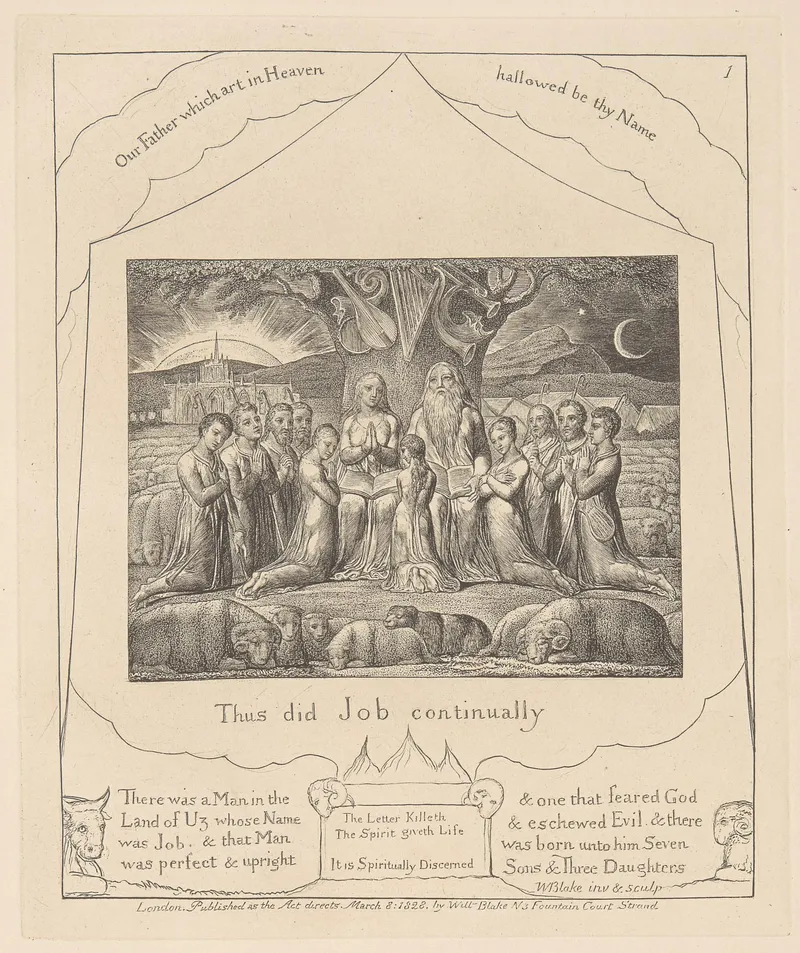
Wisdom of Solomon 3:1-3In the Hand of God, and at Peace
1But the souls of the just are in the hand of God, and the torment of death shall not touch them.
The chapter opens with a sentence that has carried mourners through grief for more than two thousand years. To be "in the hand of God" is to be held, kept, protected by the strongest grip there is. The image runs all through Scripture: the sheep of God's pasture whom no one can pluck out of His hand, the soul committed into the Father's keeping. And the promise attached to it is bold. The "torment of death," the thing that looks like the end of everything, "shall not touch them."
Whatever death does to the body, it cannot reach the soul that God Himself is holding. The just are safe in the one place nothing can pry them loose.
2In the sight of the unwise they seemed to die: and their departure was taken for misery: 3And their going away from us, for utter destruction: but they are in peace.
Notice the careful wording: "in the sight of the unwise they seemed to die." The chapter does not pretend no one died; it says the outward appearance is being misread. To eyes that see only the surface, death looks like misery, departure, "utter destruction," the total loss of a person. This is how the world tells the story of every righteous life that ends in suffering. The chapter does not mock that grief. It simply insists that the unwise are working from incomplete sight. There is a deeper truth they cannot see from where they stand.
Then comes the turn, on a single short clause: "but they are in peace." Against every appearance of ruin, the reality is peace. The word lands with quiet weight: rest, in place of all the destruction the unwise imagined. This is the great reversal the chapter is built on, the gap between how things look and how they are. The wicked read the suffering of the righteous as evidence that God has abandoned them. The chapter answers that they have it exactly backward.
The departed just are not lost. They are at peace in the hand of the God who made them and keeps them.
Wisdom of Solomon 3:4-6Their Hope Is Full of Immortality
4And though in the sight of men they suffered torments, their hope is full of immortality.
The chapter concedes the hard part without flinching: "in the sight of men they suffered torments." The righteous really do suffer, sometimes terribly, and there is no use pretending otherwise. But over against that visible suffering it sets an invisible reality: "their hope is full of immortality." Their hope reaches far past a thin wish that things might improve. It is full, brimming, weighted with the expectation of a life that death cannot end. This is the hope that lets a person endure present pain without being crushed by it, because the suffering is measured against something that outlasts it.
5Afflicted in few things, in many they shall be well rewarded: because God hath tried them, and found them worthy of himself. 6As gold in the furnace he hath proved them, and as a victim of a holocaust he hath received them, and in time there shall be respect had to them.
Here the suffering is given a meaning that turns it inside out. The afflictions were a trial, a testing, and the outcome is that God "found them worthy of himself." The scale is deliberately lopsided: "afflicted in few things, in many they shall be well rewarded." Whatever was endured, however heavy it felt, is "few" beside what is given. And the deepest dignity is hidden in that phrase "worthy of himself." God tested the just to reveal and refine what was genuine in them, and what He found He claimed as fit for His own presence.
The hardship was God drawing near to prove gold, the opposite of God turning away.
The furnace image is one of the most enduring in all of Scripture, and the chapter uses it with precision. Gold is put into the fire to burn away everything that is not gold; the heat does not ruin it, it reveals and purifies it. "As gold in the furnace he hath proved them." Then a second image is laid alongside: God "received them" as an offering wholly given up to Him. So the suffering of the just is read two ways at once, as refining fire and as an offering accepted.
Either way it carries meaning: the soul is being made pure, and being received. And the promise closes the verse: "in time there shall be respect had to them." The honor is coming; it is only delayed.
Wisdom of Solomon 3:7-9They Shall Shine, and Reign with Him
7The just shall shine, and shall run to and fro like sparks among the reeds. 8They shall judge nations, and rule over people, and their Lord shall reign for ever.
The vision now lifts from peace and proving to glory. "The just shall shine." The very people the world overlooked, who suffered in obscurity and died unhonored, will blaze with light. The image that follows is full of motion and joy: "sparks among the reeds," fire racing through dry stubble, swift and bright and unstoppable. This is the destiny the chapter has been building toward. The hiddenness of the righteous life is temporary. A day comes when what was concealed is revealed in brightness, and the ones the world could not see become impossible to miss.
Their glory is not isolated honor; it is shared rule. "They shall judge nations, and rule over people." The afflicted just are destined not merely to be vindicated but to reign, given a share in God's own governance of the world. And the foundation of all of it is named in the last clause: "their Lord shall reign for ever." Their reigning rests entirely on His. The honor that comes to the just is the overflow of the everlasting reign of God, who lifts His faithful ones to share in what is His.
Their future is secured by the permanence of His throne, which no power of theirs could ever provide.
9They that trust in him, shall understand the truth: and they that are faithful in love shall rest in him: for grace and peace is to his elect.
This verse gathers the whole promise into a few words about how a person lays hold of it. The way in is trust: "they that trust in him, shall understand the truth." Understanding is given to the trusting heart, not seized by the suspicious one. The way through is faithful love: "they that are faithful in love shall rest in him." And the gift at the end is named plainly, "grace and peace," given to those God claims as His own.
Trust, faithfulness, rest, grace, peace: this is the shape of the life that ends in shining. It begins now, in the quiet decision to trust the God whose hand holds the just.
Wisdom of Solomon 3:10-13Hope That Is Vain, and Labor Without Fruit
10But the wicked shall be punished according to their own devices: who have neglected the just, and have revolted from the Lord. 11For he that rejecteth wisdom, and discipline, is unhappy: and their hope is vain, and their labours without fruit, and their works unprofitable.
The chapter now turns to the other side of the ledger, and the contrast is deliberate. The just are punished by nothing; the wicked "shall be punished according to their own devices." Their ruin is not an arbitrary sentence imposed from outside; it grows out of the very schemes they devised. Two faults are named: they "neglected the just," treating the righteous as beneath notice, and they "revolted from the Lord." The two go together.
Contempt for God's people and rebellion against God are one movement of the same heart. Where the just are held in God's hand, the wicked are left to the consequences of their own hands.
The verdict on a life that rejects wisdom is quietly devastating: "their hope is vain, and their labours without fruit, and their works unprofitable." This is the exact mirror of the just, whose "hope is full of immortality." Both lives have hope; the difference is what the hope is anchored to. The wicked pour out genuine effort, real labor, but it comes to nothing because it is built on what cannot last. The chapter takes no pleasure in their failure; it grieves a tragedy: a whole life of work that, having rejected the only thing that gives life weight, finally yields no fruit at all.
13Their offspring is cursed: for happy is the barren: and the undefiled, that hath not known bed in sin: she shall have fruit in the visitation of holy souls.
Here the chapter overturns one of the deepest assumptions of the ancient world, where childlessness was felt as a curse and many children as the surest sign of blessing. "Happy is the barren," it says, if she is "undefiled." The woman the world pitied for having no children, but who kept her integrity, is pronounced blessed, and promised "fruit in the visitation of holy souls," a harvest of a different and lasting kind. The chapter is redrawing the whole scorecard.
The fruit that matters is not measured the way the world measures it. A faithful life that looks empty by worldly counting is full in the sight of God.
Wisdom of Solomon 3:14-19The Root of Wisdom Never Faileth
14And the eunuch, that hath not wrought iniquity with his hands, nor thought wicked things against God: for the precious gift of faith shall be given to him, and a most acceptable lot in the temple of God.
The reversal goes even further. Under the older order a eunuch could be barred from the assembly and felt himself a "dry tree," cut off from the future. The chapter lifts him up. The eunuch who "hath not wrought iniquity," who has kept his hands and even his thoughts clean before God, is promised "the precious gift of faith" and "a most acceptable lot in the temple of God." The very person the world counted as having no place is given the best place.
What qualifies him is a life of integrity toward God, with no mention of lineage or progeny at all. The chapter keeps making the same point from every angle: God honors faithfulness, and faithfulness is open to anyone.
15For the fruit of good labours is glorious, and the root of wisdom never faileth.
This is the verse the whole chapter has been growing toward, and it lands like a proverb you could carry for life: "the fruit of good labours is glorious, and the root of wisdom never faileth." A root is the hidden part, the unseen anchor beneath the soil, and that is exactly the point. The visible fruit of a faithful life is glorious in its season, but the root, the wisdom that holds the whole life in place, never fails.
The wicked's labor was "without fruit." The just have a root that cannot be killed. When everything visible is stripped away, the believer's life is still anchored in something underground and unbreakable.
16But the children of adulterers shall not come to perfection, and the seed of the unlawful bed shall be rooted out. 19For dreadful are the ends of a wicked race.
The chapter closes the contrast by following the other path to its end. Where the just have a root that never fails, the fruit of a life rooted in unfaithfulness "shall be rooted out." The language is solemn and final: such a life does not "come to perfection," does not reach the wholeness it was made for, and "dreadful are the ends of a wicked race." This is sobering, and it is meant to be.
But set within the whole chapter, it serves the larger comfort. The same God who guarantees that no faithful life is finally lost also guarantees that evil does not get the last word. Both halves of that truth steady the heart: the just are kept, and injustice will not endure.
Where this echoes in Scripture
In the Hand of God, and at Peace
- Psalm 116:15Precious in the sight of the LORD is the death of his saints.What the unwise call misery, God calls precious.
- John 10:28And I give unto them eternal life; and they shall never perish, neither shall any man pluck them out of my hand.The same hand of God, and the same promise that death cannot pry the soul loose.
- Luke 23:46Father, into thy hands I commend my spirit.Christ Himself entrusts His soul to the hand the just rest in.
Their Hope Is Full of Immortality
- 1 Peter 1:7That the trial of your faith, being much more precious than of gold that perisheth, though it be tried with fire, might be found unto praise.Faith proved by fire like gold, the same assaying image.
- Malachi 3:3And he shall sit as a refiner and purifier of silver... and purge them as gold and silver.God as the refiner who sits over the fire until the metal is pure.
- Romans 8:18For I reckon that the sufferings of this present time are not worthy to be compared with the glory which shall be revealed in us.Paul weighs the same lopsided scale: "few things" now, "many" then.
They Shall Shine, and Reign with Him
- Daniel 12:3And they that be wise shall shine as the brightness of the firmament; and they that turn many to righteousness as the stars for ever and ever.The same promise of the righteous shining like light.
- Matthew 13:43Then shall the righteous shine forth as the sun in the kingdom of their Father.Jesus repeats this chapter's promise almost word for word.
- 2 Timothy 2:12If we suffer, we shall also reign with him.The afflicted just who "shall judge nations" reign because they suffered with Him.
Hope That Is Vain, and Labor Without Fruit
- Galatians 6:8For he that soweth to his flesh shall of the flesh reap corruption; but he that soweth to the Spirit shall of the Spirit reap life everlasting.The same two harvests: labor without fruit, or fruit unto life.
- Jeremiah 17:7-8Blessed is the man that trusteth in the LORD... he shall be as a tree planted by the waters... her leaf shall be green... neither shall cease from yielding fruit.Where hope is anchored decides whether the labor bears fruit.
- Isaiah 54:1Sing, O barren, thou that didst not bear... for more are the children of the desolate than the children of the married wife.The same reversal: the barren of integrity is called blessed.
The Root of Wisdom Never Faileth
- Isaiah 56:4-5Unto the eunuchs that keep my sabbaths... even unto them will I give in mine house... a place and a name better than of sons and of daughters.God's own promise to the faithful eunuch: the best place in His house.
- Acts 8:38-39And he commanded the chariot to stand still... and he baptized him. And... the eunuch... went on his way rejoicing.The promise to the faithful eunuch fulfilled in the gospel reaching him.
- Psalm 1:3-4He shall be like a tree planted by the rivers of water... The ungodly are not so, but are like the chaff which the wind driveth away.The rooted life that endures against the rootless life that is driven off.