

Who was Herod Antipas in the Bible?
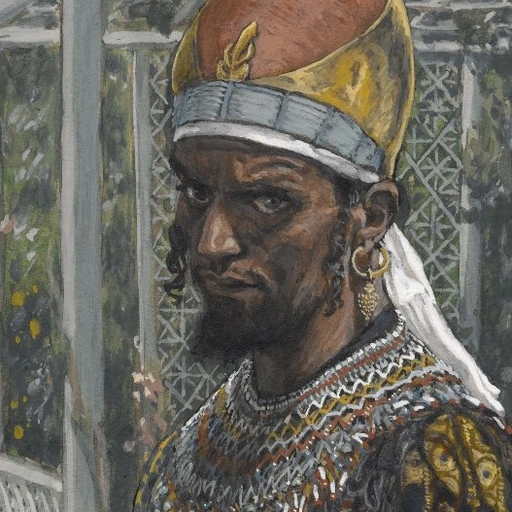
Herod Antipas was the ruler of Galilee who had John the Baptist beheaded and later questioned Jesus at His trial.
Tetrarch of Galilee
1st century AD
Herod Antipas was the ruler of Galilee who had John the Baptist beheaded and later questioned Jesus at His trial.
Follow the reading trailBEYOND THE NAME
Herod Antipas, a son of Herod the Great, governed Galilee and Perea as tetrarch during the ministry of Jesus. He imprisoned John the Baptist for condemning his unlawful marriage to Herodias, then had John executed after a rash oath made at his birthday feast. When Jesus was sent to him during the trial, Antipas hoped to see a miracle, but Jesus gave him no answer.
Themes in the authored commentary
These entries connect the study to the source’s recorded family context. Read their cautions when the family records or identifications differ.
FOLLOW THE PASSAGES
These are chapter studies associated with this record. Their order follows the books and chapters, rather than a reconstructed timeline of the person’s life.
tetrarch who imprisoned John the Baptist and had him beheaded at Herodias' urging
Matthew frames the whole chapter with a question about identity. Word of Jesus’ works reaches the palace, and Herod the tetrarch - the same Herod who had silenced John - jumps to a haunted conclusion: This is John the Baptist; he is risen from the dead; and therefore mighty works do shew forth themselves in him (v. 2). It is the reasoning of a guilty man. So Matthew turns back to recount how John died: imprisoned for naming Herod’s marriage unlawful, then beheaded to satisfy a rash oath sworn before dinner guests, his head brought in on a platter at the request of a dancing girl coached by her mother.
Chapter overview from the authored study guide.tetrarch who imprisons and then executes John the Baptist at Herodias's urging
Mark 6 is built on a rhythm of rejection and mercy, and the two keep crashing into each other. It opens at home, in Nazareth, where Jesus teaches in the synagogue and the hometown crowd is astonished - but their astonishment curdles into offense. Is not this the carpenter, the son of Mary, the brother of James, and Joses, and of Juda, and Simon? and are not his sisters here with us? (v. 3). They cannot hold together the boy they remember and the prophet now speaking with such authority, so they take offense, and Jesus answers with the saying that has outlived the moment: A prophet is not without honour, but in his own country (v. 4).
Chapter overview from the authored study guide.tetrarch rebuked by John for taking his brother's wife
Luke opens the chapter like a historian dating a charter. Now in the fifteenth year of the reign of Tiberius Caesar, Pontius Pilate being governor of Judaea, and Herod being tetrarch of Galilee… Annas and Caiaphas being the high priests (vv. 1-2) - emperor, governor, tetrarchs, high priests, the whole apparatus of worldly and religious power named in a row. And then the sentence turns, and the weight falls in the most unexpected place: the word of God came unto John the son of Zacharias in the wilderness. Not to the throne, not to the temple, but to a man in the desert.
Chapter overview from the authored study guide.called 'that fox' by Jesus when warned that Herod seeks to kill him
The chapter opens with people bringing Jesus news of an atrocity: There were present at that season some that told him of the Galilaeans, whose blood Pilate had mingled with their sacrifices (v. 1). Behind their report lies an old and stubborn assumption - that catastrophe is a measure of guilt, that those who suffer most must have sinned most. Jesus meets it head-on and rejects it twice, adding a second disaster of His own, the eighteen crushed when the tower in Siloam fell (v. 4): Suppose ye that these… were sinners above all…? I tell you, Nay. He will not turn tragedy into a verdict on the dead.
Chapter overview from the authored study guide.mocks Jesus and sends him back to Pilate after questioning him
Luke has brought the long night of arrest and questioning to its end; now it is morning, and the whole council rises and leads Jesus to Pilate, the Roman governor, the only man with power to put Him to death. The charge they bring is political, framed to alarm Rome: We found this fellow perverting the nation, and forbidding to give tribute to Caesar, saying that he himself is Christ a King. Pilate puts the one question that matters to an empire: Art thou the King of the Jews? Jesus answers, Thou sayest it - affirming the title without playing the part of a rebel.
Chapter overview from the authored study guide.THE PEOPLE AROUND THE PERSON
Recorded parents
Recorded spouses
Relationships follow the source graph. Some are interpretive or uncertain, and individual verse citations are not yet available for every connection.
STUDY & INTERPRETATION
Herod Antipas embodies the worldly power that recurs throughout Scripture, fascinated by holiness yet unwilling to bend to it. He heard John gladly and was troubled by him, yet he silenced the prophet to save face before his guests, choosing reputation over repentance. When the silent Christ stood before him, the ruler who could command armies could not command a single word, and his curiosity curdled into mockery. His story is a sober picture of a heart that hears the truth, even enjoys it for a season, and still turns away, contrasted with the One who endured such rulers in order to redeem all who would receive Him.
From the Learn of Christ person commentary. Read alongside the linked Scripture passages.KEEP SCRIPTURE CLOSE
5 authored chapter guides feature this person. This is guide coverage, not an exhaustive count of biblical mentions.
ASK A BETTER QUESTION
Identity, story, early-life sources, family, and where to read.
Names and spellings in the source: Herod Antipas · Herod
Herod Antipas was the ruler of Galilee who had John the Baptist beheaded and later questioned Jesus at His trial.
Herod Antipas, a son of Herod the Great, governed Galilee and Perea as tetrarch during the ministry of Jesus. He imprisoned John the Baptist for condemning his unlawful marriage to Herodias, then had John executed after a rash oath made at his birthday feast. When Jesus was sent to him during the trial, Antipas hoped to see a miracle, but Jesus gave him no answer.
The individualized passage index associates this Herod Antipas record with Matthew, Mark, Luke, Acts. There are 24 distinct indexed verse references in the 66-book Bible. Browse the book-by-book list below; it separates this identity from other people who share the name. Source assignments and textual identifications can require interpretation.
A separate childhood account for Herod Antipas is not provided in our current authored profile sources. Begin with Matthew 14:1 and the passages linked here for the evidence that is available. The first indexed reference to a name is not a birth record. This profile does not establish a birth date, schooling, or childhood events beyond what its sources state.
Herod Antipas’s source record lists Herod the Great (father), Herodias (spouse). These are source-graph relationships; legal family, uncertain identifications, and ancestral language require the cautions below. Individual verse evidence is not yet retained for every family edge.
Herod Antipas embodies the worldly power that recurs throughout Scripture, fascinated by holiness yet unwilling to bend to it. He heard John gladly and was troubled by him, yet he silenced the prophet to save face before his guests, choosing reputation over repentance.
Answers draw on our existing authored biography and linked chapter studies. Where supplied, verse assignments come from the individualized STEP Bible index. Childhood answers distinguish documented events from gaps in the available sources.
FIND THE PERSON IN THE TEXT
24 distinct verse references in the source’s 66-book index. These are indexed name assignments, rather than every indirect allusion to this person. A name may also refer to descendants, a tribe, or a nation; read each passage to distinguish that usage from the individual.
“At that time Herod the tetrarch heard of the fame of Jesus,”
Matthew 14:1 · King James Version
“And when a convenient day was come, that Herod on his birthday made a supper to his lords, high captains, and chief estates of Galilee;”
Mark 6:21 · King James Version
“And Herod said, John have I beheaded: but who is this, of whom I hear such things? And he desired to see him.”
Luke 9:9 · King James Version
“Now there were in the church that was at Antioch certain prophets and teachers; as Barnabas, and Simeon that was called Niger, and Lucius of Cyrene, and Manaen, which had been brought up with Herod the tetrarch, and Saul.”
Acts 13:1 · King James Version
References are adapted from STEP Bible / Tyndale House TIPNR (CC BY 4.0). Deduplicated, matched to this identity, and checked against the bundled KJV’s verse bounds. Interpretive assignments and translation/versification differences may remain. This index is separate from evidence for individual family relationships.
YOUR OWN OBSERVATIONS
Notes, saved people, and study marks stay in this browser. They do not sync to your account.
KEEP EXPLORING
People featured in the same study guides. Sharing a chapter does not establish a family relationship.