- Starting price
- Free
- Free tier
- Yes
- Platforms
- iOS · Android
- Developer
- Independent developer (community-maintained)
- Launched
- 2014
- Updated
- May 24, 2026
The verdict
The cleanest standalone way to read, study, and memorize the Heidelberg Catechism on a phone. It is small, free, and unambitious in the best sense - a single confession, well presented, with the scripture proofs and the Lord’s Day rhythm intact.
Try Heidelberg Catechism ↗Opens apps.apple.com
The Heidelberg Catechism app has quietly become the favorite of Reformed Christians who want the 1563 catechism on their phone without a Logos library, a denominational portal, or a paid devotional subscription wrapped around it. It is a single confession, presented straight, with the structure the catechism was written to have - 129 questions, 52 Lord’s Days, full scripture proofs, and a memorization drill.
It is not a study Bible. It is not a daily-devotional habit app. It is not a sermon library. It is the Heidelberg Catechism, indexed and searchable, with a quiet weekly schedule and a flashcard mode for people who actually want to learn the answers by heart. That narrow scope is the whole point.
The catechism itself is one of the Three Forms of Unity - the doctrinal standards of Dutch and continental Reformed churches - and a confessional standard in many American Reformed and Reformed-adjacent denominations (URCNA, RCA, CRC, PRC, and others). Famous for its opening question - "What is your only comfort in life and in death?" - it reads more pastorally than the Westminster Standards and is often described as the warmest of the major Reformation catechisms. The app respects that warmth and largely stays out of its way.
✓ The good
- Full 129 questions and answers in clean, readable typography - not a scanned PDF, not a stripped excerpt
- Lord’s Day schedule built in - the catechism’s native 52-week rhythm is the default navigation, which matches how Reformed congregations actually use it
- Memorization mode with Q→A drill - hide the answer, recall it, reveal, repeat; the simplest possible flashcard loop and exactly what most users want
- Scripture proof-texts integrated under each answer - the references the Heidelberg authors cited, not a modern editor’s shortlist
- Completely free with no ads, no subscription, no upsell - a single-purpose tool that has stayed a single-purpose tool
- Works fully offline once installed - useful for catechism class, road trips, and any context where you do not want a network dependency
✗ Watch out
- Translation choice is fixed in most builds - the standard English text is presented without a side-by-side German or Dutch original
- No audio reading of the questions and answers - a missed opportunity for commute or chore-time review
- No spaced-repetition scheduling in the memorization mode - it is a manual drill, not a smart-review system like Anki or The Bible Memory App
- No notes, highlights, or journaling - if you want to mark up the catechism you will need a paper copy or a separate app
- UI is dated and varies in polish between the iOS and Android builds - functional, but clearly the work of a small maintainer rather than a design team
Best for
- Reformed Christians (continental, Dutch, or American) using the catechism as a confessional standard
- Catechism students working through the 52 Lord’s Days alongside a congregation or class
- Memorizers who want a clean Q→A drill without account creation or gamification
- Pastors and elders who want the full text and proof-texts on a phone for quick reference
Avoid if
- You want a broader Reformed library - the Westminster Standards, Three Forms of Unity in one app, or commentary integration
- You want spaced-repetition memorization with a review schedule that adapts to your recall
- You want audio narration or a guided daily devotional wrapped around the text
- You want a polished, modern UI with cross-device sync and a web companion
What Heidelberg Catechism is
The Heidelberg Catechism app is a standalone mobile reader and study tool for the 1563 catechism of the same name. The app contains the full English text of the 129 questions and answers, divided into the traditional 52 Lord’s Days, with the scripture references that have accompanied the catechism since its original publication. It is available on iOS and Android, runs offline after install, and asks nothing of the user - no account, no subscription, no analytics opt-in dance.
Functionally it does three things. It lets you read the catechism in its native weekly structure. It lets you look up any individual question or proof-text. And it lets you memorize the answers using a simple hide-and-reveal drill. That is the entire surface area, and it is the right surface area for this confession.
Why Reformed readers prefer a single-confession app
The Heidelberg Catechism is unusual among Reformation documents in that it was written to be used in a specific way: one Lord’s Day per week, fifty-two weeks per year, preached or taught alongside Sunday worship. That rhythm is the whole architecture of the document, and most general Bible apps flatten it. They will give you the text as a single long document, or buried inside a larger confessions module, with no sense that the original authors expected you to live with it across a calendar year.
A single-purpose app respects the work. The Lord’s Day index is the default screen. The week’s questions are grouped the way Ursinus and Olevianus grouped them. The proof-texts sit under the answer they were chosen for, not in a separate cross-reference pane. None of this is revolutionary - it is just the catechism behaving like the catechism, which is exactly what people who care about it want from a phone app.
Lord’s Day structure: the catechism the way it was meant to be used
The app’s primary navigation is the 52 Lord’s Days, not the 129 questions. Open the app and you see a list of weeks; tap a week and you see the two to seven questions assigned to it, grouped under the historical headings the catechism uses (Misery, Deliverance, Gratitude - the three-part scheme of Lord’s Days 2-4, 5-31, and 32-52). You can jump straight to question 1, of course, but the default view is the calendar view, and that is the right default.
This sounds like a small thing. In practice it is the difference between reading the catechism and using the catechism. Congregations that preach through Heidelberg in a year, families that read a Lord’s Day after Sunday dinner, and classes that work week-by-week through confirmation - all of them inherit a built-in pace from the document itself, and the app keeps that pace visible. You always know where you are in the cycle, and you always know what week is next.
Memorization mode: the simplest flashcard loop that works
The memorization mode is exactly what you would expect and nothing more. You see a question. You think (or say aloud) the answer. You tap to reveal the official text. You move to the next question. You can drill within a single Lord’s Day, across a range, or across the full 129. There is no streak counter, no XP, no gamification - just the questions and your own honesty about whether you got the answer.
For Q1 and a handful of others this is the killer feature. The Heidelberg answers are often paragraph-length, written in the first person, and meant to be internalized rather than merely understood. "That I am not my own, but belong with body and soul, both in life and in death, to my faithful Saviour Jesus Christ" - the kind of sentence that does its work when it is in your bones, not just in your bookmarks. A clean Q→A drill on a phone is the model that respects that work. The catch - noted in the cons - is that there is no spaced-repetition scheduling, so long-term retention is on you.
Scripture proof-texts: the references in their original home
Every answer in the catechism is accompanied by scripture references - sometimes a single verse, often a cluster of three or four. These were chosen by the catechism’s authors (with later additions in the Reformed tradition) to ground each answer in the biblical text rather than in the authority of the catechism itself. The app surfaces these proof-texts beneath each answer, with the reference visible and (depending on the build) tappable to expand the verse.
For confessional Reformed readers this is the point. The catechism is not a freestanding system; it is a structured exposition of what the authors believed scripture teaches, and stripping the proof-texts strips the document of half its argument. The app keeps the proofs attached. The execution is plain - references rather than a full embedded Bible - but it is the right plainness for an app this small, and most users already have a Bible app open in the next tab anyway.
Pricing
Free
$0
The entire app - all 129 questions, all 52 Lord’s Days, scripture proofs, memorization mode, offline access. There is no paid tier.
Pricing is the easy part of this review: the app is free, on both platforms, with no in-app purchases, no subscription, no premium tier, and no ads. There is nothing to compare and nothing to upsell.
That matters for a confessional document. The Heidelberg Catechism is a public, freely available text - anyone can host it, print it, or distribute it - and a paywalled app would feel out of step with how the document has been treated for four centuries. The maintainers seem to know that.
The trade-off is that you should not expect aggressive maintenance. A free, single-maintainer app updates on the maintainer’s schedule, not on a quarterly product roadmap. In practice the app is stable enough that this is rarely an issue - the text is not going to change - but if your phone OS makes a sweeping change, you may wait a release cycle for compatibility.
Where Heidelberg Catechism falls behind
No spaced-repetition memorization. The drill is manual. You decide what to review and when, and there is no algorithm tracking which answers you keep blanking on. For deep memorization across all 129 questions, a dedicated review app (Anki, The Bible Memory App, RemNote) with the catechism content loaded in will retain the material longer - at the cost of significant setup.
No audio. The catechism rewards being heard. Reading Q1 aloud, hearing it read back, listening on a commute - all of that is well within the reach of a 2026 app, and it is conspicuously missing here. A few third-party audio recordings of the Heidelberg exist on YouTube and on Reformed church sites, but nothing is integrated.
No second confession. If you are confessionally Reformed and also reach for the Belgic Confession or the Canons of Dort - the other two Forms of Unity - you will need a separate app or a website. The same is true for Westminster Standards users who want to keep their tradition’s documents alongside Heidelberg in one place.
No notes or highlights. You cannot mark up the text, write a comment on an answer, or save a passage to a notebook. For the average reader this is fine; for a pastor preparing a Heidelberg sermon series or a student working through a confessions course, it pushes you back to a paper copy or to Logos.
No web companion or cross-device sync. The app lives on your phone, full stop. Open it on a different device and you start over. This is not a dealbreaker for a 129-question document, but it is a real limitation for anyone used to syncing study work across phone, tablet, and desktop.
Heidelberg Catechism vs. New City Catechism vs. Westminster Shorter Catechism
These three are the catechisms most likely to live on a Reformed or Reformed-adjacent reader’s phone, and they serve genuinely different purposes. Different strengths.
The Heidelberg Catechism app is the most traditional of the three: a sixteenth-century confessional document presented in its native Lord’s Day structure, used as a doctrinal standard by continental and Dutch Reformed churches and many of their American descendants. It is the right tool if you are working through Heidelberg specifically - whether because your congregation preaches it, your family reads it, or your tradition confesses it.
The New City Catechism (a free Gospel Coalition / Redeemer project, available as an app and as a website) is the modern entry: 52 questions written in 2017, drawing on Heidelberg, Westminster, and Calvin’s Geneva Catechism, with built-in commentary, video, and music for memorization. It is broader-church evangelical-Reformed in tone, designed for families and small groups who want a catechism but do not want to take on the full weight of a confessional standard. Lighter, more polished, more pastoral framing.
The Westminster Shorter Catechism is the Presbyterian standard - 107 questions, more compact and propositional than Heidelberg, the doctrinal heritage of PCA, OPC, ARP, Free Church, and many other Presbyterian bodies. Several free apps exist for it (Reformed Forum and others have published versions), with similar memorization and proof-text features to the Heidelberg app. If your tradition confesses Westminster, that is the app you want, not this one.
Heidelberg is warmer and longer-form. New City is shorter and modernized. Westminster is tighter and more systematic. Pick the catechism your tradition actually uses, and the app choice follows.
The bottom line
For Reformed readers who want the Heidelberg Catechism on their phone - the full text, the 52 Lord’s Days, the proof-texts, and a working memorization drill - this app is the right answer. It is free, it is offline, it is unambitious, and it stays out of the way of the document. The missing pieces (spaced repetition, audio, notes, multi-confession support) are real gaps, but they are worth knowing about going in rather than dealbreakers. If you are in any tradition that confesses Heidelberg, install it; if you are in a different Reformed tradition, install the catechism your tradition actually uses and treat this one as the version you reach for when someone quotes Q1 and you want to see the rest of the answer.
Alternatives to Heidelberg Catechism
 New City CatechismModern 52-question catechism from Redeemer and The Gospel Coalition, with commentary, video, and music for memorization. Lighter and broader-church than Heidelberg.
 ESV Study BibleThe most widely used Reformed-leaning study Bible in English. Useful alongside any catechism for working out the scripture proof-texts in their full context.
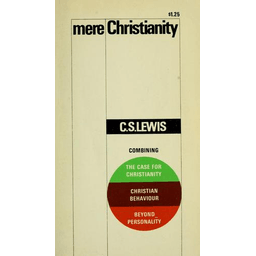 Mere ChristianityC. S. Lewis’s broad-church classic. Not a catechism, but the natural pair for readers who want a doctrinal primer that crosses tradition lines.
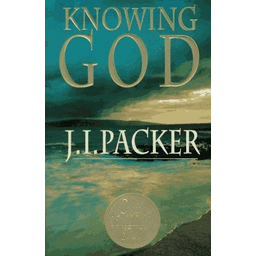 Knowing GodJ. I. Packer’s Reformed-Anglican meditation on the character of God. Reads beautifully alongside the Heidelberg sections on God, Christ, and the Christian life.
Frequently asked questions
What is the Heidelberg Catechism?
A 1563 catechism written in Heidelberg, Germany, primarily by Zacharias Ursinus and Caspar Olevianus at the request of Elector Frederick III. It contains 129 questions and answers divided into 52 Lord’s Days, structured around the themes of human misery, deliverance in Christ, and grateful obedience. It is one of the Three Forms of Unity - the confessional standards of Dutch and continental Reformed churches - and is also confessed by many American Reformed bodies.
Is the app really completely free?
Yes. There is no paid tier, no subscription, no in-app purchase, and no advertising in the standard build on either iOS or Android. The Heidelberg Catechism is a public confessional document, and the app reflects that.
Does it work offline?
Yes. Once installed, the full catechism text, Lord’s Day structure, scripture proof-texts, and memorization mode are available without a network connection. This makes it usable in catechism class, on travel, or anywhere reliable connectivity is not assumed.
Which English translation of the catechism does the app use?
Most builds use a standard modern English translation of the catechism (typically the version commonly used in American Reformed denominations such as the URCNA or CRC). The app does not generally offer a side-by-side German or Dutch original. If translation precision matters to you - for scholarly work or for use in a specific denomination - verify which translation the build is using before relying on it for citation.
Is the memorization mode spaced repetition?
No. It is a manual hide-and-reveal drill: you see the question, recall the answer, tap to reveal, and move on. There is no scheduling algorithm tracking which answers you struggle with. For long-term retention across all 129 questions, pairing the app with a dedicated review tool such as Anki or The Bible Memory App is reasonable, though it requires more setup.
Does it include the Belgic Confession and the Canons of Dort?
No. This app is single-confession - Heidelberg only. Readers who want all three of the Three Forms of Unity in one place will need a separate app, a Reformed library app, or a website such as the standards pages maintained by URCNA, CRC, and other Reformed denominations.
Is this app suitable for non-Reformed readers who are curious about the catechism?
Yes. The Heidelberg Catechism is widely read outside Reformed circles as a piece of Reformation theology and devotional literature - the opening question alone is quoted across many traditions. The app presents the text plainly, without commentary that assumes prior confessional commitment, so it works fine for a curious reader as well as for a confessional one.
Sources & further reading
More Catechism & Theology Apps
 Reformed ForumA confessional Presbyterian podcast network and online academy that treats systematic and biblical theology as serious, lifelong study - and assumes you want to do the reading.New City CatechismA short, modernized catechism with deep Reformation roots, packaged as a free weekly habit for adults, kids, and whole churches - and that is the whole pitch.
 Catechism.appA single iOS app that puts five major Reformed and evangelical catechisms in one searchable, memorization-friendly library - for the price of a coffee.
 B1 ChurchA genuinely free, open-source church platform - app, website, giving and check-in on one database - run by an Oklahoma nonprofit. The catch is not the price - it is that the vendor own docs call the native app deprecated.
 365 Christian Men365 Christian Men delivers short, memorable stories of faith and courage across history, now inside the broader 365 Christian Stories ministry—most useful as a free conversation starter when biography is sourced, contextualized and never confused with Scripture.
 Involv Chat (church.chat)Involv Chat combines ministry-team messaging, rosters, blocked dates and service scheduling in a focused church workspace—useful when leaders protect volunteer consent and resist turning attendance or gifts data into a spiritual score.