
- Starting price
- Free app, songs from ~$15 each; Prime ~$30/mo
- Free tier
- Yes
- Platforms
- iOS · macOS · Web
- Developer
- Loop Community
- Launched
- 2009
- Updated
- May 24, 2026
The verdict
Loop Community has quietly become the favorite of small-to-mid-size church worship teams who need backing tracks, click, and chord charts without the major-label price tag - and whose set lists include hymn arrangements and indie worship songs the big catalogs do not carry.
Try Loop Community ↗Opens loopcommunity.com
Loop Community is the worship-tech app that grew up around a single idea: let worship leaders upload their own backing tracks for any song, and the catalog will get broader than any single label could ever curate. Most of its competitors started as record labels licensing their own catalogs to churches. Loop started as a community first and a marketplace second, and that order matters.
It is not the deepest catalog for top-40 modern worship. It is not the slickest click-track playback engine on the market. It is not the cheapest way to get a single song for one Sunday. What it is, instead, is the place where a worship pastor in Nashville can upload a stripped-down acoustic arrangement of "It Is Well," another leader in Texas can upload a Latin-percussion version of the same hymn, and a small church in Ohio can buy either one for fifteen dollars and run it through an iPad on Sunday morning.
For the segment of worship leaders this app serves - small and mid-size churches, indie worship teams, hymn-forward congregations, and anyone whose set list runs past the Top 40 CCLI chart - Loop Community is the most useful worship app on the market. For megachurches running tightly produced services from Hillsong, Bethel, and Elevation catalogs, the major-label competitors still have the edge. Both things are true at once.
✓ The good
- Community-uploaded tracks - the catalog includes thousands of songs the major-label competitors do not carry, especially indie, regional, and hymn arrangements
- Prime subscription is genuinely affordable - around $30/mo for unlimited streaming of the full catalog beats per-song purchases for active worship teams
- Strong hymn and traditional catalog - multiple arrangements of the same hymn at different tempos, keys, and instrumentations
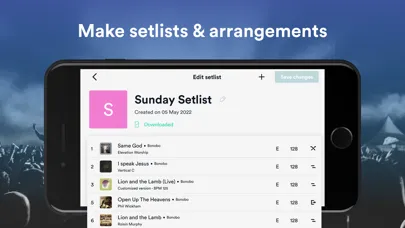
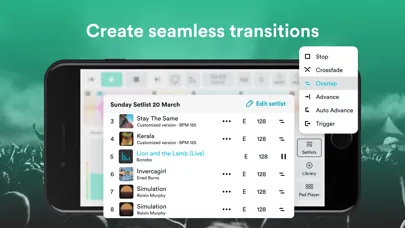
- Prime app and web playback are tightly integrated - build a set on the web, run it from an iPad on the platform, no friction
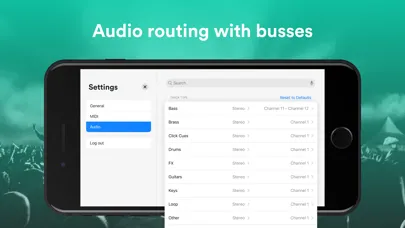
- Click tracks, guide vocals, and stems are standard on most tracks - not premium add-ons
- Songs you purchase are yours to keep - even if you cancel Prime, your individual purchases remain available
- Active community of contributing worship leaders - new arrangements get uploaded regularly, including hymn projects you cannot find elsewhere
✗ Watch out
- Smaller catalog for top-tier modern worship - Hillsong, Bethel, and Elevation releases are sometimes thinner here than on MultiTracks.com
- Track quality varies - community uploads range from professional studio recordings to good-but-not-great home productions
- No native Android app (yet) - iOS and macOS only, with web playback as the Android workaround
- Search and filtering still feel a half-step behind MultiTracks - finding the right arrangement of a popular hymn can take a few tries
- Prime per-month pricing only makes sense if you are running tracks every week - occasional users are better off buying songs individually
- Chord chart formatting is functional rather than beautiful - fine for the stage, not as polished as PraiseCharts
Best for
- Small-to-mid-size church worship teams on a budget
- Hymn-forward congregations needing modern arrangements
- Indie worship leaders looking for non-major-label songs
- Worship pastors who want to upload and share their own tracks
Avoid if
- You run a megachurch built on Hillsong / Bethel / Elevation catalogs exclusively
- You only need chord charts and lead sheets, not playback
- You are an Android-only church with no iPad in the booth
- You play tracks once a quarter - Prime will not pay off
What Loop Community is
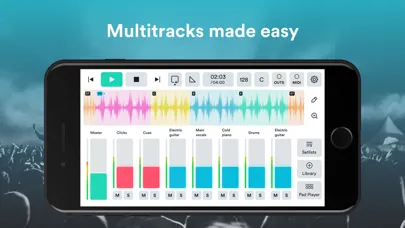
Loop Community is a worship-tech platform that sells and streams backing tracks, click tracks, multitracks, and chord charts to church worship teams. It runs as a free app on iOS and macOS - with a polished web player - and the core flow is simple: browse a song, preview the arrangement, buy the multitrack or stream it through Prime, then play it back on Sunday morning through your in-ear monitor or front-of-house rig.
What sets it apart from the rest of the worship-tech stack is its production model. MultiTracks.com licenses tracks from the major worship labels and sells them studio-perfect. Loop Community does some of that too, but the bulk of its catalog is uploaded by worship leaders themselves - pastors, indie songwriters, hymn arrangers, and church producers contributing the tracks they made for their own teams. That community-first approach is why the catalog looks the way it does, and why the app appeals to the churches it appeals to.
Why small-church worship teams prefer Loop Community
The single biggest practical difference between Loop Community and the major-label competitors is who decides what enters the catalog. On MultiTracks, the catalog is whatever the labels license. On Loop, the catalog is whatever the global worship community uploads. That sounds like a small thing. In practice it is transformative - because it means your set list does not have to bend to what is commercially available.
A worship pastor at a 200-seat church in the Midwest does not need the Elevation Worship full-band stadium mix of "Graves Into Gardens." She needs a stripped-down four-instrument version in the key her congregation actually sings. On Loop, that version exists - uploaded by another worship leader who built it for the same reason. The same logic applies to hymns: "Come Thou Fount" in twelve different arrangements, "Holy Holy Holy" with a modern feel, "It Is Well" stripped to piano and pad. This is the model that respects how most churches actually do worship.
Community-uploaded tracks: the differentiator vs. MultiTracks.com
Loop Community lets any verified worship leader upload backing tracks, click tracks, and multitracks for any song they have the rights to share. The uploader sets the price (or contributes it to Prime), Loop handles the marketplace and payments, and the rest of the worship community gets access to arrangements that would never make it onto a major-label catalog. Hundreds of arrangements of the same hymn. Stripped-down acoustic versions of songs that only exist commercially as full-band productions. Regional worship songs that never charted nationally. This is the catalog you cannot buy from a single label, because no single label produced it.
The trade-off is real. Track quality varies - some uploads are studio-grade productions from professional church engineers, others are competent-but-not-pristine recordings made on home gear. The labeling and metadata can be inconsistent. The search can serve up four arrangements of the same song without telling you which one is the most-purchased. But the upside is that for a wide swath of songs your team actually plays - hymns, indie worship, songs from churches outside the top five worship labels - Loop is the only place that catalog exists at all. The thoughtful worship leader is willing to accept some variance for that much more selection.
Indie + hymn arrangements: the catalog the big labels skip
Two corners of the worship catalog have always been underserved by the big tracks platforms: indie worship songs that did not come from a major label, and hymn arrangements that fit a modern church band. Loop Community is the strongest single source for both. The hymn catalog in particular is striking - "Be Thou My Vision," "Great Is Thy Faithfulness," "Holy Holy Holy," "It Is Well With My Soul," "Come Thou Fount," and dozens of others appear in arrangement after arrangement, at different tempos, in different keys, with different instrumentation. The Indelible Grace and Page CXVI catalogs sit alongside contributions from individual worship leaders rearranging the same hymns for their own contexts.
For hymn-forward congregations - and there are more of these than the modern-worship industry tends to remember - this is the difference between "we sing hymns acoustically with our guitarist" and "we sing hymns with the full band, click, and pad, the way we do everything else on Sunday." Loop does not force a hymn-forward church to choose between musical excellence and musical heritage. It gives them the tracks to do both. For indie worship - songs from smaller labels, songwriter releases, and regional movements - it is similarly the only catalog with the depth to cover what your team is actually pulling from Spotify and bringing to rehearsal.
Prime: the affordable subscription tier worship teams have been asking for
Prime is Loop Community’s unlimited-streaming subscription - around $30 a month for full access to the community catalog through the Prime app on iOS, macOS, and the web. For a worship team running tracks every Sunday and rehearsing midweek, the math gets favorable fast: two new songs a month at $15 each is already the cost of Prime, and that is before you count the songs you stream once for rehearsal and never play again. For churches building a deep, rotating set list, Prime is simply the right tier.
The reason this matters for the small-church market is straightforward. Major-label competitors built their pricing for churches with worship budgets. A 150-seat church with an all-volunteer team often does not have a worship-tech budget at all - the worship pastor is paying for tools out of their own pocket or fighting for a line item that never quite materializes. A $30/mo all-you-can-stream tier is something the volunteer worship leader can actually justify. That accessibility - combined with the community catalog - is the practical reason Loop has become the worship app of choice for the long tail of churches that do not show up in the megachurch conferences.
Pricing
Free App
Free
Download the Prime app, browse the full catalog, preview tracks, and play back any songs you purchase individually.
Per-Song Purchase
From ~$15 / song
Buy individual multitracks outright. Yours forever - no subscription required. Best for churches that use tracks occasionally.
Prime Subscription
~$30 / month
Unlimited streaming of the full community catalog through the Prime app and web. The right tier for active worship teams running tracks weekly.
Songs Subscription (Annual)
~$300 / year
Annual Prime billing at a meaningful discount over month-to-month. Same access, lower per-month cost for committed teams.
The free app is genuinely useful - you can browse, preview, and play any individual songs you have purchased without ever paying a subscription. For churches that run tracks two or three times a year, this is the model that respects your work. Buy the songs, keep them forever, no monthly bill.
Per-song purchases run around $15 and include the full multitrack - click, guide vocals, individual instrument stems, and a stereo mix. That is the standard package, not a premium add-on. For occasional users this is the most cost-effective tier; for active teams the math flips quickly toward Prime.
Prime at roughly $30/mo is the inflection point. If your team is running tracks weekly and rotating through new arrangements, Prime pays for itself inside the first two songs of the month. Annual billing brings the effective monthly cost down further, and is the right call for any team that has decided Loop is part of the long-term toolkit.
One important note: songs you purchase outright are yours forever, even if Prime lapses. Streaming-only access disappears with the subscription, but anything bought individually stays in your library. That hybrid model - buy the keepers, stream the rest - is part of what makes Loop work for smaller budgets.
Where Loop Community falls behind
Smaller catalog for top-tier modern worship. If your church builds set lists almost entirely from Hillsong, Bethel, Elevation, and Maverick City releases, MultiTracks.com is going to have the deeper, label-licensed catalog for that exact slice. Loop has many of these songs - but not always the official label-released stems, and sometimes only in community arrangements. The closer your set list hugs the Top 40 CCLI chart, the more you will notice the gap.
No native Android app (yet). Loop is iOS- and macOS-first, with web playback as the cross-platform fallback. For most worship teams this is fine - the iPad is the dominant in-ear / playback device on the platform - but Android-only operators have to route through the web player, which works but does not match the polish of the native app.
Track quality is inconsistent. The flip side of community uploads is that you cannot assume every track on the platform was produced to the same standard. Most are good. Some are excellent. A handful are clearly made on home gear with no mastering pass. The platform is getting better at surfacing the higher-quality uploads first, but you still want to preview before you commit to a song for Sunday.
Chord chart and lead sheet formatting is functional rather than gorgeous. PraiseCharts is still the gold standard for printed and on-stage charts - typography, transposition, layout - and Loop has not closed that gap. For most worship teams the included charts are perfectly usable on an iPad, but if your team is print-and-bind people, PraiseCharts remains a complementary purchase.
Search and filtering are still catching up. With a community catalog this broad - and multiple arrangements of the same song - the search experience matters a lot, and Loop’s is decent but not yet best-in-class. Finding the right arrangement of "How Great Thou Art" in your key, at your tempo, with the instrumentation you want sometimes takes a few attempts. Real gaps, but worth knowing about going in rather than dealbreakers.
Loop Community vs. MultiTracks vs. PraiseCharts
These three are the dominant worship-tech tools for backing tracks and charts, and they solve overlapping but distinct problems. Different strengths. MultiTracks.com is better at major-label catalog depth and studio-grade production quality - if you need the official Hillsong stems exactly as released, MultiTracks is where they live. Loop Community is broader (indie, hymns, community uploads, and an affordable Prime tier). PraiseCharts is the chord-and-lead-sheet specialist - the best place to buy beautifully formatted, transposable charts, with tracks as a secondary offering.
The honest framing for most worship teams: MultiTracks for the major-label songs you have to have exactly right, Loop Community for everything else - indie songs, hymn arrangements, the wide tail of what your church actually sings - and PraiseCharts when you need the print-ready chart in a specific key for a specific musician. Many established worship teams subscribe to two of the three. Smaller and mid-size churches that have to pick one almost always pick Loop, because it covers the broadest swath of their actual set list for the lowest monthly cost.
Where Loop genuinely wins outright is the long tail. The 200-seat church running a mix of modern worship and traditional hymns, the indie worship leader writing their own material, the campus ministry that wants stripped-down arrangements rather than stadium productions - none of these are well served by a major-label-licensed catalog alone. The community model is the answer to a question the major-label model cannot really answer.
The bottom line
Loop Community is the worship-tech app for everyone outside the megachurch tier - and for plenty of churches inside it that simply prefer hymns, indie songs, or affordable subscriptions. Its community-uploaded catalog is the deepest single source for arrangements you cannot find on the major-label platforms, the Prime subscription at around $30/mo is the rare worship tool a small-church budget can absorb, and the per-song purchases give occasional users a way in without a monthly bill. The big-label catalog and the search experience trail MultiTracks, and the chart formatting trails PraiseCharts. None of that changes the fact that for the long tail of worship teams, Loop is the most useful tool on the market.
Alternatives to Loop Community
 MultiTracks.comThe major-label-licensed competitor - deeper catalog for top-40 modern worship, studio-grade production, higher price point. The right pick for churches built around Hillsong, Bethel, and Elevation set lists.
 OnSongThe dominant chord-chart and set-list iPad app for worship musicians. Pairs well with Loop or MultiTracks for playback - handles the on-stage chart side rather than the tracks side.
 Planning CenterWorship-team scheduling, rehearsal planning, and service order - the backbone of how most modern church worship teams run their week. Integrates with both Loop and MultiTracks for track playback.
 Hymnary.orgThe encyclopedic free hymn database - lyrics, tunes, historical context, and scans of historic hymnals. A teaching and research companion when you want the story behind the hymns Loop sells arrangements of.
Frequently asked questions
Is Loop Community better than MultiTracks.com?
Different strengths. MultiTracks has the deeper major-label catalog and more polished search. Loop has community-uploaded tracks, a broader indie and hymn catalog, and an affordable Prime subscription. Most worship teams pick based on what their set list looks like - major-label-heavy teams lean MultiTracks; hymn-forward, indie, and small-church teams lean Loop.
How much does Loop Community Prime cost?
Prime runs around $30/mo for unlimited streaming of the full community catalog, with a meaningful discount on annual billing (roughly $300/yr). The app itself is free to download, and you can buy individual songs without a subscription at around $15 each.
What happens to my songs if I cancel Prime?
Songs you purchased individually are yours forever and stay in your library after cancellation. Songs you only had access to through Prime streaming will no longer be available. Many teams run a hybrid - buy the keepers outright, stream the rest through Prime while it makes sense.
Does Loop Community work on Android?
There is no native Android app yet. The native Prime app is iOS and macOS only. Android users can access the catalog through Loop’s web player, which works for browsing, purchasing, and playback, but is not as polished as the native app experience.
Can I upload my own tracks to Loop Community?
Yes - that is the core of the community model. Verified worship leaders can upload backing tracks and multitracks for songs they have the rights to share. The uploader sets pricing and Loop handles the marketplace. This is why the catalog includes so many arrangements you cannot find on any major-label platform.
Do Loop Community tracks include click and guide vocals?
Yes - click tracks, guide vocals, and individual instrument stems are standard on most tracks rather than premium add-ons. You get a stereo mix, the click, vocal guides, and the multitrack stems in the standard package, which makes Loop a strong value compared to platforms that unbundle these.
Is Loop Community a good fit for hymn-forward churches?
It is arguably the single best fit on the market. Loop has multiple arrangements of nearly every common hymn - different keys, tempos, and instrumentations - alongside the Indelible Grace and Page CXVI catalogs and many independent worship leaders rearranging hymns for modern bands. Churches that sing both hymns and modern worship songs tend to find Loop covers more of their set list than any single competitor.
Sources & further reading
More Worship Apps
 AsaphAn ambitious AI workspace for sermon-aligned setlists, song analysis and local feedback—valuable as a planning assistant, risky if its theology scores become a substitute for pastoral judgment.
 Kaleo AIKaleo AI streams church services into live captions and 150+ translated languages, with theology-aware vocabulary and simple fixed plans—but human review and stronger data-governance answers remain essential.
 Nepali Christian Lyrics & ChordsA rare, actively maintained songbook built around the real needs of Nepali-speaking worship teams—but privacy and song-rights documentation lag far behind the app.
 OnStageA modern all-in-one workspace for worship charts, setlists, rehearsals, schedules, chat, and live performance—but conflicting prices and missing legal pages make due diligence essential.
 Unceasing WorshipIHOPKC’s niche streaming service preserves spontaneous prayer-room worship, intercession, live archives, and 76 legacy albums—valuable for listeners who want that exact charismatic worship tradition, but not a general Christian music replacement.MultiTracks.comThe officially licensed stem library and Playback session player behind most touring worship rigs and large-church Sunday mornings - and the closest thing the industry has to a default.