1 Maccabees 7
People in this chapter
Power had changed hands in the empire, and trouble followed it home. Demetrius escaped Rome, claimed the Seleucid throne, and almost at once a delegation of renegade Israelites came to him with a request and a grievance. Alcimus wanted the high priesthood. His allies wanted Judas Maccabeus and his brothers destroyed. The king obliged, sending armies into Judea with smooth words on their lips and swords behind their backs. Twice in this chapter peace is offered and twice it is a lie, and the people learn the bitter lesson that an oath sworn by a treacherous heart is worth nothing.
Tap any highlighted phrase to jump to the commentary that unpacks it.
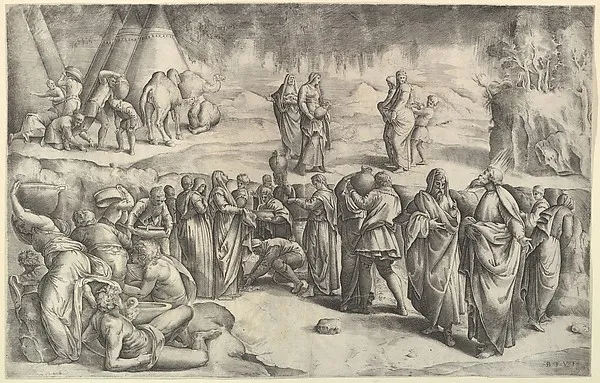
1 Maccabees 7:1-9Demetrius Takes the Throne, and Alcimus Seeks the Priesthood
1In the hundred and fifty-first year Demetrius the son of Seleucus departed from the city of Rome, and came up with a few men into a city of the sea coast, and reigned there. 5And there came to him the wicked and ungodly men of Israel: And Alcimus was at the head of them, who desired to be made high priest.
The chapter opens far from Jerusalem, in the politics of empires. Demetrius, a Seleucid prince who had been held as a hostage in Rome, slips away and returns east to seize the throne that had passed to the boy-king Antiochus. He arrives with only a few men, yet the army turns to him and the rivals are swept aside. The writer fixes the date with care, by the count of the Greek kingdom, because he wants us to feel that the small story of a faithful people is unfolding inside the vast, indifferent machinery of world power.
Thrones rise and fall, and the question is always the same: where will the people of God stand when the dust settles?
No sooner is Demetrius enthroned than a party of Israelites comes to him, and the text does not soften its verdict on them: they are "the wicked and ungodly men of Israel." At their head is Alcimus, and his motive is named plainly. He "desired to be made high priest." The sacred office that was meant to stand before God on behalf of the people had become, in his hands, a prize to be won by flattering a pagan king.
There is a deep sorrow in this. The threat to the faithful in this chapter rises from within as well, from men of Israel who will betray their own to secure their ambition.
6And they accused the people to the king, saying: Judas and his brethren have destroyed all thy friends, and he hath driven us out of our land. 9To see the havock that Judas had made: and the wicked Alcimus he made high priest, and commanded him to take revenge upon the children of Israel.
The renegades come not only as petitioners but as accusers. They stand before the king and indict their own brethren, casting Judas as a destroyer and themselves as the wronged and exiled party. This is the oldest weapon in a faithless heart's arsenal: to gain power by accusing the righteous before the powerful. Scripture knows the figure well, the accuser who slanders God's servants day and night. Here the accusation works exactly as intended. The king believes it and acts on it.
The king grants the request, and the result is bitterly fitting. Alcimus, who "desired to be made high priest," receives the office, and his first commission is vengeance: he is "commanded to take revenge upon the children of Israel." A priesthood that is gained by political maneuver is put immediately to political use. The office meant to bless and intercede is turned into an instrument of reprisal against the very people it was supposed to serve. When a holy thing is sought for the wrong reason, it does not stay holy in the using.
1 Maccabees 7:10-20The Oath That Was Worth Nothing
10And they arose, and came with a great army into the land of Juda: and they sent messengers, and spoke to Judas and his brethren with peaceable words deceitfully. 11But they gave no heed to their words: for they saw that they were come with a great army.
Bacchides and Alcimus march into Judah with a great army, and then they do something that should not work and too often does: they send a peace delegation. The words are "peaceable," but the writer adds the one word that unmasks them, "deceitfully." This is the chapter's recurring tactic. Force comes wrapped in friendship; the sword arrives wearing the face of a handshake. It is the same lie that has been told in every age, the offer of peace made in bad faith to disarm an enemy before destroying him.
Judas and his brothers are not fooled. They "gave no heed to their words," and the reason is plain common sense lit by hard experience: you do not bring a great army to make a peaceful visit. They read the gap between the soft words and the massed soldiers, and they trust the soldiers. This is a kind of wisdom Scripture commends, the discernment that weighs words against deeds and is not swept along by smooth speech. The simple are taken in by flattery; the prudent look, and consider, and are not so easily caught.
13And first the Assideans that were among the children of Israel, and they sought peace of them. 14For they said: One that is a priest of the seed of Aaron is come, he will not deceive us. 15And he spoke to them peaceably: and he swore to them, saying: We will do you no harm nor your friends.
The Assideans, the "pious ones," were the devout among Israel who had stood for the law in the worst of the persecution. Now they break from Judas's caution and seek terms. Their reasoning is moving and tragic at once. They look at Alcimus and see only the office, missing the man inside it: "One that is a priest of the seed of Aaron is come, he will not deceive us." Because he wears the priesthood, they assume he carries its integrity.
They cannot imagine that a son of Aaron, the line set apart to stand before God, would lie to his own people while swearing an oath. Their trust is beautiful, and it is about to be betrayed.
Here is one of the quiet warnings of the chapter. The Assideans trusted the office and forgot to test the heart. They reasoned that a man holding a sacred position must be safe to trust, and that reasoning cost them everything. An office can be occupied by a faithless man. A title can clothe a liar. Scripture never asks us to extend trust on the strength of a robe alone; it asks us to discern, to watch the fruit, to know people by what they do and not only by what they wear.
The Assideans' mistake was that they let goodness make them careless.
16And they believed him. And he took threescore of them, and slew them in one day, according to the word that is written: 18Then fear and trembling fell upon all the people: for they said: There is no truth, nor justice among them: for they have broken the covenant, and the oath which they made.
The betrayal is swift and total. They believed him, and he killed sixty of them in a single day. The writer reaches for an old scripture to give the horror its proper weight, quoting the lament of the Psalm over the bodies of the faithful left unburied around Jerusalem. He wants the reader to understand that this is not merely a political murder; it is an atrocity that joins the long, grievous record of the righteous slain. The blood of the devout has been shed again, and the page of Scripture trembles with it.
The effect on the people is dread. "Fear and trembling fell upon all the people," and their cry names the wound precisely: "There is no truth, nor justice among them: for they have broken the covenant, and the oath which they made." An oath is a sacred thing. To swear is to call God as witness and to bind your word to the truth on pain of His judgment. When the powerful break their oaths, the ground gives way beneath ordinary life, because nothing can be trusted and no word can be leaned on.
This is why Scripture treats the broken oath so gravely, and why the people, watching it happen, feel the very foundations shake.
1 Maccabees 7:21-32Nicanor Sent, and the Friendly Words That Hid a Trap
26And the king sent Nicanor one of his principal lords, who was a great enemy to Israel: and he commanded him to destroy the people. 27And Nicanor came to Jerusalem with a great army, and he sent to Judas and to his brethren deceitfully with friendly words,
When Alcimus cannot stand against Judas, he runs again to the king, and Demetrius sends a new and more dangerous man. Nicanor is named "one of his principal lords," a great figure in the empire and "a great enemy to Israel," and his orders are blunt: destroy the people. The chapter is escalating. The first army came under Bacchides; now a higher lord arrives with a settled hatred and an open commission to wipe out the faithful.
The reader senses that the conflict is rising toward its crisis, and that this enemy will not be turned aside by a single defeat.
And then, astonishingly, the same lie is tried a third time. Nicanor comes "with a great army" and sends to Judas "deceitfully with friendly words." After all that has happened, after the slaughter of the Assideans, the empire still believes that soft speech can disarm what the sword has failed to break. There is a kind of contempt in this, the assumption that the faithful are gullible and can be flattered into surrender. But the chapter has been teaching the reader to hear the word "deceitfully" the moment the friendly words begin.
29And he came to Judas, and they saluted one another peaceably: and the enemies were prepared to take away Judas by force. 30And the thing was known to Judas that he was come to him with deceit: and he was much afraid of him, and would not see his face any more.
The scene is chilling in its outward warmth. Nicanor comes to Judas and "they saluted one another peaceably," the customary greeting of friends, while all the time "the enemies were prepared to take away Judas by force." A gesture of friendship is made the cover for an ambush. Scripture has a name for this, the betrayal that wears the face of love, and the gospel will bring it to its darkest point when one disciple greets his Master with a kiss in the garden.
Here the trap is sprung in the open air of a peaceful greeting, the embrace that hides the seizing hand.
The plot is discovered. Judas learns "that he was come to him with deceit," and the text makes a striking admission: Judas "was much afraid of him." This is the same Judas who has won battle after battle, and Scripture does not hide that he felt fear. His courage was the refusal to let fear rule him. He withdraws, declines to meet Nicanor again, and lives to fight on his own terms. There is wisdom here that is easy to miss: the brave man is the one who, trembling, will not walk into the trap.
31And Nicanor knew that his counsel was discovered: and he went out to fight against Judas near Capharsalama. 32And there fell of Nicanor’s army almost five thousand men, and they fled into the city of David.
With the trap exposed, deceit gives way to open battle, and the result is a first reversal for Nicanor. His army loses thousands and is driven back into the city. The lesson of the chapter is quietly making itself felt. The schemes that depended on lies have failed, and now the matter must be settled in the open, where it will finally be God who decides. The man who came to seize Judas by a trick cannot finish the work he was sent to do, and his frustration will soon drive him to a blasphemy that seals his fate.
1 Maccabees 7:33-42The Threat Against the Temple and the Prayer That Answered It
33And after this Nicanor went up into mount Sion: and some of the priests and the people came out to salute him peaceably, and to shew him the holocausts that were offered for the king. 34But he mocked them and despised them, and abused them: and he spoke proudly, 35And swore in anger, saying: Unless Judas and his army be delivered into my hands, as soon as ever I return in peace, I will burn this house. And he went out in a great rage.
The priests do something gracious and disarming. They come out to meet Nicanor in peace and show him the sacrifices being offered for the king, a gesture meant to prove they are no rebels but men who pray even for the empire's ruler. Nicanor answers their courtesy with contempt. He "mocked them and despised them, and abused them," trampling on a sincere overture of peace. The priests offered worship and goodwill; he gave them scorn. It is a portrait of arrogance meeting humility, and humility looks, for the moment, like the weaker thing.
Then Nicanor crosses a line that no army of men should dare. He swears in anger that unless Judas is handed over, "I will burn this house," the temple, the dwelling He had chosen for His name. This is the true crisis of the chapter, deeper than any battle. A man has lifted his hand against the house of God and made the sanctuary itself a hostage to his rage. He stalks off "in a great rage," and the threat hangs over Jerusalem like a drawn sword.
From this moment the conflict is no longer Nicanor against Judas; it is Nicanor against the Lord whose house he has threatened to destroy.
36And the priests went in, and stood before the face of the altar and the temple: and weeping, they said: 37Thou, O Lord, hast chosen this house for thy name to be called upon therein, that it might be a house of prayer and supplication for thy people. 38Be avenged of this man, and his army, and let them fall by the sword: remember their blasphemies, and suffer them not to continue any longer.
Against the threat of fire and sword, the priests reach for the only weapon that matters. They go back into the temple, stand before the altar, and weep and pray. They bring the danger to God and lay it at the altar. This is the deep instinct of faith under threat, to turn the assault into prayer, to answer a raised human hand by lifting empty hands to heaven. The tears are the cry of people who know that their house cannot be saved by their own strength and who place it, weeping, in the hands of the One who owns it.
Their prayer begins by reminding God what the temple is for. He chose this house for His name to dwell in, "that it might be a house of prayer and supplication for thy people." The priests appeal to God's own purpose for the place, as if to say, this is Your house, given for Your people to seek You; will You let it be burned by a blasphemer? Centuries later, the Lord Jesus would stand in that same temple courts and declare, "My house shall be called the house of prayer," cleansing it of those who had made it something less.
The priests here pray from inside that truth: the house belongs to God, and its purpose is communion with Him.
40But Judas pitched in Adarsa with three thousand men: and Judas prayed, and said: 41O Lord, when they that were sent by king Sennacherib blasphemed thee, an angel went out, and slew of them a hundred and eighty-five thousand: 42Even so destroy this army in our sight today, and let the rest know that he hath spoken ill against thy sanctuary: and judge thou him according to his wickedness.
Judas, encamped with only three thousand men against a great army, does the same thing the priests did. Before the battle, he prays. The conqueror does not trust his sword; he kneels. And his prayer is built on memory, on a story from Israel's past that he carries into his present danger. This is how the faithful pray under pressure, by remembering what God has done and asking Him to do it again. Judas reaches back across the centuries and lays hold of a night when heaven itself fought for Jerusalem.
The memory Judas chooses is exact. When Sennacherib's envoys blasphemed the Lord and threatened Jerusalem, "an angel went out, and slew of them a hundred and eighty-five thousand" in a single night. Judas sees the parallel and prays it forward: as You answered that blasphemy, so answer this one. "Even so destroy this army in our sight today." He asks God to defend His own honor, since it is God's sanctuary that has been threatened and God's name that has been mocked.
The prayer is bold because it is not finally about Judas's survival; it is about whether the Lord will let His house be insulted with impunity.
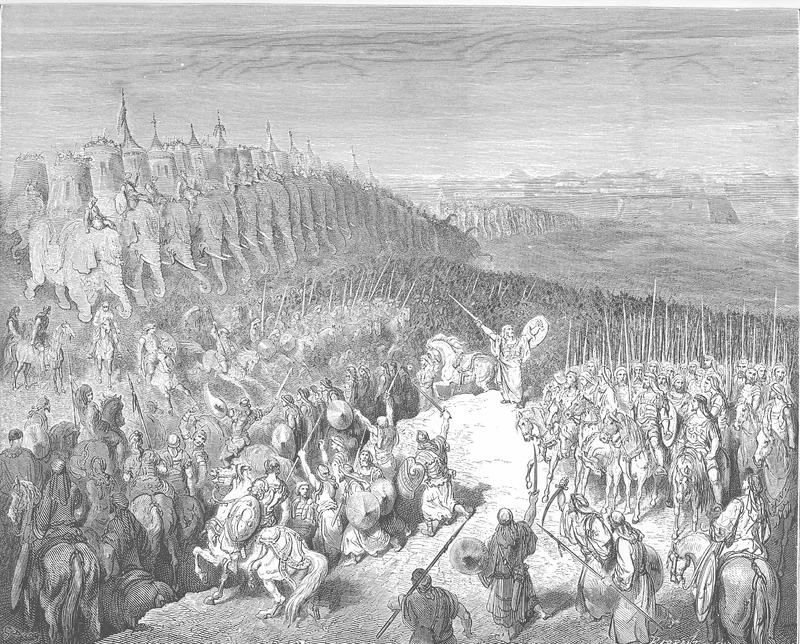
1 Maccabees 7:43-50The Proud Hand Cut Off, and a Day of Joy
43And the armies joined battle on the thirteenth day of the month Adar: and the army of Nicanor was defeated, and he himself was first slain in the battle. 44And when his army saw that Nicanor was slain, they threw away their weapons, and fled:
The answer comes swiftly and unmistakably. On the thirteenth of Adar the battle is joined, and Nicanor's great army is defeated, and "he himself was first slain in the battle." The man who swore to burn the house of God falls before the day is out, the very first to die. There is a terrible symmetry in it. He had lifted his hand against the Lord's sanctuary; now that hand is stilled. Judas and the priests had brought the threat to God in prayer, and God Himself has answered, defending His own honor exactly as He had done in the days of Sennacherib.
When the soldiers see that Nicanor has fallen, the whole army collapses. They "threw away their weapons, and fled." The force that had seemed so terrible depended entirely on the man at its head, and with him gone it dissolves into a panicked rout. So often the power that menaces the faithful is hollower than it looks, propped up on a single proud man or a single false confidence. When God removes the keystone, the whole threatening structure comes down. The army that came to destroy the people of God throws away its swords and runs.
47And they took the spoils of them for a booty, and they cut off Nicanor’s head, and his right hand, which he had proudly stretched out, and they brought it, and hung it up over against Jerusalem. 48And the people rejoiced exceedingly, and they spent that day with great joy.
The detail the writer lingers on is the hand. They cut off Nicanor's head and "his right hand, which he had proudly stretched out" against the temple, and hung it up in sight of Jerusalem. The very hand he had lifted in his oath, the hand that had pointed at the house of God and threatened it with fire, is severed and displayed where all the city could see. It is a stark and ancient kind of justice, the punishment fitted exactly to the crime.
The hand that blasphemed is the hand that falls. The proud gesture is answered, limb for word, by the God who does not forget.
"The people rejoiced exceedingly, and they spent that day with great joy." The dread that fell when the oath was broken is answered by the joy that breaks out when the blasphemer falls. This is the deep rhythm of deliverance running all through Scripture, the weeping that endures for a night and the joy that comes in the morning. God turned their mourning into dancing, and the city that had trembled now keeps a day of gladness.
49And he ordained that this day should be kept every year, being the thirteenth of the month of Adar. 50And the land of Juda was quiet for a short time.
The deliverance is too great to let pass; it must be remembered. Judas ordains that the thirteenth of Adar be kept every year, a yearly feast so that no generation would forget the day God answered a blasphemer and saved His house. This is how a faithful people guards its memory, by turning rescue into an annual remembrance, building the mercy of God into the calendar itself. We are forgetful creatures, quick to take deliverance for granted once the danger passes. The appointed day stands against that forgetting, calling each new year to recall that the Lord defended His own.
The chapter ends on a sober, honest note: "the land of Juda was quiet for a short time." The victory is real and the joy is real, but the peace is not yet permanent. The writer will not pretend that one deliverance has ended the long struggle; new armies will come, and Judas himself will fall in the chapters ahead. Yet there is grace even in a short rest. God gives His people seasons of quiet, breathing room in the middle of a long war, mercies that are genuine even when they are not final.
The full and lasting rest still lies ahead, promised and waited for, while the people give thanks for the quiet they have been given.
Where this echoes in Scripture
Demetrius Takes the Throne, and Alcimus Seeks the Priesthood
- Revelation 12:10For the accuser of our brethren is cast down, which accused them before our God day and night.The renegades before Demetrius act out the ancient pattern of accusing the faithful before a throne.
- Numbers 16:10And seek ye the priesthood also?Moses to Korah: grasping for the priesthood as a prize ends the same way it begins.
- John 11:48If we let him thus alone, all men will believe on him: and the Romans shall come and take away both our place and nation.Leaders who guard their standing by accusing a faithful man before a foreign power.
The Oath That Was Worth Nothing
- Psalm 79:2-3The dead bodies of thy servants have they given to be meat unto the fowls of the heaven... and there was none to bury them.The very lament the writer quotes over the sixty slain Assideans.
- Matthew 5:37But let your communication be, Yea, yea; Nay, nay: for whatsoever is more than these cometh of evil.Jesus on the integrity of plain speech, the opposite of the broken oath here.
- Psalm 15:4He that sweareth to his own hurt, and changeth not.The righteous keep an oath even when it costs them, exactly what Alcimus would not do.
Nicanor Sent, and the Friendly Words That Hid a Trap
- Luke 22:48But Jesus said unto him, Judas, betrayest thou the Son of man with a kiss?The betraying greeting reaches its darkest form when a kiss becomes the signal for arrest.
- Proverbs 26:24-25He that hateth dissembleth with his lips... when he speaketh fair, believe him not.The wisdom Judas uses to see through Nicanor's "friendly words."
- Psalm 56:3What time I am afraid, I will trust in thee.Fear and faith in the same heart, as Judas shows when he is "much afraid" yet acts.
The Threat Against the Temple and the Prayer That Answered It
- Isaiah 37:36Then the angel of the LORD went forth, and smote in the camp of the Assyrians a hundred and fourscore and five thousand.The exact deliverance Judas recalls and asks God to repeat against Nicanor.
- Matthew 21:13My house shall be called the house of prayer; but ye have made it a den of thieves.Jesus defends the temple's true purpose, the very purpose the priests plead here.
- John 2:19-21Destroy this temple, and in three days I will raise it up... he spake of the temple of his body.The threatened house of stone foreshadows the true temple, the body of Christ.
The Proud Hand Cut Off, and a Day of Joy
- Psalm 30:5Weeping may endure for a night, but joy cometh in the morning.The chapter's turn from "fear and trembling" to a day of "great joy."
- Psalm 30:11Thou hast turned for me my mourning into dancing.The mourning of the broken oath answered by the joy of deliverance.
- Exodus 12:14And this day shall be unto you for a memorial; and ye shall keep it a feast to the LORD.Like the Passover, the Day of Nicanor turns a rescue into a yearly remembrance.