2 Chronicles 5
People in this chapter
The hammers have stopped. The work is finished (v. 1), and what makes it a temple is about to arrive. So they carry in the one thing that ever made it a sanctuary. The ark goes up into the most holy place, under the wings of the cherubims (v. 7), and the text stops to tell you what is inside: nothing… save the two tables (v. 10). The law Israel kept breaking, set in the dark at the center, overshadowed and kept.1
Tap any highlighted phrase to jump to the commentary that unpacks it.
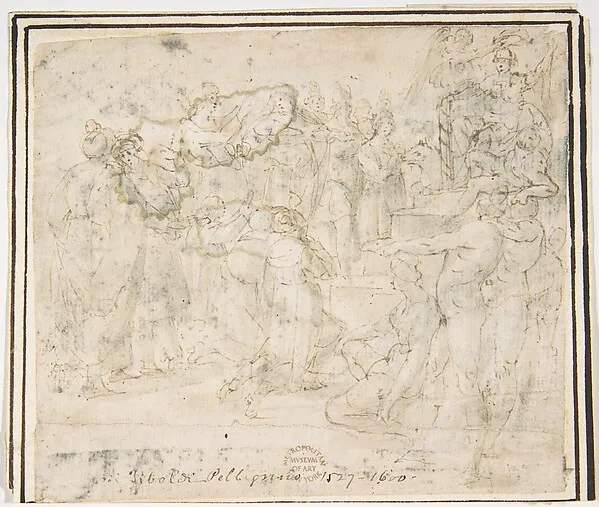
2 Chronicles 5:1-5The Work Finished, Israel Assembled
1Thus all the work that Solomon made for the house of the LORD was finished: and Solomon brought in all the things that David his father had dedicated; and the silver, and the gold, and all the instruments, put he among the treasures of the house of God. 2Then Solomon assembled the elders of Israel, and all the heads of the tribes, the chief of the fathers of the children of Israel, unto Jerusalem, to bring up the ark of the covenant of the LORD out of the city of David, which is Zion. 3Wherefore all the men of Israel assembled themselves unto the king in the feast which was in the seventh month. 4And all the elders of Israel came; and the Levites took up the ark. 5And they brought up the ark, and the tabernacle of the congregation, and all the holy vessels that were in the tabernacle, these did the priests and the Levites bring up.
Years of labour come to rest in a single word: finished (v. 1). Then Solomon does a quiet, fitting thing - he brings in the silver and gold and vessels that David his father had dedicated and lays them up among the treasures of the house. The son completes what the father began; the wealth a previous generation set apart for God is kept holy, devoted, in its place. Yet the building, however finished, is not yet doing what a temple is for.
The walls stand empty of the one thing that makes them a sanctuary. A house of God becomes one only when God comes to dwell in it, whatever its gold or its proportions. So the moment the construction ends, the chapter turns at once to the bringing up of the ark - because the finished work was always only the setting for a Presence it could not itself supply.
Solomon does not bring up the ark quietly or alone. He assembled the elders of Israel, and all the heads of the tribes, the chief of the fathers of the children of Israel (v. 2), and all the men of Israel assembled themselves unto the king in the feast which was in the seventh month (v. 3). The timing is deliberate: the seventh month was the month of the great feast, when Israel gathered to remember that God had made them dwell in booths when He brought them out of Egypt - a season already steeped in the memory of God dwelling with His people in the wilderness.
Now, into that very season, the ark is carried to its permanent home. The whole nation is summoned; this is the act of a people. And the verbs are careful about who does what: the Levites took up the ark (v. 4), and the priests and the Levites bring up the tabernacle and the holy vessels (v. 5). The sacred things are handled by the consecrated, in the appointed way. Israel had learned at terrible cost what it meant to carry the ark carelessly; here everything is done in order, by those set apart for it.
2 Chronicles 5:6-10The Ark Set Beneath the Cherubims
6Also king Solomon, and all the congregation of Israel that were assembled unto him before the ark, sacrificed sheep and oxen, which could not be told nor numbered for multitude. 7And the priests brought in the ark of the covenant of the LORD unto his place, to the oracle of the house, into the most holy place, even under the wings of the cherubims: 8For the cherubims spread forth their wings over the place of the ark, and the cherubims covered the ark and the staves thereof above. 9And they drew out the staves of the ark, that the ends of the staves were seen from the ark before the oracle; but they were not seen without. And there it is unto this day. 10There was nothing in the ark save the two tables which Moses put therein at Horeb, when the LORD made a covenant with the children of Israel, when they came out of Egypt.
As the ark moves toward the temple, the king and the people make an offering past all counting: Also king Solomon, and all the congregation of Israel… sacrificed sheep and oxen, which could not be told nor numbered for multitude (v. 6). The detail is not extravagance for its own sake. The approach of the holy is never a casual thing; the ark cannot simply be wheeled into place as though God were a furnishing.
Blood is shed; the sheer scale of the sacrifice says, in the only language Israel had for it, that what is happening here is weighty beyond reckoning. The God who is about to take up residence is holy, and a holy God is approached with reverence and cost. There is gladness in this - it is a feast, a day of joy - but the joy comes wrapped in awe. The uncountable offerings are the people's way of confessing that they understand whose presence they are inviting near, and that no gift could ever be too much for Him.
Now the central act. The ark is carried to the oracle of the house, into the most holy place, even under the wings of the cherubims (v. 7). The oracle is the inner sanctuary, the holy of holies, the room no one entered but the high priest, and he only once a year. Into that deepest dark the ark is set, and over it the great golden cherubims spread forth their wings… and covered the ark and the staves thereof above (v. 8).
The ark, throughout Israel's history, was the visible token of God's throne - He was said to dwell between the cherubims, enthroned above the mercy-seat that capped it. So this is not the storing of a relic; it is the setting of a throne. And there is a tender, exact detail about the staves used to carry it: they drew out the staves… that the ends of the staves were seen from the ark before the oracle; but they were not seen without (v. 9).
The poles by which the ark had travelled all those wilderness years were pulled out just far enough to be seen by one standing in the holy place, but not from outside - the long journey honored, the resting-place now fixed. The wandering is over; the throne has come home.
Then the text pauses, almost reverently, to count the contents of the ark - and there is only one thing to count. There was nothing in the ark save the two tables (v. 10). Slow over that. The single most sacred object in Israel, in the single most sacred room, overshadowed by the wings of the cherubims, holds the two tablets of stone on which the commandments were written. The law is at the very center of the house.
And remember what these particular tablets were: the covenant Israel had failed, again and again, to keep. Yet they are not discarded. They are enshrined. Over them, the mercy-seat; above that, the wings. The law that accuses is set beneath the place where, once a year, blood was sprinkled and atonement made. Think of where your own worst failure belongs in that picture: laid in the dark under the wings, with mercy resting over it.
At the heart of the whole temple, the law is honored, kept, and covered.
2 Chronicles 5:11-13As One, To Make One Sound
11And it came to pass, when the priests were come out of the holy place: (for all the priests that were present were sanctified, and did not then wait by course: 12Also the Levites which were the singers, all of them of Asaph, of Heman, of Jeduthun, with their sons and their brethren, being arrayed in white linen, having cymbals and psalteries and harps, stood at the east end of the altar, and with them an hundred and twenty priests sounding with trumpets:) 13It came even to pass, as the trumpeters and singers were as one, to make one sound to be heard in praising and thanking the LORD; and when they lifted up their voice with the trumpets and cymbals and instruments of musick, and praised the LORD, saying, For he is good; for his mercy endureth for ever: that then the house was filled with a cloud, even the house of the LORD;
The scene shifts to the singers, and every detail marks them as ready and set apart. They are the Levites which were the singers, all of them of Asaph, of Heman, of Jeduthun, with their sons and their brethren (v. 12) - the three great families of temple music, appointed generations before in David's day to lead Israel's praise, here standing together with their children and kin. They are arrayed in white linen, the garment of consecration and purity, and they stand at the east end of the altar, in full view.
There is something quietly moving in the lineage: the men leading this worship are doing the very thing their fathers were appointed to do, and their sons stand beside them to carry it on. The note about the priests in the previous verse fits the same picture - on this day the ordinary rotation is set aside, for all the priests that were present were sanctified, and did not then wait by course (v. 11). Normally the priests served in shifts, by course; but for a moment like this, no one waits his turn.
Everyone who is consecrated is present and part of it. The whole consecrated company, robed and ready, takes its place.
With the singers stand an hundred and twenty priests sounding with trumpets (v. 12). The number is large and the instrument is significant: the trumpet, in Israel, was the sound of summons and proclamation, the herald of God's acts - blown over sacrifices, at feasts, at the announcing of holy things. A hundred and twenty of them, joined to the harps and psalteries and cymbals of the Levite singers, make an enormous body of sound.
And yet the text's point is unity, not sheer volume. All these players, all these voices, all these instruments - trumpets that do not sound like harps, cymbals that do not sound like song - are gathered to one purpose. The sheer number sets up what follows: out of so many rises a single sound. The largeness of the company makes the oneness of the sound all the more striking. This is a great crowd of the consecrated, instruments raised, on the edge of doing together the one thing they were all appointed to do.
Here is the hinge of the whole chapter. Out of a hundred and twenty trumpets and three families of singers and every kind of instrument, the text insists on a single result: they were as one, to make one sound (v. 13). This is unity: the trumpets remain trumpets and the voices remain voices, many parts bent to one purpose until they are heard as one. And notice what they sing. They lift the oldest and plainest confession of who God is: For he is good; for his mercy endureth for ever. It is the refrain that runs all through Israel's worship, the line repeated in psalm after psalm.
At the highest moment of the nation's history, with the throne of God carried home and the whole consecrated company assembled, the one thing they lift up is the goodness and the enduring mercy of the LORD. And it is precisely as that single confession rises that the house was filled with a cloud. The unity and the praise and the descent of the Presence belong together; one sound of mercy goes up, and the glory comes down.
2 Chronicles 5:13-14The Glory of the LORD Filled the House
13It came even to pass, as the trumpeters and singers were as one, to make one sound to be heard in praising and thanking the LORD; and when they lifted up their voice with the trumpets and cymbals and instruments of musick, and praised the LORD, saying, For he is good; for his mercy endureth for ever: that then the house was filled with a cloud, even the house of the LORD; 14So that the priests could not stand to minister by reason of the cloud: for the glory of the LORD had filled the house of God.
As the single voice of praise rises, the answer comes from God Himself. One sound of thanksgiving goes up, and a cloud comes down to fill the house (v. 13). The connection is immediate and unmistakable. This is the same cloud that had marked God's presence all through Israel's history: the pillar that led them out of Egypt, the cloud that settled on Sinai, the glory that filled the wilderness tabernacle the day Moses finished it.
Now it fills Solomon's temple. The repetition in the verse is deliberate and reverent - filled with a cloud, even the house of the LORD - as if the writer must say it twice to take it in: the LORD has come to this house. The long arc of the chapter reaches its purpose here. The finished building, the gathered nation, the ark beneath the wings, the law enshrined, the uncountable sacrifices, the one sound of mercy - all of it was the setting, and this is the thing itself.
God has come to dwell with His people. The promise that ran from the wilderness forward, that the LORD would tabernacle in the midst of Israel, stands fulfilled in a cloud no one can see through.
And then the weight of it. The very men whose whole purpose was to serve in that house could not stand to minister (v. 14) - the Presence is too great. The glory does not merely appear; it overwhelms. There is a holy irony here: the priests came to minister to God, and the nearness of God makes their ministry impossible. Their carefully ordered service simply stops in the face of the thing it existed to honor.
This is the proper human response to the unveiled glory of God: undone stillness, the strength going out of one's knees. It happened to Moses, who could not enter the tent when the glory filled it; it will happen to prophets who fall as dead men before the holy. The chapter closes with a house full of glory and a priesthood unable to stand. When God truly draws near, the most fitting thing a person can do is sometimes simply to be unable to do anything at all.
Research trail
Sources & further study
These references support the historical, linguistic, manuscript, and contextual notes in this chapter. Scripture remains the primary text; external sources are provided so readers can inspect the research directly.
- 2 Chronicles 5 - Translators' NotesThe NET Bible's detailed footnotes on 2 Chronicles 5 - the bringing up of the ark to the most holy place (vv. 2-9), the note that the ark held only the two tables (v. 10), and the unified praise of singers and trumpeters as the cloud descended (vv. 11-14).
- 2 Chronicles 5 · Hebrew + classical Jewish commentaryThe Hebrew text of 2 Chronicles 5 with Rashi, Ibn Ezra, and other classical commentators side by side - useful for kavod (v. 14, the “glory” that filled the house) and for chesed (v. 13, the covenant “mercy” the singers proclaimed), and for the wording about the ark, the cherubims, and the two tables.
- 2 Chronicles 5 ↔ 1 Kings 8 · Exodus 40 · John 1 & 2 · Revelation 5Traces the threads tying this chapter to the rest of Scripture - the glory-cloud filling the house (vv. 13-14) read alongside the cloud that filled the tabernacle (Exod. 40:34-35) and the glory beheld when the Word dwelt among us (John 1:14), and the single voice of praise (v. 13) read beside the one song of every creature in Revelation 5:13.
Where this echoes in Scripture
The Ark Set Beneath the Cherubims
- 1 Kings 8:6-9And the priests brought in the ark... into the oracle of the house, to the most holy place, even under the wings of the cherubims... There was nothing in the ark save the two tables of stone.The same event told in Kings - the ark set beneath the cherubims, holding the two tables (vv. 7-10).
- Exodus 25:21-22thou shalt put the mercy seat above upon the ark... and there I will meet with thee, and I will commune with thee from above the mercy seat.The mercy-seat over the law in the ark of verses 7-10 - the place where God meets His people.
- Romans 3:25Whom God hath set forth to be a propitiation through faith in his blood.The mercy-seat over the broken law (v. 10) named in person - Christ as the place of atonement.
- Hebrews 9:3-5the Holiest of all... the ark of the covenant... and over it the cherubims of glory shadowing the mercyseat.The holy of holies of verses 7-10 read as a shadow of the greater sanctuary fulfilled in Christ.
- Matthew 5:17Think not that I am come to destroy the law, or the prophets: I am not come to destroy, but to fulfil.The law enshrined in the ark (v. 10) fulfilled by the One who covers it.
As One, To Make One Sound
- Psalm 136:1O give thanks unto the LORD; for he is good: for his mercy endureth for ever.The refrain the singers lift in verse 13 - the enduring mercy sounded again and again through Israel's worship.
- 1 Chronicles 16:34O give thanks unto the LORD; for he is good; for his mercy endureth for ever.The same confession David appointed for the worship before the ark - carried into the temple in verse 13.
- John 17:21-22That they all may be one... that they may be one, even as we are one.The oneness of verse 13 - the unity of the singers asked now for all who would believe.
- Revelation 5:13And every creature which is in heaven, and on the earth... saying, Blessing, and honour, and glory, and power, be unto him that sitteth upon the throne.The one sound of verse 13 carried to its end - the whole creation made one voice of praise.
- Ephesians 4:3-6Endeavouring to keep the unity of the Spirit... one Lord, one faith, one baptism, one God and Father of all.The unity of the trumpeters and singers (v. 13) as the pattern for the one people of God.
The Glory of the LORD Filled the House
- Exodus 40:34-35Then a cloud covered the tent of the congregation, and the glory of the LORD filled the tabernacle. And Moses was not able to enter... because the cloud abode thereon.The same glory-cloud that fills the temple in verses 13-14 - first filling the wilderness tabernacle.
- 1 Kings 8:10-11the cloud filled the house of the LORD, so that the priests could not stand to minister because of the cloud: for the glory of the LORD had filled the house.The same moment told in Kings - the cloud and glory filling the house, the priests unable to stand (vv. 13-14).
- John 1:14And the Word was made flesh, and dwelt among us, (and we beheld his glory, the glory as of the only begotten of the Father,) full of grace and truth.The glory that filled the house (v. 14) come near in flesh - tabernacling among us, beheld and not fled from.
- John 2:19-21Destroy this temple, and in three days I will raise it up... But he spake of the temple of his body.The dwelling-place of the glory (vv. 13-14) named anew - the temple of Christ's own body.
- Revelation 21:3Behold, the tabernacle of God is with men, and he will dwell with them, and they shall be his people.The glory come to dwell (vv. 13-14) carried to its end - God dwelling with His people forever.