2 Samuel 9
People in this chapter
The throne is settled. The wars are over. By every custom of the age, a new king now makes himself safe by erasing the old dynasty. David does the opposite. Is there yet any that is left of the house of Saul, that I may shew him kindness for Jonathan's sake? He is hunting for someone to bless.1 The kindness reaches back years, to a covenant once cut with Jonathan and a promise to keep the kindness of the LORD forever (1 Sam. 20:14-15).
Tap any highlighted phrase to jump to the commentary that unpacks it.
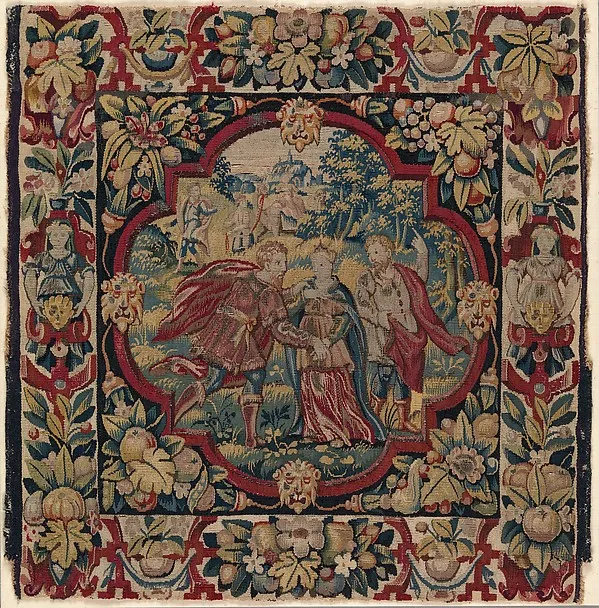
2 Samuel 9:1-5The Kindness of God, and a Name in Lo-debar
1And David said, Is there yet any that is left of the house of Saul, that I may shew him kindness for Jonathan’s sake? 2And there was of the house of Saul a servant whose name was Ziba. And when they had called him unto David, the king said unto him, Art thou Ziba? And he said, Thy servant is he. 3And the king said, Is there not yet any of the house of Saul, that I may shew the kindness of God unto him? And Ziba said unto the king, Jonathan hath yet a son, which is lame on his feet. 4And the king said unto him, Where is he? And Ziba said unto the king, Behold, he is in the house of Machir, the son of Ammiel, in Lodebar. 5Then king David sent, and fetched him out of the house of Machir, the son of Ammiel, from Lodebar.
Everything turns on the strangeness of David's first question. The kingdom is his; the long war between his house and Saul's is over; by every custom of the ancient world a new dynasty made itself safe by wiping out the old one, lest some surviving heir become a rallying point for revolt. That is exactly the danger a king in David's place was expected to remove. And David's thought runs the opposite way entirely: Is there yet any that is left of the house of Saul, that I may shew him kindness?1 He is searching the old regime for someone to bless.
The whole initiative is his; no one petitions him, no survivor comes forward with a claim. The king goes looking, and he goes looking with mercy already in his heart. The grace of the chapter does not begin with the broken man being found. It begins, before he knows anything of it, with the king deciding to seek him.
The reason David gives is a name: for Jonathan's sake. Years before, when David was hunted and Jonathan was heir to the very throne David now holds, the two had cut a covenant, and Jonathan had pleaded with him: shew me the kindness of the LORD… thou shalt not cut off thy kindness from my house for ever (1 Sam. 20:14-15). David swore it then, and he had sworn to Saul as well not to destroy his seed (1 Sam. 24:21-22).
Now, when he could safely have forgotten every word of it, he remembers. This is the heart of the matter: the kindness about to fall on Mephibosheth is owed to a love and a promise made long before he could do anything to deserve or forfeit it. He will be blessed for the sake of another - one whom the king loved.
Ziba answers, and the very first thing we learn about Jonathan's surviving son is not his name but his condition: Jonathan hath yet a son, which is lame on his feet. The earlier narrative told us how it happened - when the news came that Saul and Jonathan had fallen, the child's nurse caught him up to flee, and in her haste he fell and was crippled, five years old (2 Sam. 4:4).
So his lameness is bound up with the day his family's kingdom collapsed; he carries in his own body the wound of his house's downfall. In a world that read physical wholeness as a mark of fitness and favor, his brokenness marked him as the opposite. The heir of Saul is introduced to us as a disabled man, hidden away, the living emblem of a fallen line. And that - not in spite of it but precisely so - is the man the king has resolved to seek.
2 Samuel 9:6-8Fear Not; Such a Dead Dog as I Am
6Now when Mephibosheth, the son of Jonathan, the son of Saul, was come unto David, he fell on his face, and did reverence. And David said, Mephibosheth. And he answered, Behold thy servant! 7And David said unto him, Fear not: for I will surely shew thee kindness for Jonathan thy father’s sake, and will restore thee all the land of Saul thy father; and thou shalt eat bread at my table continually. 8And he bowed himself, and said, What is thy servant, that thou shouldest look upon such a dead dog as I am?
Mephibosheth comes - he must be carried, or come painfully on his crippled feet - and the moment he is before the king he fell on his face, and did reverence. Consider what this man would have been feeling. He is the grandson of the king David displaced, the surviving heir of a rival house, summoned out of hiding into the presence of the very man who now holds the throne his family lost. In the cold logic of the ancient world, a summons like this could only mean death; the new king was tidying up the old line.
So he comes expecting the worst, and he does the only thing a powerless man can do before a king who holds his life: he prostrates himself to the ground. Behold thy servant. There is no claim here, no bargaining, no leverage. He has nothing to offer and nothing to plead. He can only fall on his face and wait to learn whether the king means life or death.
And the king's first word to him is the word God speaks again and again across all of Scripture to the frightened and the undone: Fear not. It is the word the angels bring, the word the prophets carry, the word the Lord Himself will speak to the trembling. The fear not here means: “I have determined to be kind to you.” The terror of the prostrate man is met with reassurance, and the reassurance opens straight into a flood of gifts.
David lays out three things in a single breath: I will surely shew thee kindness - and again the ground of it, for Jonathan thy father's sake - and will restore thee all the land of Saul thy father; and thou shalt eat bread at my table continually. Restoration of inheritance, and a permanent place at the king's own table. The man who came expecting a sentence receives a sonship. If you have ever walked toward God braced for the worst, hear how the King opens His mouth.
The first gift undoes a loss. The land of Saul had been forfeit with the fall of the house - the very inheritance Mephibosheth lost when his grandfather's kingdom collapsed and he fled to Lo-debar. I will restore thee all the land, says the king, and gives back every acre of it.2 This is the return of a lost inheritance, the undoing of the disinheritance, the restoration of everything the failure of his house had stripped away - far beyond a provision for daily survival.
The broken heir who owned nothing in Lo-debar - the place of “no pasture” - is suddenly a landed man again, his patrimony handed back to him whole. Grace here restores. It gives back the life and the belonging he had lost.
The second gift goes further than land. In the ancient world the table was the place of intimacy and honor - to eat at a man's table was to share his life, to be counted among his own, to belong.2 And the seat David gives is not a feast-day courtesy but a standing one: thou shalt eat bread at my table continually. The lame grandson of the rival king is to take his meals, every day, in the royal household, as a member of it.
The land restored gives him independence; the seat at the table gives him something greater - belonging. He will not merely be provided for at a distance, an estate-holder out in the country. He will be brought near, into the king's own house, to the king's own table, for the rest of his life.
A dog was already the lowest of creatures in that world; a dead dog is lower still - worthless, unclean, contemptible, fit only to be cast out.1 That is the self David's kindness lands on, and Mephibosheth names it without flinching: What is thy servant, that thou shouldest look upon such a dead dog as I am? It is how the man honestly sees himself: broken, lame, the remnant of a disgraced house, with no merit and no claim, asking the only question his situation allows - why would the king so much as look at someone like me?
And it is exactly the right question, because it measures the gift correctly. Mephibosheth does not receive the king's kindness because he has talked himself into thinking he deserves it. He receives it knowing full well he does not. The greatness of the grace and the depth of his unworthiness are held in the same breath - and that is precisely where grace is seen for what it is. Only the one who knows he is a dead dog can rightly marvel at being seated as a son.
2 Samuel 9:9-13At the King's Table as One of His Sons
9Then the king called to Ziba, Saul’s servant, and said unto him, I have given unto thy master’s son all that pertained to Saul and to all his house. 10Thou therefore, and thy sons, and thy servants, shall till the land for him, and thou shalt bring in the fruits, that thy master’s son may have food to eat: but Mephibosheth thy master’s son shall eat bread alway at my table. Now Ziba had fifteen sons and twenty servants. 11Then said Ziba unto the king, According to all that my lord the king hath commanded his servant, so shall thy servant do. As for Mephibosheth, said the king, he shall eat at my table, as one of the king’s sons. 12And Mephibosheth had a young son, whose name was Micha. And all that dwelt in the house of Ziba were servants unto Mephibosheth. 13So Mephibosheth dwelt in Jerusalem: for he did eat continually at the king’s table; and was lame on both his feet.
David moves at once to make the gift concrete and durable. He summons Ziba - the servant of Saul's old household, a man with fifteen sons and twenty servants of his own - and assigns him and his whole company to work the restored estates on Mephibosheth's behalf: thou shalt bring in the fruits, that thy master's son may have food to eat. The arrangement is careful and complete. Mephibosheth is not merely handed a deed to land he cannot farm with his crippled feet; he is given a whole workforce to make that land yield, so that the inheritance is not a burden but a living provision.
Twice in these verses David calls him thy master's son - not “the lame man,” not “Saul's heir,” but the master's son, the one whose servants these now are. The disinherited fugitive of Lo-debar is established as a man of standing, with lands worked for him and a household serving him.
And yet, even as he secures the land, David sets the table above it. He has just given Mephibosheth estates and servants enough to live in independence - and then, almost as if the lands were the lesser thing, comes the but: but Mephibosheth thy master's son shall eat bread alway at my table. The provision in the country is real, but it is not the heart of the gift. The heart of the gift is nearness.
Mephibosheth could have been a wealthy landholder far from the court, well provided for and rarely seen. Instead the king insists he live in Jerusalem and eat at the royal table alway - always, without interruption, day after day. David is not content to bless him at a distance. The kindness is not satisfied until the broken man is brought near, into the king's own house, sharing the king's own table for good.
Then comes the phrase that gathers the whole chapter into a single astonishing word: he shall eat at my table, as one of the king's sons.2 A son. The lame grandson of the house David replaced is placed among the king's own children at the family table, given the standing of a son in the royal household. There is no legal claim behind it; Mephibosheth will never inherit David's throne, and he asked for none of this.
It is sheer adoption - the deliberate decision of the king to take the broken heir of his enemy into his own house as a child. The man who an hour before called himself a dead dog now sits among the princes of Israel at the king's board, counted as a son.
The chapter ends with a quiet summary that says everything twice over. So Mephibosheth dwelt in Jerusalem: for he did eat continually at the king's table. The man of Lo-debar - the place of no pasture - now dwells in Jerusalem, the city of the king, and eats continually at the royal table. The word lands a final time: continually, as a fixed and settled state of life, a standing invitation without end. His exile is over; his hiding is over; his hunger in the nowhere place is over.
He has a permanent seat in the king's house and a permanent place at the king's board. The story that began with a king asking whether anyone was left to bless ends with the blessed man at home in the king's own city, fed at the king's own table, for the rest of his days.
And then the very last words of the chapter are these: and was lame on both his feet. It is the most quietly powerful note in the whole account. After the seeking, the kindness, the restored land, the place among the king's sons, the table forever - after all of it - the narrator's closing word is that Mephibosheth was still lame on both his feet. His brokenness remains. He comes to the king's table as a crippled man, and a crippled man he stays, his lame feet hidden beneath the royal board among the king's sons.
The kindness did not wait for him to be whole; it did not require him to be whole; it embraced him in his brokenness and seated him anyway. That the chapter chooses to end on his lameness is no accident. It fixes forever the nature of the grace shown here: a broken man, unhealed, undeserving, seated as a son at the King's table because the King was kind.
Research trail
Sources & further study
These references support the historical, linguistic, manuscript, and contextual notes in this chapter. Scripture remains the primary text; external sources are provided so readers can inspect the research directly.
- 2 Samuel 9 - Translators' NotesThe NET Bible's detailed footnotes on 2 Samuel 9 - the force of chesed rendered “kindness,” the background of Mephibosheth's lameness (cf. 2 Sam. 4:4), the meaning of the place-name Lo-debar, and the self-abasing idiom of “a dead dog.”
- Art of the Ancient Near East · Heilbrunn TimelineThe Met's survey of the ancient Near Eastern world that frames the chapter - the king's table and the royal banquet as the place of honor and belonging (vv. 7, 10-13), and the giving and restoring of land as the substance of inheritance (vv. 7, 9).
- 2 Samuel 9 · Hebrew + classical Jewish commentaryThe Hebrew text of 2 Samuel 9 with Rashi, Radak, and other classical commentators side by side - useful for chesed (vv. 1, 3, 7, the steadfast covenant-kindness David is determined to show), for the place-name Lo-debar, and for the idiom of eating “at the king's table continually.”
- 2 Samuel 9 ↔ Ephesians 2 · Romans 5 · 1 John 3Traces the threads tying David's kindness for Jonathan's sake (v. 1) to the kindness shown us for Christ's sake (Eph. 4:32), the crippled enemy's heir restored to when we were enemies, we were reconciled (Rom. 5:10), and the seat at the king's table to being made to sit together in heavenly places in Christ Jesus (Eph. 2:6).
Where this echoes in Scripture
The Kindness of God, and a Name in Lo-debar
- 1 Samuel 20:14-15And thou shalt not only while yet I live shew me the kindness of the LORD… but also thou shalt not cut off thy kindness from my house for ever.The covenant this chapter fulfills - the promise Jonathan drew from David, kept now “for Jonathan's sake.”
- 2 Samuel 4:4And he fell, and became lame… he was five years old when the tidings came of Saul and Jonathan.How Mephibosheth came to be lame - crippled on the very day his family's kingdom fell.
- Luke 19:10For the Son of man is come to seek and to save that which was lost.The king who goes looking for the hidden heir - the seeking that begins on the throne's side, not the sinner's.
Fear Not; Such a Dead Dog as I Am
- Ephesians 4:32And be ye kind one to another, tenderhearted, forgiving one another, even as God for Christ's sake hath forgiven you.Kindness shown “for Jonathan's sake” (v. 7), deepened - the kindness God shows us for the sake of His Son.
- Matthew 9:2And Jesus… said unto the sick of the palsy; Son, be of good cheer; thy sins be forgiven thee.The “Fear not” David speaks over the trembling man - the King meeting fear with mercy, not judgment.
- Luke 18:13God be merciful to me a sinner.Mephibosheth's “such a dead dog as I am” - the honest confession of unworthiness that grace meets and lifts.
At the King's Table as One of His Sons
- Romans 5:10For if, when we were enemies, we were reconciled to God by the death of his Son.Mephibosheth, of the rival house, sought and reconciled - the enemy brought near and made a friend.
- 1 John 3:1Behold, what manner of love the Father hath bestowed upon us, that we should be called the sons of God.The dead dog seated “as one of the king's sons” (v. 11) - adoption into the family table.
- Ephesians 2:6And hath raised us up together, and made us sit together in heavenly places in Christ Jesus.The seat at the king's table “continually” - the broken seated forever in the King's own house.
- Luke 14:21Bring in hither the poor, and the maimed, and the halt, and the blind.The King's table set for the lame and the broken - welcomed as they are, not when made whole.