2 Samuel 10
People in this chapter
A king remembers an old kindness and means to repay it. Ammon's Nahash had once been good to David; now he is dead, so David sends servants to comfort his son Hanun (v. 2). No angle. Just goodwill. And Hanun's princes read it as a plot - the comforters are spies (v. 3). So the young king shaves off half each man's beard, cuts their garments to the buttocks, and sends them home shamed.1
Tap any highlighted phrase to jump to the commentary that unpacks it.
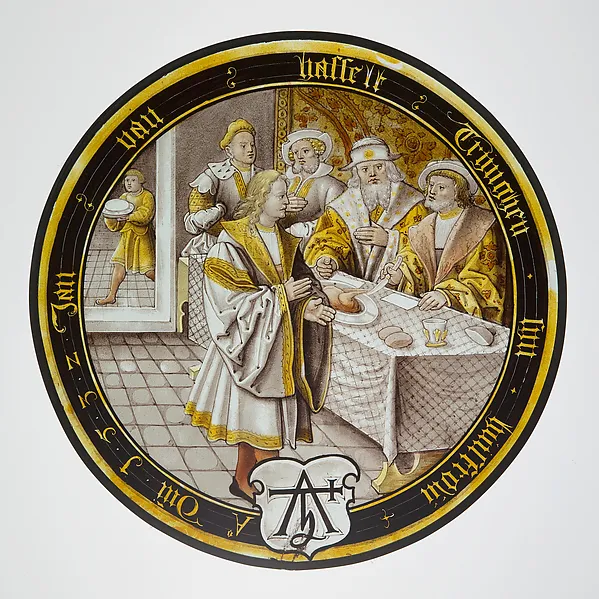
2 Samuel 10:1-5Tarry at Jericho Until Your Beards Be Grown
1And it came to pass after this, that the king of the children of Ammon died, and Hanun his son reigned in his stead. 2Then said David, I will shew kindness unto Hanun the son of Nahash, as his father shewed kindness unto me. And David sent to comfort him by the hand of his servants for his father. And David’s servants came into the land of the children of Ammon. 3And the princes of the children of Ammon said unto Hanun their lord, Thinkest thou that David doth honour thy father, that he hath sent comforters unto thee? hath not David rather sent his servants unto thee, to search the city, and to spy it out, and to overthrow it? 4Wherefore Hanun took David’s servants, and shaved off the one half of their beards, and cut off their garments in the middle, even to their buttocks, and sent them away. 5When they told it unto David, he sent to meet them, because the men were greatly ashamed: and the king said, Tarry at Jericho until your beards be grown, and then return.
The chapter opens on a king who remembers. The old Ammonite king Nahash has died, his son Hanun has taken the throne, and David's first thought is not advantage but gratitude: I will shew kindness unto Hanun the son of Nahash, as his father shewed kindness unto me (v. 2). We are not told here what Nahash had done for David - it lies somewhere in the long, hard years of his rise - but David has not forgotten it.
So he sends servants across the border to comfort him… for his father, an embassy of condolence and goodwill. Notice what this reveals about David at the height of his power. A secure king owes a small neighbour nothing; he could ignore Ammon entirely, or treat the change of throne as a moment to press his advantage. Instead he reaches out to repay an old mercy with a new one. It is the conduct of a man whose strength has not hardened him - who still keeps his accounts of kindness, and means to settle them on the side of grace.1
The embassy never gets a fair hearing. Hanun's counsellors have decided in advance what it must mean, and they pour it into the young king's ear: surely David has not sent comforters but spies, to search the city, and to spy it out, and to overthrow it (v. 3). It is a study in how suspicion works. The princes do not weigh David's overture; they reinterpret it, supplying a sinister motive the act itself does not carry.
Comfort becomes cover, condolence becomes reconnaissance, an open hand is read as a hidden knife. This is the lens of fear and of a guilty imagination - the assumption that no one acts in good faith, that every kindness is a maneuver. And a young king newly on his throne, unsure of himself and eager not to look like a fool, is exactly the sort to be swayed by it. The tragedy is that the slander is self-fulfilling: by treating a friend as an enemy, Hanun is about to manufacture the very war his advisors claim to fear.
Persuaded, Hanun disgraces the embassy. Wherefore Hanun took David's servants, and shaved off the one half of their beards, and cut off their garments in the middle, even to their buttocks, and sent them away (v. 4). Every detail is engineered for maximum humiliation. In that world a man's beard was bound up with his dignity and his standing; to shave it - and to shave only half, leaving each man visibly mutilated and absurd - was a deliberate, mocking insult.
To cut their garments away even to their buttocks exposed them in the most shaming way a person could be exposed. These were not common men but the king's own ambassadors, and to abuse an envoy was, by every ancient custom, an act of war - an insult aimed straight at the sovereign who sent them. Hanun has chosen the gesture calculated to wound David most: he takes the hand extended in peace and breaks it, then sends the broken pieces home for everyone to see.2
David's response is the measure of the king. Word reaches him that his men are coming home mutilated and exposed, greatly ashamed, and he does the opposite of what wounded pride would do. He does not parade them into the capital to inflame the city; he does not let their disgrace become a public spectacle. He sent to meet them… and the king said, Tarry at Jericho until your beards be grown, and then return (v. 5).
Every word is tender. He sends ahead to meet them before they can be gawked at; he gives them a place to stop short of the court; and he frames the wait around their healing - until your beards be grown. What was cut will grow back; the shame, given time and shelter, will pass. Here is a king who feels his servants' humiliation as his own and refuses to add to it. He neither pretends the wound is nothing nor lets it define them.
He covers them, gives them time, and tells them they may return whole. The insult he will answer in its place; first he tends the men who bore it.
2 Samuel 10:6-8They Stank Before David
6And when the children of Ammon saw that they stank before David, the children of Ammon sent and hired the Syrians of Bethrehob, and the Syrians of Zoba, twenty thousand footmen, and of king Maacah a thousand men, and of Ishtob twelve thousand men. 7And when David heard of it, he sent Joab, and all the host of the mighty men. 8And the children of Ammon came out, and put the battle in array at the entering in of the gate: and the Syrians of Zoba, and of Rehob, and Ishtob, and Maacah, were by themselves in the field.
The insult cannot stay an insult; it ripens into war. And when the children of Ammon saw that they stank before David (v. 6) - the phrase is blunt and physical, the language of something gone rotten and offensive. They know what they have done: they have made themselves odious, exposed as treaty-breakers and bullies, and they understand that reckoning is coming. So they buy an army. They hire the Syrians of Bethrehob and Zoba, with troops from the king of Maacah and from Ishtob - tens of thousands of mercenaries gathered out of fear.
There is a grim irony in it. The very thing Hanun's advisors pretended to dread - David coming against the city - their own folly has now made certain, and at ruinous cost. Sin, having acted, must scramble to cover itself; the lie about spies has become a real and expensive war. Fear that begins by manufacturing an enemy ends by frantically hiring help against the enemy it made. The Ammonites do not repent of the insult; they double down and arm against the consequences.
2 Samuel 10:9-11The Front of the Battle Was Against Him Before and Behind
9When Joab saw that the front of the battle was against him before and behind, he chose of all the choice men of Israel, and put them in array against the Syrians: 10And the rest of the people he delivered into the hand of Abishai his brother, that he might put them in array against the children of Ammon. 11And he said, If the Syrians be too strong for me, then thou shalt help me: but if the children of Ammon be too strong for thee, then I will come and help thee.
Joab marches out with the mighty men and arrives to find himself in a trap. The Ammonites have drawn up at the entering in of the gate, close before their city, while the hired Syrians are deployed apart by themselves in the field (v. 8) - so that when Joab advances he discovers the front of the battle was against him before and behind (v. 9). He is caught between two armies facing opposite directions, the worst position a commander can hold; a force pressed from front and rear can be crushed inward and routed.
Joab does not panic. He makes a swift, clear-eyed decision: he picks the choice men of Israel, the best he has, and arrays them himself against the Syrians - the more formidable, professional threat - while he hands the rest of the people to his brother Abishai to face the Ammonites at the gate (vv. 9-10). Hemmed in on every side, he does not pretend the danger away, and he is not paralyzed by it.
He takes hold of what can be done and does it with order and resolve.1
2 Samuel 10:12-14Let Us Play the Men for Our People
12Be of good courage, and let us play the men for our people, and for the cities of our God: and the LORD do that which seemeth him good. 13And Joab drew nigh, and the people that were with him, unto the battle against the Syrians: and they fled before him. 14And when the children of Ammon saw that the Syrians were fled, then fled they also before Abishai, and entered into the city. So Joab returned from the children of Ammon, and came to Jerusalem.
Then Joab speaks to his brother, and through him to all Israel, and the chapter reaches its summit. First the plain arrangement of mutual aid: If the Syrians be too strong for me, then thou shalt help me: but if the children of Ammon be too strong for thee, then I will come and help thee (v. 11) - two halves of one army, each pledged to come to the other's rescue. But then Joab lifts the moment far above tactics: Be of good courage, and let us play the men for our people, and for the cities of our God: and the LORD do that which seemeth him good (v. 12).
Hold the whole sentence together, because its greatness is in the joining. Be of good courage… let us play the men - this is a summons to act, to fight with everything in them, as men fully responsible for our people and the cities of our God. And then, in the same breath, the outcome is laid down before God: the LORD do that which seemeth him good. Joab does not say the result is theirs to seize, nor does he use God's sovereignty as an excuse to slacken.
He says both at once - we will give this everything; the verdict belongs to the LORD. Wholehearted human effort and complete surrender of the outcome are not rivals here; they stand side by side in one resolve.
The battle, when it comes, is swift. And Joab drew nigh, and the people that were with him, unto the battle against the Syrians: and they fled before him (v. 13). The hired Syrians break almost at once - and it is worth noticing why mercenaries would. They are paid men with no stake in Ammon's quarrel and no reason to die for another nation's wounded pride; when the fight turns hard, there is nothing to hold them.
The moment they run, the Ammonites lose their nerve too: when the children of Ammon saw that the Syrians were fled, then fled they also before Abishai, and entered into the city (v. 14). The two-front trap that looked so deadly collapses in a single day, and Joab returns to Jerusalem. The shape of the victory is quiet and instructive. There is no fire from heaven, no miracle reported; the deliverance comes through courage, sound deployment, brotherly support, and the simple fact that a cause built on pride and bought loyalty cannot hold together under pressure.
Joab had prayed the LORD do that which seemeth him good - and what seemed good to the LORD came by way of faithful men doing their part well.
2 Samuel 10:15-19They Feared to Help the Children of Ammon Any More
15And when the Syrians saw that they were smitten before Israel, they gathered themselves together. 16And Hadarezer sent, and brought out the Syrians that were beyond the river: and they came to Helam; and Shobach the captain of the host of Hadarezer went before them. 17And when it was told David, he gathered all Israel together, and passed over Jordan, and came to Helam. And the Syrians set themselves in array against David, and fought with him. 18And the Syrians fled before Israel; and David slew the men of seven hundred chariots of the Syrians, and forty thousand horsemen, and smote Shobach the captain of their host, who died there. 19And when all the kings that were servants to Hadarezer saw that they were smitten before Israel, they made peace with Israel, and served them. So the Syrians feared to help the children of Ammon any more.
The Syrians will not accept their defeat. Beaten in the field, they regroup: when the Syrians saw that they were smitten before Israel, they gathered themselves together (v. 15), and their overlord Hadarezer summons fresh forces that were beyond the river - reinforcements from far up in Syria - massing at Helam under his captain Shobach (v. 16). This is no longer a hired skirmish on Ammon's behalf; it has become a full Syrian war against Israel.
And now David himself takes the field. When it was told David, he gathered all Israel together, and passed over Jordan, and came to Helam (v. 17). The king who began the chapter sending an embassy of comfort now crosses the Jordan at the head of his whole nation to meet a coalition that has chosen war over peace. The detail that David goes in person matters: this is the gathered strength of Israel under its anointed king, marching out to face a danger that has refused every off-ramp.
The Syrians had a chance to let the matter die after the first defeat; instead they doubled their stake, and so they draw the full weight of Israel upon themselves.1
The second battle is decisive in a way the first was not. And the Syrians fled before Israel; and David slew the men of seven hundred chariots of the Syrians, and forty thousand horsemen, and smote Shobach the captain of their host, who died there (v. 18). The numbers are staggering, and the death of Shobach the captain is the hinge - an army that loses its commander in the field loses its head and its will at once.
Where the hired troops of the first battle simply ran, here the professional Syrian host is broken outright and its leadership destroyed. The contrast with how the chapter opened could hardly be sharper. David sought peace, returned an old kindness, sent comfort to a grieving court; that peace was thrown back as an insult, and an alliance was raised to make war on him. Now the full cost of that choice comes due. This is the sober arithmetic of pride: an insult meant to make a young king look strong has cost Syria its chariots, its horsemen, and its general, and has gained Ammon nothing but a coming siege.
The chariots and horsemen, the very strength the coalition trusted, lie broken in the field.
The chapter that opened with a broken peace closes with a peace restored - though not the one David first offered. And when all the kings that were servants to Hadarezer saw that they were smitten before Israel, they made peace with Israel, and served them. So the Syrians feared to help the children of Ammon any more (v. 19). The vassal kings who had marched under Hadarezer read the outcome plainly and make their submission; they become subject to Israel, and the Syrian threat that had loomed over the region is broken for a generation.
The closing line is quietly final: the Syrians feared to help the children of Ammon any more. The alliance bought with Ammon's silver evaporates; their hired friends will not come again at any price. And so the consequences of Hanun's insult settle into place - Ammon is left isolated, its powerful backers cowed and withdrawn, awaiting the reckoning the next chapter will bring. What began with a kindness despised ends with the despiser stripped of every ally.
The king who came in peace has not been overthrown by those who scorned his peace; he stands, and they are scattered, and the land has rest from Syria.
Research trail
Sources & further study
These references support the historical, linguistic, manuscript, and contextual notes in this chapter. Scripture remains the primary text; external sources are provided so readers can inspect the research directly.
- 2 Samuel 10 - Translators' NotesThe NET Bible's detailed footnotes on 2 Samuel 10 - the gravity of shaving the beard and cutting the garments in verse 4, the alliance of Syrian states hired in verse 6, Joab's two-front deployment in verses 9-11, and the scale of the rout at Helam in verse 18.
- 2 Samuel 10 · Hebrew + classical Jewish commentaryThe Hebrew text of 2 Samuel 10 with Rashi, Radak, and other classical commentators side by side - useful for chesed (v. 2, the “kindness” David remembers and returns), for chazaq (v. 12, “be of good courage… play the men”), and for the idiom of verse 6 that the KJV renders “stank before David.”
- 2 Samuel 10 ↔ Matthew 21 · Luke 22 · Romans 10Traces the threads tying 2 Samuel 10 to the rest of Scripture - a king's messengers of peace mistreated (vv. 3-4) read beside the householder whose servants and Son are rejected (Matt. 21:34-39), and Joab's surrender of the outcome (v. 12) read beside not my will, but thine, be done (Luke 22:42).
Where this echoes in Scripture
Tarry at Jericho Until Your Beards Be Grown
- Matthew 21:34-39he sent his servants to the husbandmen... and the husbandmen took his servants, and beat one, and killed another... last of all he sent unto them his son.The pattern of verses 2-4 - a lord's messengers of good faith seized and abused, the insult aimed at the one who sent them.
- John 1:11He came unto his own, and his own received him not.The deepest form of the rejection David's embassy meets - kindness sent and spurned.
- Matthew 23:37O Jerusalem, Jerusalem, thou that killest the prophets, and stonest them which are sent unto thee.The long pattern behind verses 2-4 - God's messengers of peace met again and again with violence.
- John 15:20If they have persecuted me, they will also persecute you... ye shall be hated of all men for my name's sake.The same rejection David's servants meet, promised to all the King sends out (cf. Matt. 10:22).
- Romans 10:11For the scripture saith, Whosoever believeth on him shall not be ashamed.The promise behind David's word in verse 5 - the shame of God's servants is not the last word (cf. Rom. 9:33).
- Psalm 34:5They looked unto him, and were lightened: and their faces were not ashamed.The same restoration David gives in verse 5 - faces lifted from shame by looking to God.
- 1 Chronicles 19:1-5David said, I will shew kindness unto Hanun... Wherefore Hanun took David's servants, and shaved them, and cut off their garments.The parallel account of these same events - the kindness offered and the insult returned.
- Matthew 12:20A bruised reed shall he not break, and smoking flax shall he not quench.The same tenderness as verse 5 - a king who tends the wounded toward wholeness.
Let Us Play the Men for Our People
- Luke 22:42Father, if thou be willing, remove this cup from me: nevertheless not my will, but thine, be done.The fullest form of Joab's surrender in verse 12 - wholehearted striving joined to total yielding of the outcome.
- Matthew 26:42O my Father, if this cup may not pass away from me, except I drink it, thy will be done.The same temper as verse 12 - the cup not refused, the outcome laid fully before the Father.
- Matthew 6:10Thy will be done in earth, as it is in heaven.The shape the King taught His own to pray - the surrender half of Joab's sentence (v. 12).
- John 16:33In the world ye shall have tribulation: but be of good cheer; I have overcome the world.The courage half of verse 12, set in a hostile world - take heart, the battle is already won.
- Joshua 1:9Be strong and of a good courage; be not afraid... for the LORD thy God is with thee whithersoever thou goest.The same charge as verse 12 - the courage God commanded at the edge of the land, resting on His presence.
- 1 Corinthians 16:13Watch ye, stand fast in the faith, quit you like men, be strong.The apostle's echo of Joab's “play the men” - the call to take firm hold and stand.
- 1 Samuel 14:6there is no restraint to the LORD to save by many or by few.The faith underneath verse 12 - effort fully given, the outcome left entirely to the LORD.
- Proverbs 21:31The horse is prepared against the day of battle: but safety is of the LORD.Joab's two halves stated as a proverb - full preparation, and the result belonging to God.
They Feared to Help the Children of Ammon Any More
- Psalm 2:1-6The kings of the earth set themselves... against the LORD, and against his anointed... Yet have I set my king upon my holy hill of Zion.The pattern of the whole chapter - the nations rage against the anointed king, and yet he stands.
- Ephesians 2:13-14ye who sometimes were far off are made nigh by the blood of Christ. For he is our peace.The hope behind verse 19 - former enemies brought from war into submission and peace.
- Proverbs 16:18Pride goeth before destruction, and an haughty spirit before a fall.The arithmetic of verses 15-19 - an insult chosen out of pride that ends in ruin.
- 1 Chronicles 19:16-19when the Syrians saw that they were put to the worse before Israel... they made peace with David, and became his servants.The parallel account of the rout at Helam and the peace that followed.
- 1 Corinthians 15:25For he must reign, till he hath put all enemies under his feet.The fuller horizon of the King who stands while his enemies are scattered (v. 19).
- Ephesians 1:20-21set him at his own right hand... far above all principality, and power, and might, and dominion.The exaltation of the King once refused - the One who stood at the chapter's close, raised over every rival power.