Tobit 12
People in this chapter
How do you thank someone for giving you back your whole life? Tobias has been led safely home, the family debt has been recovered, a tormenting spirit has been driven from his bride, and his father's blindness has been healed. All of it came through one quiet companion. So father and son do the natural, generous thing: they offer him half of everything they own. Tobit 12 is the answer to that offer, and the answer turns out to be far larger than any reward.
The guide refuses the payment and lifts their gaze to the only One who deserves the thanks.
Tap any highlighted phrase to jump to the commentary that unpacks it.
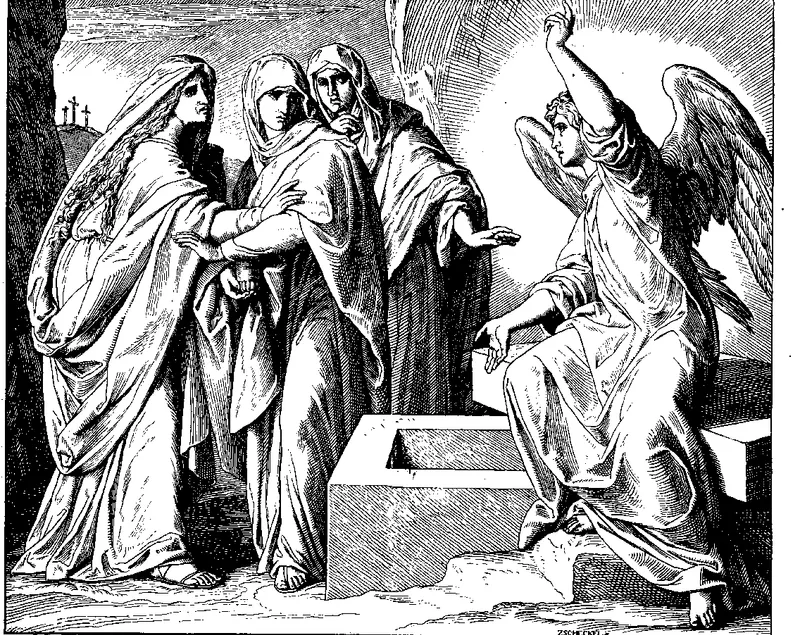
Tobit 12:1-5What Can We Give the One Who Gave Us Everything?
1Then Tobias called to him his son, and said to him: What can we give to this holy man, that is come with thee?
The older Tobit, his sight now restored, opens the chapter with a question every grateful heart eventually asks. Someone has done for us what we could never repay, and we cast about for some way to answer the kindness. Notice that he already senses something about the traveler; he calls him a "holy man." The instinct of gratitude is reaching toward worship without yet knowing it. The whole scene begins where genuine thanksgiving always begins: with the awareness that we have received far more than we can return.
3He conducted me and brought me safe again, he received the money of Gabelus, he caused me to have my wife, and he chased from her the evil spirit, he gave joy to her parents, myself he delivered from being devoured by the fish, thee also he hath made to see the light of heaven, and we are filled with all good things through him. What can we give him sufficient for these things?
Young Tobias recounts the whole journey in a single breathless sentence, and it reads like a litany of rescue. Safe passage, the recovered money, a wife given, a spirit driven off, joy restored to grieving parents, deliverance from the fish, and his father's sight returned. Every clause is a gift, and the boy lays them out one after another as if counting them on his fingers. This is what thanksgiving does: it remembers specifically.
Vague gratitude fades, but gratitude that names each mercy out loud keeps the heart tender. "We are filled with all good things through him," he says, and only then asks how such a debt could ever be paid.
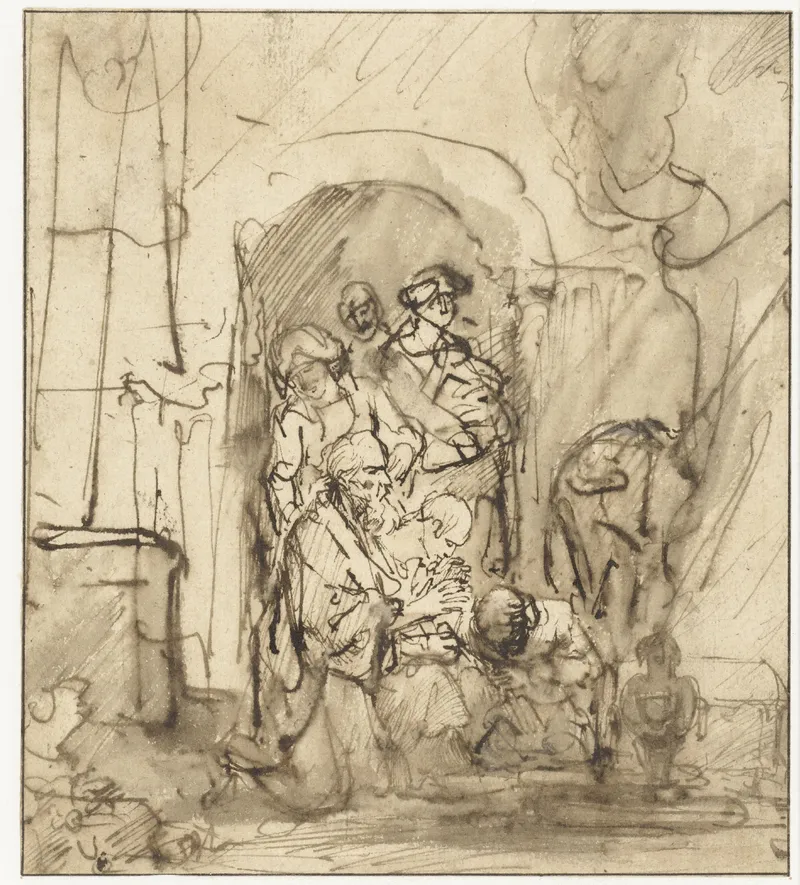
4But I beseech thee, my father, to desire him, that he would vouchsafe to accept one half of all things that have been brought. 5So the father and the son, calling him, took him aside: and began to desire him that he would vouchsafe to accept of half of all things that they had brought.
Father and son agree to offer half of everything as wages. It is an extravagant figure, a tithe turned upside down, and it shows how deeply they feel the weight of what they have received. They are not haggling over a fair fee; they are trying to give away nearly all they own in proportion to a kindness that feels boundless. The reader, who has watched the journey, knows what they do not yet know: no sum of money could ever match the gift, because the giver was never after money at all.
Their generous miscalculation sets up everything the angel is about to say.
Tobit 12:6-10Bless God, and the Worth of Prayer with Mercy
6Then he said to them secretly: Bless ye the God of heaven, give glory to him in the sight of all that live, because he hath shewn his mercy to you.
The angel will not take the payment. Instead he redirects every ounce of their gratitude to its true object. "Bless ye the God of heaven." This is the heart of the chapter and the correction every grateful heart needs. It is easy to stop at the instrument and forget the source, to thank the gift while overlooking the Giver. The angel gently lifts their eyes higher. The mercy they have experienced did not originate with the traveler at their side; it came from the God of heaven, and to Him belongs the glory, "in the sight of all that live."
7For it is good to hide the secret of a king: but honourable to reveal and confess the works of God.
Here is one of the chapter's quiet jewels. Some things are rightly kept private, "the secret of a king," but the works of God are made to be told. There is a holy publicity to what God has done; to hide His mercies would be a kind of theft from those who need to hear them. This single line reframes the entire ending of the book, where the family will go out and tell everyone what happened.
Testimony is presented here as something honourable, even owed. The good news of God's dealings is not a possession to hoard but a light to set on a stand.
8Prayer is good with fasting and alms more than to lay up treasures of gold: 9For alms delivereth from death, and the same is that which purgeth away sins, and maketh to find mercy and life everlasting.
The angel names three acts together as worth more than stored-up gold: prayer, fasting, and the giving of alms. They form a single devotional life rather than three unrelated duties. Prayer lifts the heart to God, fasting frees it from the grip of appetite, and almsgiving turns it outward toward the poor. Jesus would later teach these same three practices side by side in the Sermon on the Mount, warning against doing any of them for show (Matthew 6). Here they are praised as treasure that outlasts gold, the kind of wealth that moths and rust cannot reach.
Then comes the chapter's most weighty and most discussed line: "alms delivereth from death, and the same is that which purgeth away sins, and maketh to find mercy and life everlasting." Scripture elsewhere ties mercy toward the poor to mercy received from God; Proverbs says the one who gives to the poor lends to the Lord, and Daniel urged a king to break off his sins by showing mercy to the poor (Daniel 4:27).
Christians across the centuries have drawn deeply from this verse on the saving worth of mercy shown to others, and have read it alongside the whole counsel of Scripture on grace, faith, and works. The text sets the connection before us plainly: the hand that opens to the poor is bound up somehow with the life that does not end.
10But they that commit sin and iniquity, are enemies to their own soul.
The angel sets the opposite path beside the first. Those who choose sin and iniquity are "enemies to their own soul." It is a startling phrase. We tend to imagine wrongdoing as something that mainly harms others or offends God from a distance, but here the deepest casualty is the sinner himself. To turn from God is to turn against your own life, to war on the very soul you were given to keep. Mercy toward others nourishes the soul; persistent evil starves and wounds it. The two roads of the chapter could not be clearer.
Tobit 12:11-15I Am Raphael: The Prayer Carried Up to God
11I discover then the truth unto you, and I will not hide the secret from you. 12When thou didst pray with tears, and didst bury the dead, and didst leave thy dinner, and hide the dead by day in thy house, and bury them by night, I offered thy prayer to the Lord.
The traveler now lifts the veil. "I discover then the truth unto you, and I will not hide the secret from you." Everything the family thought they understood about their companion is about to be rewritten. The man who walked the dusty road with Tobias, who shared their meals and their dangers, has been carrying a secret the whole time. The disclosure is given as a gift, an act of revelation, and it transforms the meaning of every step of the journey behind them.
What they took for good fortune was the hand of God working through a messenger they could not recognize.
This is the line that opens a window into heaven. The angel tells Tobit that his prayers, prayed with tears, and his hidden mercies, the burying of the dead by night when it was dangerous to be seen, did not fall to the ground. "I offered thy prayer to the Lord." Heaven was listening the entire time. The tears Tobit thought no one saw, the bodies he risked his safety to bury, the meals he abandoned to honor the dead, all of it was gathered up and carried before God.
The chapter quietly assures every hidden sufferer that their unseen faithfulness is seen, remembered, and brought into the presence of God.
13And because thou wast acceptable to God, it was necessary that temptation should prove thee. 14And now the Lord hath sent me to heal thee, and to deliver Sara thy son’s wife from the devil.
The angel says something that turns Tobit's suffering inside out. Because he "wast acceptable to God," the angel explains, "it was necessary that temptation should prove thee." The trials came to one God had already drawn near to, and they served to refine a faith He treasured. This echoes a deep current in Scripture, where the gold is tried in the fire and the faithful are proven through hardship. Tobit's blindness, his grief, his apparent forsakenness, were the crucible in which a faith already precious to God was shown to be genuine.
The reader who has wondered whether trials mean rejection is told here that they can mean the very opposite.
15For I am the angel Raphael, one of the seven, who stand before the Lord.
Now the secret is spoken plainly: "I am the angel Raphael, one of the seven, who stand before the Lord." The companion was a messenger of God all along, one of those who attend the very throne of heaven, sent down into the small, painful affairs of one family. The grandeur of the claim, standing before the Lord, set against the homeliness of the task, a son's journey and a father's eyes, is the wonder of the whole book.
Heaven's highest servants are not too lofty for our lowest griefs. The name itself, "God heals," has been the quiet thesis of every chapter.
Tobit 12:16-22Peace Be to You: The Messenger Returns to God
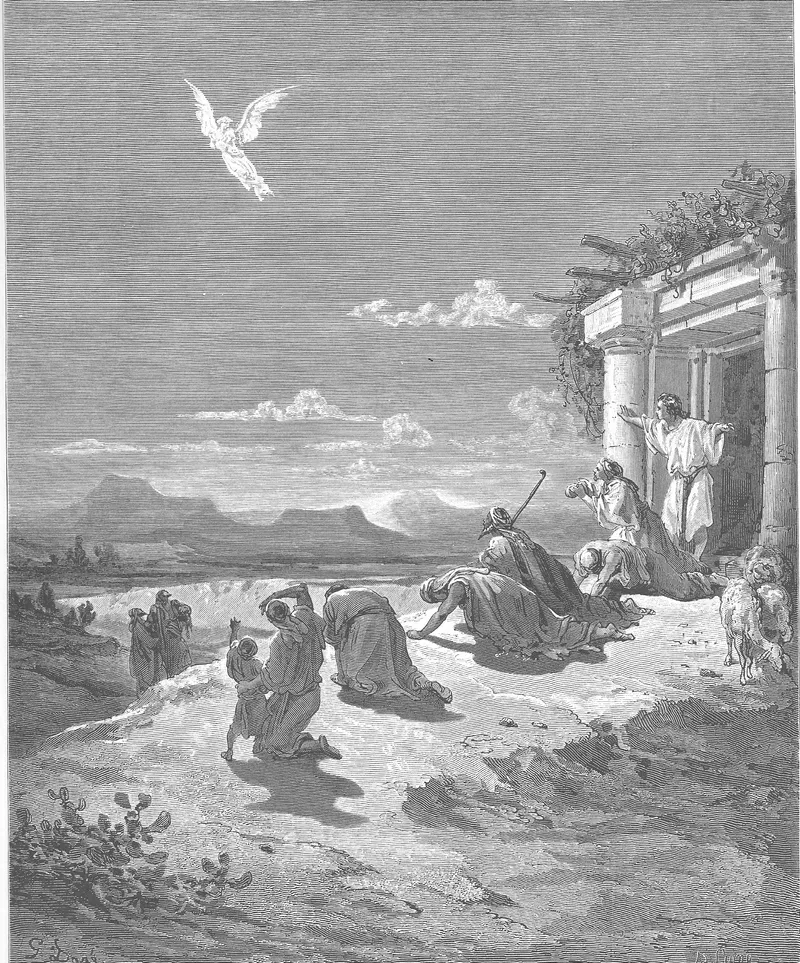
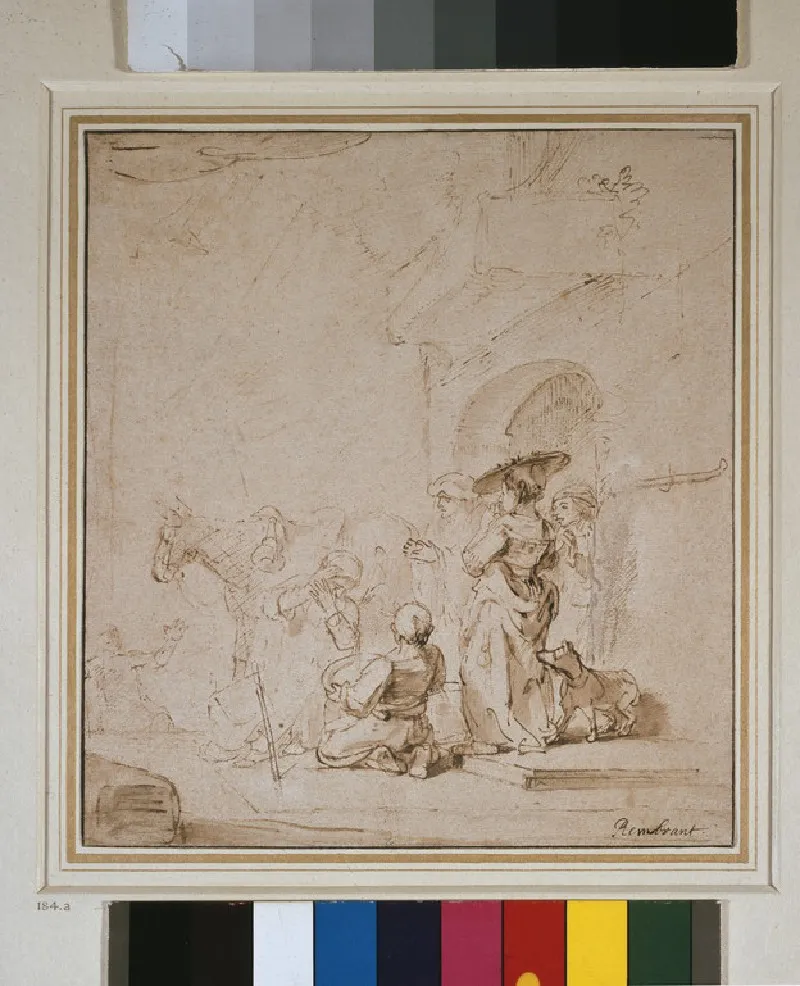
16And when they had heard these things, they were troubled, and being seized with fear they fell upon the ground on their face. 17And the angel said to them: Peace be to you, fear not.
The disclosure overwhelms them. Father and son fall to the ground, "seized with fear." This is the proper response of mortals who suddenly realize they have been in the presence of heaven. All through Scripture, those who encounter the holy are first undone by it; nearness to the divine exposes how small and frail we are. The family had treated Raphael as an equal, even offered him wages, and now the ground itself feels like the only fit posture. Their fear is not faithlessness. It is awe finally catching up to the truth.
Then comes the word that nearly always follows such terror in Scripture: "Peace be to you, fear not." It is the standing greeting of heaven to frightened people. The angels say it to shepherds; the risen Lord says it to His disciples behind locked doors. The God whose nearness overwhelms us does not want us crushed by Him but lifted up. Raphael does not leave them facedown in dread; he speaks peace and bids them rise. The holiness that exposes our smallness is the same holiness that bends down to reassure us.
18For when I was with you, I was there by the will of God: bless ye him, and sing praises to him. 19I seemed indeed to eat and to drink with you: but I use an invisible meat and drink, which cannot be seen by men.
Even now the angel keeps deflecting their wonder back toward God. "I was there by the will of God: bless ye him." He never accepts worship or even gratitude for himself; every time their amazement turns toward him, he turns it back toward the One who sent him. This is the mark of a true servant of heaven. The greatest of God's messengers is jealous only for God's glory, and will not let himself become the thing the rescued admire. The lesson for any who help others is unmistakable: point past yourself to God.
Raphael explains a mystery of his time among them. He only "seemed" to eat and drink; his true sustenance is "an invisible meat and drink, which cannot be seen by men." He had veiled his nature to walk among them, accommodating himself to human company so they could bear his presence. There is a tenderness in this. Heaven drew near in a form the family could receive, sharing their table without overwhelming them. The full glory was hidden so that the help could come close, a pattern of God meeting His people where they are.
20It is time therefore that I return to him that sent me: but bless ye God, and publish all his wonderful works. 21And when he had said these things, he was taken from their sight, and they could see him no more. 22Then they lying prostrate for three hours upon their face, blessed God: and rising up, they told all his wonderful works.
The angel's parting command is a commission. "Bless ye God, and publish all his wonderful works." His mission complete, he returns to the One who sent him, but he leaves the family with a task that outlasts his visit: to tell. What God has done is meant to be spoken, carried out into the world, made known. This brings the chapter full circle back to verse seven, where it was called honourable to reveal the works of God. The family's rescue was never meant to end with them. It was given partly so that it could be told.
The chapter ends in a single beautiful motion. Raphael vanishes from sight, and the family lies prostrate for three hours, blessing God. Then they rise, and "rising up, they told all his wonderful works." Worship and witness are joined here as one breath. First they fall down in adoration; then they get up and go tell. This is the whole shape of a life touched by God: brought low in worship, raised up to testify. The hidden mercies of God, once revealed, cannot stay hidden in the heart that has received them. They must be published abroad.
Where this echoes in Scripture
What Can We Give the One Who Gave Us Everything?
- Psalm 116:12What shall I render unto the LORD for all his benefits toward me?The same question Tobit asks, set to song: how do we repay such kindness?
- Luke 17:15-16And one of them, when he saw that he was healed, turned back, and with a loud voice glorified God, and fell down on his face at his feet, giving him thanks.The healed leper, like Tobias, returns to give thanks once the gift is received.
- 1 Chronicles 29:14But who am I, and what is my people, that we should be able to offer so willingly after this sort? for all things come of thee, and of thine own have we given thee.Even our gifts back to God are first His gifts to us, as the family is about to learn.
Bless God, and the Worth of Prayer with Mercy
- Proverbs 19:17He that hath pity upon the poor lendeth unto the LORD; and that which he hath given will he pay him again.Mercy shown to the poor is counted by God as a loan made to Him.
- Daniel 4:27Break off thy sins by righteousness, and thine iniquities by shewing mercy to the poor.Daniel ties the breaking of sin to mercy toward the poor, as Tobit does here.
- Matthew 6:1-4Take heed that ye do not your alms before men, to be seen of them... But when thou doest alms, let not thy left hand know what thy right hand doeth.Jesus teaches the same three practices, prizing the secret deed over the seen one.
I Am Raphael: The Prayer Carried Up to God
- Revelation 8:3-4And another angel came and stood at the altar... and the smoke of the incense, which came with the prayers of the saints, ascended up before God out of the angel's hand.An angel offering the prayers of the saints before God, just as Raphael offered Tobit's.
- Hebrews 1:14Are they not all ministering spirits, sent forth to minister for them who shall be heirs of salvation?The New Testament names angels as sent servants, exactly Raphael's role here.
- Luke 4:18He hath sent me... to preach deliverance to the captives, and recovering of sight to the blind.The healing of blindness in Tobit anticipates the One sent to give sight.
Peace Be to You: The Messenger Returns to God
- Luke 2:9-10And, lo, the angel of the Lord came upon them... And they were sore afraid. And the angel said unto them, Fear not.The same heavenly greeting to terrified people: do not be afraid.
- Psalm 9:1I will praise thee, O LORD, with my whole heart; I will shew forth all thy marvellous works.The published works of God, exactly what the family rises to do.
- Mark 5:19Go home to thy friends, and tell them how great things the Lord hath done for thee, and hath had compassion on thee.Jesus gives the same commission Raphael does: go and tell what God has done.