Painter of the Bible
Cherubino Alberti (Zaccaria Mattia)
Cherubino Alberti (Zaccaria Mattia) was a Tuscan-born engraver and painter of the late sixteenth century and one of the principal Italian reproductive printmakers who carried the Marcantonio Roman engraving tradition thr…

Their faith
Why Cherubino Alberti (Zaccaria Mattia) painted Christ
Cherubino Alberti, born in 1553 in Borgo San Sepolcro, was deeply rooted in the Christian faith, which significantly influenced his artistic journey. Raised in a family of painters, Alberti was trained in his father's workshop and later honed his skills in Rome under the guidance of his brother Giovanni. His work flourished during a period marked by the Catholic Church's revitalization efforts following the Council of Trent, and he was actively engaged with papal patrons such as Sixtus V, Clement VIII, and Paul V. This close association with the church not only provided him with opportunities but also instilled in him a profound reverence for sacred subjects, which he expressed through his art. His engravings and paintings often reflected the spiritual narratives found in scripture, showcasing his commitment to portraying Christian themes with beauty and devotion.
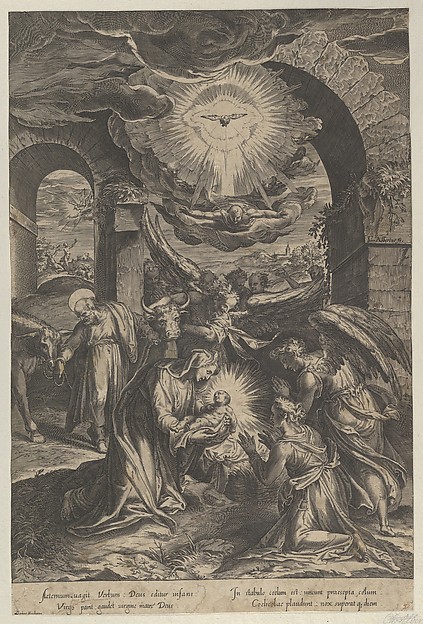
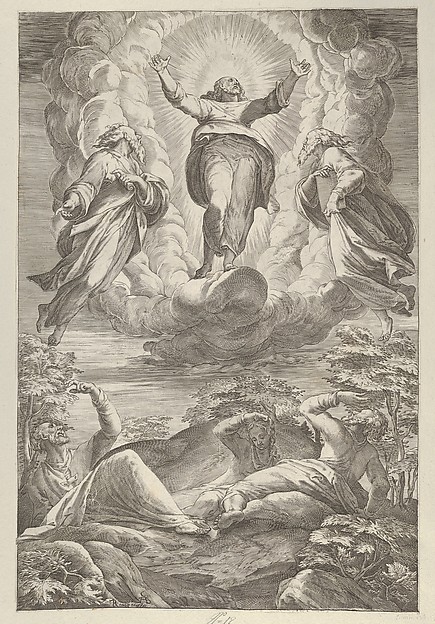
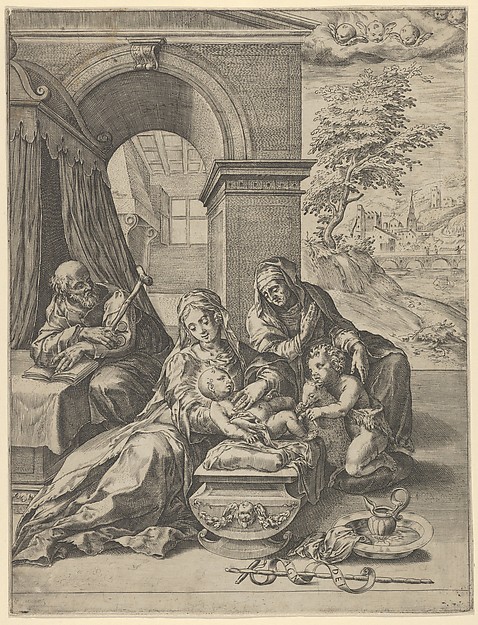
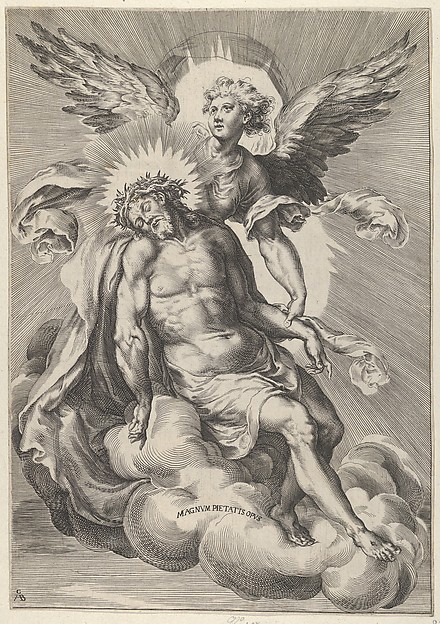
Alberti's faith was particularly evident in his engravings, which served as vital reproductions of the works of his contemporaries, such as Polidoro da Caravaggio and Federico Zuccaro. His engravings of Old and New Testament narratives not only preserved these important compositions but also conveyed the spiritual truths they represented. The frescoes he painted in the Sala Clementina of the Vatican Apostolic Palace, executed in collaboration with his brother, further exemplified his dedication to glorifying God through art. Cherubino Alberti's work continues to inspire and uplift viewers, inviting them to reflect on the profound narratives of faith and redemption that are central to the Christian experience. Through his artistic legacy, Alberti's devotion to Christ resonates, reminding us of the beauty and power of sacred art in connecting us to the divine.
Life & work
Cherubino Alberti (Zaccaria Mattia) was a Tuscan-born engraver and painter of the late sixteenth century and one of the principal Italian reproductive printmakers who carried the Marcantonio Roman engraving tradition through the post-Council-of-Trent generation into the early years of the seventeenth century. Born in Borgo San Sepolcro in 1553 to the painter Alberto Alberti (the family was a productive late-Mannerist Borgo workshop that produced several painters), trained in his father's workshop and then in Rome under his older brother Giovanni Alberti, and active principally in Rome under successive papal patrons (Sixtus V, Clement VIII, Paul V), he died in Rome in 1615.
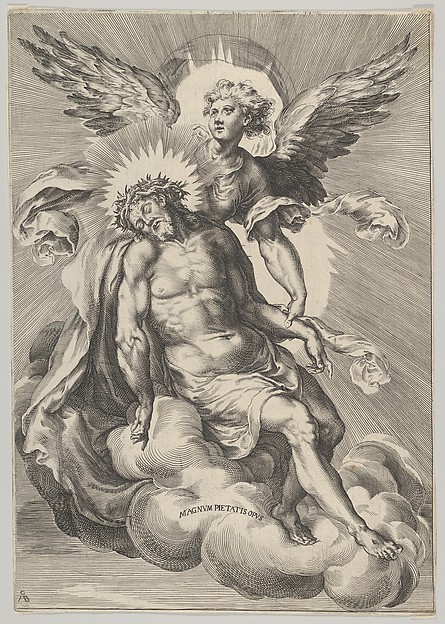
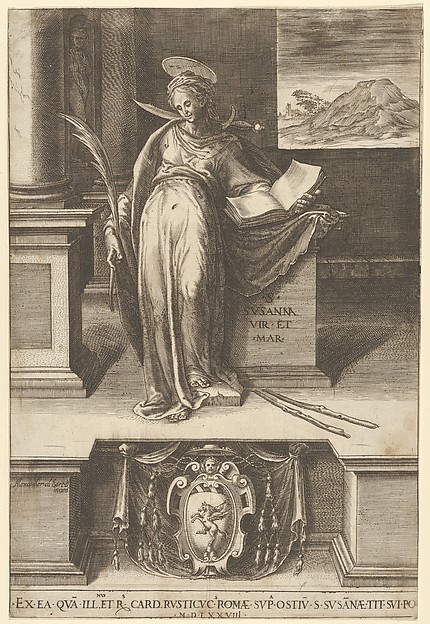
His Christian religious work is concentrated in engraved reproductions of paintings by his Italian Cinquecento and late-Cinquecento contemporaries — Polidoro da Caravaggio, Federico Zuccaro, Cesare Nebbia, and the broader late-Mannerist Roman papal-court generation — and in his own decorative ceiling paintings for the Roman papal commissions. The reproductive engravings of Polidoro da Caravaggio's lost facade frescoes (Polidoro's Roman painted facades had largely deteriorated by the late sixteenth century, and Cherubino Alberti's engravings became the principal surviving record of his compositions), the Federico Zuccaro Vatican fresco programs reproduced in plates, the great series of Old and New Testament narrative compositions reproduced from various Italian Cinquecento sources, and Cherubino's own emblematic and allegorical compositions fill the engraved corpus.
His painted output is smaller. The frescoes in the Sala Clementina of the Vatican Apostolic Palace (1597–1602, painted in collaboration with his older brother Giovanni Alberti and the Roman late-Mannerist workshop tradition), the small altarpieces in Roman parish churches, and the late ceiling decorations for the Borghese Palace under Pope Paul V's nephew Cardinal Scipione Borghese fill the painted corpus.
He served as principe (head) of the Roman Accademia di San Luca in 1599–1600 — the same Roman painters' academy that Federico Zuccaro had founded a decade earlier — and was a prominent figure in the late-Cinquecento Roman pictorial-political establishment. He worked in close professional dialogue with the Roman engravers Aliprando Caprioli, Antonio Tempesta, and the broader late-Mannerist papal-court generation.
Bible scenes Cherubino Alberti (Zaccaria Mattia) painted
Luke
Matthew
John
Daniel