- Starting price
- ~$20 hardcover
- Free tier
- No
- Platforms
- Hardcover · Kindle · Study Bible editions
- Developer
- David C. Cook
- Launched
- 2010
- Updated
- May 31, 2026
The verdict
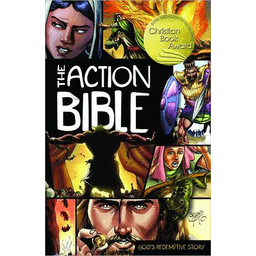
The Action Bible is the book you reach for when a child says the Bible is boring. Sergio Cariello - a veteran of DC and Marvel - draws the whole sweep of Scripture as a full-color comic, and for visual kids, reluctant readers, and teens who already love graphic novels, it works where a plain text never could. It is a retelling and an illustrated one, so it carries the usual buyer notes for any picture Bible, but as a doorway into the narrative it is hard to beat.
Try The Action Bible ↗Opens theactionbible.com
The Action Bible has quietly become the default gift for the kid who will not sit still with a regular Bible. Grandparents buy it. Children's pastors stock it. Homeschool parents put it on the shelf next to the readers. It shows up under Christmas trees aimed at nine-year-old boys who would rather read anything with a cape in it. That is a specific and well-earned piece of real estate, and it is the whole design goal - meet a young reader in the visual, fast-cutting language they already speak, and walk them through the biblical story from Creation to Revelation.
The book is the work of illustrator Sergio Cariello, a Brazilian-American artist who spent years drawing for DC and Marvel before turning the same dynamic, motion-filled style on Scripture. David C. Cook published the first edition in 2010, and an Expanded Edition followed in 2020 with additional narratives and refreshed art. It is the spiritual successor to the older Picture Bible, also from David C. Cook, which generations of kids grew up on - The Action Bible is that idea rebuilt for a generation raised on graphic novels and superhero films.
What you actually get is a single full-color volume of 215-plus narratives, arranged chronologically rather than book-by-book, each told in comic-panel form with speech bubbles, captions, and a lot of movement. It does not reprint the biblical text. It does not read like a Bible. It does not try to be a study tool. It is a retelling in pictures - the story dramatized so a child can follow it the way they follow a movie - and on that specific job it is the best-selling product of its kind, which is exactly why it earns a place on so many shelves.
✓ The good
- Best-in-class for reluctant and visual readers - the comic format pulls in kids (boys especially) who bounce off plain-text Bibles and storybook Bibles alike
- Genuinely professional art - Sergio Cariello is a working comics veteran, and the draftsmanship, pacing, and color are a clear step above most illustrated Bibles
- Chronological sweep - laying the narratives out as one continuous story from Creation to the early church helps kids see the Bible as a single arc rather than scattered tales
- Broad reach across ages - marketed for roughly 9-12, but it lands with younger kids read to, teens who love graphic novels, and even adults who want the big picture quickly
- A whole ecosystem - the same art style extends into the Action Bible Study Bible (full biblical text in ESV or NIV), devotionals, and handbooks, so a family can grow within one visual world
- Durable, giftable hardcover - built like a graphic-novel collection, it survives backpacks and re-reads, which matters for the age it targets
- Covers the hard and dramatic parts - battles, miracles, the Passion, and Revelation are all here, told with energy rather than skipped over
✗ Watch out
- It is a retelling, not the biblical text - the words are paraphrased and condensed for the format, so it is a companion to a Bible, not a replacement for one
- Comic art means every scene is depicted - faces, figures, and dramatic moments are drawn and interpreted, which some families and traditions prefer not to have rendered visually for sacred figures
- Uses the Protestant 66-book canon - readers from traditions with a larger canon (for example Catholic or Orthodox) will not find the deuterocanonical/apocryphal books here
- Violence and intensity are real - the art does not flinch at warfare, the crucifixion, or judgment scenes, which is age-appropriate for most but worth previewing for sensitive younger kids
- Selective coverage - 215 narratives is a lot, but the poetry, law, and much of the wisdom and prophetic literature get little or no space in a story-driven format
- Not a study or reference tool - there are no cross-references, notes, or original-language helps; for that you would move to the Action Bible Study Bible or a separate study Bible
Best for
- Reluctant or visual readers who find plain-text Bibles a slog
- Kids and teens who already love comics and graphic novels
- Parents and teachers wanting a child to grasp the big story chronologically
- Gift-givers looking for a durable, high-interest Bible for ages 9-12
Avoid if
- You want the actual biblical text rather than a paraphrased retelling
- You prefer sacred figures not be illustrated or dramatized
- You need a canon beyond the Protestant 66 books
- You want study notes, cross-references, or reference tools in the same volume
What The Action Bible is
The Action Bible is a full-color, comic-book-style retelling of Scripture, illustrated by Sergio Cariello and published by David C. Cook in 2010, with an Expanded Edition in 2020. It gathers 215-plus narratives - Creation, the patriarchs, the Exodus, the kings and prophets, the life of Jesus, the early church, and a glimpse of Revelation - and presents them chronologically as a single continuous story rather than book-by-book. Each narrative is drawn in comic panels with speech bubbles and captions, in a dynamic, action-forward style drawn from mainstream comics.
It is a retelling, not a translation: the dialogue and narration are paraphrased and compressed to fit the form, so it functions as a companion to a Bible rather than a substitute for the text itself. The framing is broadly evangelical and non-denominational, drawn from the Protestant 66-book canon, with the emphasis squarely on narrative drama and the overall arc of the story. Because it is comic art, every scene - including the face of Jesus and other sacred figures - is depicted and interpreted, which is standard for the illustrated-Bible category and worth knowing going in.
Why families reach for The Action Bible
Most children's Bibles are built around either soft, gentle illustration (the storybook-Bible tradition) or simple early-reader text. The Action Bible is built around a different premise: that a lot of kids - especially the nine-to-twelve crowd, and boys in particular - already consume stories in the visual, fast-cutting language of comics and superhero films, and that meeting them there is the fastest way into the biblical narrative. Cariello's panels move. People run, fight, weep, and pray with real motion, and the page turns like an action sequence.
That makes The Action Bible the rare children's Bible that a reluctant reader will pick up on their own. Parents report the same thing again and again: a child who would not touch a regular Bible will sit for an hour with this one, then ask what happens next. It is not trying to be comprehensive or devotional or scholarly. It is trying to make the story land for a young, visual reader - and on that narrow, important job, it is the best-selling option in its category for a reason.
The art: a working comics veteran draws the whole Bible
The single biggest practical difference between The Action Bible and the rest of the children's-Bible shelf is the draftsmanship. Sergio Cariello spent years as a professional illustrator in mainstream American comics - DC and Marvel titles - before applying that craft to Scripture, and it shows on every page. Anatomy, perspective, panel-to-panel pacing, dramatic lighting, full-color rendering: these are the tools of a seasoned sequential artist, not a generic stock illustrator, and the difference in quality is immediate when you set it next to a typical illustrated Bible.
This sounds like a small thing. In practice it's transformative for the target reader. A nine-year-old who has internalized the visual grammar of comics and films reads these pages fluently - the motion lines, the close-ups, the wide establishing shots all signal meaning the way they do in a graphic novel. The art is also frank: battles look like battles, the crucifixion is rendered with weight, and Revelation's imagery is vivid. That intensity is age-appropriate for most of the intended audience, but it is real, and it is part of why the book holds a child's attention rather than losing it.
Chronological storytelling: the Bible as one arc
Rather than following the order of the books, The Action Bible threads its 215-plus narratives chronologically, so a child reads the story roughly in the sequence the events are understood to unfold - Creation, the patriarchs, slavery and Exodus, the rise and fall of the kings, the prophets, the life and death and resurrection of Jesus, the spread of the early church, and a closing glimpse of the end. Captions bridge the gaps between scenes, and the whole volume reads as one continuous narrative rather than a collection of disconnected episodes.
For a young reader, this is the feature that does the quiet heavy lifting. Many kids absorb individual Bible stories - Noah, David, the manger - as standalone tales without ever seeing how they connect. Laying them end to end as one arc helps a child grasp that the Bible tells a single sweeping story moving toward a climax. It is the same instinct behind chronological reading plans for adults, applied to a visual format a child will actually finish. The trade-off, worth naming, is that the non-narrative parts of Scripture - much of the poetry, law, wisdom, and prophecy - get little room in a story-first design.
The wider ecosystem: from comic to study Bible
The Action Bible is the front door to a whole family of products in the same visual style. The most significant is the Action Bible Study Bible, which is a different kind of book entirely: it contains the full biblical text - available in the ESV or the NIV - wrapped with Cariello-style illustrations, book introductions, and kid-oriented helps. There are also devotionals, a handbook, and companion volumes, all sharing the art language so a child who starts with the comic can step up to the actual Scripture text without leaving the look they connected with.
This matters because it answers the most common objection to a comic-book Bible - that it is a paraphrase, not the text. A family can use The Action Bible to hook a reluctant reader on the story, then graduate them to the Action Bible Study Bible for the real words, then onward to any standard translation or study Bible. Treated as the first rung of that ladder rather than the whole ladder, The Action Bible does its job well, and the ecosystem makes the next step an easy one rather than a jarring switch.
Pricing
Hardcover (standard)
~$20
The original full-color edition. The copy most families own and the usual gift pick.
Expanded Edition
~$25
The 2020 update with additional narratives and refreshed art. The fullest single-volume version.
Kindle / e-book
~$10-15
The same retelling on a tablet. Color screens show the art best; check device before buying.
Action Bible Study Bible
~$30-40
A separate product: the full biblical text (ESV or NIV) wrapped with Action Bible art and helps.
Devotionals & companions
~$10-20
Devotional and handbook spin-offs in the same art style, sold individually.
The Action Bible is not free, and it is priced like a quality hardcover graphic novel rather than a cheap paperback. The standard hardcover runs around $20 as of writing - call it the everyday default - and that is the copy most families own and most gift-givers buy. Used and discounted copies turn up regularly, since the book has sold in large numbers since 2010.
The 2020 Expanded Edition runs roughly $25 and is the version to buy if you want the fullest single volume - it adds narratives and refreshes art over the original. Most readers will be happy with either; the Expanded Edition is the small upgrade worth taking if you are buying new and want everything in one book. The Kindle or e-book edition is usually cheaper, around $10-15, though the art is the whole point, so a color screen is strongly preferable to grayscale e-ink.
If you want the actual biblical text in the same art style rather than a retelling, that is a separate purchase: the Action Bible Study Bible runs roughly $30-40 depending on translation (ESV or NIV) and binding. Devotionals and companion volumes in the same style are sold individually, usually $10-20 each.
For most buyers the decision is simple. The Expanded Edition hardcover is the balanced pick - the fullest retelling, built to survive a child's backpack and a decade of re-reads. Add the Action Bible Study Bible later if and when the reader is ready for the full text. Most families do not need the entire ecosystem on day one.
Limitations and considerations
Not the biblical text. The Action Bible is a paraphrased, condensed retelling shaped to fit comic panels, not a translation. That is the right call for what it is trying to do, but it means the book is a companion to a Bible, not a replacement - a point David C. Cook makes itself, which is why the separate Action Bible Study Bible exists. Families wanting their child reading the actual words will need a real translation alongside it.
Everything is illustrated. Because it is comic art, every scene is drawn and interpreted - including the faces of Jesus and other sacred figures. This is standard for the illustrated-Bible category and unremarkable to most buyers, but some families and some traditions specifically prefer that sacred figures not be depicted visually, and for them this is a genuine consideration rather than a feature. Worth knowing before you buy rather than discovering on the page.
Selective coverage. A story-first, chronological design naturally favors narrative, so the patriarchs, the Exodus, the kings, and the Gospels get rich treatment while large stretches of poetry, law, wisdom, and prophecy get little or none. The 215-plus narratives are well chosen, but a child who reads only this will come away with the Bible's stories far more than its psalms, proverbs, or prophetic oracles.
Intensity and violence. The art renders warfare, the crucifixion, and judgment scenes with real weight. For the nine-to-twelve target audience this is generally appropriate and part of the appeal, but for sensitive or younger children it is worth previewing - some pages are vivid, and parents reading aloud to a five-year-old may want to choose narratives selectively.
Not a reference tool. There are no cross-references, study notes, maps, or original-language helps in the core volume. That is by design - it is a reading experience, not a study Bible - but anyone wanting those tools should look to the Action Bible Study Bible or a separate study Bible rather than expecting them here.
The Action Bible vs. The Picture Bible vs. The Jesus Storybook Bible
These three are the shortlist when people ask for a children's Bible, and they do genuinely different jobs. The Action Bible (Cariello, 2010) is the modern comic-book retelling - high-energy graphic-novel art, chronological, aimed squarely at reluctant and visual readers around 9-12. The Picture Bible (David C. Cook, 1978) is its direct ancestor - the older, gentler comic-strip Bible that generations grew up on, still in print, with a softer vintage art style and a lower intensity that suits younger or more sensitive readers. The Jesus Storybook Bible (Sally Lloyd-Jones, 2007) is a different animal entirely - a narrated storybook for younger children that frames every story as pointing toward Jesus, with warm Jago illustrations rather than comic panels.
Different strengths. The Action Bible is the best at grabbing a reluctant older child and the most cinematic of the three. The Picture Bible is gentler and a good fit if the dramatic intensity of The Action Bible is too much, or for a slightly younger reader who still wants the comic format. The Jesus Storybook Bible is the best for reading aloud to little ones and for a single unifying theme, but it is a storybook, not a comic, and covers fewer stories. If your reader is a nine-year-old who loves superheroes, The Action Bible. If they are younger or more sensitive, The Picture Bible. If you are reading to a preschooler at bedtime, The Jesus Storybook Bible.
All three are retellings rather than the biblical text, all three use the Protestant 66-book canon, and all three illustrate their scenes. They are widely used across Protestant homes and churches, and many families own more than one - using a storybook Bible for the youngest, a comic Bible for the grade-schooler, and a full translation as the child grows.
The bottom line
The Action Bible is the book to hand a kid who thinks the Bible is boring. Sergio Cariello's comic-book art does what no plain text can for a visual, reluctant, or graphic-novel-loving reader: it makes the story move, and it makes them want to know what happens next. It is a retelling, not the text, and like any illustrated Bible it draws every scene - both worth knowing going in rather than surprises. But as a doorway into the biblical narrative for the nine-to-twelve crowd, and as the first rung on a ladder that climbs toward the full Scripture, it is the best-selling option in its class for good reason.
Alternatives to The Action Bible
 The Picture BibleThe Action Bible's gentler 1978 ancestor from the same publisher - softer comic-strip art for younger or more sensitive readers.
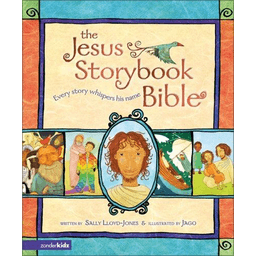 The Jesus Storybook BibleA read-aloud storybook for little ones that frames every story as pointing to Jesus - warm illustrations rather than comic panels.
 The Beginner's BibleThe classic simple-text, brightly illustrated Bible for the youngest readers and preschool story time.
 SuperbookThe animated kids-Bible app and series - the screen-based counterpart to a comic Bible, with games and videos.
Frequently asked questions
Is The Action Bible the actual Bible text?
No. The Action Bible is a retelling in comic-book form - the dialogue and narration are paraphrased and condensed to fit the panels. It is best used as a companion that draws a child into the story, alongside an actual translation. If you want the full biblical text in the same art style, that is a separate product called the Action Bible Study Bible (available in ESV or NIV).
What age is The Action Bible for?
It is marketed mainly for ages 9-12, but its reach is wider. Younger children enjoy it read aloud, teens who love graphic novels read it on their own, and adults sometimes use it for a quick visual overview of the biblical story. Because the art renders battles, the crucifixion, and judgment scenes with real intensity, parents of younger or more sensitive children may want to preview certain pages.
What is the difference between the original and the Expanded Edition?
The original came out in 2010. The Expanded Edition followed in 2020 with additional narratives and refreshed artwork, making it the fullest single-volume version. Both tell the same chronological story in the same comic style; the Expanded Edition is the small upgrade worth taking if you are buying new and want everything in one book.
Which Bible canon and translation does it follow?
The Action Bible retelling is drawn from the Protestant 66-book canon and is broadly evangelical and non-denominational in framing. It does not include the deuterocanonical or apocryphal books found in some traditions. The companion Action Bible Study Bible, which contains the full biblical text, is available in the ESV and the NIV translations.
Is The Action Bible related to The Picture Bible?
Yes - both are published by David C. Cook, and The Action Bible is widely regarded as the modern successor to The Picture Bible (1978). The Picture Bible is the older, gentler comic-strip Bible many parents grew up on; The Action Bible rebuilds that idea with high-energy graphic-novel art for a generation raised on comics and superhero films.
Who illustrated The Action Bible?
Sergio Cariello, a Brazilian-American artist who worked for years in mainstream American comics, including DC and Marvel titles, before applying that craft to Scripture. His professional comics background is the main reason the art quality stands out from most illustrated Bibles.
Should I get The Action Bible or The Jesus Storybook Bible?
They serve different ages and purposes. The Jesus Storybook Bible is a narrated storybook ideal for reading aloud to younger children, framing every story around Jesus. The Action Bible is a comic-book retelling that grabs older, reluctant, or visual readers (roughly 9-12). Many families own both - a storybook for the youngest and a comic Bible for the grade-schooler.
Sources & further reading
More Children's Bibles & Kids Books
The Jesus Storybook BibleThe children's storybook Bible that retells 44 stories as a single rescue plan pointing to Jesus - the one most parents and grandparents end up gifting, and the one adults quietly read for themselves.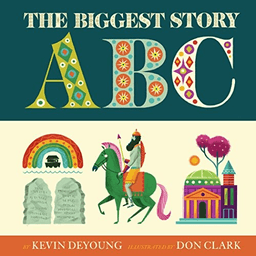 The Biggest StoryKevin DeYoung and Don Clark trace the whole Bible as one story - from the garden, through the promised snake crusher, to the new creation - in a single flowing read-aloud for ages four to eight.The Beginner's BibleThe illustrated storybook Bible that has been the default 'first Bible' for toddlers and preschoolers for more than thirty years - and quietly became the art behind the most-downloaded kids' Bible app in the world.
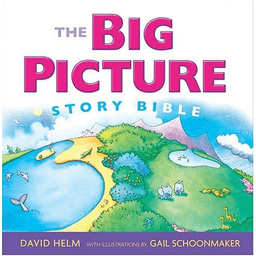 The Big Picture Story BibleThe storybook Bible that tells the whole Bible as one story - God's people, in God's place, under God's rule - written slow and gentle enough for a two-year-old on your lap.
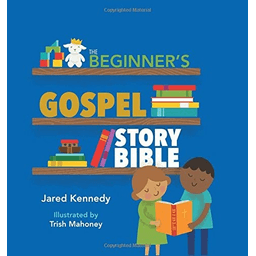 The Gospel Story BibleThe 156-story family storybook Bible that ends every story by connecting it to Jesus - and the hub of a whole devotional-and-curriculum ecosystem built for reading with a range of ages at once.
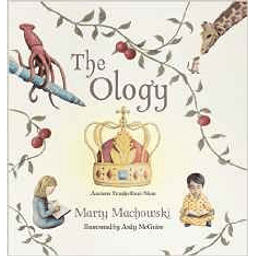 The OlogyA children's systematic theology disguised as a treasure hunt - 71 short readings that walk kids through the whole sweep of Christian doctrine, organized by topic instead of by story.