- Starting price
- ~$18 hardcover
- Free tier
- No
- Platforms
- Hardcover · Kindle · Animated DVD · Storybook Bible companion
- Developer
- Crossway
- Launched
- 2015
- Updated
- May 31, 2026
The verdict
The Biggest Story is the kids' Bible book for families who want the whole of Scripture as a single, connected story rather than a stack of separate episodes. Kevin DeYoung's text and Don Clark's striking, stylized art trace one thread - the promised "snake crusher" from Genesis 3:15 to Christ and the new creation - in a slim read-aloud aimed at ages four to eight. If you want one big arc, this is one of the best-made versions of it.
Try The Biggest Story ↗Opens thebiggeststory.com
The Biggest Story has quietly become a staple on the shelves of families who want their children to grasp the Bible as one story, not sixty-six disconnected ones. It is not a collection of bedtime tales arranged by chapter. It is a single flowing narrative - a beginning, a middle, and an end - that opens in a garden, follows a promise made the moment things go wrong, and lands in a restored creation. Kevin DeYoung wrote it; Don Clark illustrated it; Crossway published it in 2015. In the decade since, it has grown into a small franchise, but the original slim hardcover is still the heart of the thing.
What you actually get is short. This is not a 350-page storybook Bible with a story for every major figure. It is a picture book - read-aloud in one or two sittings - that retells the Bible's overarching plot through a single image: the snake crusher. The phrase comes from Genesis 3:15, where God promises that one day an offspring of the woman will crush the serpent's head. DeYoung takes that promise and follows it like a thread across the whole canon, through Abraham and Moses and David, all the way to Jesus, and then forward to the new heavens and new earth. It doesn't try to cover everything. It doesn't pause for every miracle. It doesn't slow down for side characters. It keeps its eye on the one storyline it set out to tell.
Don Clark's artwork is the first thing most people notice. Clark is a graphic designer by trade, and the book looks like it - richly patterned, intricately layered, full of geometric flourishes and gold-leaf flourishes and the kind of detail that rewards a second and third look. It is not the soft, rounded, cartoon style of most children's Bibles. It is design-forward and stylized, which is exactly why it tends to appeal to older kids and adults as much as to the four-year-old it was written for. Families either love the look immediately or take a beat to warm to it; almost nobody is neutral about it.
✓ The good
- Tells the Bible as one connected story - the single-arc, redemptive-historical approach helps kids see Scripture as a whole rather than a pile of unrelated episodes
- Don Clark's artwork is genuinely distinctive - richly patterned, design-forward, and unlike almost anything else on the kids' Bible shelf; it ages up better than typical cartoon illustration
- Short enough to actually finish - a single read-aloud in one or two sittings, which suits squirmy listeners and busy bedtimes far better than a 300-page storybook Bible
- The 'snake crusher' hook from Genesis 3:15 gives kids a concrete, memorable image to hang the whole narrative on - and a thread they can trace book to book
- DeYoung's prose is warm, rhythmic, and read-aloud friendly - clear sentences, repeated refrains, and a momentum that carries a young listener forward
- Anchors the original 66-book Protestant canon clearly - families who want that scope and that storyline will find it cleanly executed
- Part of a larger ecosystem - an animated DVD, an ABC board book, and a fuller storybook Bible companion mean a family can scale up as kids grow
✗ Watch out
- Not a story-per-figure storybook Bible - by design it skips most individual episodes, so kids won't meet Noah, Daniel, or Jonah as standalone characters here
- Don Clark's stylized art is polarizing - some children (and parents) bounce off the abstract, geometric look and prefer warmer, more representational illustration
- Reflects a gospel-centered, redemptive-historical framing from a Reformed-leaning evangelical publisher - families wanting a more neutral retelling or a different canon should know the lens going in
- Slim for the price - at around $18 for a relatively short hardcover, the per-page cost runs higher than a thick storybook Bible like the companion volume
- The single-arc structure can feel fast - younger listeners sometimes want to linger on a scene the book is already moving past
Best for
- Families who want their kids to see the Bible as one connected story
- Parents reading aloud to ages four to eight (and older kids drawn to the art)
- Households that prefer a short, finishable picture book over a long storybook Bible
- Gift-givers wanting a beautifully designed, keepsake-quality children's book
Avoid if
- You want a story for every major Bible character - this one stays on a single arc
- You prefer soft, rounded, conventional children's-book illustration
- You want a deuterocanonical or non-Protestant canon scope
- You want a thick, comprehensive storybook Bible - the companion volume fits that better
What The Biggest Story is
The Biggest Story is a children's picture book by Kevin DeYoung, illustrated by Don Clark and published by Crossway in 2015, that retells the entire Bible as a single connected narrative. Its subtitle - "How the Snake Crusher Brings Us Back to the Garden" - names the through-line: the promise of Genesis 3:15 that an offspring of the woman will one day crush the serpent. The book follows that promise from Eden, through the patriarchs and the exodus and the kingdom, to Jesus, and on to the new creation. It is short - a read-aloud aimed at roughly ages four to eight - and built around one storyline rather than a sequence of separate Bible stories.
It is not a confessional document for any single denomination, but it does carry a clear shape. DeYoung writes from a gospel-centered, redemptive-historical perspective - the conviction that the whole of Scripture is one unified story climaxing in Christ - and Crossway is a Reformed-leaning evangelical publisher. The book works from the 66-book Protestant canon. None of that is presented as argument; it is simply the frame the story is told inside. Families drawn to the single-arc, one-Story approach will find it the book's central strength; families who want a different scope or a story-per-character format will want to weigh that going in.
Why families reach for the one-Story approach
Most children's Bibles are anthologies. They give you Noah, then Joseph, then Moses, then David, then Daniel, then Jesus - each a self-contained story with its own moral, its own two-page spread, its own clean ending. That format has real strengths: it is browsable, it is modular, and a child can meet a new hero every night. The Biggest Story deliberately does the opposite. It treats the Bible as a single plot with a single problem introduced in chapter one and resolved at the end, and it asks the child to follow the thread rather than collect the characters.
The payoff is a sense of the whole. A child who reads The Biggest Story comes away not with a folder of separate hero stories but with a shape - the garden lost, the promise made, the promise kept, the garden restored. For parents who grew up able to recite the individual stories without ever seeing how they fit together, that connected arc is the entire appeal. It is a different teaching goal than the anthology format serves, and which one fits your family depends on what you want your kids to walk away holding: a cast of characters, or a single unfolding story.
The snake-crusher thread: one promise, traced across the whole canon
The organizing idea of the book is a single promise. In Genesis 3, the moment things go wrong in the garden, God tells the serpent that an offspring of the woman will one day crush its head - the "snake crusher" of the subtitle. DeYoung takes that line and makes it the spine of the entire book. Every subsequent scene is framed as a step in the long search for the promised one: is it this child, this rescuer, this king? The book keeps asking, and keeps answering "not yet," until it arrives at Jesus and then looks ahead to the new creation where the garden is restored.
This is the feature that makes the book work as a teaching tool rather than just a pretty retelling. A four-year-old can hold the question "who will crush the snake?" across two dozen pages in a way they could never hold an abstract theological summary. The thread gives the child a job - to watch for the promise being kept - and it gives the parent a built-in way to connect any individual Bible story back to the main plot. It is a concrete, repeatable hook, and it is the single biggest reason families who use this book recommend it to other families.
Don Clark's design-forward art: the reason it ages up
Don Clark is a working graphic designer, and The Biggest Story looks nothing like the soft pastel cartoons that dominate the children's-Bible shelf. The pages are dense with pattern - geometric tessellations, layered color, gold and deep jewel tones, intricate borders that reward close looking. Faces are stylized rather than rounded and cute. The overall effect is closer to high-end illustrated design than to traditional kid-lit, and it is the most-discussed thing about the book in either direction.
That choice has a practical consequence: the book ages up unusually well. A typical cartoon storybook is outgrown by seven or eight; The Biggest Story tends to keep its appeal because the art reads as art, not as baby illustration. Older kids notice the detail. Adults reach for it on the coffee table. It also makes the book a strong gift - keepsake-quality, the kind of thing that survives multiple children. The flip side is real: a subset of families simply prefer warmer, more representational pictures, and those families should look at a spread before buying, because the style is the experience here.
The broader ecosystem: from board book to a full storybook Bible
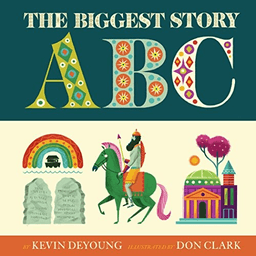
The Biggest Story did not stay a single picture book. It grew into a small family of products built around the same one-Story frame. There is The Biggest Story ABC, a sturdy board book that walks toddlers through the storyline an alphabet letter at a time. There is an animated DVD adaptation that puts the arc on screen for younger kids. And in 2022 came The Biggest Story Bible Storybook, a much fuller 104-story volume that keeps DeYoung's redemptive-historical approach but finally gives the story-by-story coverage the original book intentionally skips.
For a family, this ecosystem matters because it lets you scale the same approach as your children grow. You can start a two-year-old on the ABC board book, read the original picture book to a five-year-old, put the DVD on for a rainy afternoon, and graduate a seven- or eight-year-old to the 104-story companion when they are ready for more breadth. It is a rare case where the spinoffs genuinely extend the original rather than just monetizing it - each piece serves a different age and a different reading appetite while keeping the storyline consistent across all of them.
Pricing
Hardcover
~$18
The original illustrated picture book. The copy most families own and read aloud.
Kindle / eBook
~$10-13
Digital edition for tablets and travel. The art holds up on a good screen, though the print detail is part of the charm.
ABC board book
~$8-10
The Biggest Story ABC - a sturdy board-book spinoff for toddlers, an alphabet trip through the same storyline.
Animated DVD
~$15-20
The animated adaptation of the book's arc - useful for younger kids and for screen-time with a point.
Storybook Bible companion
~$25
The Biggest Story Bible Storybook (2022) - a fuller 104-story volume for families who want the longer, story-by-story treatment.
The Biggest Story is not free, and at around $18 for a relatively slim hardcover it asks a bit more per page than a thick storybook Bible does. That price reflects the production: heavy stock, rich color printing, and Don Clark's detail-dense art are part of what you are paying for. Used copies and library sales turn it up for less, and it is a common shower-gift and Christmas-stocking pick, so many families acquire their first copy secondhand.
The Kindle edition runs lower - roughly $10 to $13 depending on the sale - and the art survives the transition to a good tablet screen reasonably well, though the printed page is where the design really lands. If you read aloud from a device anyway, the digital edition is a fine and cheaper entry point.
The spinoffs are priced to match their format. The ABC board book is the cheap entry for toddlers at roughly $8 to $10; the animated DVD runs around $15 to $20; and the fuller Biggest Story Bible Storybook (2022) sits at about $25 for its 104 stories. Most families do not need the whole set at once. The original hardcover is the balanced default - the copy that does the core job - and the companion volume is the natural upgrade when a child is ready for more breadth.
Limitations and considerations
Breadth of stories. By design, this is not a comprehensive storybook Bible. It follows one arc and lets most individual episodes go by without stopping - kids won't meet Noah, Daniel, Esther, or Jonah as standalone characters here. That is the right call for the book DeYoung set out to write, but families who want their children to know the individual stories will need the companion volume or a different storybook Bible alongside it.
Art that doesn't suit everyone. Don Clark's stylized, geometric look is the book's signature and also its most common sticking point. A meaningful slice of families prefers softer, more representational children's-book illustration, and for them the art is a barrier rather than a draw. It is worth seeing a few spreads before buying, because the style is so central that it largely determines whether a given household will reach for the book again.
Value per page. At roughly $18 for a short hardcover, the cost runs higher than thicker storybook Bibles on a per-page basis. The production quality justifies a lot of it, but families on a tight budget comparing shelf options should note that the companion 104-story volume, at around $25, delivers far more reading per dollar.
A specific frame. The book is told from a gospel-centered, redemptive-historical perspective and works from the 66-book Protestant canon. That shapes which storyline gets emphasized and how the whole is framed. None of it is argued on the page, but families who want a different canon scope or a more neutral retelling should know the lens before buying rather than be surprised by it.
The Biggest Story vs. The Jesus Storybook Bible vs. The Big Picture Story Bible
These three are the shortlist for parents who want the one-connected-story approach, and they are closer cousins than most kids' Bibles. The Jesus Storybook Bible (Sally Lloyd-Jones, 2007) is the best-known of them - a fuller collection of individual stories, but with a famous refrain in every chapter that every story "whispers his name," tying the episodes back to Jesus. The Big Picture Story Bible (David Helm, 2004, also Crossway) is the simplest and youngest-skewing, built around God's people in God's place under God's rule. The Biggest Story (DeYoung, 2015) is the most tightly single-threaded of the three - one arc, one promise, far fewer individual scenes.
Different strengths. The Jesus Storybook Bible is the best at giving you both the individual stories and the connecting thread, which is why it is the most-recommended starting point for most families. The Big Picture Story Bible is the best for the very youngest listeners and for the simplest possible version of the arc. The Biggest Story is the best at making a child feel the single sweep of Scripture as one story, and it has the most distinctive art of the three. If you want one book that does the most, start with the Jesus Storybook Bible; if you specifically want the tightest single-arc telling with standout illustration, The Biggest Story is the pick.
All three sit in the same gospel-centered, redemptive-historical, 66-book tradition, so the choice between them is mostly about format and art rather than framing. The Jesus Storybook Bible is the broadest. The Big Picture Story Bible is the gentlest on-ramp for toddlers. The Biggest Story is the most design-driven and the most committed to a single storyline - and DeYoung's own 104-story companion volume is there for families who later want the breadth the original deliberately leaves out.
The bottom line
The Biggest Story is one of the best-made versions of a specific idea: the Bible as a single, connected story rather than a stack of separate ones. Kevin DeYoung's read-aloud text and Don Clark's striking, design-forward art give a child a memorable thread - the promised snake crusher - to follow from the garden to the new creation, and the book is short enough to actually finish. It won't replace a comprehensive storybook Bible, and the art isn't for everyone, but if you want your kids to grasp the whole arc of Scripture in one beautiful sitting, this is the book to hand them.
Alternatives to The Biggest Story
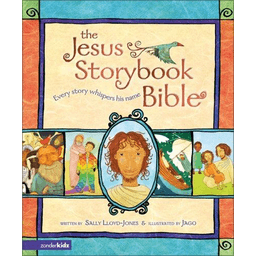 The Jesus Storybook BibleSally Lloyd-Jones's beloved storybook Bible - the closest peer, with individual stories and a refrain that ties each one back to Jesus.
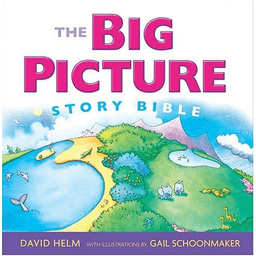 The Big Picture Story BibleDavid Helm's simple, toddler-friendly arc of God's people in God's place - the gentlest on-ramp to the one-Story approach.
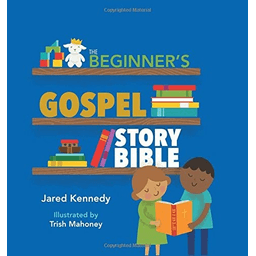 The Gospel Story BibleMarty Machowski's 156-story volume connecting each episode to the gospel - broader coverage with a redemptive-historical thread.
 Bible App for KidsYouVersion's free animated kids' Bible app - interactive screen-based stories, a different medium for the same young audience.
Frequently asked questions
Is The Biggest Story a full storybook Bible?
No. The original 2015 book is a single picture book that tells the Bible as one connected story rather than a collection of separate ones. It follows a single arc - the promised "snake crusher" from Genesis 3:15 to Jesus and the new creation - and skips most individual episodes by design. For story-by-story coverage, Crossway later published The Biggest Story Bible Storybook (2022), a fuller 104-story volume.
What age is The Biggest Story for?
It is written as a read-aloud for roughly ages four to eight. Because Don Clark's art is design-forward rather than cartoonish, it tends to hold the interest of older kids and adults as well, which makes it a common coffee-table and gift book in addition to a bedtime read.
Who wrote and illustrated it?
Kevin DeYoung, a pastor and author, wrote the text. Don Clark, a graphic designer, created the distinctive richly patterned illustrations. Crossway published it in 2015. The two also collaborated on the spinoffs, including the ABC board book and the 2022 storybook Bible companion.
What is the "snake crusher"?
It comes from Genesis 3:15, where God promises that an offspring of the woman will one day crush the serpent's head. The Biggest Story uses that promise as its through-line, following it across the whole Bible - through the patriarchs, the exodus, and the kingdom - until it arrives at Jesus, and then looks ahead to the restored creation.
What theological tradition does it come from?
The book is written from a gospel-centered, redemptive-historical perspective - the view that all of Scripture is one unified story climaxing in Christ - and is published by Crossway, a Reformed-leaning evangelical publisher. It works from the 66-book Protestant canon. The framing isn't argued on the page; it simply shapes which storyline the book emphasizes, and it is useful buyer information for families weighing scope and approach.
How is it different from The Jesus Storybook Bible?
Both connect the Bible's stories to Jesus, but The Jesus Storybook Bible is a fuller collection of individual stories with a recurring refrain tying each back to Christ, while The Biggest Story is a single, tightly threaded narrative with far fewer individual scenes and more distinctive art. Many families own both - the Jesus Storybook Bible for breadth, The Biggest Story for the single-arc sweep.
Are there other Biggest Story products?
Yes. Beyond the original book there is an animated DVD adaptation, The Biggest Story ABC board book for toddlers, and The Biggest Story Bible Storybook (2022), a 104-story volume for families wanting the longer, story-by-story treatment. The set lets a family scale the same approach as children grow.
Sources & further reading
More Children's Bibles & Kids Books
The Jesus Storybook BibleThe children's storybook Bible that retells 44 stories as a single rescue plan pointing to Jesus - the one most parents and grandparents end up gifting, and the one adults quietly read for themselves.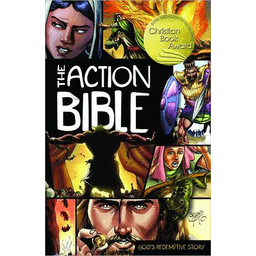 The Action BibleThe best-selling graphic-novel Bible of its era - 215+ Scripture narratives told in full-color comic art, built to pull reluctant and visual readers into the story.
 The Beginner's BibleThe illustrated storybook Bible that has been the default 'first Bible' for toddlers and preschoolers for more than thirty years - and quietly became the art behind the most-downloaded kids' Bible app in the world.The Big Picture Story BibleThe storybook Bible that tells the whole Bible as one story - God's people, in God's place, under God's rule - written slow and gentle enough for a two-year-old on your lap.The Gospel Story BibleThe 156-story family storybook Bible that ends every story by connecting it to Jesus - and the hub of a whole devotional-and-curriculum ecosystem built for reading with a range of ages at once.
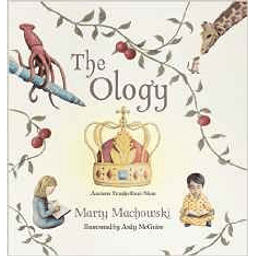 The OlogyA children's systematic theology disguised as a treasure hunt - 71 short readings that walk kids through the whole sweep of Christian doctrine, organized by topic instead of by story.