- Starting price
- ~$17 hardcover
- Free tier
- No
- Platforms
- Hardcover · Kindle · Audiobook (David Suchet) · Curriculum
- Developer
- Zondervan (Zonderkidz)
- Launched
- 2007
- Updated
- May 31, 2026
The verdict
Almost twenty years on, The Jesus Storybook Bible is the most-recommended children's storybook Bible of its generation - beloved enough that adults read it without the kids around. It is a Protestant-tradition retelling that threads every story to Jesus, written with real literary craft and paired with Jago's gorgeous art. If you buy one storybook Bible to read aloud, this is the one most people hand you.
Try The Jesus Storybook Bible ↗Opens jesusstorybookbible.com
The Jesus Storybook Bible has quietly become the default gift for a new baby in a churchgoing family. It turns up at baby showers, on dedication and baptism tables, in grandparents' Amazon carts, and on the recommended-reading lists of pastors who agree on almost nothing else. Sally Lloyd-Jones's 2007 retelling sold past two and then three million copies, got translated into dozens of languages, and earned a near-universal recommendation across Protestant traditions - a rare piece of common ground in a crowded shelf of children's Bibles.
It is not a reference Bible, and it does not pretend to be. It does not include every story. It does not reproduce the text verse by verse. It does not try to be comprehensive. What it does instead is pick 44 stories - 21 from the Old Testament, 23 from the New - and retell each one in warm, image-rich prose aimed at a four-to-eight-year-old listening on a parent's lap. The subtitle tells you the organizing idea up front: "Every Story Whispers His Name."
The thread running through the whole book is the one big idea Lloyd-Jones never lets go of: the Bible is not mainly a rulebook or a collection of hero stories but a single Story about a God who keeps rescuing His people, a Story that points forward and backward to Jesus the Rescuer at its center. Noah's ark, the Passover lamb, David and Goliath, the manger, the cross - each retelling reaches toward that center. Pair the prose with Jago's expressive, slightly impressionistic illustrations and you get a book that reads aloud beautifully and that a surprising number of adults admit they keep on their own nightstand.
✓ The good
- The most-recommended children's storybook Bible of its generation - gifted constantly across Protestant traditions, and recommended by pastors who otherwise disagree on plenty
- A genuine through-line - every story is tied to one big rescue Story, so children come away with the shape of the whole Bible, not 44 disconnected episodes
- Real literary craft - Lloyd-Jones writes like a storyteller, not a curriculum writer, with refrains and rhythms that hold up to the hundredth read-aloud
- Jago's illustrations are warm, expressive, and a clear cut above the clip-art look of many children's Bibles - the art carries as much as the text
- The Deluxe Edition pairs the book with audiobook CDs narrated by British actor David Suchet, whose reading is the version many families end up loving most
- Read-aloud length is just right - most stories run a few minutes, which fits an actual bedtime rather than fighting it
- Beloved by adults too - many readers describe being moved by stories they thought they already knew, which is unusual for a children's book
✗ Watch out
- Not comprehensive - it covers 44 stories, not the whole Bible, so it is a companion to Scripture reading, not a replacement (Lloyd-Jones would say the same)
- Follows the Protestant 66-book canon - there are no deuterocanonical stories, so Catholic and Orthodox families wanting Tobit, Judith, or Maccabees, and Latter-day Saint families wanting Book of Mormon content, will need a different or additional book
- The retellings paraphrase and dramatize - dialogue and interior feelings are added for storytelling, so a parent wanting word-for-word Scripture should know it is an interpretive retelling
- The reading level outgrows quickly - the prose and themes land best around ages four to eight, and older grade-schoolers often graduate to a fuller narrative or text Bible
- Hardcover heft and price - at around $17-18 it costs more than the bargain children's Bibles, and the standard edition is a sizeable book for small hands to hold alone
Best for
- Parents and grandparents wanting one read-aloud Bible for ages roughly 4-8
- Families who want the whole Bible framed as one connected Story
- Gift-givers for a baptism, dedication, baby shower, or Christmas
- Protestant-tradition households (the canon and framing fit that tradition)
Avoid if
- You want every Bible story or a verse-by-verse text for kids
- You want deuterocanonical books or Book of Mormon content included
- You want a neutral, just-the-facts retelling without an interpretive thread
- Your children have aged past early grade school and want fuller narrative
What The Jesus Storybook Bible is
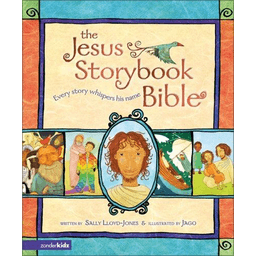
The Jesus Storybook Bible is an illustrated children's storybook Bible written by Sally Lloyd-Jones and illustrated by Jago, published by Zondervan's children's imprint Zonderkidz in 2007. It is a single hardcover volume of 44 retold stories - 21 from the Old Testament and 23 from the New - each running a few pages of narrative prose with full illustrations. It is aimed at read-aloud with children roughly four to eight years old, though it is read and loved well past that range. It follows the Protestant 66-book canon and does not include deuterocanonical material.
The book's organizing idea is right in its subtitle, "Every Story Whispers His Name." Rather than presenting the stories as standalone lessons, Lloyd-Jones frames the whole Bible as one continuous Story about a God who rescues, with Jesus as the Rescuer at the center toward whom every story points. This is a gospel-centered, redemptive-historical approach - a way of reading common across Protestant traditions - and it is the feature that distinguishes the book from the many children's Bibles that simply collect stories one after another. It is a narrative retelling, not a reference Bible or a word-for-word translation.
Why so many families reach for this one
Most children's Bibles are anthologies. They give you Noah, then Moses, then David, then Daniel, then Jesus, as a sequence of separate adventures with a moral attached to each - be brave, be obedient, be kind. The Jesus Storybook Bible refuses that structure on purpose. Every retelling is written to point at one center, so a child who reads the whole thing comes away not with a drawer full of disconnected hero stories but with a sense that the Bible is going somewhere, that it is one Story with one rescue at its heart.
That single decision is what earned the book its reputation. It reads less like a textbook of Bible facts and more like a storyteller leaning over a child's bed, and the writing has the refrains and rhythms to back that up - lines that families end up quoting from memory. The framing sits comfortably within Protestant tradition, which is worth knowing going in: it is the lens that shaped the book. For families in that tradition it is close to ideal, and the craft of the prose is good enough that plenty of adults read it for themselves.
The one-big-Story thread: every story whispers His name
The book's signature feature is structural rather than decorative. Lloyd-Jones does not simply retell each story and stop; she ends or frames each one with a turn toward Jesus, so that the Passover lamb foreshadows the cross, the rescue from Egypt rhymes with the rescue of the world, and the manger and the empty tomb land as the moments the earlier stories were straining toward. The opening lines set the rule for the whole book - that this is a Story, with a capital S, and that the reader should watch for how every part reaches toward its center.
For a child, the payoff is a mental map. Instead of forty-four moral lessons to keep straight, a young listener absorbs a single shape: things go wrong, God keeps His promise, a Rescuer comes. That is also why the book lands with adults - it reframes familiar stories inside a larger arc that many grown readers were never explicitly taught as children. It is a gospel-centered, redemptive-historical reading, the kind common in Protestant teaching, and it is the engine that makes the book more than the sum of its 44 parts.
Jago's illustrations and Lloyd-Jones's prose: a read-aloud built to last
The text and the art were clearly made for each other. Jago's illustrations are warm and slightly impressionistic - expressive faces, sweeping landscapes, a palette that feels storybook rather than Sunday-school-handout - and they carry real emotional weight rather than just labeling the scene. Lloyd-Jones's prose is written to be spoken: short sentences, repeated refrains, a narrator's voice that addresses the child directly. The combination is why the book survives the test every children's book faces, which is the hundredth bedtime reading.
Most individual stories run only a few minutes aloud, which matters more than it sounds. A retelling short enough to finish before a four-year-old loses the thread is a retelling that actually gets read, night after night, rather than abandoned halfway. The craft here is the difference between a book that lives on the shelf and one that lives on the nightstand - and this is firmly the second kind. Parents routinely report rereading favorite stories on request long past the point where the child has them nearly memorized.
The David Suchet audiobook and the wider family of editions
Beyond the standard hardcover, the title has grown into a small family of editions. The Deluxe Edition bundles the book with audiobook CDs narrated by the British actor David Suchet, and his reading is, for many families, the version they end up loving most - measured, warm, and unhurried, the kind of narration that holds a car full of children quiet. There is also a larger expanded Read-Aloud edition with added material, a Kindle edition for travel, a full Sunday-school and homeschool curriculum built on the book, and board-book spinoffs adapting individual stories for the youngest hands.
That range is part of why the book has stayed a fixture for almost two decades. A family can start with the audiobook in the car, move to the hardcover at bedtime, use the curriculum in a church class, and hand a board-book version to a toddler too young for the full text - all inside the same retelling and the same one-big-Story frame. The editions reinforce each other rather than competing, which is unusual and a real part of the book's staying power. As of writing, exact bundle contents and prices vary by edition and retailer.
Pricing
Hardcover
~$17-18
The standard Zonderkidz hardcover. The copy most families own and the one most people gift.
Kindle / eBook
~$10
The full text and art on a tablet - handy for travel, though the art reads best on a color screen.
Deluxe Edition (with audio)
~$25-35
The book bundled with audiobook CDs narrated by David Suchet. The narration is the draw - many families prefer it to reading aloud themselves.
Read-Aloud / expanded edition
~$25
A larger expanded edition with added material, sized for lap-reading and family devotions.
Curriculum / Sunday-school kit
Varies
A church and homeschool curriculum built on the book, with lessons and teaching helps. Priced as a kit, not a single book.
The Jesus Storybook Bible is not free, and it is priced a notch above the bargain children's Bibles you find at the supermarket. The standard Zonderkidz hardcover runs around $17-18 as of writing - call it the everyday default - and it is the copy most families own and the one that turns up most often as a gift.
The Kindle edition comes in cheaper, around $10, and is genuinely useful for travel, though Jago's art is a big part of the experience and reads best on a color screen rather than a black-and-white e-reader. The Deluxe Edition, which bundles the book with the David Suchet audiobook CDs, runs higher - roughly $25-35 depending on the retailer - and for a lot of families the narration alone justifies the step up.
There is also a larger expanded Read-Aloud edition (around $25) sized for family devotions, and a full curriculum and Sunday-school kit priced as a kit rather than a single book. Most families do not need the curriculum unless they are teaching a class. For a home, the hardcover is the balanced default, and the Deluxe Edition is the upgrade worth considering if your children spend time in the car.
Prices drift, and used copies of a book this widely owned turn up cheaply at library sales and secondhand shops - so treat every figure here as approximate and check the current edition before buying.
Limitations and considerations
Not the whole Bible. The book covers 44 stories, not the full canon, and it leaves out a great deal by design. That is the right call for a read-aloud aimed at small children, but it means the book is a companion to Scripture, not a substitute - something Lloyd-Jones herself is clear about. A family wanting comprehensive coverage will eventually need a fuller children's Bible or the text itself.
Protestant 66-book canon. The Jesus Storybook Bible works from the Protestant canon and the gospel-centered framing that shaped it. There are no deuterocanonical stories, so Catholic and Orthodox families wanting Tobit, Judith, or the Maccabees - and Latter-day Saint families wanting Book of Mormon content - will find those absent and should plan to supplement or choose a book from their own tradition. This is buyer information, not a flaw: it simply tells you which tradition the book serves.
It is a retelling, not a translation. Lloyd-Jones dramatizes - she adds dialogue, names feelings, and frames each story toward Jesus. The result is wonderful as story and faithful to its aim, but a parent wanting word-for-word Scripture should know going in that this is an interpretive retelling rather than a verse-by-verse text.
A narrow age window. The prose and themes land best from about four to eight. Younger toddlers need the board-book spinoffs; older grade-schoolers tend to graduate to a fuller narrative Bible or the text itself. The book is excellent inside its window and simply outgrown above it.
The Jesus Storybook Bible vs. The Beginner’s Bible vs. The Biggest Story
These three are the children's-Bible shortlist that comes up most often, and they do genuinely different jobs. The Jesus Storybook Bible (Lloyd-Jones, 2007) is the literary, one-big-Story option - 44 stories threaded to Jesus in storyteller's prose, aimed at roughly four to eight and loved by adults too. The Beginner's Bible is the simplest and youngest-skewing - bright cartoon art, very short text, broad story coverage, ideal for toddlers and the first read-alouds. The Biggest Story (Kevin DeYoung) takes a similar gospel-centered through-line to Lloyd-Jones's but in a single sweeping narrative arc rather than 44 separate retellings, with a more stylized art style.
Different strengths. The Jesus Storybook Bible is the best-written and the most re-readable - the one you will still be reading aloud on request a year later. The Beginner's Bible is broader and simpler, the better pick for a very young child or a first Bible. The Biggest Story is tighter and more sweeping, a single connected story rather than an anthology. If you want one read-aloud for a four-to-eight-year-old and care about the writing, it is the Jesus Storybook Bible. For a toddler, start with The Beginner's Bible. For a short, unified arc, add The Biggest Story.
All three sit within Protestant tradition and the 66-book canon. Families in other traditions - Catholic, Orthodox, or Latter-day Saint - should weigh that framing and may prefer a children's Bible published within their own tradition.
The bottom line
The Jesus Storybook Bible is the gold standard among modern read-aloud children's Bibles for good reason. Lloyd-Jones wrote a book that small children sit still for, that adults are quietly moved by, and that frames the whole Bible as one rescue Story rather than a pile of disconnected lessons - all carried by Jago's lovely art. It is a Protestant-tradition retelling and not a comprehensive text, which is worth knowing before you buy. But if a friend asks for one storybook Bible to read to a four-to-eight-year-old, this is still the one to hand them.
Alternatives to The Jesus Storybook Bible
 The Beginner's BibleThe bright, simple cartoon classic for the youngest readers - broader story coverage and very short text, ideal as a first Bible.
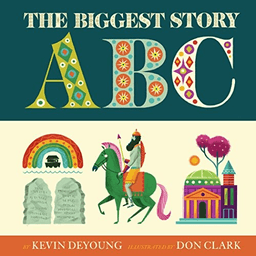 The Biggest StoryKevin DeYoung's single sweeping gospel-arc retelling - a similar through-line to Lloyd-Jones in one connected narrative.
 The Bible App for KidsYouVersion’s free animated, interactive children’s Bible app - the screen-based companion to a print storybook.
 SuperbookCBN’s animated children’s Bible series and app - story-driven video for kids who learn by watching.
Frequently asked questions
What ages is The Jesus Storybook Bible best for?
It is written for read-aloud with children roughly four to eight years old. Younger toddlers do better with the board-book spinoffs, and older grade-schoolers often move on to a fuller narrative Bible or the text itself. Many adults also enjoy reading it on its own.
Does it cover the whole Bible?
No. It retells 44 stories - 21 from the Old Testament and 23 from the New - chosen to trace one connected rescue Story rather than to be comprehensive. It is best used as a companion to Scripture reading, not a replacement for it, which the author herself makes clear.
Which tradition or canon does it follow?
It follows the Protestant 66-book canon and a gospel-centered, redemptive-historical framing common across Protestant traditions. It does not include deuterocanonical books, so Catholic and Orthodox families wanting those - and Latter-day Saint families wanting Book of Mormon content - should plan to supplement it or choose a book published within their own tradition.
What is the David Suchet audiobook?
The Deluxe Edition bundles the book with audiobook recordings narrated by the British actor David Suchet. His reading is warm and unhurried, and many families end up preferring it to reading aloud themselves - it is a common reason people choose the Deluxe Edition over the standard hardcover.
Is it a word-for-word Bible translation?
No. It is a narrative retelling. Sally Lloyd-Jones dramatizes the stories - adding dialogue, naming feelings, and framing each one toward Jesus - so a parent wanting verse-by-verse Scripture should know it is an interpretive retelling rather than a translation.
Which edition should I buy?
The standard hardcover (around $17-18 as of writing) is the right default for most homes and the usual gift choice. Consider the Deluxe Edition with the David Suchet audiobook (roughly $25-35) if your children spend time in the car, and the curriculum kit only if you are teaching a class. The Kindle edition (around $10) is handy for travel, though the art reads best in color.
Why is it so widely recommended?
Two reasons most readers cite: the writing is genuinely good - it reads like a storyteller rather than a worksheet and holds up to endless re-reading - and the one-big-Story structure gives children the shape of the whole Bible instead of a stack of separate lessons. It has sold well over two to three million copies and is recommended across Protestant traditions.
Sources & further reading
More Children's Bibles & Kids Books
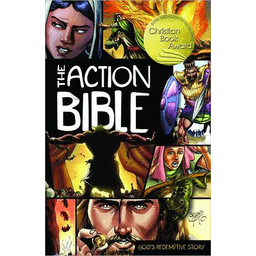 The Action BibleThe best-selling graphic-novel Bible of its era - 215+ Scripture narratives told in full-color comic art, built to pull reluctant and visual readers into the story.The Biggest StoryKevin DeYoung and Don Clark trace the whole Bible as one story - from the garden, through the promised snake crusher, to the new creation - in a single flowing read-aloud for ages four to eight.The Beginner's BibleThe illustrated storybook Bible that has been the default 'first Bible' for toddlers and preschoolers for more than thirty years - and quietly became the art behind the most-downloaded kids' Bible app in the world.
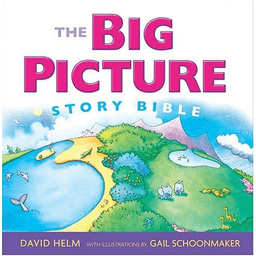 The Big Picture Story BibleThe storybook Bible that tells the whole Bible as one story - God's people, in God's place, under God's rule - written slow and gentle enough for a two-year-old on your lap.
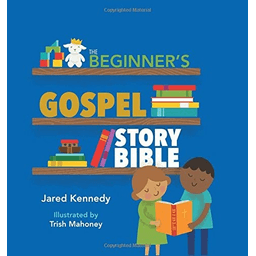 The Gospel Story BibleThe 156-story family storybook Bible that ends every story by connecting it to Jesus - and the hub of a whole devotional-and-curriculum ecosystem built for reading with a range of ages at once.
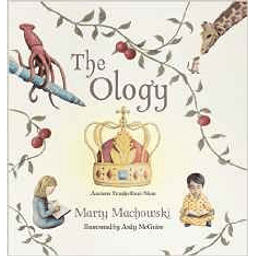 The OlogyA children's systematic theology disguised as a treasure hunt - 71 short readings that walk kids through the whole sweep of Christian doctrine, organized by topic instead of by story.