- Starting price
- ~$22 hardcover
- Free tier
- No
- Platforms
- Hardcover · Audio · Kindle
- Developer
- Crossway
- Launched
- 2004
- Updated
- May 31, 2026
The verdict
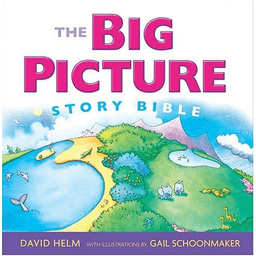
The Big Picture Story Bible is the storybook Bible to reach for when your child is very young. David Helm tells all sixty-six books as a single connected story of God's people, God's place, and God's rule, and Gail Schoonmaker's warm, simple art carries it. It skews younger than almost every competitor - repetitive, unhurried, built for a toddler's attention span - and that focus is both its great strength and the reason it eventually gets outgrown.
Try The Big Picture Story Bible ↗Opens crossway.org
The Big Picture Story Bible has quietly become the storybook Bible that parents of toddlers recommend to each other first. It is not the flashiest on the shelf, the art is not the most cinematic, and at twenty-six story sections it is not trying to cover every account in Scripture. What it does instead is tell the Bible as one continuous story - and it tells that story slowly, in repeated phrases, in a cadence built for a child who is two or three and still learning to sit still. Parents come back to it because it is the rare children's Bible written for the youngest end of the room.
David R. Helm wrote the text and Gail Schoonmaker illustrated it, and Crossway published the first edition in 2004, with a later updated edition and an audio recording added along the way. Helm's organizing idea is borrowed from a way of reading Scripture that traces a single thread from Genesis to Revelation: God making a people for himself, giving them a place to live with him, and ruling over them as a good king. The book does not race through stories like beads on a string. It does not stop to moralize at the end of each page. It does not assume your child already knows the names.
What you actually get is a hardcover storybook of roughly 450 pages - large pages, large type, one warm full-bleed illustration after another - divided into twenty-six connected sections that run from creation through the early church and on toward the promise of Christ's return. The voice is gentle and rhythmic, almost like a lullaby in places, with key phrases repeated so often that toddlers start to chant them back. It is the children's Bible you read aloud a hundred times before your child can read it themselves, and the one a lot of families credit with giving their kids a sense that the Bible is one story and not a pile of unrelated tales.
✓ The good
- Built for the youngest listeners - the unhurried pace, the repeated refrains, and the large warm art are pitched at ages two to five in a way most storybook Bibles are not
- Tells one connected story - Helm frames the whole Bible as God's people, God's place, under God's rule, so kids absorb the arc rather than a string of disconnected episodes
- Gail Schoonmaker's illustrations are gentle and uncluttered - full-page, soft-edged, calm rather than busy, which holds a small child's eye without overwhelming it
- Repetition that actually works on toddlers - the recurring questions and phrases turn into call-and-response and stick in a way one-and-done storytelling does not
- The audio edition is a real asset - useful in the car or at bedtime, and good for pre-readers who want to 'read' it on their own
- Points toward Jesus throughout - the Old Testament sections are told as part of a story that is going somewhere, which parents who want a gospel-centered through-line value
- Sturdy, gift-grade hardcover - the kind of book that survives years of bedtime use and gets handed down
✗ Watch out
- Covers fewer stories than most - twenty-six sections means many familiar accounts (Noah, Joseph's coat, Daniel, individual parables) are compressed or left out
- Outgrown relatively early - its great strength with toddlers becomes a limitation around ages six or seven, when kids are ready for more text and more stories
- Longer page-text than some toddler Bibles - the gentle, repetitive prose runs long per section, which is wonderful for cuddle-reading but a lot for a squirmy child in a hurry
- The art is a matter of taste - warm and simple, but some parents prefer the more illustrated, animated, or cinematic look of newer storybook Bibles
- Reflects a specific framing - the kingdom-and-covenant emphasis and the Protestant 66-book canon are baked in, which is worth knowing if your tradition orders or includes books differently
Best for
- Parents of toddlers and preschoolers (roughly ages 2-5)
- Families who want their child to grasp the Bible as one connected story
- Bedtime and lap-reading where a slower, repetitive cadence is a feature
- Households that want a first Bible to grow into over several years
Avoid if
- You want broad coverage of many individual Bible stories
- Your child is older (7+) and ready for fuller text and more accounts
- You prefer a busier, more cinematic illustration style
- You want a children's Bible that includes the deuterocanonical books
What The Big Picture Story Bible is
The Big Picture Story Bible is a storybook Bible for young children, written by David R. Helm and illustrated by Gail Schoonmaker, first published by Crossway in 2004 and later issued in an updated edition with an audio recording. It retells Scripture in twenty-six connected sections that run from creation to the early church, with the closing pages looking ahead to the promise of Christ's return. It is a large hardcover - roughly 450 pages - with one full-page illustration per spread and gentle, repetitive prose meant to be read aloud to children who cannot yet read.
Its organizing idea is a single storyline rather than a collection of separate Bible stories. Helm tells the whole Bible as the account of God forming a people for himself, settling them in a place where they can live with him, and ruling over them as a good king - a thread he traces from Eden through Israel to Jesus and the Church. That framing comes out of a kingdom-and-covenant, biblical-theology way of reading Scripture, and the book follows the Protestant sixty-six-book canon. It skews toward the youngest readers - younger than most storybook Bibles on the shelf - which shapes both its pace and its scope.
Why parents of little kids reach for this one
Most storybook Bibles are anthologies. They give you forty, sixty, a hundred short stories - Noah, then Joseph, then David, then Daniel - each self-contained, each wrapped up before the page turns. That works well for a five-or-six-year-old who can hold a dozen stories in their head. It works less well for a two-year-old, who experiences each story as an unrelated event and has no thread to hang them on. The Big Picture Story Bible makes the opposite bet: fewer stories, told slower, all hung on one visible thread.
The result is a book that does something a toddler can actually do. Instead of asking a small child to remember many names and many plots, it asks them to follow one question - where are God's people, and is God still their king? - repeated section after section until they can answer it themselves. The repetition that would bore an older reader is exactly what a two-year-old wants: the same phrases, the same cadence, the same warm pictures, every single night. That is why so many families describe it as the children's Bible their kids asked for over and over, and why it tends to be the first one off the shelf in homes with the youngest children.
One story, not sixty-six: the kingdom-and-covenant through-line
The spine of the book is a single sentence that gets unpacked across all twenty-six sections: God is making a people who will live in God's place under God's rule. Creation establishes the place and the rule; the fall breaks both; and the rest of the book follows God patiently rebuilding what was lost - calling Abraham, forming Israel, giving them a land, sending kings and prophets, and finally sending Jesus as the true and forever King. The closing sections move into the early church and gesture toward the day the story is fully resolved. Each section is told not as a standalone lesson but as the next move in that one long plot.
This is what most distinguishes the book from a standard anthology, and it is the feature parents talk about most. A child raised on disconnected Bible stories can know a hundred of them and never suspect they belong together. A child raised on this book grows up assuming the Bible is one story going somewhere - which is the reading the kingdom-and-covenant, biblical-theology tradition is built to surface. Whether that framing matches your own tradition is worth checking; for families who want their youngest to feel the arc before they can name the books, it is the whole reason to buy this one.
Written for a two-year-old's attention span
Helm's prose is unusually gentle and unusually repetitive, and that is by design. Recurring questions and refrains come back section after section, so that a child who has heard the book a dozen times starts answering before the parent finishes the line. The sentences are simple, the tone is warm, and the rhythm is closer to a bedtime chant than to a lesson. There is very little moralizing - the book mostly tells the story and trusts the story to do its work, rather than stopping each page to extract an application the way some children's Bibles do.
The trade-off is length per section: because the language is slow and repeats itself, each story runs longer on the page than the clipped one-paragraph entries in many toddler Bibles. For lap-reading and bedtime, where the goal is to linger, that is a feature - the repetition is the point, and small children love it. For a parent racing through a single quick story before lights-out, it can feel like a lot. The book rewards the family that reads it the way it was built to be read: slowly, repeatedly, the same warm pages every night.
Gail Schoonmaker's art and the audio edition
Gail Schoonmaker illustrated the book with full-page, soft-edged art - warm color, simple shapes, uncluttered scenes. It is calm rather than busy, which suits the youngest viewers: there is usually one clear thing to look at per page, and the palette is gentle enough not to overstimulate at bedtime. It is not the animated, action-forward look of some newer storybook Bibles, and whether you prefer it is a matter of taste, but for the toddler audience the book is aimed at, the restraint works in its favor.
Later editions added an audio recording, available bundled with the book or on its own, and it turns out to be a genuine asset. Pre-readers can 'read' the book by themselves by following the narration, the recording travels well in the car, and the gentle prose holds up read aloud by someone other than a parent. For families who do a lot of car time or who want their child to have a way to revisit the story independently, the audio is the reason to step up from the plain hardcover.
Pricing
Hardcover
~$22
The standard Crossway hardcover. Large pages, durable binding - the copy most families own.
Hardcover + Audio
~$30
The edition bundled with the audio recording (CD or download, depending on printing). Worth it if your kids listen in the car.
Kindle
~$13
The digital edition for tablets and phones. Cheaper, travels well - but the large physical pages are part of the experience.
Audio only
~$10
The narrated recording on its own. Handy as an add-on for a family that already owns the book.
The Big Picture Story Bible is not free. The standard Crossway hardcover runs around $22 - call it the everyday default - and it is the edition most families own. It is a large, sturdy book built to survive years of nightly handling, which is part of what you are paying for; this is a Bible that tends to get handed down to the next sibling rather than worn out.
Pricing shifts a little by printing, so treat these as approximate. The edition bundled with audio runs closer to $30 and is the pick if your kids spend time in the car or like to follow along on their own - the recording is a real add-on, not a throwaway. The Kindle edition is cheaper, around $13, and travels well on a tablet, though the oversized physical pages are genuinely part of the experience and something a screen flattens.
If you already own the hardcover and just want the narration, the audio-only recording runs about $10 on its own. Most families do not need it separately - the bundled edition is the cleaner buy. The plain hardcover is the balanced default and the copy you will reach for at bedtime; the audio bundle is the small upgrade worth making if your household listens as much as it reads.
Limitations and considerations
Story coverage. Twenty-six sections is a deliberate choice, but it means a lot of familiar accounts get compressed or skipped - there is no room for every parable, every miracle, every Old Testament hero a child might hear about elsewhere. A family that wants their kid to know the breadth of individual Bible stories will eventually want a fuller anthology alongside it. The Big Picture Story Bible trades coverage for cohesion on purpose, but the trade is real.
Age range. The same focus that makes it excellent for toddlers makes it something kids outgrow. Around six or seven, when children are ready for more text, more stories, and more detail, the gentle repetition that delighted them at two starts to feel thin. This is a first Bible with a real shelf life of a few years, not a children's Bible that carries a kid all the way to a full text - and it does not pretend otherwise.
Illustration style. Schoonmaker's art is warm and calm, but it is not the cinematic, animated, action-forward look that some newer storybook Bibles use to grab older kids. For the youngest viewers the restraint is an asset; for a parent shopping on visual punch, or a slightly older child who wants drama on the page, it can read as plain. It is a matter of taste rather than quality, but it is worth seeing a few spreads before you buy.
Tradition fit. The book is built on a kingdom-and-covenant, biblical-theology framing and follows the Protestant sixty-six-book canon, and that shapes both which stories it tells and how it tells them. Families whose tradition includes the deuterocanonical books, or who order and emphasize the biblical story differently, should know the framing going in - not as a flaw, but as buyer information about which shelf this book comes from.
The Big Picture Story Bible vs. The Jesus Storybook Bible vs. The Biggest Story
These three are the gospel-centered storybook shortlist, and they aim at slightly different children. The Big Picture Story Bible (David Helm, 2004) is the toddler pick - twenty-six gentle, repetitive sections that hang the whole Bible on one visible thread, pitched at the youngest end of the room and built for slow nightly re-reading. The Jesus Storybook Bible (Sally Lloyd-Jones, 2007) is the lyrical middle ground - more stories, a famously poetic 'every story whispers his name' refrain, and Jago's vivid art, aimed a little older. The Biggest Story (Kevin DeYoung, also Crossway) is the shortest and most overview-shaped - a single-arc retelling closer to a picture book than a full storybook Bible, with Don Clark's bold illustrations.
Different strengths. The Big Picture Story Bible is the best fit for a two-to-five-year-old who needs the arc more than the breadth. The Jesus Storybook Bible is the most beloved all-rounder and the one most families land on if they want one book for a wider age range. The Biggest Story is the quickest single-sitting overview and a natural gift or read-aloud for a slightly broader audience. If your child is very young and you want the whole Bible felt as one story, start with Helm. If you want lyrical prose and a bit more coverage for a preschooler-and-up, the Lloyd-Jones is the usual choice. If you want a short, striking single-arc picture book, DeYoung's is the lighter option.
All three share a Crossway-or-evangelical, gospel-centered sensibility and the Protestant sixty-six-book canon, and all three are widely read in homes that want a connected, Christ-centered through-line for their kids. They differ mostly in length, age target, and art - not in their basic aim of telling the Bible as one story that points to Jesus.
The bottom line
The Big Picture Story Bible is the storybook Bible to start with when your child is very young. David Helm's one-story framing and Gail Schoonmaker's warm, simple art give toddlers something rare: a sense that the Bible is a single story going somewhere, absorbed long before they can read a word of it. It covers fewer accounts than a full anthology and gets outgrown around six or seven, so most families pair it with a broader children's Bible later. But for the ages-two-to-five years it owns, it is hard to beat - and it is the copy a lot of families reach for first at bedtime.
Alternatives to The Big Picture Story Bible
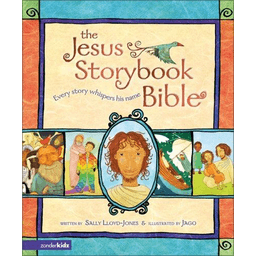 The Jesus Storybook BibleSally Lloyd-Jones's lyrical storybook Bible where 'every story whispers his name' - the beloved all-rounder, aimed a little older.
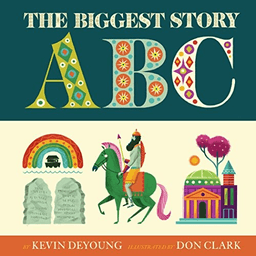 The Biggest StoryKevin DeYoung's short single-arc retelling from Crossway - the closest peer, lighter and more picture-book than full storybook Bible.
 The Gospel Story BibleMarty Machowski's 156-story Bible that ties each account to Jesus - broader coverage with a built-in family-devotion structure.
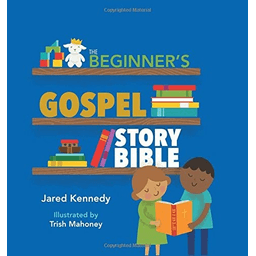
 The Beginner's BibleThe best-selling bright, simple storybook Bible for little kids - more stories, more cartoonish art, no single-arc framing.
Frequently asked questions
What age is The Big Picture Story Bible best for?
It is pitched at the youngest end - roughly ages two to five. The slow, repetitive prose and the calm full-page art are built for toddlers and preschoolers on a parent's lap. Children around six or seven are usually ready for a fuller children's Bible with more stories and more text, so most families treat this as a first Bible to grow into over a few years.
How is it different from The Jesus Storybook Bible?
Both tell the Bible as one connected story that points to Jesus, but they aim at slightly different ages. The Big Picture Story Bible is gentler, more repetitive, and skews younger, with twenty-six sections. The Jesus Storybook Bible has more stories, more lyrical prose, and tends to suit a slightly older preschooler-and-up. Many families own both and start with Helm when their child is very young.
How many stories does it include?
Twenty-six connected sections, running from creation through the early church and toward the promise of Christ's return. That is fewer than most storybook Bibles by design - the book trades broad coverage for a single, easy-to-follow storyline. Families who want their child to know a wide range of individual Bible stories often pair it with a fuller anthology later.
Is there an audio version?
Yes. Later editions added an audio recording, available bundled with the hardcover or on its own. It works well in the car and lets pre-readers follow along independently. If your household listens as much as it reads, the hardcover-plus-audio edition is the natural pick over the plain hardcover.
What is the "big picture" the title refers to?
It refers to the single storyline the book traces through all of Scripture: God making a people for himself, giving them a place to live with him, and ruling over them as a good king - from Eden through Israel to Jesus and the Church. This kingdom-and-covenant framing comes from a biblical-theology way of reading the Bible, and it is the organizing idea of the whole book.
Which edition should I buy?
The standard Crossway hardcover (around $22) is the right default for most families - large, durable, and built to last through years of bedtime reading. Step up to the hardcover-plus-audio edition (around $30) if your kids spend time in the car or like to follow the narration on their own. The Kindle edition (around $13) is cheaper and travels well, though the oversized physical pages are part of the experience.
What tradition is it written from?
It is published by Crossway, a Reformed-leaning evangelical publisher, and it follows the Protestant sixty-six-book canon with a kingdom-and-covenant, gospel-centered framing. That shapes which stories it tells and how it connects them. Families whose tradition includes the deuterocanonical books or emphasizes the biblical story differently should know that framing going in as they choose a children's Bible.
Sources & further reading
More Children's Bibles & Kids Books
The Jesus Storybook BibleThe children's storybook Bible that retells 44 stories as a single rescue plan pointing to Jesus - the one most parents and grandparents end up gifting, and the one adults quietly read for themselves.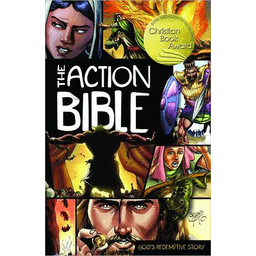 The Action BibleThe best-selling graphic-novel Bible of its era - 215+ Scripture narratives told in full-color comic art, built to pull reluctant and visual readers into the story.The Biggest StoryKevin DeYoung and Don Clark trace the whole Bible as one story - from the garden, through the promised snake crusher, to the new creation - in a single flowing read-aloud for ages four to eight.The Beginner's BibleThe illustrated storybook Bible that has been the default 'first Bible' for toddlers and preschoolers for more than thirty years - and quietly became the art behind the most-downloaded kids' Bible app in the world.The Gospel Story BibleThe 156-story family storybook Bible that ends every story by connecting it to Jesus - and the hub of a whole devotional-and-curriculum ecosystem built for reading with a range of ages at once.
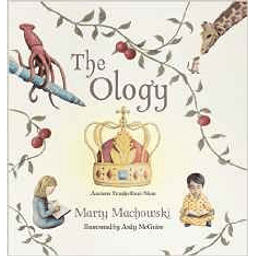 The OlogyA children's systematic theology disguised as a treasure hunt - 71 short readings that walk kids through the whole sweep of Christian doctrine, organized by topic instead of by story.