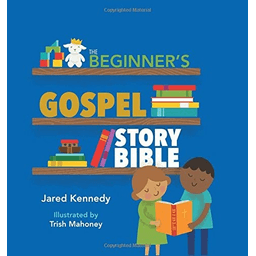
- Starting price
- ~$22 hardcover
- Free tier
- No
- Platforms
- Hardcover · Kindle · Family devotionals · Curriculum
- Developer
- New Growth Press
- Launched
- 2011
- Updated
- May 31, 2026
The verdict
The Gospel Story Bible is the most family-worship-ready storybook Bible on the shelf - 156 short stories, each ending by connecting to Jesus, each with discussion questions built in. It is a gospel-centered, redemptive-historical retelling from a Reformed-leaning evangelical publisher, following the Protestant 66-book canon. If you want one book to anchor regular family devotions across a spread of ages, this is the one built for the job.
Try The Gospel Story Bible ↗Opens newgrowthpress.com
The Gospel Story Bible has quietly become the storybook Bible that families reach for when they want a routine, not just a read-aloud. Marty Machowski's 2011 volume turns up on family-worship reading lists, in homeschool plans, and in the hands of parents who have tried a few children's Bibles and wanted one with more structure. It is published by New Growth Press, carries a gospel-centered framing common across Reformed-leaning evangelical teaching, and is built from the ground up to be used night after night rather than admired on a shelf.
It is not a reference Bible, and it does not try to be. It does not reproduce the text verse by verse. It does not cover every chapter. It does not leave you to figure out the discussion on your own. What it does instead is gather 156 stories - drawn from both the Old and New Testaments - and retell each in a few pages of warm, accessible prose, ending each one by tying the story to Jesus and the larger gospel arc, with discussion questions printed right on the page.
The organizing idea is in the subtitle: "Discovering Jesus in the Old and New Testaments." Machowski never lets a story sit as an isolated lesson. Adam and Eve, Abraham and Isaac, the bronze serpent, the manger, the cross, the empty tomb - each retelling reaches toward the same center, and each closes by asking the family to see how it points to Christ. Pair the text with A.E. Macha's distinctive folk-art, woodcut-style illustrations and you get a book that is less a coffee-table object and more a working tool for the dinner table or bedtime.
What sets it apart from most of its shelf-mates is the ecosystem around it. The 156 stories are the same 156 stories keyed to Machowski's family devotionals - "Long Story Short" for the Old Testament, "Old Story New" for the New - and to a Sunday-school curriculum. A church can teach a story on Sunday, a family can revisit it at home that week, and the storybook Bible can read it to the youngest child, all on the same track. That coordination is the book's real differentiator, and it is rarer than it sounds.
✓ The good
- Built for family worship - 156 short stories, each with discussion questions printed on the page, so a parent can lead a devotion without prep or a separate guide
- A genuine gospel through-line - every story ends by connecting to Jesus and the larger redemptive arc, so children absorb the shape of the whole Bible rather than 156 disconnected lessons
- Broad story coverage - at 156 stories it spans far more of both Testaments than the slimmer storybook Bibles, which buys it years of use
- A.E. Macha's folk-art, woodcut-style illustrations give the book a distinctive, hand-made look that stands apart from the cartoon style of most children's Bibles
- The hub of a coordinated ecosystem - the same 156 stories key to the "Long Story Short" (OT) and "Old Story New" (NT) family devotionals and a Sunday-school curriculum, so home and church can run on one track
- Works across a range of ages at once - the prose plus the layered discussion questions let one reading reach a preschooler and a grade-schooler in the same sitting
- Affordably anchored - a hardcover around $22 (with a Kindle edition near $10) is reasonable for a book this size and one a family can use for years
✗ Watch out
- Not comprehensive - 156 stories is broad for the genre but still a selection, not the whole Bible, so it is a companion to Scripture reading rather than a replacement
- Follows the Protestant 66-book canon - there are no deuterocanonical stories, so Catholic and Orthodox families wanting Tobit, Judith, or Maccabees, and Latter-day Saint families wanting Book of Mormon content, will need a different or additional book
- The retellings paraphrase and dramatize - dialogue and framing are shaped toward the gospel arc, so a parent wanting word-for-word Scripture should know it is an interpretive retelling
- The folk-art illustration style is distinctive rather than universally loved - some families adore Macha's woodcut look, others prefer the brighter, softer art of other storybook Bibles
- It shines most when used as a routine - bought as a one-off read-aloud without the family-worship rhythm, a lot of its design (the questions, the ecosystem) goes unused
Best for
- Families wanting a structured devotion they can lead without separate prep
- Households reading with a spread of ages at the same time
- Homeschool and Sunday-school families who want home and church on one track
- Protestant-tradition households (the canon and gospel framing fit that tradition)
Avoid if
- You want every Bible story or a verse-by-verse text for kids
- You want deuterocanonical books or Book of Mormon content included
- You want the brightest, softest cartoon art rather than a folk-art style
- You just want a quick standalone read-aloud and will not use the questions
What The Gospel Story Bible is
The Gospel Story Bible is an illustrated family storybook Bible written by Marty Machowski and illustrated by A.E. Macha, published by New Growth Press in 2011. It is a single hardcover volume of 156 retold stories drawn from both the Old and New Testaments, each running a few pages of narrative prose with folk-art illustrations and a short set of discussion questions printed on the page. It is designed for family worship and devotions with children across a range of ages, and it follows the Protestant 66-book canon, so it does not include deuterocanonical material.
The book's organizing idea is in its subtitle, "Discovering Jesus in the Old and New Testaments." Rather than presenting the stories as standalone moral lessons, Machowski frames each one to point toward Jesus and the larger gospel arc, closing every story by drawing that connection. This is a gospel-centered, redemptive-historical approach - a way of reading common in Reformed-leaning evangelical teaching, and consistent with the New Growth Press and Sovereign Grace heritage the book comes from. It is a narrative retelling with built-in discussion, not a reference Bible or a word-for-word translation.
Why families build their devotions around this one
Most storybook Bibles hand you stories and leave the rest to you. The Gospel Story Bible hands you a routine. Each of the 156 entries ends by connecting the story to Jesus and then gives you discussion questions right there on the page, so a parent who has never led a family devotion can open the book, read a few minutes, and have something to talk about without buying a separate guide or doing any prep. That single design choice - a read-aloud and a discussion starter in one - is what moves the book from the shelf to the dinner table.
The other half of the differentiator is the ecosystem. The same 156 stories key to Machowski's family devotionals, "Long Story Short" for the Old Testament and "Old Story New" for the New, and to a Sunday-school curriculum, so a church can teach a story on Sunday and a family can revisit it at home that week on the same track. The framing sits within Reformed-leaning evangelical tradition, which is worth knowing going in - it is the lens that shaped the book. For families in that tradition who want structure and coordination between home and church, it is close to purpose-built.
Built-in discussion questions: a family devotion without the prep
The signature feature is on every page rather than in a separate workbook. After each of the 156 retellings, Machowski connects the story to Jesus and then prints a short set of discussion questions - typically a mix that a younger child can answer and a few that push an older one to think harder. The result is that the book does double duty: it is the read-aloud and the lesson plan at once. A parent does not need a degree, a leader's guide, or fifteen minutes of preparation. They open the book, read the story, draw the gospel connection the author has already framed, and ask the questions on the page.
That lowers the bar to actually doing family worship, which is the whole point. The most common reason home devotions stall is not lack of desire but lack of a simple, repeatable format, and this book supplies one out of the box. Because the questions are layered for different ages, a single reading can reach a preschooler and a grade-schooler in the same sitting - the younger child catches the story, the older one wrestles with the application. It is gospel-centered and redemptive-historical in its framing, the kind common in Reformed-leaning evangelical teaching, and it is engineered to be used night after night rather than read once.
156 stories with a gospel through-line across both Testaments
Where many storybook Bibles pick a few dozen highlights, The Gospel Story Bible runs to 156 stories spanning the Old and New Testaments - broad enough that a family works through a real sweep of Scripture rather than the same handful of favorites. And Machowski does not let the stories sit as isolated episodes. Each retelling is written to point toward Jesus, so the bronze serpent foreshadows the cross, the Passover lamb rhymes with the Lamb of God, and the manger and the empty tomb land as the moments the earlier stories were straining toward. Every story closes by naming that connection explicitly.
For a child, the payoff is a map of the whole Bible rather than a drawer of disconnected lessons - a sense that Scripture is one Story going somewhere, with Jesus at the center. For a family, the breadth is what buys the book years of use: 156 short readings is a long runway, enough to anchor devotions for a long stretch before you reach the end. This is a redemptive-historical reading, the kind common in Reformed-leaning evangelical teaching, and it is the engine that makes the book more than a collection of stories. It works from the Protestant 66-book canon, which tells you which tradition it serves.
The ecosystem: Long Story Short, Old Story New, and the curriculum
The Gospel Story Bible is the hub of a coordinated family of resources, and that is unusual for the genre. The same 156 stories key to two companion family devotionals - "Long Story Short" covers the Old Testament and "Old Story New" covers the New - which go deeper for older children and parents with daily readings and fuller discussion. The same 156 stories also key to a Sunday-school and homeschool curriculum, so a church class and a home can run on a single track: a story taught on Sunday can be revisited at home that week using the storybook Bible for the youngest and the devotional for the oldest.
That coordination is part of why families build a routine around the book rather than treating it as a one-off purchase. A household can start with the storybook Bible at bedtime, layer in "Long Story Short" or "Old Story New" as the children grow, and align all of it with whatever a church is teaching on Sundays - every piece working from the same stories and the same gospel-centered frame. The companion devotionals and curriculum are sold separately, and as of writing exact contents and prices vary by edition and retailer, so it is worth checking what each piece includes before buying the set.
Pricing
Hardcover
~$22
The standard New Growth Press hardcover. The copy most families own and the one most people gift.
Kindle / eBook
~$10
The full text and art on a tablet - handy for travel, though Macha’s art reads best on a color screen.
With family devotionals
Varies
"Long Story Short" (OT) and "Old Story New" (NT) are sold separately and keyed to the same 156 stories - buy them alongside the storybook Bible to run a full family-worship track.
Sunday-school curriculum
Varies
The "Gospel Story for Kids" curriculum built on the same 156 stories, priced as a church/homeschool kit rather than a single book.
The Gospel Story Bible is not free, and it sits a notch above the bargain children's Bibles you find at the supermarket - which makes sense given its size and the discussion material built into every story. The standard New Growth Press hardcover runs around $22 as of writing - call it the everyday default - and it is the copy most families own and the one that turns up most often as a gift.
The Kindle edition comes in cheaper, around $10, and is genuinely useful for travel, though Macha's folk-art is a real part of the experience and reads best on a color screen rather than a black-and-white e-reader. For a book a family plans to use at the dinner table night after night, most people still prefer the hardcover.
The wider ecosystem is priced separately. The companion devotionals - "Long Story Short" for the Old Testament and "Old Story New" for the New - and the Sunday-school curriculum are sold as their own products, keyed to the same 156 stories. Most families do not need the curriculum unless they are teaching a class, and the devotionals are an upgrade worth considering as children grow rather than a day-one purchase.
Prices drift, and used copies of a widely owned book like this turn up cheaply at library sales and secondhand shops - so treat every figure here as approximate and check the current edition and what each companion includes before buying.
Limitations and considerations
Not the whole Bible. At 156 stories the book is broad for the genre, but it is still a selection rather than the full canon, and it leaves a great deal out by design. That is the right call for a family read-aloud, but it means the book is a companion to Scripture, not a substitute - a family wanting comprehensive coverage will eventually need a fuller Bible or the text itself.
Protestant 66-book canon. The Gospel Story Bible works from the Protestant canon and the gospel-centered framing that shaped it. There are no deuterocanonical stories, so Catholic and Orthodox families wanting Tobit, Judith, or the Maccabees - and Latter-day Saint families wanting Book of Mormon content - will find those absent and should plan to supplement or choose a book from their own tradition. This is buyer information, not a flaw: it tells you which tradition the book serves.
It is a retelling, not a translation. Machowski dramatizes the stories and frames each one toward Jesus and the gospel arc. The result works beautifully as story and as devotion, but a parent wanting word-for-word Scripture should know going in that this is an interpretive retelling rather than a verse-by-verse text.
A distinctive art style. A.E. Macha's folk-art, woodcut-style illustrations give the book a strong, hand-made identity, and that is a feature for many families and a mismatch for others. Households expecting the bright, soft cartoon look common to other children's Bibles should flip through a few pages first to be sure the style suits them.
Most of its value lives in the routine. The questions, the layered ages, the companion devotionals, the curriculum - the book is engineered to be used as a system, not read once. Bought as a one-off read-aloud with no family-worship rhythm around it, a good deal of what makes it special goes unused.
The Gospel Story Bible vs. The Jesus Storybook Bible vs. The Big Picture Story Bible
These three are the gospel-centered storybook-Bible shortlist, and they do genuinely different jobs. The Gospel Story Bible (Machowski, 2011) is the family-worship workhorse - 156 stories across both Testaments, each ending with a gospel connection and built-in discussion questions, and tied to a wider set of devotionals and curriculum. The Jesus Storybook Bible (Sally Lloyd-Jones, 2007) is the literary, one-big-Story option - 44 stories threaded to Jesus in storyteller's prose, the best-written of the group and loved by adults too. The Big Picture Story Bible (David Helm) is the simplest and youngest-skewing of the three - a smaller set of stories tracing God's kingdom across the Bible in very accessible language for the youngest listeners.
Different strengths. The Gospel Story Bible is the most complete and the most usable as a routine - the broadest coverage and the only one with discussion questions and a full ecosystem built in, the pick if you want to lead regular family devotions across a range of ages. The Jesus Storybook Bible is the best-written and most re-readable, the one to hand a four-to-eight-year-old if the craft of the prose matters most. The Big Picture Story Bible is the gentlest on-ramp for toddlers and preschoolers. If you want a structured family devotion, it is the Gospel Story Bible. For literary read-aloud, add the Jesus Storybook Bible. For the very young, start with The Big Picture Story Bible.
All three sit within Protestant tradition and the 66-book canon, with a gospel-centered, redemptive-historical framing. Families in other traditions - Catholic, Orthodox, or Latter-day Saint - should weigh that framing and may prefer a children's Bible published within their own tradition.
The bottom line
The Gospel Story Bible is the most family-worship-ready storybook Bible on the shelf, and that is its whole pitch. Machowski wrote a book that does the read-aloud and the discussion in one - 156 stories spanning both Testaments, each ending by connecting to Jesus, each with questions on the page - and then surrounded it with devotionals and curriculum keyed to the same stories so home and church can run together. It is a Reformed-leaning evangelical, gospel-centered retelling on the Protestant 66-book canon, which is worth knowing before you buy. But if a family wants one book to anchor regular devotions across a spread of ages, this is the one built for it.
Alternatives to The Gospel Story Bible
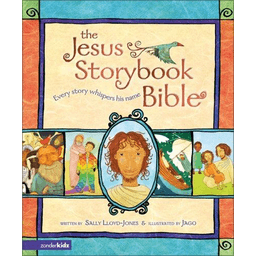 The Jesus Storybook BibleSally Lloyd-Jones's literary, one-big-Story retelling - 44 stories threaded to Jesus in storyteller's prose, the best-written of the bunch.
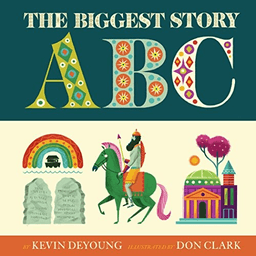 The Biggest StoryKevin DeYoung's single sweeping gospel-arc retelling - a similar through-line in one connected narrative rather than separate stories.
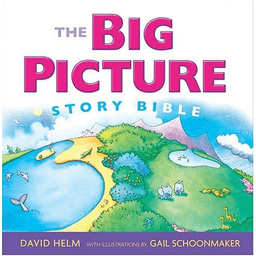 The Big Picture Story BibleDavid Helm's gentle, kingdom-arc retelling in very accessible language - the easiest on-ramp for toddlers and preschoolers.
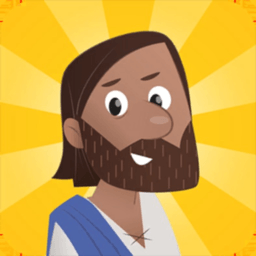 The Bible App for KidsYouVersion's free animated, interactive children's Bible app - the screen-based companion to a print storybook.
Frequently asked questions
What ages is The Gospel Story Bible best for?
It is designed for family worship with children across a range of ages, roughly three to twelve. The retellings reach the youngest listeners, while the discussion questions are layered so an older grade-schooler can wrestle with the same story a preschooler is hearing. That spread is part of why families with several children find one reading can serve everyone at once.
Does it cover the whole Bible?
No. It retells 156 stories drawn from both the Old and New Testaments - broad for a storybook Bible, but still a selection rather than the full text. It is best used as a companion to Scripture reading rather than a replacement for it.
Which tradition or canon does it follow?
It follows the Protestant 66-book canon and a gospel-centered, redemptive-historical framing common in Reformed-leaning evangelical teaching, consistent with its New Growth Press publisher. It does not include deuterocanonical books, so Catholic and Orthodox families wanting those - and Latter-day Saint families wanting Book of Mormon content - should plan to supplement it or choose a book published within their own tradition.
What are the discussion questions, and do I need a separate guide?
Each of the 156 stories ends by connecting the story to Jesus and then prints a short set of discussion questions right on the page. You do not need a separate leader’s guide to use it - the book is built so a parent can read a story and lead a short discussion without any prep. The companion devotionals go deeper, but they are optional.
How does it relate to Long Story Short and Old Story New?
They are companion family devotionals by the same author, keyed to the same 156 stories. "Long Story Short" covers the Old Testament and "Old Story New" covers the New Testament, with daily readings and fuller discussion aimed at older children and parents. A Sunday-school curriculum uses the same stories too, so home and church can run on one track. They are sold separately from the storybook Bible.
Is it a word-for-word Bible translation?
No. It is a narrative retelling. Marty Machowski dramatizes the stories and frames each one toward Jesus and the larger gospel arc, so a parent wanting verse-by-verse Scripture should know it is an interpretive retelling rather than a translation.
Which edition should I buy?
The standard hardcover (around $22 as of writing) is the right default for most homes and the usual gift choice. The Kindle edition (around $10) is handy for travel, though Macha’s folk-art reads best in color. Add the "Long Story Short" or "Old Story New" devotionals as your children grow, and the curriculum kit only if you are teaching a class.
Sources & further reading
More Children's Bibles & Kids Books
The Jesus Storybook BibleThe children's storybook Bible that retells 44 stories as a single rescue plan pointing to Jesus - the one most parents and grandparents end up gifting, and the one adults quietly read for themselves.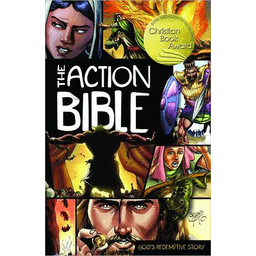 The Action BibleThe best-selling graphic-novel Bible of its era - 215+ Scripture narratives told in full-color comic art, built to pull reluctant and visual readers into the story.The Biggest StoryKevin DeYoung and Don Clark trace the whole Bible as one story - from the garden, through the promised snake crusher, to the new creation - in a single flowing read-aloud for ages four to eight.
 The Beginner's BibleThe illustrated storybook Bible that has been the default 'first Bible' for toddlers and preschoolers for more than thirty years - and quietly became the art behind the most-downloaded kids' Bible app in the world.The Big Picture Story BibleThe storybook Bible that tells the whole Bible as one story - God's people, in God's place, under God's rule - written slow and gentle enough for a two-year-old on your lap.
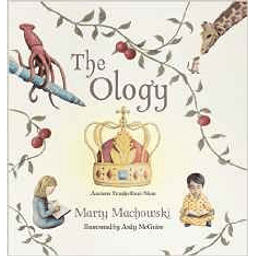 The OlogyA children's systematic theology disguised as a treasure hunt - 71 short readings that walk kids through the whole sweep of Christian doctrine, organized by topic instead of by story.