- Starting price
- ~$25 paperback
- Free tier
- No
- Platforms
- Print · Kindle
- Developer
- Deseret Book
- Launched
- 1989
- Updated
- May 31, 2026
The verdict
Approaching Zion is Hugh Nibley at his most provocative - a collection of essays that hammers, again and again, on the gap between the Latter-day Saint ideal of Zion and the materialism of ordinary life. Drawing on scripture, history, and his vast reading, Nibley argues that the pursuit of wealth and status is fundamentally at odds with the consecrated society the tradition aspires to. It is dense, demanding, and unmistakably one scholar’s own voice and scholarship rather than an official statement. For a Latter-day Saint reader ready to be challenged, it is among the most bracing books the tradition has produced.
Try Approaching Zion ↗Opens deseretbook.com
Approaching Zion is not a comfortable book, and it was never meant to be. It belongs to a particular category in Latter-day Saint reading - the volume people describe with a slightly nervous laugh, the one that got under their skin and stayed there. Its whole reason for existing is to confront a tension the tradition holds openly: that it teaches an ideal called Zion - a consecrated, united, unselfish society - while its members live, like everyone else, inside an economy organized around getting and keeping. Nibley’s essays press on that tension relentlessly, and they do not let the reader off easily.
The book is volume nine of the Collected Works of Hugh Nibley, gathered and published in 1989 by Deseret Book in association with FARMS. Nibley was among the most influential Latter-day Saint scholars of the twentieth century, a polymath known for sweeping erudition across ancient languages, history, and scripture. This collection is not a measured textbook. It doesn’t hedge. It doesn’t flatter its audience. It doesn’t pretend the subject is easy or the reader innocent. Instead it reads as a series of pointed, often fiery essays - sermons, in places - turning Nibley’s enormous learning against the love of money and the rationalizations that protect it.
The central claim runs through every essay: that wealth-seeking, status, and the ethic of acquisition are not neutral, and that they stand in direct opposition to the ideal of Zion the tradition holds up. Nibley assembles scripture, ancient and modern history, and his own wide reading to argue that a people cannot serve both the accumulation of riches and the building of a consecrated society - and that comfortable readers, himself included, are far more implicated than they would like to think. The essays are demanding in their density and uncompromising in their tone, and that is precisely the experience they intend to deliver.
This review treats the book the way this site treats every resource - with practical notes on what it is, what to buy, what it costs, and who it serves. It is important to be clear about one thing up front: Approaching Zion reflects Hugh Nibley’s own scholarship and views, the arguments of one influential thinker writing within his tradition, rather than an official position of any institution. On the plain terms of a reader’s decision, it is one of the most challenging and memorable books a Latter-day Saint can pick up - rewarding for the reader who wants to be provoked, heavy going for the reader who wants reassurance.
✓ The good
- A bracing, unforgettable challenge - Nibley presses the gap between the ideal of Zion and everyday materialism harder than almost any book in the tradition, and readers remember it for years
- Enormous erudition put to work - Nibley draws on ancient languages, history, scripture, and vast reading, so the essays carry a depth and range few popular books match
- Morally serious and unflinching - the book refuses easy outs and rationalizations, which readers who want to be genuinely confronted find rare and valuable
- Distinctive, vigorous voice - Nibley’s prose is pointed, witty, and combative in a way that makes demanding material compelling rather than dry
- Centered on a coherent theme - every essay circles consecration, wealth, work, and Zion, so the collection reads as a sustained argument rather than a scattered miscellany
- Rewards rereading and discussion - the density and provocations make it a strong choice for a reader who likes to argue with a book or study it with others
- Anchored in the tradition’s own scripture and ideals - Nibley builds his case from texts and concepts his Latter-day Saint readers already hold, speaking from inside the tradition
✗ Watch out
- Dense and demanding - the essays are erudite and tightly packed, so this is heavy going, not a light or quick read
- Pointed, even combative in tone - Nibley’s fiery, uncompromising voice is bracing for some readers and off-putting for others who prefer a gentler register
- Reflects one scholar’s own views - the arguments are Nibley’s own scholarship and positions, not an official statement of any institution, and a reader should take them as one influential thinker’s case
- Written for a Latter-day Saint readership - it assumes the tradition’s context, scripture, and ideal of Zion throughout, so a reader outside it encounters it as one tradition’s internal critique
- Essay collection rather than a single argument - gathered as separate pieces, it repeats its themes across chapters, which a reader expecting a single linear book may find redundant
- Not free - it is an in-copyright collection you buy, though used copies of the older edition turn up inexpensively
Best for
- Latter-day Saints who want to be seriously challenged on wealth, consecration, and the ideal of Zion
- Readers who enjoy erudite, argumentative essays and do not mind a combative voice
- Members drawn to Hugh Nibley’s scholarship and wide-ranging style
- Study or discussion groups looking for a provocative book to argue through together
Avoid if
- You want a gentle, reassuring devotional rather than a pointed, demanding critique
- You prefer light, quick reading to dense, erudite essays
- You are looking for an official statement of doctrine rather than one scholar’s own views
- You want a tradition-neutral treatment rather than a critique written from within the Latter-day Saint tradition
What Approaching Zion is
Approaching Zion is a collection of essays by Hugh Nibley, the influential twentieth-century Latter-day Saint scholar, published in 1989 by Deseret Book in association with FARMS as volume nine of his Collected Works. Its subject is the ideal of Zion - a consecrated, unselfish society - and its persistent target is materialism: the love of money, the pursuit of status, and the ethic of acquisition that Nibley argues stand opposed to that ideal. Drawing on scripture, ancient and modern history, and his wide reading, the essays make a sustained, pointed case that a people cannot pursue both wealth and Zion at once.
The book is demanding in both density and tone - erudite, vigorous, and frequently combative, written to confront rather than to comfort. As neutral buyer information, two things are worth stating plainly: it is written from within the Latter-day Saint tradition and for readers in it, assuming that tradition’s scripture and concepts throughout; and it reflects Hugh Nibley’s own scholarship and views - the arguments of one influential thinker, not an official statement of any institution. It is an in-copyright title sold in print and digital editions.
Why Latter-day Saint readers wrestle with this one
The single biggest practical difference between Approaching Zion and most devotional reading is that it is built to disturb rather than to settle. A great deal of religious writing aims to reassure the reader - to confirm that they are on the right path and to send them away comforted. Nibley does close to the opposite. He takes the tradition’s own ideal of Zion, holds it next to the way comfortable people actually live, and refuses to look away from the distance between them. The reader is not positioned as an observer of someone else’s problem; Nibley makes plain that the critique includes the reader, and himself.
That changes how the book functions. A reader does not so much agree with Approaching Zion as argue with it - and that arguing is the point. Nibley’s combative voice, his refusal of easy rationalizations, and his sheer range of reference make the essays hard to brush off; even a reader who resists the conclusions tends to leave unable to un-see the question. Because the whole collection circles a single theme from many angles, the cumulative effect is a kind of moral pressure that builds across the chapters. For the reader inside the tradition who wants to be genuinely confronted about wealth and consecration, this is the book that does it.
A sustained critique of materialism and the love of money
The throughline of the collection is an argument about money and what the pursuit of it does to people. Across the essays, Nibley contends that wealth-seeking, status, and the ethic of acquisition are not morally neutral activities but forces that pull directly against the consecrated, unselfish society the tradition calls Zion. He is unsparing about the rationalizations that protect material comfort - the assumption that prosperity signals righteousness, the habit of treating getting and keeping as simply prudent - and he turns his learning against each of them in turn.
What gives the critique its force is that Nibley refuses to keep it at arm’s length. He does not frame greed as the sin of some distant villain; he insists that ordinary, respectable, hardworking people - his readers and himself - are deeply implicated in the very pattern he is criticizing. That move is what makes the book uncomfortable in the way it intends. A reader expecting a tidy lesson about other people’s avarice instead finds the argument turning toward their own assumptions, which is precisely the confrontation the essays are designed to produce.
The ideal of Zion as the standard he measures against
Nibley does not critique materialism in a vacuum; he measures it against a positive ideal, and that ideal is Zion. In the tradition’s vocabulary, Zion names a consecrated society - a people united, of one heart, with no poor among them, holding their goods in common stewardship rather than private accumulation. Nibley draws this ideal from the tradition’s own scripture and history and holds it up as the standard against which ordinary economic life falls short. The gap between the two is the engine of nearly every essay.
Treating Zion as a live standard rather than a distant abstraction is what makes the book demanding. If Zion were merely a future hope with no present claim, the essays would carry little sting. Nibley insists instead that the ideal makes demands now, on the reader’s present choices about work, wealth, and possessions. That insistence - that consecration is not a someday ideal but a present summons - is the source of both the book’s power and its discomfort, and it is why readers describe it as a book that changed how they thought about money rather than merely informing them about it.
Nibley’s erudition and voice, for better and for harder
The third defining feature of the book is the mind behind it. Hugh Nibley was a scholar of unusual range - ancient languages, classical and biblical history, scripture, and a famously vast reading - and he brings the whole of it to bear on these essays. Allusions and examples come from across the ancient and modern world, and the argument is built with a density of reference that few popular books attempt. For a reader who relishes that kind of erudition, the experience is exhilarating: a brilliant, well-stocked mind turned loose on a subject most writing handles timidly.
That same density and the vigor of Nibley’s voice are also why the book is hard going for some. The essays are tightly packed and assume an engaged, patient reader; the tone is pointed, witty, and often combative rather than gentle. It is worth repeating here, as plain information for a buyer, that these are Nibley’s own scholarship and positions - one influential thinker’s arguments, not an official statement of any institution. Read on those terms, the strong voice is the appeal: Approaching Zion is unmistakably one person’s bracing, learned, uncompromising case, and that is exactly what its admirers come for.
Pricing
Paperback
~$25
The standard paperback of the collection (Collected Works of Hugh Nibley, vol. 9), the edition most readers own. The everyday default for this title.
Kindle / eBook
~$15-25
A searchable digital edition for readers who prefer to highlight and search a dense book on a device, typically at or below the paperback price.
Hardcover (Collected Works)
~$30-40
The hardcover volume in the Collected Works of Hugh Nibley set, for readers building the series or wanting a durable copy of a book they expect to reread.
Used / secondhand
~$5-15
Since the collection first appeared in 1989, used copies are common through resellers and Latter-day Saint bookshops - a budget route to the same essays.
Approaching Zion is not free - it is an in-copyright collection, part of the Collected Works of Hugh Nibley - so you buy it. The good news for a buyer is that it has been in print since 1989, which keeps the floor on price low. Mark the paperback as the everyday default; at around $25 it is the edition most readers own and the one quotations are usually keyed to.
If you prefer to read a dense book on a device, the Kindle or eBook edition is worth considering. It typically runs at or below the paperback, and for a book this packed with reference, searchable text and syncing highlights are genuinely useful - you will want to find your way back to particular passages.
A hardcover exists as part of the Collected Works set, generally a bit more than the paperback, and it is the pick for a reader assembling the series or wanting a durable copy of a book they expect to reread and mark up. It is more than most readers need, but it suits a collector or a serious student of Nibley.
Because the collection first appeared in 1989, the secondhand supply is healthy. Used copies turn up through resellers and Latter-day Saint bookshops, often well below new, which is a sensible route for a reader who does not mind a previous owner’s underlining - and given how much underlining this book tends to provoke, a used copy sometimes comes with a stranger’s argument in the margins. Most readers need nothing beyond the paperback or the eBook.
Where Approaching Zion falls behind
Density. These are erudite, tightly packed essays, and they ask for a patient, engaged reader. A person hoping for something light or quick will find the going heavy - Nibley assumes you will keep up with a wide-ranging argument and a flood of reference. The density is inseparable from the book’s depth, but it does mean Approaching Zion rewards slow, attentive reading and frustrates anyone looking to skim.
Tone. Nibley’s voice is pointed, witty, and frequently combative, and that register is not for everyone. Readers who want a gentle, encouraging book will find this one bracing to the point of discomfort; readers who relish a vigorous argument will find the same quality exhilarating. It is a matter of temperament rather than a defect, but it is the most common reason a reader either loves or bounces off the book.
One scholar’s views. The arguments here are Hugh Nibley’s own scholarship and positions - the case of one influential thinker working within his tradition, not an official statement of any institution. That is worth holding clearly: a reader should engage the essays as a provocative individual argument to wrestle with, not as a settled or authoritative pronouncement. Taken that way, the strong, personal voice is the point; taken the wrong way, it could be mistaken for more than it claims to be.
Essay-collection repetition. Because the book gathers separate essays, its central themes - wealth against Zion, the demands of consecration - recur from chapter to chapter rather than building in a single linear line. The repetition is part of how the cumulative pressure works, but a reader expecting one continuous argument may notice the same points returning in new dress, and should approach it as a themed collection rather than a single sustained treatise.
Approaching Zion vs. Believing Christ vs. The God Who Weeps
These three are all read within the Latter-day Saint tradition, but they do very different jobs and suit very different moods. Approaching Zion (Nibley, 1989) is the bracing, erudite challenge - a demanding essay collection that confronts the reader about wealth, work, and the ideal of Zion, in a pointed and combative voice. Believing Christ (Stephen E. Robinson, 1992) is the short, warm, pastoral book on grace - one clarifying idea and a homely parable, aimed at comforting a discouraged reader rather than confronting a comfortable one. They sit at opposite ends of the emotional register.
Different strengths. The God Who Weeps (Terryl and Fiona Givens, 2012) is the literary, reflective meditation - essayistic and atmospheric, drawing on poetry and philosophy to articulate why the tradition’s belief is worth holding. Set beside it, Nibley is far more confrontational and far more concerned with economics and ethics than with beauty or consolation. If your need is to be challenged about money and consecration, Approaching Zion is the book. If it is encouragement about grace, that is Robinson. If it is a reflective case for belief, that is the Givenses. The three are complementary, not competing - they meet very different needs.
All three are written from inside the tradition, drawing on its scripture and concepts, so a reader outside it will encounter each as one tradition’s work rather than a tradition-neutral one. The crucial difference with Approaching Zion is standpoint within that: where the other two largely express widely shared sensibilities, Nibley’s collection is pointedly the argument of a single scholar - his own scholarship and views - which is part of why it provokes the debates it does.
The bottom line
Approaching Zion is Hugh Nibley at his most provocative - an erudite, uncompromising essay collection that presses the gap between the Latter-day Saint ideal of Zion and the materialism of ordinary life, and refuses to let the reader stand outside the critique. Drawing on scripture, history, and vast reading, it argues that wealth-seeking and consecration cannot be served at once, and it does so in a pointed, combative voice that readers either love or struggle with. It is dense, demanding, and unmistakably one scholar’s own scholarship and views rather than an official statement. For a Latter-day Saint reader ready to be genuinely challenged about money and Zion, it is among the most bracing and memorable books the tradition has produced.
Alternatives to Approaching Zion
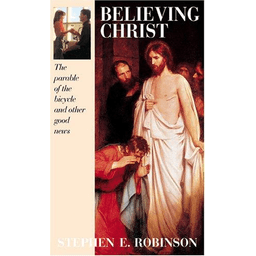 Believing ChristStephen E. Robinson’s short, warm book on grace and the Atonement - the consoling counterpart to Nibley’s confrontational essays.
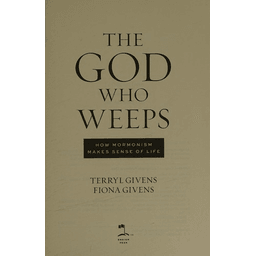 The God Who WeepsTerryl and Fiona Givens’s literary meditation on Latter-day Saint belief - reflective and essayistic where Nibley is pointed and combative.
 Maxwell InstituteA center for Latter-day Saint scholarship - a natural next stop for readers drawn to the kind of erudite study Nibley exemplifies.
 Gospel LibraryThe official free Latter-day Saint study app - scripture and a deep library for following any thread Nibley’s essays open up.
Frequently asked questions
What is Approaching Zion about?
It is a collection of essays by the Latter-day Saint scholar Hugh Nibley, published in 1989, on consecration, wealth, work, and the ideal of Zion. Its sustained argument is that the pursuit of riches and status stands opposed to the consecrated, unselfish society the tradition calls Zion - and that comfortable readers are more implicated in that pursuit than they tend to admit.
Who was Hugh Nibley?
Hugh Nibley was among the most influential Latter-day Saint scholars of the twentieth century - a polymath known for sweeping erudition across ancient languages, history, and scripture. Approaching Zion is volume nine of his Collected Works, and like much of his writing it brings that wide learning to bear in a vigorous, distinctive voice.
Is this an official Church position?
No. The book reflects Hugh Nibley’s own scholarship and views - the arguments of one influential thinker writing within his tradition - rather than an official statement of any institution. It is best read as a provocative individual case to wrestle with, not as a settled or authoritative pronouncement.
How hard is it to read?
It is demanding. The essays are erudite, tightly packed, and assume an engaged, patient reader, and Nibley’s tone is pointed and often combative. Readers who enjoy a vigorous, learned argument find it exhilarating; readers wanting something light or reassuring find it heavy going. Either way, it rewards slow, attentive reading rather than skimming.
How much does it cost?
The paperback runs around $25 and is the edition most readers own. A Kindle or eBook edition is usually at or below that, and a hardcover exists as part of the Collected Works set for a bit more. Because the collection has been in print since 1989, used copies are common and inexpensive - often well below the new price.
Is it written for a Latter-day Saint audience?
Yes. It is written from within the Latter-day Saint tradition and for readers in it, building its case from that tradition’s scripture and its ideal of Zion throughout. A reader outside the tradition can certainly read it, but will encounter it as one tradition’s internal critique of materialism rather than a tradition-neutral treatment.
Who is this book best for?
Latter-day Saints who want to be seriously challenged about wealth, consecration, and Zion; readers who enjoy erudite, argumentative essays and do not mind a combative voice; and study groups looking for a provocative book to argue through together. It is not the book to choose if you want gentle reassurance, light reading, or an official statement of doctrine.
Sources & further reading
More Latter-day Saint Books
 The Doctrine and CovenantsThe volume of modern revelations at the center of Latter-day Saint scripture - 138 sections, two Official Declarations, and the founding document of a still-growing church.
 The Pearl of Great PriceThe shortest of the four Latter-day Saint standard works - five short texts that hold the First Vision account, the Articles of Faith, and some of the tradition’s most-quoted scripture.
 The Standard Works (Quad)The four-in-one scripture set most Latter-day Saints carry - King James Bible, Book of Mormon, Doctrine and Covenants, and Pearl of Great Price, bound with one of the most thorough study apparatuses in print.
 Jesus the ChristJames E. Talmage's 1915 study of the life and mission of Jesus Christ - for over a century the standard Latter-day Saint treatment of the Messiah, and now free in the public domain.Believing ChristThe short Latter-day Saint book on grace that quietly reframed how a generation of readers understood the Atonement - built around one homely parable about a girl, a bicycle, and a father.
 Come, Follow MeThe official home-centered, church-supported study curriculum of the Church of Jesus Christ of Latter-day Saints - the weekly reading schedule the whole Church follows together, free in Gospel Library and in print.