- Starting price
- ~$15 paperback
- Free tier
- No
- Platforms
- Print · Kindle
- Developer
- Ancient Faith Publishing
- Launched
- 1989
- Updated
- May 31, 2026
The verdict
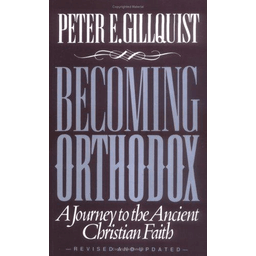
Becoming Orthodox is the conversion story most evangelicals curious about the Christian East get handed first. Peter Gillquist tells how a group of leaders - many from Campus Crusade for Christ - spent the better part of two decades reading their way through early church history and were eventually received into the Orthodox Church together. It is warm, readable, and frankly an apologetic for the journey its authors took. If you want one accessible account of why some evangelicals end up Orthodox, this is the usual starting point.
Try Becoming Orthodox ↗Opens ancientfaith.com
Becoming Orthodox has quietly become the book evangelicals reach for when a friend announces they are exploring the Orthodox Church and nobody quite knows what to say. It is short, it is personal, and it is written by someone who started exactly where the curious evangelical is standing. Peter Gillquist was a campus minister, a publishing executive, an evangelical insider - and the book is his account of how he and a circle of fellow leaders ended up somewhere none of them expected. For a reader who finds a 350-page history of Orthodoxy daunting, this is the on-ramp.
It did not begin as a study of Orthodoxy at all. It began, by Gillquist's telling, as a group of young men from the staff of Campus Crusade for Christ (now Cru) and adjacent ministries asking a simple question in the late 1960s: what did the church look like in the beginning, and where is that church now? It is not a systematic theology. It is not a balanced survey of competing traditions. It is not a neutral history. It is one man narrating, on behalf of a group, a search that took the better part of twenty years and landed them in a communion most of them had barely heard of when they started.
What you actually get is part memoir, part travelogue, part apologetic. Gillquist walks through the questions that drove the search - the shape of worship, the meaning of the Lord's Supper, the role of bishops, the authority behind the Bible itself - and recounts how the group's reading of the early Fathers and the first centuries kept pointing them in a direction they had not anticipated. He tells the story of the loose fellowship of congregations they formed, the long and sometimes bruising process of finding a canonical home, and their eventual reception, in 1987, into the Antiochian Orthodox Church. The voice is conversational and unmistakably evangelical in cadence, which is exactly why the book travels so well among the readers it is written for.
✓ The good
- The most accessible evangelical-to-Orthodox conversion story in print - for a curious evangelical reader, this is almost always the first title named and the one they actually finish
- Written from inside the evangelical world the author came from - Gillquist speaks the vocabulary and shares the instincts of his intended reader, which lowers the barrier enormously
- Reads like a story, not a textbook - part memoir, part travelogue, with real people, false starts, and a genuine arc rather than a catalogue of doctrines
- Frames the big questions plainly - worship, the Eucharist, church authority, the canon of Scripture, and the early Fathers are introduced in terms a newcomer can follow
- Respectful toward the tradition the authors left - Gillquist tells the story without bitterness toward the evangelical world that formed him, and credits it for setting him searching
- Short and re-readable - well under 250 pages in most editions, finishable in a couple of sittings, and easy to pass along
- A useful first step into a deeper bibliography - Gillquist consistently points readers toward fuller histories and primary sources rather than presenting his book as the last word
✗ Watch out
- It is one group's personal story, not a balanced survey - by design it argues for the path its authors took, and a reader who does not share its conclusions will read it as a perspective rather than a settled case
- Light on the academic depth of scholarly church history - Gillquist is narrating a journey, not writing peer-reviewed history, so specialists will want fuller and more rigorously sourced treatments
- The questions it raises are presented from the authors' vantage - the book makes its case for Orthodox answers on worship, authority, and the sacraments rather than weighing the alternatives at length
- Dated in places - the events run through the 1970s and 80s, and some of the cultural texture and contemporary references read as a snapshot of that era
- Not a how-to for inquirers - it tells how the authors got there more than it walks a present-day reader through visiting a parish or the process of reception
Best for
- Evangelicals curious about why some Protestants become Orthodox
- Readers who want a personal story rather than a systematic theology
- Anyone exploring the Orthodox Church who wants an accessible first book
- Friends and family trying to understand a loved one's move toward Orthodoxy
Avoid if
- You want a balanced, tradition-neutral survey of the questions it raises
- You want rigorous, heavily sourced academic church history
- You want a systematic exposition of Orthodox doctrine and worship
- You want a step-by-step practical guide to visiting or joining a parish
What Becoming Orthodox is
Becoming Orthodox is Peter E. Gillquist's first-person account of how he and a group of fellow evangelical leaders - many of them formerly on staff with Campus Crusade for Christ - spent roughly two decades studying early church history and were eventually received together into the Eastern Orthodox Church. First published in 1989 and later revised and expanded, it is a short book, well under 250 pages, that blends memoir, travelogue, and apologetic. It traces the questions that drove the group's search - worship, the Eucharist, the authority of bishops, the canon of Scripture - and the long road that led to their reception into the Antiochian Orthodox Church in 1987.
The book is written from inside the evangelical world its author came out of, and Gillquist never pretends otherwise. He writes warmly about the faith that formed him and the ministry that set him searching, and he makes a candid case for the conclusions he and his companions reached. It is not a neutral history, a systematic theology, or a comparative survey; it is a story told by a participant who is persuaded of where the story led. That first-person, evangelical-to-Orthodox vantage is the book's defining feature and the reason it has remained the usual first title handed to an evangelical exploring the Christian East.
Why this is the book evangelicals get handed first
Most introductions to Orthodoxy are written by lifelong Orthodox authors, or by scholars, and they begin where the tradition begins - with history, doctrine, and worship explained from the inside. Gillquist starts somewhere else entirely: in a college ministry, with the questions an evangelical actually asks. He shares the reader's starting vocabulary, the reader's reflexes about the Bible and the local church, even the reader's initial wariness about icons and incense and bishops. He is not translating Orthodoxy for an outsider so much as narrating his own surprise as an insider who went looking and found something he had not expected.
That shared starting point is what makes the book travel. An evangelical reader does not have to cross a vocabulary gap to follow it, because Gillquist is speaking their language the whole way through. A reader from another background gets an honest look at how a particular group of Protestants reasoned their way toward the Orthodox Church - what questions moved them and what answers they found persuasive. The book argues those questions from the authors' perspective rather than adjudicating them, and it does so without disparaging the tradition the authors left. That combination - an insider to evangelicalism telling the story of becoming Orthodox, respectfully toward both - is why a curious friend, a worried parent, and an inquiring believer all tend to be handed the same paperback.
The search: reading the early church back to its source
The engine of the book is the search itself. Gillquist recounts how the group set out to answer what sounds like a straightforward question - what was the New Testament church actually like, and what happened to it? - and how that question pulled them into the writings of the early Fathers and the history of the first Christian centuries. They read about how the earliest Christians worshiped, how they understood the Lord's Supper, how leadership and the office of bishop developed, and how the books of the New Testament were recognized as Scripture in the first place. Each thread, in Gillquist's telling, kept leading back toward forms and convictions the group had not associated with their own evangelical practice.
What makes this section work for its intended reader is that the questions are ones evangelicals already care about - the authority of the Bible, the nature of the church, the meaning of communion - rather than concerns imported from outside. Gillquist presents the group's reading of the historical evidence and the conclusions they drew from it, and he is candid that he is making a case. A reader who weighs the same history differently will encounter this as one well-told account of how a particular group reasoned, not as a neutral verdict on the questions. Read on those terms - as the story of a search and the answers that persuaded the searchers - it is genuinely compelling, and it is the part most readers remember.
The long road home: from a new fellowship to a canonical church
The middle of the book is the most novelistic, and the most distinctive. Convinced by their study that they were seeing something they wanted to recover, the group did not simply join an existing church; they first tried to rebuild what they had found, forming a loose fellowship of congregations and an organization that experimented with ancient worship while working out where they belonged. Gillquist narrates the years of effort, the wrong turns, and the search for a canonical Orthodox jurisdiction that would receive them - a process that was neither quick nor guaranteed and that involved real disappointment before it resolved.
It resolved in 1987, when the bulk of the group was received into the Antiochian Orthodox Christian Archdiocese, a story connected to the founding of what became the Antiochian Evangelical Orthodox Mission. Gillquist tells this stretch with evident relief and gratitude, and it is here that the book is most plainly a testimony to where the authors landed. A reader does not have to share the destination to appreciate the honesty of the account - the false starts are left in, the difficulty of being received is not glossed, and the people involved come across as searchers rather than salesmen. It is the human center of the book, and it is what keeps it from reading like a tract.
The voice: an evangelical writing to evangelicals
The least technical strength of the book is its tone. Gillquist writes the way an evangelical pastor talks - anecdotal, warm, plainspoken, quick to a personal illustration - and that register is a deliberate bridge to his intended reader. He does not adopt the cadence of an Orthodox theologian or a church historian. He explains unfamiliar terms as a fellow newcomer would, recalling his own first reactions to practices that initially struck him as foreign, which lets a reader feel accompanied rather than lectured. The book reads like a long, candid conversation with someone who has been exactly where the reader is wondering whether to go.
That voice is also what keeps the book respectful in two directions at once. Gillquist does not caricature the evangelical world he came from; he credits it for teaching him to take Scripture seriously and for setting him on the search in the first place. And he presents the Orthodox tradition he entered as the answer he came to believe, without framing the move as a triumph over the faith of his youth. The book is unmistakably an argument for the path its authors took, but it makes that argument as a grateful insider to both worlds, and many readers report that the generosity of the telling is what made them willing to keep reading even when the conclusions were new to them.
Pricing
Paperback
~$15
The standard Ancient Faith Publishing edition. The copy most readers own and the one usually passed along.
Kindle / ebook
~$10
Searchable and highlight-syncs across devices - convenient, and a little under the paperback.
Used / library
~$4-9
A title in print since 1989 turns up cheaply secondhand and in parish libraries; just confirm you have the revised/expanded edition.
Audiobook
~$15
Where available, a narrated edition; pricing varies and it is sometimes included with an audiobook membership.
Becoming Orthodox is not free, but it is inexpensive. A new Ancient Faith Publishing paperback runs around $15 - call it the everyday default - and is the edition most readers own and the one usually passed from hand to hand. For a book this short and this readable, it is an easy purchase, and it is frequently bought in twos so a copy can be lent out.
The Kindle edition runs a little under the paperback, around $10, with highlighting that syncs across devices - useful for a book a reader may want to mark up and quote in conversation. Used copies of a title in print since 1989 turn up cheaply, often in the $4-9 range and frequently in parish libraries, which is how a fair number of inquirers acquire their first copy. The one thing to check is the edition: the book was revised and expanded after its first printing, so it is worth confirming you have the later version rather than an early one.
Where a narrated audiobook is available it runs around $15 or is sometimes included with an audiobook membership, and Gillquist's conversational prose reads well aloud. Most readers do not need anything beyond the paperback - it is the balanced default and the copy you will reach for when you want to lend the story to someone else.
If you are building a small shelf rather than buying a single title, Becoming Orthodox pairs naturally with a fuller introduction to the tradition; the two together still come in well under the price of a single academic theology text and cover both the personal story and the broader landscape.
Where Becoming Orthodox falls behind
Balance. The book is one group's story and an apologetic for the path they took, and it does not pretend to weigh the alternatives evenly. On the questions it raises - worship, church authority, the sacraments, the canon - it presents the answers its authors found persuasive rather than setting competing readings side by side. That is the right call for the book Gillquist set out to write, but a reader who wants an even-handed survey will need to read other voices alongside it.
Academic depth. Gillquist is narrating a journey, not writing scholarly church history, and the historical material is presented in service of the story rather than with the apparatus a specialist expects. Readers who want rigorous, heavily footnoted treatments of the early Fathers, the development of the episcopate, or the formation of the canon will outgrow this book quickly - and Gillquist points them onward to fuller works rather than claiming the last word.
A single vantage point. Because the book is told from inside the experience of becoming Orthodox, it reads the questions it raises from that destination. A reader who does not share the conclusion will encounter the historical and theological claims as the authors' perspective, not as a neutral verdict. That is worth knowing going in: the book is doing what a conversion narrative does, which is tell the story persuasively from where it ended up.
Currency and practical help. The events run through the 1970s and 80s, and some of the cultural texture dates the book. It also explains how the authors got to Orthodoxy far more than it walks a present-day reader through visiting a parish or the process of inquiry and reception. A reader who mainly wants a contemporary how-to for exploring the Orthodox Church will need to supplement it, or simply talk to a local priest.
Becoming Orthodox vs. The Orthodox Church vs. The Orthodox Way
These three are the short list an evangelical exploring Eastern Orthodoxy is most often handed, and they do genuinely different jobs. Becoming Orthodox (Gillquist, 1989) is the conversion story - a first-person, evangelical-to-Orthodox narrative that argues for the journey its authors took. The Orthodox Church (Kallistos Ware, 1963) is the standard introduction-as-overview - half history, half doctrine, the book that lays out the whole landscape from inside the tradition. The Orthodox Way (Ware, 1979) is the shorter, more devotional companion - Orthodox spirituality organized around six names for God, with prayer at the center.
Different strengths. Gillquist is the most personal and the easiest first step for an evangelical reader, because he starts where they start and tells a story rather than a system. Ware's Orthodox Church is the most informational - the book you consult to understand the tradition as a whole. His Orthodox Way is the most contemplative - the book you sit with once you want the interior, prayerful dimension. If you are an evangelical wondering why anyone makes this move, begin with Becoming Orthodox. When you want the history and doctrine in full, add The Orthodox Church. When you want the spiritual path, add The Orthodox Way.
The books also differ in posture. Gillquist's is openly a testimony, arguing its case from the authors' perspective and respectful toward the evangelical world they left. Ware's two books are expositions of the tradition rather than conversion stories, presenting Orthodoxy as it understands itself without adjudicating against other traditions. A reader from any background - Catholic, Protestant, Latter-day Saint, or simply curious - can use all three to understand the Christian East, with the caveat that Becoming Orthodox is making a case where Ware is mapping the terrain.
The bottom line
Becoming Orthodox is the book to hand an evangelical who wants to understand why some Protestants end up in the Orthodox Church - and especially the one to hand someone trying to make sense of a friend or family member who has. Gillquist tells a genuinely good story, in a voice that meets evangelical readers where they are, and he does it without bitterness toward the tradition he came from or triumphalism about the one he entered. It is one group's testimony rather than a balanced survey, and read on those terms it is honest, warm, and hard to put down. If a friend asks for one accessible book on this particular journey, this is still the one to give them.
Alternatives to Becoming Orthodox
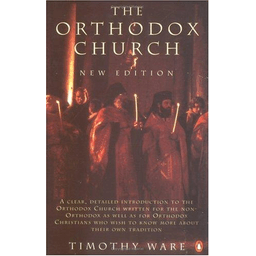 The Orthodox ChurchKallistos Ware's standard introduction - half history, half doctrine - the book to read for the full landscape once Gillquist's story has raised the questions.
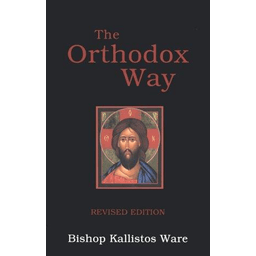 The Orthodox WayWare's shorter, devotional companion - Orthodox spirituality organized around six names for God, for readers who want the interior path next.Ancient Faith MinistriesGillquist's own publishing home, now a large hub of Orthodox podcasts, articles, and books - the natural next stop online for going deeper.OrthoChristianA large English-language portal of Orthodox news, articles, and saints' lives - useful for browsing the tradition beyond a single book.
Frequently asked questions
Who was Peter Gillquist, and what was his background?
Peter E. Gillquist was an American evangelical leader who served on the staff of Campus Crusade for Christ (now Cru) and worked in Christian publishing. Together with a group of fellow evangelical leaders he spent years studying early church history, and in 1987 they were received into the Antiochian Orthodox Church. He later became a priest and a prominent figure in bringing converts into Orthodoxy. Becoming Orthodox is his account of that journey.
Is Becoming Orthodox a history book or a personal story?
Primarily a personal story. It is part memoir, part travelogue, and part apologetic - a first-person narrative of how the author and his companions searched early church history and ended up in the Orthodox Church. It does engage historical questions about worship, church authority, the sacraments, and the canon of Scripture, but it presents them from the authors' perspective as part of their journey rather than as a balanced academic survey.
Do I need to be evangelical, or interested in converting, to get something out of it?
No. The book is written from inside the evangelical world and speaks most directly to readers from that background, but anyone curious about the Christian East can read it as an honest account of how a particular group reasoned their way toward Orthodoxy. Readers who do not share its conclusions will encounter it as one well-told perspective, and friends or family trying to understand a loved one's move toward Orthodoxy often find it especially helpful.
Does the book criticize evangelicalism?
Not in a hostile way. Gillquist writes warmly about the evangelical faith that formed him and credits it for teaching him to take Scripture seriously and for setting him on his search. He presents the Orthodox tradition he entered as the answer he came to believe, but he does so without framing the move as a victory over his earlier faith. The tone is respectful toward both the tradition he left and the one he joined.
How does it compare to The Orthodox Church by Kallistos Ware?
They do different jobs. Becoming Orthodox is a personal conversion narrative that argues for the path its authors took and is the easiest first step for an evangelical reader. The Orthodox Church is the standard introduction-as-overview - half history, half doctrine - presenting the tradition as it understands itself. Many readers start with Gillquist for the story and move to Ware for the full landscape; the two complement each other well.
Which edition should I buy?
The standard Ancient Faith Publishing paperback (around $15) is the right default for almost everyone. The Kindle edition (around $10) is handy if you like to highlight and search. Used copies are cheap and plentiful - the one thing to check is that you are getting the revised and expanded edition rather than an early printing, since the book was updated after its first release.
Is Becoming Orthodox still relevant in 2026?
Yes. Decades after its 1989 publication it remains the most accessible and most often recommended evangelical-to-Orthodox conversion story in English, and it stays in steady circulation. Some of its cultural references date it to the era it describes, but the questions at its heart - worship, church authority, the sacraments, the canon - are ones each generation revisits, and Gillquist tells the story in a way newer books rarely match.
Sources & further reading
More Orthodox Christian Books
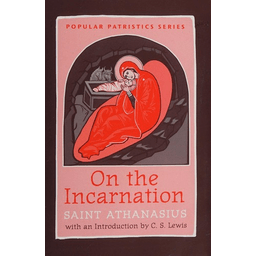 On the IncarnationThe short 4th-century treatise on why God became man - the one early-Church book modern readers actually finish, and the one C.S. Lewis told everyone to start with.The Orthodox ChurchThe Penguin paperback that has introduced more English readers to Eastern Orthodoxy than any other single book - half history, half doctrine, and still the first title nearly everyone names.The Orthodox WayThe slim companion to The Orthodox Church that trades history for the lived path - Kallistos Ware walking a reader through God as Mystery, Trinity, Creator, Man, Spirit, and Prayer, in fewer than two hundred pages.
 For the Life of the WorldAlexander Schmemann's slim, much-loved meditation on sacramental theology - the book that taught a generation to see the whole world as a gift to be received and offered back in thanksgiving.
 The PhilokaliaThe great Eastern Orthodox anthology on inner watchfulness and the prayer of the heart - eleven centuries of monastic teachers, compiled on Mount Athos, and still the master text of the Jesus Prayer.
 The Way of a PilgrimThe anonymous 19th-century Russian classic that taught the modern world the Jesus Prayer - a wandering pilgrim, a worn copy of the Philokalia, and one short sentence repeated until it never stops.