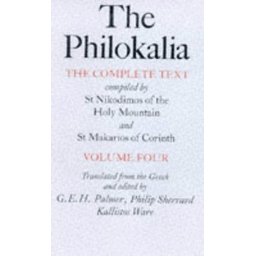
- Starting price
- ~$25 per volume
- Free tier
- No
- Platforms
- Print (multi-volume) · Kindle
- Developer
- Faber & Faber
- Launched
- 1782
- Updated
- May 31, 2026
The verdict
The Philokalia is the central anthology of Eastern Orthodox teaching on prayer and the spiritual life - a collection of writings on watchfulness and the Jesus Prayer gathered from Fathers who lived between roughly the 4th and 15th centuries. It is demanding, multi-volume, and written mostly by and for monastics, which is exactly why it has held its authority for so long. Approach it selectively, ideally with guidance, rather than as a book you read cover to cover.
Try The Philokalia ↗Opens faber.co.uk
The Philokalia has quietly become the master reference for one of the oldest continuous prayer traditions in Christianity. Compiled in the 18th century but drawing on texts written across more than a thousand years, it is the book Eastern Orthodox spiritual writers cite when they talk about the prayer of the heart, the book monks on Mount Athos still read in their cells, and the book that, by a long and surprising route, put the words "Lord Jesus Christ, Son of God, have mercy on me" into the hands of readers all over the world. That is unusual cultural reach for an anthology of ascetic theology, and it is worth understanding why.
The book did not begin as one book, and in a sense it still isn't. The Greek title - Philokalia - means roughly "love of the beautiful," the beauty in question being the beauty of a soul purified through prayer. It was assembled around 1782 on Mount Athos by St. Nikodimos of the Holy Mountain and St. Makarios of Corinth, who gathered scattered manuscripts from monastic libraries and arranged them, more or less, by author and era. It is not a single argument. It is not a devotional in the modern sense. It is not a beginner's guide. It is a curated library of texts on one subject - the inner work of prayer - by writers as early as the 4th-century desert and as late as the 14th-century Hesychast revival.
What you actually get, in the standard modern English edition, is a multi-volume set translated by G.E.H. Palmer, Philip Sherrard, and Bishop Kallistos Ware and published by Faber & Faber - four volumes in print so far, with a fifth long awaited. The writing ranges from short collections of numbered sayings to extended treatises on the stages of the spiritual life. The recurring themes are nepsis, usually translated "watchfulness" - the sober guarding of the mind and heart - and the practice of unceasing prayer, above all the short invocation of the name of Jesus that the tradition calls the Jesus Prayer. It is the foundational text of Hesychasm, the Orthodox contemplative tradition, and it earns that place on nearly every page.
✓ The good
- The single most important anthology of Eastern Orthodox teaching on prayer - for the contemplative tradition centered on the Jesus Prayer, this is the source nearly everything else points back to
- Spans eleven-plus centuries of writers in one set - desert ascetics, Sinai monks, and the 14th-century Hesychast theologians, arranged so you can trace how the tradition developed
- The Palmer / Sherrard / Ware translation is a genuine scholarly achievement - careful, readable English with helpful introductions, a Greek-term glossary, and notes that orient a newcomer
- Unusually frank about the inner life - the texts name distraction, vainglory, and self-deception with a precision most modern devotional writing never attempts
- Centered on a practice anyone can begin - the Jesus Prayer is a single short sentence, and the volumes return to it again and again from many angles
- Re-readable for a lifetime - these are texts monastics revisit for decades, not books you finish and shelve
- Beautifully produced as a set - the Faber volumes are designed to sit together on a shelf and be worked through slowly over years
✗ Watch out
- Demanding and dense - much of the material assumes a reader already living a structured life of prayer, and a first-timer can find whole sections hard going without context
- Written by and largely for monastics - the world it describes is the monastery and the hermitage, and lay readers have to do real translation work to apply it to ordinary life
- Traditionally meant to be read under a spiritual guide rather than alone - the texts themselves repeatedly warn against attempting the higher practices without an experienced elder
- Multi-volume and incomplete in English - four volumes are published, a fifth is still awaited, and reading the whole thing is a multi-year commitment most people will not make
- Not a beginner's devotional - it presupposes the Orthodox ascetic framework and a familiarity with terms like nepsis, the passions, and the nous that the introductions can only partly supply
Best for
- Readers already drawn to the Jesus Prayer who want the primary sources
- Orthodox Christians moving from introductory books into the tradition's own texts
- Anyone studying the history of Christian contemplative prayer
- Patient readers willing to work through difficult material slowly and selectively
Avoid if
- You want a gentle, modern daily devotional you can read in five minutes
- You are brand new to the subject and have not read an introduction first
- You want a single, finishable book rather than a multi-volume reference set
- You want practical application to lay or family life spelled out for you
What The Philokalia is
The Philokalia is an anthology of Eastern Orthodox texts on prayer and the spiritual life, compiled around 1782 on Mount Athos by St. Nikodimos of the Holy Mountain and St. Makarios of Corinth. The writings it collects were composed across a long span - roughly the 4th through the 15th centuries - by monastic teachers of the Christian East. Its organizing theme is the inner discipline the tradition calls nepsis, or watchfulness: the sober, attentive guarding of the mind and heart against distracting and harmful thoughts. Bound up with that theme is the practice of continual prayer, and above all the Jesus Prayer - the repeated invocation of the name of Jesus that became the heart of the Hesychast tradition.
It is not a single-author work or a confession of any one position; it is a curated library, and the standard modern English translation by G.E.H. Palmer, Philip Sherrard, and Bishop Kallistos Ware runs to four published volumes (with a fifth long awaited) from Faber & Faber. The Greek word philokalia means "love of the beautiful" - here, the beauty of the soul restored through prayer. Within Eastern Orthodoxy it functions less as a book to be read straight through than as a reference and a companion: a text returned to over years, traditionally under the guidance of an experienced spiritual elder rather than approached alone.
Why readers reach for the Philokalia
Most books about prayer are written by a single author offering a single approach, and most are written for a general modern reader. The Philokalia is neither. It is the gathered testimony of dozens of teachers across more than a millennium, all circling one subject - the inner work of attention and prayer - and arriving at a recognizable common vocabulary. When a reader wants not one writer's method but the deep source the whole Eastern contemplative tradition draws on, this is where the trail leads. Introductory books on the Jesus Prayer almost all footnote it; this is the thing they are footnoting.
The other distinctive is its candor about the interior life. The Philokalia's writers describe the movements of thought, the subtle forms of pride, the way the mind wanders and resists stillness, with a clinical precision that can feel startling next to gentler modern devotional writing. They treat prayer as a real discipline with real obstacles, not as a mood. For readers who suspect their own inner life is more complicated than most spiritual books admit, that frankness is the draw - though the same texts are quick to warn that the higher reaches of the practice are meant to be undertaken with guidance, not pursued alone on the strength of a book.
Nepsis: watchfulness as the organizing idea
The Greek word nepsis runs through the whole anthology, and the standard English rendering is "watchfulness" - the title is even sometimes given as a collection of texts on "watchfulness and holiness." It names a sober, alert guarding of the mind: the practice of noticing thoughts as they arise, before they take root, and not being carried off by them. The Philokalia's writers map the inner life in fine detail - the difference between a thought that merely appears and one the will has consented to, the way distraction and self-flattery slip in unnoticed, the discipline of returning attention again and again to God. Much of the anthology reads as a kind of phenomenology of the praying mind.
This is the connective tissue that holds an otherwise sprawling collection together. Writers separated by a thousand years are recognizably working on the same problem - how to keep the attention of the heart fixed on God amid the noise of one's own thoughts - and the cumulative effect is a remarkably coherent picture of the interior life. It is also the part of the Philokalia that travels best beyond the monastery: the basic observation that the mind needs guarding, and that prayer is partly the work of attention, is one many readers recognize immediately, whatever their tradition.
The Jesus Prayer and the Hesychast tradition
The practice the Philokalia is most associated with is the Jesus Prayer: the short invocation "Lord Jesus Christ, Son of God, have mercy on me," repeated continually until, in the tradition's language, it descends from the lips into the heart and becomes unceasing. The later texts in the anthology - especially those from the 14th-century Hesychast writers - describe this practice in detail, including the physical postures and breathing some teachers associated with it, and defend it as a genuine path to the knowledge of God. Hesychasm (from hesychia, "stillness") is the name for this whole contemplative current, and the Philokalia is its central documentary source.
It is important to report this neutrally: the Philokalia describes a specific Eastern Orthodox practice within its own theological world, and the texts themselves repeatedly stress that the more advanced techniques should be undertaken under the direction of an experienced elder, not improvised from a book. Readers from other traditions encounter the Jesus Prayer in many forms, and the anthology is the place to see how the Orthodox tradition itself understands and transmits it. What the Philokalia offers is not a method ripped from context but the practice as the tradition has actually taught it, with all its cautions attached.
A library spanning eleven centuries
The Philokalia is, structurally, an anthology arranged roughly by author and period, and part of its value is that range. It opens with very early material from the 4th- and 5th-century ascetic world and moves forward through the Sinai and Byzantine traditions to the Hesychast theologians of the 14th century. Some entries are brief collections of numbered sayings meant to be read a few at a time; others are sustained treatises on the stages of the spiritual life. St. Nikodimos and St. Makarios chose and ordered the texts in the 1780s, and the modern translators added introductions to each author that help a newcomer place who is speaking and when.
Reading across that span, you can watch a tradition develop its own language and refine its questions over a thousand years. That historical depth is what makes the Philokalia more than a how-to: it is a record of how generations of teachers received, tested, and handed on a way of prayer. It is also why the set rewards selective reading. Few people work through all four volumes in order; many keep the set as a reference, returning to particular authors as their own reading and prayer draw them, which is much closer to how the book has actually been used.
Pricing
Single volume (paperback)
~$22-30
Each Faber volume sold separately. Volume 1 is the usual starting point and the most common single purchase.
Kindle (per volume)
~$15-25
The Faber volumes are available as ebooks. Searchable, which genuinely helps with a text this cross-referenced.
Complete set (4 volumes)
~$90-110
Buying all four published volumes together. A multi-year reading project, not a weekend purchase.
Older / partial translations
Free-$15
Earlier partial English selections (e.g. the Kadloubovsky & Palmer "Writings from the Philokalia on Prayer of the Heart") and some public-domain texts circulate cheaply or free.
The Philokalia is not free, and unlike a single paperback it is a set. Each Faber & Faber volume in the Palmer / Sherrard / Ware translation runs roughly $22-30 new, with Volume 1 the usual starting point and the most common single purchase. Buying all four published volumes together comes to somewhere around $90-110 - call it a multi-year reading project rather than a weekend acquisition.
The Kindle editions run a little less per volume and are searchable, which genuinely matters for a text this cross-referenced; you will want to look things up. The translation you are paying for is the reason to buy new: the Palmer / Sherrard / Ware edition is a careful, readable rendering with introductions, notes, and a glossary of Greek terms that do real work in orienting a first-time reader. For a book this difficult, the apparatus is not a luxury.
There is also a cheaper on-ramp. Older, partial English selections - most notably the mid-20th-century Kadloubovsky & Palmer volumes drawn from the same source, and various public-domain texts - circulate free or for a few dollars. They are incomplete and the scholarship is older, but for a reader testing whether the material is for them at all, they are a reasonable first step. Most readers, though, end up wanting the modern translation. The single Volume 1 is the balanced default: it is enough to know whether you want to go further, and it is the volume the rest of the set builds on.
Where The Philokalia falls behind
Not a beginner's book. The Philokalia assumes a reader already inside a structured life of prayer and familiar with its vocabulary - nepsis, the passions, the nous, the distinction between a thought and consent to it. The translators' introductions help, but a newcomer who opens Volume 1 cold will hit stretches that are genuinely hard to follow. Most people are better served reading an introduction to the tradition first.
Written for the monastery. The world these texts describe is the cell, the hermitage, and the long obedience of monastic life. That is not a defect - it is what the books are - but it does mean lay readers have to do real interpretive work to apply the teaching to jobs, families, and ordinary days. The Philokalia does not do that translation for you.
Meant to be read with a guide. The texts themselves repeatedly caution that the higher practices, including the physical techniques some associate with the Jesus Prayer, should be undertaken under an experienced spiritual elder rather than attempted alone from a book. A solitary reader can absorb a great deal, but the tradition is candid that the book is not meant to stand entirely on its own.
Long and unfinished in English. Four volumes are in print and a fifth has been awaited for years. Reading the whole thing in order is a commitment few will make, and the practical reality is that most people use it as a reference, returning to particular authors selectively rather than working straight through. That is a feature of how it is used, but it is worth knowing going in.
The Philokalia vs. The Way of a Pilgrim vs. The Ladder of Divine Ascent
These three are the texts a reader drawn to Eastern Christian prayer most often encounters together, and they do different jobs. The Philokalia is the master anthology - the deep, demanding, multi-volume source on watchfulness and the Jesus Prayer, written mostly by and for monastics across eleven centuries. The Way of a Pilgrim is the popular gateway to it: a 19th-century Russian first-person narrative of an ordinary wanderer learning the Jesus Prayer, far more accessible, and the book that introduced most modern Western readers to the practice (and indeed to the Philokalia itself, which the pilgrim carries). The Ladder of Divine Ascent, by St. John Climacus, is a single sustained treatise - thirty "steps" of the monastic life - that predates the Philokalia and is read alongside it, especially in Orthodox monasteries during Lent.
Different strengths. The Way of a Pilgrim is the easiest entry point and the most narrative - start there if the Jesus Prayer is new to you. The Ladder is a focused, structured single work on the ascetic life, more readable than the Philokalia as a whole because it is one author with one plan. The Philokalia is the broadest and deepest, the reference the other two ultimately connect to, and the hardest to read straight through. If you want the practice introduced, read the Pilgrim. If you want one structured monastic classic, read the Ladder. If you want the tradition's own gathered sources, the Philokalia is where everything else leads.
All three belong to the Eastern Orthodox contemplative tradition and are read most fully within it, though all three are also read with interest by Catholic and Protestant readers studying the history of Christian prayer. The Philokalia is the most comprehensive and the most demanding of the three; the Pilgrim is the most inviting; the Ladder sits between them.
The bottom line
The Philokalia is the central text of one of Christianity's oldest living prayer traditions, and for a reader serious about the Jesus Prayer and the Eastern contemplative path there is finally no substitute for it - every introductory book is pointing here. It is also genuinely hard: multi-volume, written for monastics, dense with assumptions, and meant to be read slowly and with guidance rather than alone. Start with The Way of a Pilgrim or a good introduction, then buy Volume 1 of the Faber translation and read it the way it was meant to be read - patiently, selectively, over years. Approached that way, it is one of the great spiritual books in any language.
Alternatives to The Philokalia
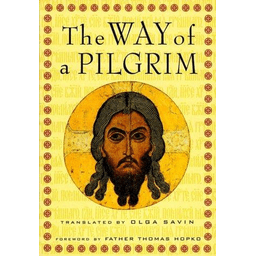 The Way of a PilgrimThe 19th-century Russian narrative that introduced most modern readers to the Jesus Prayer - the accessible gateway to the Philokalia.
 The Ladder of Divine AscentSt. John Climacus's thirty-step treatise on the ascetic life - a single sustained Orthodox classic read alongside the Philokalia.
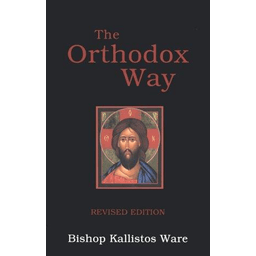 The Orthodox WayBishop Kallistos Ware's short, lucid introduction to Eastern Orthodox faith and prayer - ideal context before tackling the Philokalia.Ancient Faith MinistriesThe hub for Orthodox podcasts, books, and teaching - a good companion for readers exploring the tradition the Philokalia comes from.
Frequently asked questions
What is the Philokalia, in one sentence?
It is an anthology of Eastern Orthodox texts on prayer and the spiritual life - centered on inner watchfulness (nepsis) and the Jesus Prayer - gathered from writers of the 4th through 15th centuries and compiled on Mount Athos around 1782 by St. Nikodimos of the Holy Mountain and St. Makarios of Corinth.
Do I need to read all the volumes?
No, and most readers never do. The Philokalia is a reference library, not a single argument, and it is traditionally read selectively over years rather than straight through. Volume 1 of the Faber translation is the usual starting point, and many readers return to particular authors as their own reading draws them.
Is the Philokalia hard to read?
For most newcomers, yes. It assumes a reader already familiar with the Orthodox ascetic vocabulary and a structured life of prayer, and much of it was written by and for monastics. The modern translation includes introductions and a glossary that help, but most people are better served reading an introduction to the tradition - or The Way of a Pilgrim - first.
What is the Jesus Prayer?
It is the short invocation "Lord Jesus Christ, Son of God, have mercy on me," repeated continually. The Philokalia, especially its later Hesychast texts, describes the practice in detail and treats it as a path toward unceasing prayer. The texts themselves stress that the more advanced techniques are meant to be learned under an experienced spiritual guide.
Which translation should I buy?
The standard modern English edition is the four-volume translation by G.E.H. Palmer, Philip Sherrard, and Bishop Kallistos Ware, published by Faber & Faber. It is the careful, readable rendering with introductions and notes that most current quotations are keyed to. Older partial translations exist and are cheaper or free, but the Faber edition is the one most readers settle on.
Is the Philokalia only for Orthodox Christians?
It comes out of the Eastern Orthodox monastic tradition and is read most fully within it, but it is also studied by Catholic and Protestant readers interested in the history of Christian contemplative prayer. The texts assume the Orthodox ascetic world, so readers from other traditions do some interpretive work - but the anthology has had wide reach well beyond Orthodoxy.
Where should I start if the Philokalia feels intimidating?
Begin with The Way of a Pilgrim, the 19th-century narrative that gently introduces the Jesus Prayer, or with a short introduction like Bishop Kallistos Ware's The Orthodox Way. Then move to Volume 1 of the Faber Philokalia. Reading it slowly, selectively, and ideally with some guidance is much closer to how the tradition intends it to be used than trying to power through all four volumes.
Sources & further reading
More Orthodox Christian Books
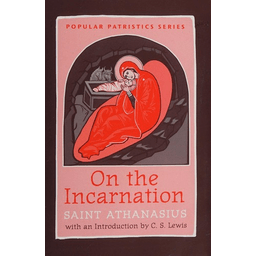 On the IncarnationThe short 4th-century treatise on why God became man - the one early-Church book modern readers actually finish, and the one C.S. Lewis told everyone to start with.
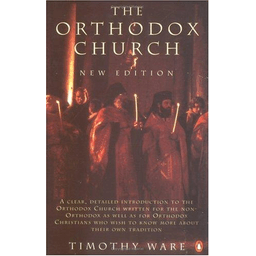 The Orthodox ChurchThe Penguin paperback that has introduced more English readers to Eastern Orthodoxy than any other single book - half history, half doctrine, and still the first title nearly everyone names.The Orthodox WayThe slim companion to The Orthodox Church that trades history for the lived path - Kallistos Ware walking a reader through God as Mystery, Trinity, Creator, Man, Spirit, and Prayer, in fewer than two hundred pages.
 For the Life of the WorldAlexander Schmemann's slim, much-loved meditation on sacramental theology - the book that taught a generation to see the whole world as a gift to be received and offered back in thanksgiving.The Way of a PilgrimThe anonymous 19th-century Russian classic that taught the modern world the Jesus Prayer - a wandering pilgrim, a worn copy of the Philokalia, and one short sentence repeated until it never stops.The Ladder of Divine AscentThe thirty-rung monastic classic from 7th-century Mount Sinai that has shaped Eastern Orthodox spiritual life for over a thousand years - read in monasteries every Lent, demanding by design, and unlike anything else on the shelf.