
- Starting price
- ~$15 paperback
- Free tier
- No
- Platforms
- Print · Kindle
- Developer
- St. Vladimir's Seminary Press
- Launched
- 1963
- Updated
- May 31, 2026
The verdict
For the Life of the World is the rare theology book that reads like a long, unhurried conversation rather than a textbook. Schmemann's vision - creation received as gift and offered back to God in thanksgiving, with the Church's sacraments as the pattern of that life - is rooted in the Eastern Orthodox tradition and has been read appreciatively far beyond it. Short, dense, and rewarding on the second pass more than the first.
Try For the Life of the World ↗Opens svspress.com
For the Life of the World has quietly become one of those books people press on each other across very different church doorways. An Orthodox catechumen gets handed it. So does a Catholic liturgist, an Anglican seminarian, a Protestant pastor rethinking why worship matters. That is unusual company for a short work written by a Russian Orthodox priest for a 1963 student conference, and it is worth understanding why a book so rooted in one tradition travels so widely.
The book did not begin as a treatise. Alexander Schmemann - a theologian who spent most of his career at St. Vladimir's Orthodox Theological Seminary in New York - first wrote the core chapters as study material for a gathering of the National Student Christian Federation. It does not read like a systematic theology. It does not argue from a numbered list of propositions. It does not assume you already know the technical vocabulary. It opens, instead, with a question a secular friend might actually ask - what is the point of all this religion? - and answers it by talking about food, hunger, and thanksgiving before it ever reaches an altar.
What you get is a short book - roughly 150 pages in the expanded edition - built around a single governing image: the world itself as a kind of sacrament. Schmemann's claim is that the human being is fundamentally a creature who receives the world as a gift from God and gives it back in thanksgiving, and that the Church's sacraments are not separate religious add-ons but the revealing of what all of life was always meant to be. The Eucharist, baptism, marriage, the blessing of water, even death - each gets a chapter that circles the same idea from a new angle. The prose is warm, sometimes lyrical, and it earns its devoted readership fresh every time someone finishes the first chapter and immediately starts it again.
✓ The good
- One of the most-loved short introductions to sacramental theology in print - read appreciatively across Orthodox, Catholic, Anglican, and Protestant settings far beyond the tradition it was written from
- A single, memorable governing idea - the world received as gift and offered back in thanksgiving - that reorganizes how a reader sees ordinary life, not just church
- Warm, essayistic prose rather than dense academic theology - Schmemann writes like someone talking to you, with concrete images of food, hunger, and feasting before any abstraction
- Genuinely short - about 150 pages, readable in a couple of sittings, and the kind of book people re-read every year or two
- Strong on the theology of creation and the everyday - it treats eating, working, and family life as already shot through with meaning, which lands with readers of many traditions
- Two appendices on worship and secularism (added in the expanded edition) that sharpen the book's argument about why liturgy matters in a modern world
- Widely used as a course text and a parish study-group book - there is a deep well of sermons, lectures, and discussion guides built around it
✗ Watch out
- Short but dense - it is a theological meditation, not a how-to, and a reader expecting step-by-step instruction will not find it here
- Assumes a sacramental and liturgical framework - readers from traditions that understand the sacraments differently may need to translate, and Schmemann does not pause to build the framework from scratch
- Rewards rereading more than skimming - the argument moves by image and accumulation rather than by clear headings, so a fast first read can feel slippery
- Light on footnotes and citations - this is a work of vision and synthesis, not a referenced survey of who-argued-what, which frustrates readers who want the scholarly apparatus
- Some 1960s phrasing and cultural reference points show their age, even though the core argument has aged well
Best for
- Readers curious about sacramental and liturgical theology who want one short book to start with
- Anyone drawn to a theology of creation, thanksgiving, and everyday life
- Parish or campus study groups wanting a discussable text with depth
- Long-time churchgoers wanting to understand why worship is shaped the way it is
Avoid if
- You want a practical, step-by-step guide to a devotional or liturgical practice
- You want a heavily footnoted academic survey of sacramental theology
- You prefer argument by numbered propositions over argument by image and essay
- You want a neutral comparison of how different traditions understand the sacraments
What For the Life of the World is
For the Life of the World is Alexander Schmemann's short work of sacramental theology, first published in 1963 and later reissued in an expanded edition with two added appendices on worship and secularism. It runs roughly 150 pages and is organized as a series of meditations rather than a systematic treatise. After an opening chapter that reframes the basic human relationship to the world as one of receiving and giving thanks, successive chapters take up the Eucharist, baptism, the blessing of water and chrismation, marriage, healing, the ministry of the Church to the world, and death - each read through the same lens of the world as gift.
The book is rooted in the Eastern Orthodox tradition; Schmemann was an Orthodox priest and theologian who taught for decades at St. Vladimir's Orthodox Theological Seminary. But it was not written as an in-house catechism. Its governing claim - that the sacraments reveal the true meaning of creation rather than standing apart from it - is presented in language meant to reach a wide audience, and the book has been read appreciatively well beyond Orthodox circles by Catholic, Anglican, and Protestant readers who find its theology of creation, worship, and ordinary life resonant. That broad reception is part of what has kept it continuously in print and assigned in courses for sixty years.
Why readers across traditions keep reaching for Schmemann
Most books on the sacraments are written for an insider - the seminarian learning the categories, the catechumen preparing for a specific rite, the cleric brushing up on theology. Schmemann was writing for a room full of students from many backgrounds who were as likely to ask whether religion mattered at all as to ask how a particular sacrament works. That audience forced a different starting point. He does not begin with the altar or the canon. He begins with hunger and food and the human impulse to say thank you, and only then shows how the Church's worship gathers all of that up.
The result is a book that bypasses the usual gatekeeping vocabulary. A reader does not have to already hold a particular theology of the sacraments to follow the argument's emotional and imaginative logic - the sense that the world is meant to be received as a gift and returned in gratitude is one almost anyone can feel. That is why the book turns up on Orthodox, Catholic, Anglican, and Protestant reading lists alike. It describes a way of seeing creation and worship that readers in many traditions recognize, even where their formal teaching about the sacraments differs, and it does so without ever sounding like a recruiting pitch.
The world as sacrament: the governing idea
The book's organizing claim arrives in the first chapter and never leaves. Schmemann argues that the human being is, at bottom, a eucharistic creature - one made to receive the world from God's hands as gift and to offer it back with thanksgiving. He reads the opening of Genesis this way: the human vocation in the garden is to name and bless and offer creation, turning ordinary life into communion with God. Food becomes his recurring image. We eat the world; we live by receiving it; and the question is whether we receive it as a gift with a Giver or as mere stuff to be consumed.
From that image everything else in the book follows. Secularism, in Schmemann's reading, is not first of all the denial of God's existence but the loss of this sense of the world as gift - the flattening of creation into something we simply use. The sacraments, by contrast, are where the world is once again taken, blessed, and offered, and so revealed as what it always was. Whether or not a reader shares Schmemann's specific tradition, this reframing is the part most people remember: it makes a meal, a glass of water, a wedding, and a deathbed all parts of one continuous story rather than separate compartments of life.
The Eucharist as the journey of the Church
The central chapters work outward from the Eucharist, which Schmemann treats not as one rite among several but as the act that gathers up the book's whole vision. He walks through the shape of the liturgy as a movement - an ascent in which the Church, gathered as the people of God, takes the bread and wine of ordinary creation, gives thanks, and is brought into communion. He is especially interested in thanksgiving (the literal meaning of the Greek eucharistia) as the key that unlocks everything: the liturgy, for him, is the world becoming what it was made to be, lifted up in gratitude.
He extends the same logic to the other sacraments and blessings the book takes up. Baptism and chrismation are read as entrance into this new life; the blessing of water shows matter itself being restored to its purpose; marriage is read as a small icon of self-giving love; and the chapter on death faces mortality without flinching, set against the hope of resurrection. The treatment throughout is rooted in Orthodox liturgical practice, and readers from other traditions generally take it as an illuminating window onto how worship can be understood as the meaning of creation made visible, even where their own practice differs.
The appendices: worship and secularism
The expanded edition most readers now own adds two appendices that have become almost as discussed as the main chapters: "Worship in a Secular Age" and a related essay on sacrament and symbol. Here Schmemann steps back from the meditative register of the body and argues more directly, taking on the claim that the modern world has simply outgrown worship. His response is that secularism is itself a kind of religion - a way of relating to the world that has quietly decided creation has no reference beyond itself - and that the Church's worship is the standing alternative.
These essays are the part of the book most likely to be excerpted on their own, because they sharpen into argument what the rest of the book offers as vision. They also explain why For the Life of the World keeps getting reassigned: the question it presses - whether worship is a leftover of a pre-modern past or the truest thing human beings do - is one every generation re-asks. The appendices give a study group something concrete to debate after the more lyrical chapters have done their work, and they are frequently the pages readers return to first on a re-read.
Pricing
Paperback (expanded edition)
~$15
The standard St. Vladimir's Seminary Press edition with the two appendices. The copy most readers own.
Kindle / ebook
~$10
Searchable and highlight-syncs across devices - handy for a book this quotable, usually a little under the paperback.
Used paperback
~$5 and up
Long in print and widely assigned, so used copies are easy to find - check the edition, as older printings lack the appendices.
Course / group bulk
varies
Frequently ordered in quantity for seminary courses and parish studies; the publisher and major retailers discount multi-copy orders.
For the Life of the World is not free. It has been in print for sixty years and is widely assigned, so a new paperback from St. Vladimir's Seminary Press runs around $15 - call it the everyday default - and is the edition almost every citation in print is keyed to. Make sure you are getting the expanded edition with the two appendices; that is the version most courses and study guides assume.
The Kindle edition usually comes in a little under the paperback, around $10, and highlight-syncs across devices, which is genuinely useful for a book this quotable. Schmemann's prose holds up well on a screen, though many readers still prefer paper for a book they expect to mark up and return to.
Because the book has been assigned for decades, used copies are easy to find for five dollars and up - the catch is that older printings predate the appendices, so check before buying if those essays matter to you. For seminary courses and parish studies it is frequently ordered in quantity, and the publisher and major retailers discount multi-copy orders.
Most readers do not need anything beyond the standard paperback. It is short, it is inexpensive, and it is the copy you will reach for again - this is one of the rare theology books people genuinely re-read rather than shelve.
Where For the Life of the World falls behind
Not a how-to. For the Life of the World is a theological meditation, not a manual. It will not walk you step by step through a practice, a rite, or a devotional routine. Readers who come looking for instructions on how to pray, fast, or participate in a particular service will need a different book; Schmemann is after the meaning behind worship, not the mechanics of it.
It assumes a sacramental framework. The book takes for granted a way of understanding the sacraments and then builds on it, rather than arguing that framework into place from the ground up. Readers from traditions that understand the sacraments differently can get a great deal from it, but they will be doing some translating as they go, and the book does not pause to meet them halfway on first principles.
Light scholarly apparatus. This is a work of synthesis and vision, not a referenced survey. There are few footnotes and little engagement with the back-and-forth of academic debate. That keeps the prose clean and readable, but a reader who wants to trace Schmemann's sources or see opposing views weighed will find the book frustratingly unencumbered.
It rewards patience. The argument advances by image and accumulation rather than by signposted headings, so a quick first read can feel like it slips through your fingers. Most devoted readers will tell you the book only fully landed the second or third time through. That is a feature for some and an obstacle for anyone who wants the thesis up front.
Period texture. A handful of references and turns of phrase mark the book as a product of the early 1960s. The core argument has aged remarkably well, but a present-day reader will occasionally notice the decade it was written in.
For the Life of the World vs. The Orthodox Way vs. The Orthodox Study Bible
These three come up together for anyone exploring the Eastern Orthodox tradition in print, and they do genuinely different jobs. For the Life of the World (Schmemann, 1963) is the sacramental meditation - a short, essayistic book about the world as gift and the meaning of worship, and the one most likely to be handed to a reader of any background. The Orthodox Way (Kallistos Ware) is the broad introduction - a clear, gentle overview of Orthodox belief and spiritual life as a whole, the natural pick for someone who wants the lay of the land rather than a single theme. The Orthodox Study Bible is the reference - a full Bible with Orthodox study notes for readers who want the text itself with that tradition's commentary alongside.
Different strengths. Schmemann is the most focused and the most quotable - the book you re-read for its vision of creation and thanksgiving. Ware is the most useful for a true beginner who wants a survey of what the tradition teaches across the board. The Orthodox Study Bible is the most useful as a daily companion to actual scripture reading rather than as a book you read straight through. If you want one short book that captures why Orthodox worship is shaped the way it is, start with Schmemann. If you want orientation to the whole tradition first, start with Ware. If you want to read the Bible with Orthodox notes, that is the study Bible's job.
All three are read by people well beyond the Orthodox tradition. Schmemann's theology of creation and worship in particular is cited appreciatively across Catholic, Anglican, and Protestant settings. Ware's introduction is a common first stop for curious outside readers, and the Orthodox Study Bible is used by anyone who wants to see how that tradition reads a given passage.
The bottom line
For the Life of the World has earned its sixty years in print. Schmemann wrote a short book with one large idea - that the world is a gift to be received and offered back in thanksgiving, and that worship is where that becomes visible - and he wrote it warmly enough that readers far outside his own Orthodox tradition keep finding it indispensable. It is not a manual and not a survey; it is a way of seeing. If you want one slim book that will change how you look at a shared meal, a glass of water, and an ordinary Sunday, this is still the one to reach for.
Alternatives to For the Life of the World
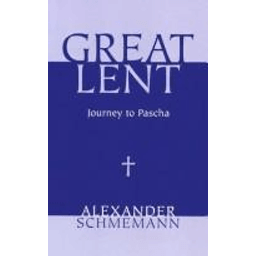 Great LentSchmemann's companion classic on the meaning and practice of the Lenten journey - pair it with this for more of the same voice.
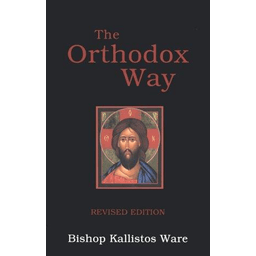 The Orthodox WayKallistos Ware's clear, gentle overview of Orthodox belief and spiritual life - the broad introduction to Schmemann's focused one.Ancient Faith MinistriesThe largest hub of Orthodox podcasts, books, and audio - a deep well of teaching that builds on themes Schmemann opens.
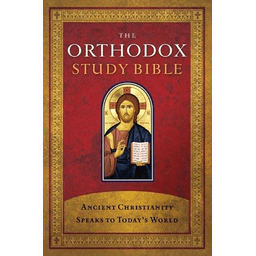 The Orthodox Study BibleA full Bible with Orthodox study notes - the reference to read alongside the tradition that shaped this book.
Frequently asked questions
Who was Alexander Schmemann?
Alexander Schmemann (1921-1983) was an influential Eastern Orthodox priest and theologian who taught for decades at St. Vladimir's Orthodox Theological Seminary in New York, where he served as dean. He is best known for his writing on liturgy and sacramental theology, of which For the Life of the World is the most widely read.
What is the main idea of For the Life of the World?
Its central vision is that the world itself is a kind of sacrament - created to be received as a gift from God and offered back to Him in thanksgiving. Schmemann argues that the Church's sacraments, beginning with the Eucharist, reveal what all of life was always meant to be, rather than standing apart from ordinary existence.
Do I need to be Orthodox to get something out of it?
No. The book is rooted in the Eastern Orthodox tradition, but it was written for a wide audience and has been read appreciatively by Catholic, Anglican, and Protestant readers for decades. Its theology of creation, thanksgiving, and worship resonates across many traditions, though readers will notice it assumes a sacramental and liturgical framework.
Is it hard to read?
It is short - about 150 pages - and the prose is warm and essayistic rather than technical. But it is dense in ideas and moves by image and accumulation rather than by clear headings, so many readers find it rewards a second or third pass more than a quick first read. It is a meditation, not a how-to guide.
Which edition should I buy?
The expanded edition from St. Vladimir's Seminary Press (around $15 in paperback) is the right default for almost everyone - it includes two appendices, "Worship in a Secular Age" and a related essay, that are widely discussed. Older used printings can be cheaper but may lack those appendices, so check before buying.
What are the appendices about?
The expanded edition adds two essays on worship and secularism. In them Schmemann argues more directly than in the main chapters that secularism is itself a way of relating to the world - one that treats creation as having no reference beyond itself - and that the Church's worship stands as the alternative. They are frequently excerpted and debated on their own.
Where should I go after For the Life of the World?
For more of Schmemann, his book Great Lent applies the same sensibility to the Lenten journey. For a broad introduction to the Orthodox tradition as a whole, Kallistos Ware's The Orthodox Way is the common next read. To read scripture with notes from that tradition, the Orthodox Study Bible is the standard reference, and Ancient Faith Ministries offers a deep library of related audio and books.
Sources & further reading
More Orthodox Christian Books
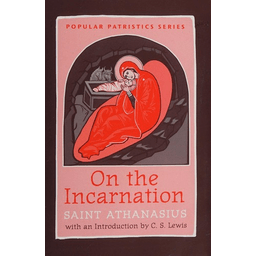 On the IncarnationThe short 4th-century treatise on why God became man - the one early-Church book modern readers actually finish, and the one C.S. Lewis told everyone to start with.
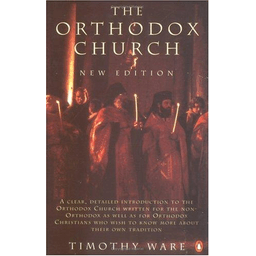 The Orthodox ChurchThe Penguin paperback that has introduced more English readers to Eastern Orthodoxy than any other single book - half history, half doctrine, and still the first title nearly everyone names.The Orthodox WayThe slim companion to The Orthodox Church that trades history for the lived path - Kallistos Ware walking a reader through God as Mystery, Trinity, Creator, Man, Spirit, and Prayer, in fewer than two hundred pages.
 The PhilokaliaThe great Eastern Orthodox anthology on inner watchfulness and the prayer of the heart - eleven centuries of monastic teachers, compiled on Mount Athos, and still the master text of the Jesus Prayer.
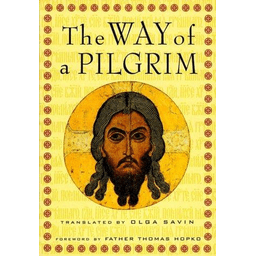 The Way of a PilgrimThe anonymous 19th-century Russian classic that taught the modern world the Jesus Prayer - a wandering pilgrim, a worn copy of the Philokalia, and one short sentence repeated until it never stops.
 The Ladder of Divine AscentThe thirty-rung monastic classic from 7th-century Mount Sinai that has shaped Eastern Orthodox spiritual life for over a thousand years - read in monasteries every Lent, demanding by design, and unlike anything else on the shelf.