- Starting price
- ~$18 paperback
- Free tier
- No
- Platforms
- Print · Kindle
- Developer
- Penguin Books
- Launched
- 1963
- Updated
- May 31, 2026
The verdict
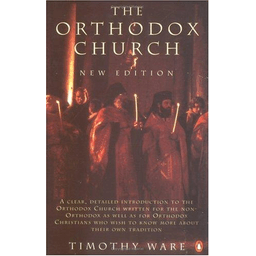
For more than sixty years, The Orthodox Church has been the standard English-language introduction to Eastern Orthodoxy - the book a curious Catholic, Protestant, or Latter-day Saint reader is most often handed first. It is two books in one: a readable history of the Orthodox Church and a clear exposition of its doctrine and worship. If you want one volume to understand how Orthodox Christians see themselves, this is still it.
Try The Orthodox Church ↗Opens penguin.com
The Orthodox Church has quietly become the default first book on Eastern Orthodoxy for the English-speaking world. Inquirers about to visit a Divine Liturgy read it. Seminary syllabi assign it. Catholic and Protestant readers who want to understand the Christian East - its icons, its monasteries, its long memory - reach for it before anything else. That position is not an accident. The book was written by an insider who could still speak to outsiders, and it has held that rare double address for more than sixty years.
It did not start from inside the tradition it describes. Timothy Ware was an Englishman, raised Anglican, who encountered Orthodoxy as a young man, converted, and went on to become a monk, a bishop, and - as Metropolitan Kallistos of Diokleia - one of the most widely read Orthodox writers in the English language and a fixture at Oxford. He wrote the first edition in 1963, while still a layman in his late twenties, precisely because no accessible English introduction existed. It does not assume you are Orthodox. It does not assume you are hostile. It does not assume you know a single Greek or Russian term going in.
What you actually get is a volume in two halves. Part One is a history - the early Church, the slow estrangement and eventual Great Schism between East and West, the Byzantine centuries, the Church under Islam and under Communism, and the spread of Orthodoxy into the modern West. Part Two is an exposition of belief and practice - God and the Holy Trinity, the meaning of icons, the sacraments (which Orthodox Christians call the mysteries), the idea of theosis or deification, and the nature of the Church itself. The voice is calm, generous, and lucid. Ware is explaining his own tradition from the inside, and he tells you so, but he does it in a way that a reader from any background can follow without a glossary.
✓ The good
- The single most-recommended introduction to Eastern Orthodoxy in English - for most inquirers and students, this is the first book named and the one they actually finish
- Genuinely two books in one - a narrative history and a topical exposition of doctrine and worship - so a reader gets both the story and the system in one volume
- Written by an insider who never forgets the outsider - Ware converted to Orthodoxy and became a bishop, but he writes for readers who know none of the vocabulary
- Prose that stays clear across hundreds of pages - the sentences are plain, the structure is signposted, and technical terms (theosis, hesychasm, the mysteries) are defined the first time they appear
- Treats hard history with composure - the chapters on the Great Schism and the relationship with Rome present the Orthodox reading of events without descending into polemic
- The doctrine chapters are unusually concrete - icons, the Liturgy, and the sacramental life are explained in terms of what Orthodox Christians actually do, not just what they hold in the abstract
- Compact and re-readable - around 350 pages, finishable over a few evenings, and the kind of reference people keep on the shelf and return to
✗ Watch out
- It is an introduction by design - specialists and graduate readers will quickly want the deeper, more technical treatments Ware himself points them toward
- The history is told from an Orthodox vantage point - Ware says so plainly, but a reader who wants a neutral, outside-the-tradition account of the Schism will want to read other historians alongside it
- Some editions show their age - the first edition is from 1963 and even the revised printings can read as a snapshot of the late 20th century on contemporary jurisdictions and statistics
- Light on the practical how-to of joining or attending - it explains what Orthodoxy believes far more than it walks a visitor through a first Liturgy step by step
- Edition confusion is common - the title has been revised more than once and shares shelf space with Ware's companion volume, so buyers sometimes pick up the wrong book
Best for
- Readers who want one book to understand Eastern Orthodoxy
- Inquirers preparing to visit an Orthodox parish or Liturgy
- Students assigned a clear introduction to Orthodox history and theology
- Catholic, Protestant, or LDS readers exploring the Christian East
Avoid if
- You want a graduate-level or specialist treatment of Orthodox theology
- You want a neutral, non-Orthodox account of the East-West Schism
- You want a step-by-step practical guide to attending or converting
- You want the latest statistics on jurisdictions and current Church politics
What The Orthodox Church is
The Orthodox Church is Kallistos Ware's single-volume introduction to Eastern Orthodox Christianity, first published by Penguin in 1963 and revised in later editions. It is built in two parts. Part One narrates the history of the Orthodox Church - from the early Church and the councils, through the gradual estrangement of East and West that culminated in the Great Schism, the long Byzantine era, the centuries under Ottoman and then Soviet rule, and the dispersion of Orthodoxy into Western Europe and the Americas. Part Two sets out Orthodox belief and worship: the doctrine of God and the Holy Trinity, the theology of icons, the sacraments (the mysteries), the concept of theosis or deification, and the Orthodox understanding of the Church.
The book is written from inside the tradition it describes, and Ware never hides that. He was an English convert to Orthodoxy who became a monk and later a bishop, and his aim was to give the English-speaking world a clear, sympathetic, accessible doorway into a tradition most Western readers had only ever glimpsed. It presents the Orthodox perspective - on history, on the Schism, on doctrine - as the tradition itself understands it. That insider clarity is the book's defining feature and the reason it has remained the standard introduction for more than sixty years rather than being displaced by a newer title.
Why inquirers reach for Ware first
Most introductions to a Christian tradition are written either by outsiders looking in - academic, distanced, occasionally cold - or by insiders writing for people already inside, who assume the vocabulary and the loyalties. Ware threaded a needle almost nobody else has managed in English. He writes as a committed member of the Orthodox Church, with the warmth and confidence of someone describing his own home, but he never forgets that his reader may have walked in off the street with no Greek, no church background, and no idea what an iconostasis is. He defines as he goes, and he never makes the reader feel behind.
The result is a book that serves a remarkably wide audience without flattening anyone. A Catholic reader gets a lucid account of where East and West diverged, presented as the Orthodox tradition understands it, without being harangued. A Protestant reader gets an honest map of why icons, the Liturgy, and the sacramental life look the way they do. A Latter-day Saint reader, or any reader simply curious about the Christian East, gets a coherent picture of a 2,000-year-old tradition explained in plain English. That combination - insider authority, outsider accessibility - is why a priest, a professor, and a curious friend all tend to hand a newcomer the same book.
Part One: the history, from the early Church to the modern diaspora
The first half of the book is a narrative history of the Orthodox Church, and it is the part that orients most readers. Ware begins with the early Church and the ecumenical councils that defined the shared Christian creed, then traces the slow cultural, political, and theological drift between the Greek East and the Latin West - the disputes over papal authority and the wording of the creed among them - that hardened over centuries and is conventionally dated to the Great Schism of 1054. From there he moves through the Byzantine centuries, the fall of Constantinople, the long experience of Orthodox Christians living under Ottoman rule, the Russian Church and its trials under Communism, and finally the spread of Orthodoxy into Western Europe and the Americas in the twentieth century.
Two things make this history work as an introduction. First, it is told as a story, not as a catalogue of dates - Ware keeps the through-line of how a unified early Church became the distinct Eastern and Western communions we know today. Second, it is openly the Orthodox reading of that story, and Ware says as much; he presents the Schism and the relationship with Rome from the Orthodox side without sliding into polemic. A reader who wants a neutral or Western account of the same events will want to set another historian beside it, and Ware would not object - but as a first map of how Orthodoxy understands its own past, the narrative is hard to beat for clarity.
Part Two: doctrine and worship, explained in plain terms
The second half turns from history to belief and practice, and this is where the book earns its place on syllabi. Ware works through the central themes of Orthodox theology one at a time: God and the Holy Trinity; the person and work of Christ; the theology of icons and why they occupy the place they do in Orthodox devotion; the sacraments, which Orthodox Christians call the mysteries, including baptism, the Eucharist, and the rest; and the idea of theosis or deification - the teaching that the goal of human life is to be united with God and transformed into His likeness. He closes on the nature of the Church itself, which for the Orthodox is inseparable from worship and the Liturgy.
What keeps these chapters readable is that Ware never lets the doctrine float free of practice. Icons are explained alongside what an Orthodox Christian actually does in front of one. The mysteries are described in terms of the rites a worshipper participates in. Theosis is presented not as an abstraction but as the purpose animating the whole sacramental life. The book reports these teachings as the Orthodox tradition holds them - it is an exposition, not a comparison - so a reader from any background comes away understanding what Orthodox Christians believe and why it hangs together, which is exactly what an introduction is supposed to deliver.
The voice: an insider writing for the newcomer
The least quantifiable strength of the book is its tone, and it may be the most important. Ware writes with the settled confidence of someone describing a tradition he has given his life to - he converted to Orthodoxy as a young man and was eventually consecrated a bishop - but the prose is never insular. He assumes nothing. The first time a term like hesychasm or theotokos or autocephalous appears, it is explained. The structure is signposted so a reader always knows where they are in the argument. The effect is less like a lecture and more like being shown around by a patient, well-read host who genuinely wants you to understand.
That tone is also what keeps the book usable for such a mixed audience. Ware does not write as though every reader is a prospective convert, nor as though every reader is a skeptic to be won. He simply explains. For a Catholic or Protestant reader the book is a window into a sister-or-cousin tradition; for a reader of any other background it is a clear, sympathetic account of one of the oldest continuous expressions of the Christian faith. Many readers report that the calm of the voice is what carried them through chapters on subjects - the councils, the Schism, the finer points of sacramental theology - that could easily have been dry in another writer's hands.
Pricing
Paperback
~$18
The standard Penguin edition. The copy most readers own and the one syllabi cite.
Kindle / ebook
~$13
Searchable and highlight-syncing across devices - handy for a book this full of terms you will want to look back up.
Used paperback
~$5-10
Earlier printings turn up cheaply secondhand; just confirm you are getting a reasonably recent revision.
The Orthodox Way (companion)
~$16
Ware's shorter, more devotional companion volume - not the same book, but the one most readers pair with this one.
The Orthodox Church is not free. A new Penguin paperback runs around $18 - call it the everyday default - and is the edition most quotations and reading lists are keyed to. It is the copy that ends up on the shelf of nearly everyone who reads seriously about the Christian East.
The Kindle edition runs a little less, around $13, and is genuinely useful for a book this full of terms a newcomer will want to look back up; highlighting and search both help when the vocabulary is unfamiliar. Used paperbacks are easy to find for $5 to $10, which is how a lot of students acquire their first copy - the one caution is to confirm you are getting a reasonably recent revision rather than a very early printing, since the contemporary sections have been updated over the book's life.
If you are buying more than one book, the natural pairing is Ware's own shorter companion, The Orthodox Way (around $16), which is more devotional and meditative where this book is more historical and expository. Most readers do not need both at once. For a first and only purchase, the paperback of The Orthodox Church is the balanced default and the copy you will reach for again.
Where The Orthodox Church falls behind
Depth for specialists. The book is an introduction, and a deliberately accessible one, so a reader who already knows the basics - or who needs graduate-level treatment of patristics, conciliar history, or sacramental theology - will outgrow it quickly. Ware himself points such readers toward fuller and more technical works. As a first book it is excellent; as a last word it was never meant to be.
A single vantage point on the history. Part One is the Orthodox reading of Church history, and Ware is candid that it is. On the Great Schism and the relationship with Rome in particular, a reader who wants a neutral or Western account of the same events will need to read other historians beside it. That is not a defect of the book - it is doing what an introduction to a tradition does - but it is worth knowing going in.
Practical hand-holding for visitors. The book explains what Orthodoxy believes far more thoroughly than it walks a newcomer through the experience of a first Divine Liturgy or the process of inquiry and reception. A reader who mainly wants a how-to for visiting or joining a parish will need to supplement it with something more practical, or simply with a local priest.
Currency. Even revised editions of a book first published in 1963 carry some sense of their era, especially in the chapters on modern jurisdictions, statistics, and Church politics, which keep moving after any given printing goes to press. The core history and doctrine hold up; the most contemporary material is the part most likely to feel a step behind the present.
The Orthodox Church vs. The Orthodox Way vs. the Orthodox Study Bible
These three are the shortlist a newcomer to Eastern Orthodoxy is most often handed, and they do genuinely different jobs. The Orthodox Church (Ware, 1963) is the introduction-as-overview - half history, half doctrine, the book that gives you the whole landscape in one volume. The Orthodox Way (Ware, 1979) is the same author's shorter, more devotional companion - it walks through the Christian life as Orthodoxy understands it (God as mystery, as creator, as Trinity, as Spirit, as prayer) rather than narrating history. The Orthodox Study Bible is a study Bible rather than a topical book - Scripture with Orthodox study notes, intended for ongoing reading rather than a single sit-through.
Different strengths. The Orthodox Church is the best single starting point for understanding the tradition as a whole - its story and its system in one place. The Orthodox Way is better once you want the interior, prayerful dimension and less of the history. The Orthodox Study Bible is the one you live with over time, the resource for reading Scripture within the tradition rather than reading about the tradition. If you are starting from zero and want one book, it is still The Orthodox Church. Add The Orthodox Way when you want depth of devotion; add the study Bible when you want to read Scripture with Orthodox notes at hand.
All three are produced from within the Orthodox tradition and present it as Orthodox Christians understand it. Ware's two books are the work of one of the tradition's most respected English-language voices; the study Bible is a collaborative project with Orthodox editorial oversight. A reader from a Catholic, Protestant, or other background can use any of them to understand Orthodoxy on its own terms - they are expositions of the tradition, not comparisons among traditions.
The bottom line
The Orthodox Church is the standard introduction to Eastern Orthodoxy for a reason. Ware wrote the book a curious reader of almost any background can read straight through and come away genuinely understanding how Orthodox Christians see their history, their worship, and their faith. It is two books in one - a clear narrative history and a lucid exposition of doctrine and practice - written from inside the tradition by someone who never forgets the newcomer. If a friend asks you for one book to understand the Christian East, this is still the book to hand them.
Alternatives to The Orthodox Church
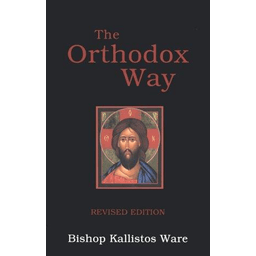 The Orthodox WayWare's shorter, more devotional companion - the interior, prayerful side of Orthodoxy where The Orthodox Church gives you the history.
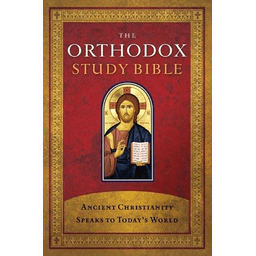 The Orthodox Study BibleScripture with Orthodox study notes - the resource for reading the Bible within the tradition rather than reading about it.Ancient Faith MinistriesA large hub of Orthodox podcasts, articles, and books - the natural next stop online after you have read an introduction.
 Orthodox Church in AmericaThe OCA website, with parish directories, liturgical texts, and explanatory articles - useful for moving from reading to visiting.
Frequently asked questions
Who is Kallistos Ware, and was he born Orthodox?
Kallistos Ware was born Timothy Ware, an Englishman raised Anglican who converted to Eastern Orthodoxy as a young man. He became a monk, later a bishop (Metropolitan Kallistos of Diokleia), and one of the most widely read Orthodox writers in English, long associated with Oxford. He wrote the first edition of The Orthodox Church in 1963, while still a layman, because no accessible English introduction existed.
Is The Orthodox Church a history book or a theology book?
Both - that is the point. Part One is a narrative history of the Orthodox Church from the early Church through the modern diaspora, including the Great Schism between East and West. Part Two is a topical exposition of Orthodox doctrine and worship: God and the Trinity, icons, the sacraments (the mysteries), theosis, and the Church. You get the story and the system in one volume.
Do I need to be Orthodox to read it?
No. The book is written for newcomers and assumes no background. Ware was himself a convert, and he explains every technical term the first time it appears. It presents Orthodoxy as the tradition understands itself, which makes it useful to Catholic, Protestant, Latter-day Saint, and simply curious readers who want to understand the Christian East on its own terms.
How does it handle the Great Schism and the relationship with Rome?
It presents the Orthodox perspective on the slow estrangement of East and West and the Schism conventionally dated to 1054, and Ware is open that he is writing from within the Orthodox tradition. He does so calmly rather than polemically. A reader who wants a neutral or Western account of the same events will want to read other historians alongside it.
What is the difference between this book and The Orthodox Way?
They are two different books by the same author. The Orthodox Church (1963) is the broad introduction - history plus doctrine. The Orthodox Way (1979) is shorter and more devotional, walking through the Christian life as Orthodoxy understands it rather than narrating history. Many readers eventually own both, but if you are buying one, The Orthodox Church is the starting point. Buyers sometimes confuse the two titles, so check the cover.
Which edition should I buy?
The standard Penguin paperback (around $18) is the right default for almost everyone, and it is the edition reading lists cite. The Kindle edition (around $13) is handy for searching unfamiliar terms. Used copies are cheap and plentiful - just confirm you are getting a reasonably recent revision, since the contemporary sections have been updated over the book's life.
Is it still the best introduction to Orthodoxy in 2026?
It remains the most-recommended single introduction to Eastern Orthodoxy in English, and for most inquirers it is still the first book named. The core history and doctrine hold up well; the most dated material is in the contemporary sections on jurisdictions and statistics. Specialists will want deeper works, which Ware himself points readers toward, but as a first book it is hard to beat.
Sources & further reading
More Orthodox Christian Books
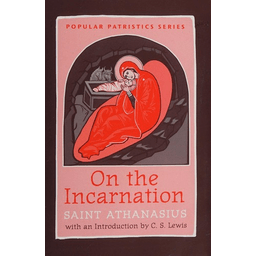 On the IncarnationThe short 4th-century treatise on why God became man - the one early-Church book modern readers actually finish, and the one C.S. Lewis told everyone to start with.The Orthodox WayThe slim companion to The Orthodox Church that trades history for the lived path - Kallistos Ware walking a reader through God as Mystery, Trinity, Creator, Man, Spirit, and Prayer, in fewer than two hundred pages.
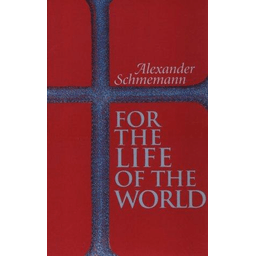 For the Life of the WorldAlexander Schmemann's slim, much-loved meditation on sacramental theology - the book that taught a generation to see the whole world as a gift to be received and offered back in thanksgiving.
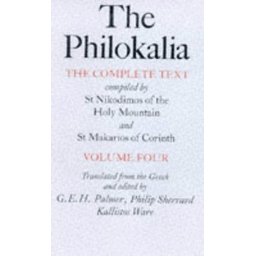 The PhilokaliaThe great Eastern Orthodox anthology on inner watchfulness and the prayer of the heart - eleven centuries of monastic teachers, compiled on Mount Athos, and still the master text of the Jesus Prayer.
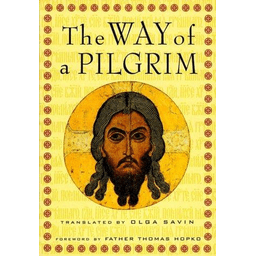 The Way of a PilgrimThe anonymous 19th-century Russian classic that taught the modern world the Jesus Prayer - a wandering pilgrim, a worn copy of the Philokalia, and one short sentence repeated until it never stops.
 The Ladder of Divine AscentThe thirty-rung monastic classic from 7th-century Mount Sinai that has shaped Eastern Orthodox spiritual life for over a thousand years - read in monasteries every Lent, demanding by design, and unlike anything else on the shelf.