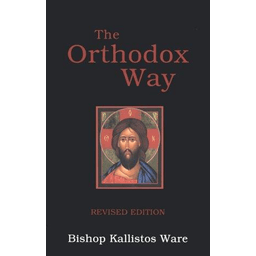
- Starting price
- ~$16 paperback
- Free tier
- No
- Platforms
- Print · Kindle
- Developer
- St. Vladimir's Seminary Press
- Launched
- 1979
- Updated
- May 31, 2026
The verdict
The Orthodox Way is the book most people are handed when they want to understand Orthodox spirituality from the inside rather than from a textbook. Kallistos Ware structures the whole of it around six names for God and walks a reader through each one with unusual warmth and economy. It is short, devotional, and quietly demanding - and much of its reflection on God and prayer is read appreciatively far beyond the Orthodox Church.
Try The Orthodox Way ↗Opens svspress.com
The Orthodox Way has quietly become the book Orthodox Christians reach for when a curious friend asks what their faith is actually like to live. Kallistos Ware - a British convert who became one of the most widely read Orthodox writers in the English language - had already written the standard introduction to Orthodoxy's history and structure. This is the other book, the companion volume, and it sets out to do something harder: to describe not what the Orthodox Church is but what it feels like to walk its path.
It is not a history. It does not catalog councils and patriarchates. It does not try to settle arguments. Where his earlier book, The Orthodox Church, hands you the map - the story, the institutions, the shape of the thing - The Orthodox Way hands you the road and starts walking. The difference is the difference between reading about a country and being taken through it by someone who has lived there a long time and loves it.
The structure is the book's quiet genius. Ware organizes the whole of it around names for God, six of them in turn: God as Mystery, God as Trinity, God as Creator, God as Man, God as Spirit, and God as Prayer. Each chapter takes one of those names and unfolds it slowly, weaving together scripture, the Church Fathers, the desert monastics, and the Orthodox liturgy into something closer to a guided meditation than a lecture. The book is short - well under two hundred pages - and it is the rare introduction that rewards a slow second reading more than a fast first one.
First published in 1979 by St. Vladimir's Seminary Press, it has stayed in print and in circulation ever since, and it is the title most often pressed into the hands of someone exploring Orthodoxy. It is also, notably, a book that readers from outside the tradition return to - not because it argues anyone into anything, but because its reflections on the hiddenness of God, on the Trinity, and on prayer have a depth that travels.
✓ The good
- The most widely recommended single introduction to Orthodox spirituality in English - when someone asks what living the Orthodox faith is like, this is the book that gets handed over
- The six-name structure (Mystery, Trinity, Creator, Man, Spirit, Prayer) is genuinely clarifying - it organizes an enormous subject around a frame a first-time reader can actually hold
- Ware writes with rare warmth and economy - the prose is devotional without being sentimental, and learned without being heavy
- Steeped in primary sources - scripture, the Church Fathers, the desert monastics, and the Orthodox liturgy are woven in throughout rather than summarized from a distance
- Short and re-readable - well under two hundred pages, and the kind of book that opens up more on a slow second pass than a quick first one
- Much of its reflection on God and prayer is read appreciatively across traditions - the chapters on God as Mystery and on prayer in particular are quoted well beyond Orthodox circles
- An ideal companion to Ware's own The Orthodox Church - together they cover both the lived path and the history and structure
✗ Watch out
- Compact by design - Ware covers vast territory quickly, and a reader wanting a full treatment of any single theme will need to read further
- Assumes some openness to a contemplative, apophatic approach - the book leans into mystery and silence, which is its strength but asks for a certain patience
- Presents the Orthodox vantage throughout - it is written from inside the tradition for readers drawn to it, not as a comparative survey of how different churches see things
- Light on history and institutional structure - readers who want councils, jurisdictions, and the shape of the Church should pair it with The Orthodox Church
- Not a how-to manual - it describes the path and its landmarks more than it gives step-by-step practical instruction for, say, building a daily rule of prayer
Best for
- Anyone wanting to understand Orthodox spirituality from the inside
- Inquirers and catechumens exploring the Orthodox Church
- Readers drawn to a contemplative, prayer-centered approach to God
- Christians of any tradition curious about Eastern Christian thought on God and prayer
Avoid if
- You want the history, councils, and structure of Orthodoxy - read The Orthodox Church instead or alongside
- You want a comparative survey weighing different Christian traditions side by side
- You want a step-by-step practical handbook for daily prayer and discipline
- You bounce off contemplative or mystical writing and prefer a brisk, argument-driven style
What The Orthodox Way is
The Orthodox Way is Kallistos Ware's short devotional-theological introduction to the Eastern Orthodox spiritual path, first published in 1979 by St. Vladimir's Seminary Press and continuously in print since. It runs well under two hundred pages and is organized around six names for God - God as Mystery, God as Trinity, God as Creator, God as Man, God as Spirit, and God as Prayer. Each chapter takes one of those names and unfolds it through scripture, the Church Fathers, the desert monastics, and the Orthodox liturgy.
It is the companion to Ware's earlier and more famous book, The Orthodox Church, which introduces Orthodoxy's history, councils, and institutional shape. Where that book is an introduction to the tradition from the outside in, The Orthodox Way is an introduction from the inside out: less concerned with explaining what the Church is and more concerned with describing what it is to walk the path the Church marks out. It is written from within the Orthodox tradition, for readers drawn to it, and it makes no attempt to be a tradition-neutral survey.
Why readers reach for Ware
Most introductions to a tradition are organized like a syllabus - history, then beliefs, then practices, then a chapter on the modern situation. Ware refuses that shape. He organizes the entire book around God himself, taken under six names, and lets everything else - doctrine, scripture, the Fathers, the rhythm of worship - arrange itself around that center. The effect is that you are never reading about Orthodoxy at a distance. You are being walked toward the thing Orthodoxy is pointed at.
The other thing Ware does, which is rarer than it sounds, is write as a teacher who trusts the reader's patience. He does not rush. He lets the chapter on God as Mystery sit with the idea that God cannot be captured in a definition before he ever gets to the Trinity. That contemplative, unhurried quality is exactly why the book is loved inside the tradition and read appreciatively outside it - a Catholic, Protestant, or Latter-day Saint reader can pick up the chapters on Mystery or on Prayer and find a great deal worth sitting with, even where the broader frame is distinctly Orthodox.
The six-name structure: God as Mystery through God as Prayer
The spine of the book is its six chapters, each named for a way of approaching God: Mystery, Trinity, Creator, Man, Spirit, and Prayer. Ware begins with Mystery on purpose - before God is described as anything, Orthodox thought insists that God exceeds every description, and Ware spends the opening chapter making that point patiently rather than treating it as a disclaimer. From there the names build: the God who is beyond all things is also Trinity, also the Creator of a real and good world, also the one who enters that world as Man, also the Spirit at work within it, and finally the one met in prayer.
What makes the structure work is that each name is not a separate topic but a deeper step into the same reality. By the time Ware reaches the final chapter on prayer, everything earlier has been quietly preparing the ground - the hiddenness of God, the life of the Trinity, the dignity of the created person - so that prayer reads less like a technique and more like the natural conclusion of the whole journey. It is a structure that rewards reading the book in order, and rewards reading it again.
God as Man: the chapter on Christ and human destiny
The fourth chapter, God as Man, sits at the heart of the book. Here Ware takes up the Incarnation - God becoming human in Christ - and the Orthodox understanding of what that makes possible for human beings. He draws on the Church Fathers and the language of the early councils, presenting Christ as both the revelation of who God is and the pattern of what a human life is meant to become. The chapter moves through the life, death, and resurrection of Christ not as a sequence of facts to affirm but as the center around which the Christian life is organized.
This is also where the book's Eastern accent is clearest. Orthodox thought has a particular vocabulary for human transformation and union with God, and Ware unfolds it here in his characteristically gentle way, rooting it in scripture and the Fathers. He is describing how the tradition understands the goal of the Christian life, not arguing comparatively against any other account of it. Readers from other traditions will recognize much that is shared and will also encounter framing distinctive to Orthodoxy - Ware presents it plainly and lets it speak for itself.
God as Prayer: the contemplative close and the Jesus Prayer
The book ends where Orthodox spirituality places its weight: prayer. The final chapter treats prayer not as one religious activity among many but as the whole point toward which the earlier chapters have been moving. Ware writes about the prayer of the heart, the long tradition of the desert and the hesychast monastics, and the short repeated invocation known as the Jesus Prayer - "Lord Jesus Christ, Son of God, have mercy on me" - which holds a central place in Orthodox practice.
Ware describes the Jesus Prayer and the contemplative tradition behind it from inside, as a practitioner and teacher explaining a path he knows well. He is careful and unhurried, more interested in the disposition of the one praying than in any mechanics. Because the chapter speaks so directly about attention, silence, and the presence of God, it is among the most quoted parts of the book beyond Orthodox circles - readers across traditions return to it for its treatment of prayer even when the surrounding theology is new to them.
Pricing
Paperback
~$16
The standard St. Vladimir's Seminary Press edition. The copy most readers own and the one quotations are usually keyed to.
Kindle / ebook
~$10
Searchable and highlight-syncs across devices - handy for a book this quotable. Roughly the price of the paperback or a little under.
Used / library
~$3-8
A 1979 title in long circulation turns up used and in parish libraries. The way many inquirers acquire their first copy.
Audiobook
~$15
Where available, a narrated edition; pricing varies and it is sometimes included with an audiobook membership. Ware reads well aloud.
The Orthodox Way is not free, but it is inexpensive. A new St. Vladimir's Seminary Press paperback runs around $16 - call it the everyday default - and is the edition most quotations in print are keyed to. For a book of this density, it is one of the better values on the Eastern Christian shelf.
The Kindle edition runs a little under the paperback, around $10, and highlighting syncs across devices, which is genuinely useful for a book this quotable and this rewarding to revisit. Used copies of a 1979 title in long circulation turn up cheaply, often in the $3-8 range and frequently in parish libraries, which is how a fair number of inquirers acquire their first copy before deciding to buy one to mark up.
Where a narrated audiobook is available it runs around $15 or is sometimes included with an audiobook membership; Ware's prose, with its measured pace, reads well aloud. Most readers do not need anything beyond the paperback. It is the balanced default and, given how this book opens up on a second pass, the copy you will reach for again.
If you are buying it alongside Ware's The Orthodox Church - the natural pairing, since one covers the lived path and the other the history and structure - the two together still come in under the price of a single academic theology text, and they make a complete starter shelf for understanding Orthodoxy.
Where The Orthodox Way falls behind
History and structure. The Orthodox Way deliberately leaves out the councils, jurisdictions, and institutional story of the Orthodox Church. That is the right call for this book - its subject is the spiritual path - but it means a reader who wants the history will need Ware's The Orthodox Church or a comparable survey alongside it. The two books are designed to be read together.
Comparative framing. The book presents the Orthodox vantage from the inside and stays there. It is not a survey that sets Orthodox, Catholic, and Protestant understandings side by side and weighs them. A reader looking for that kind of comparison will find this book assumes its own tradition's frame rather than stepping outside it.
Practical step-by-step instruction. Ware describes the landmarks of the spiritual life - prayer, the sacraments, the disciplines - more than he gives a how-to. The chapter on prayer will move you toward the practice, but it is not a manual for constructing a daily rule. Readers who want concrete, structured guidance will need a more practical companion.
Brevity cuts both ways. The economy that makes the book so approachable also means each theme is treated quickly. The Trinity, the Incarnation, the work of the Spirit - each gets a chapter where a longer book would give a volume. For an introduction that is a feature; for a reader who wants depth on one subject it is a limit, and Ware would be the first to point you onward.
The Orthodox Way vs. The Orthodox Church vs. For the Life of the World
These three are the short list people are handed when they want to understand Orthodoxy, and they do genuinely different jobs. The Orthodox Way (Ware, 1979) is the spiritual path from the inside - God under six names, prayer at the center, the contemplative life described by someone who has walked it. The Orthodox Church (Ware, also widely read) is the companion introduction to history and structure - the story, the councils, the institutions, the shape of the thing. For the Life of the World (Alexander Schmemann) is the great short meditation on Orthodox worship and the sacraments, especially the Eucharist, and the way Orthodox thought sees all of life as something to be offered back to God.
Different strengths. Ware's Orthodox Way is the most personal and contemplative - the book you sit with. His Orthodox Church is the most informational - the book you consult. Schmemann's Life of the World is the most concentrated on worship and sacrament - the book that reframes how you see ordinary things. If you are starting from zero and want the feel of the tradition, begin with The Orthodox Way. If you want the history, add The Orthodox Church. If your question is specifically about Orthodox worship and the Eucharist, add Schmemann.
All three are written from within the Orthodox tradition and are read appreciatively well beyond it. Ware is the most accessible entry point of the three. Schmemann is denser and more focused. Together they make a coherent starter shelf, and none of them asks the reader to settle a comparison between traditions - each simply presents Orthodoxy as it understands itself.
The bottom line
The Orthodox Way is the book to hand someone who wants to understand Orthodox spirituality from the inside rather than from a reference shelf. Ware organizes an enormous subject around six names for God and walks a reader through each with warmth, economy, and a teacher's patience. It is short, it is devotional, it is quietly demanding, and it rewards a slow second reading more than a fast first one. Pair it with The Orthodox Church for the history. If a friend asks you for one book on what living the Orthodox faith is like, this is still the one to give them.
Alternatives to The Orthodox Way
 The Orthodox ChurchWare's companion introduction to Orthodoxy's history, councils, and structure - the natural pairing for the lived path described in The Orthodox Way.
 For the Life of the WorldAlexander Schmemann's short, beloved meditation on Orthodox worship and the sacraments - concentrated where Ware is broad.Ancient FaithThe hub for Orthodox podcasts, audiobooks, and publishing in English - a deep well of further listening and reading once Ware has opened the door.
 The Orthodox Study BibleThe one-volume Eastern Orthodox study Bible - a Septuagint Old Testament with patristic notes, the obvious scripture companion to Ware.
Frequently asked questions
How is The Orthodox Way different from The Orthodox Church?
They are companion volumes by the same author. The Orthodox Church introduces Orthodoxy's history, councils, and institutional structure - the story and shape of the tradition. The Orthodox Way introduces its spirituality - what it is to live the faith, organized around six names for God and centered on prayer. Many readers read both, and they are designed to complement each other.
Do I need to be Orthodox to get something out of it?
No. The book is written from within the Orthodox tradition and for readers drawn to it, but much of its reflection on God and prayer is read appreciatively across Christian traditions. The chapters on God as Mystery and on prayer in particular are frequently quoted well beyond Orthodox circles. Readers from other backgrounds will encounter framing distinctive to Orthodoxy and can take what speaks to them.
Is The Orthodox Way hard to read?
It is short and clearly written, but it is contemplative rather than brisk. Ware leans into mystery, silence, and prayer, and the book rewards patience and a slow second reading more than a quick first one. There is no heavy jargon, but a reader who prefers fast, argument-driven prose may find its unhurried pace asks something of them.
What is the Jesus Prayer that the book talks about?
The Jesus Prayer is a short invocation - "Lord Jesus Christ, Son of God, have mercy on me" - repeated as a form of inward, continual prayer. It holds a central place in Orthodox spiritual practice, especially in the hesychast and monastic tradition. Ware describes it in the final chapter as a practitioner explaining a path he knows well, focusing on the disposition of the one praying.
Which edition should I buy?
The standard St. Vladimir's Seminary Press paperback (around $16) is the right default for almost everyone and the edition most quotations are keyed to. The Kindle edition (around $10) is a good pick if you like to highlight and search, and used copies turn up cheaply. Where a narrated audiobook exists it works well given Ware's measured prose.
Where should I go after The Orthodox Way?
For history and structure, read Ware's own The Orthodox Church. For Orthodox worship and the sacraments, Alexander Schmemann's For the Life of the World is the natural next read. For scripture from inside the tradition, the Orthodox Study Bible pairs well. And Ancient Faith offers a large library of Orthodox podcasts and audiobooks for going further.
Is The Orthodox Way still relevant in 2026?
Yes. Decades after its 1979 publication it is still the most recommended single introduction to Orthodox spirituality in English, and it stays in steady circulation. Its subject - the hiddenness of God, the Trinity, the Incarnation, and prayer - is not the kind of thing that dates, and Ware treats it with a clarity and warmth that newer books rarely match.
Sources & further reading
More Orthodox Christian Books
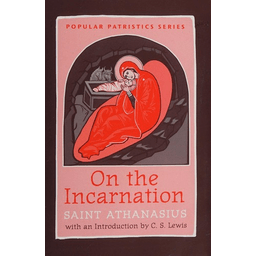 On the IncarnationThe short 4th-century treatise on why God became man - the one early-Church book modern readers actually finish, and the one C.S. Lewis told everyone to start with.The Orthodox ChurchThe Penguin paperback that has introduced more English readers to Eastern Orthodoxy than any other single book - half history, half doctrine, and still the first title nearly everyone names.For the Life of the WorldAlexander Schmemann's slim, much-loved meditation on sacramental theology - the book that taught a generation to see the whole world as a gift to be received and offered back in thanksgiving.
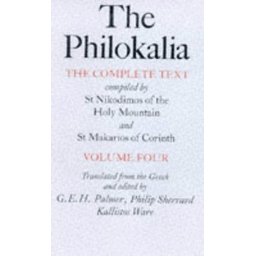 The PhilokaliaThe great Eastern Orthodox anthology on inner watchfulness and the prayer of the heart - eleven centuries of monastic teachers, compiled on Mount Athos, and still the master text of the Jesus Prayer.
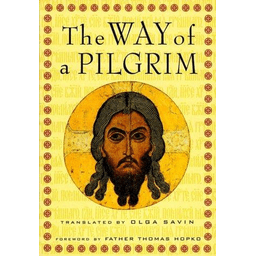 The Way of a PilgrimThe anonymous 19th-century Russian classic that taught the modern world the Jesus Prayer - a wandering pilgrim, a worn copy of the Philokalia, and one short sentence repeated until it never stops.
 The Ladder of Divine AscentThe thirty-rung monastic classic from 7th-century Mount Sinai that has shaped Eastern Orthodox spiritual life for over a thousand years - read in monasteries every Lent, demanding by design, and unlike anything else on the shelf.