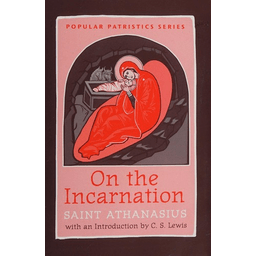
- Starting price
- Free (public domain)
- Free tier
- Yes
- Platforms
- Print · Kindle · Audiobook · Free (public domain)
- Developer
- St. Vladimir's Seminary Press
- Launched
- 318
- Updated
- May 31, 2026
The verdict
On the Incarnation is the rare patristic text a beginner can read straight through in an afternoon and not feel lost. Athanasius takes one enormous question - why did God the Son become a human being? - and answers it with a clarity that has kept the book in print for seventeen centuries. If you read one book by an early Church Father, read this one.
Try On the Incarnation ↗Opens svspress.com
On the Incarnation has quietly become the book people recommend when someone wants to read the early Church but does not know where to begin. It is old - written around AD 318, before the great doctrinal councils had met. It is short, single-minded, and by one of the most consequential figures in Christian history. That combination has made a 4th-century treatise into a perennial first assignment in seminaries, reading groups, and dorm rooms across the whole Christian world.
Its author, Athanasius of Alexandria, would later become bishop of that city and one of the towering figures of his century. He wrote it young - probably in his early twenties, very likely before the Council of Nicaea in 325. It is not a polemic. It is not a verse-by-verse commentary. It does not assume you have read the philosophers or already accept its conclusions. It assumes only that you will follow one question to the end: if God is good and made human beings for life, why are human beings dying - and what did God do about it?
What you actually get is a tightly argued essay of roughly fifty to seventy pages, usually divided into nine short sections. Athanasius lays out what is called the divine dilemma, walks through the Word's taking of a human body, explains why that body had to die and rise, and answers the objections a thoughtful reader of his day would raise. The most-quoted line in all of patristics lives in section 54 - God became man, in his phrasing, so that man might become what God is. It is the most accessible front door to the Church Fathers in print, and it earns that title every time a teacher hands it to a beginner.
✓ The good
- The most accessible on-ramp to the Church Fathers - a beginner can finish it in an afternoon and follow the argument the whole way, which is not true of most patristic texts
- Read across the entire Christian world - Catholic, Protestant, Orthodox, and Latter-day Saint readers all return to it, because it predates the divisions that came later
- A single, gripping argument - Athanasius poses the divine dilemma and pursues it to the end, giving the book the momentum of an essay rather than the sprawl of a treatise
- The popular St. Vladimir's edition carries a celebrated C.S. Lewis introduction ("On the Reading of Old Books") worth the price on its own - for many, the reason they pick the book up
- Free in the public domain - the text is centuries out of copyright, so a complete, readable translation costs nothing online
- Section 54's famous line on human transformation is among the most-quoted sentences in all of Christianity - the passage readers across traditions say stays with them
- Short enough to re-read often and dense enough to reward it - many readers return to it yearly
✗ Watch out
- It is ancient, and it assumes 4th-century categories - Athanasius argues against Greek philosophy and the objections of his own era, and a modern reader meets a few moves that take a footnote to follow
- Translation and edition genuinely matter - the free older translations read more stiffly than the modern St. Vladimir's version, and a clunky rendering can make an easy book feel hard
- It presumes some theological interest - this is not a feel-good devotional, and a reader wanting daily encouragement rather than sustained argument may find it dry
- It is brief and focused by design - anyone wanting a full account of the Trinity, the atonement debates, or church history will need to read further
- A few supporting arguments (the spread of the gospel, the decline of pagan oracles) lean on 4th-century evidence a modern reader will weigh differently
Best for
- Anyone who wants to start reading the early Church Fathers without getting lost
- Readers drawn to it by the C.S. Lewis introduction
- Study groups wanting one short, shared, pre-denominational text
- Long-time believers who want the classic statement of why the Incarnation matters
Avoid if
- You want a modern, conversational devotional rather than a sustained argument
- You want a full systematic treatment of the Trinity or the atonement - this is one focused essay
- You bounce off older prose and only have a stiff public-domain translation on hand
- You want verse-by-verse commentary rather than a thematic theological essay
What On the Incarnation is
On the Incarnation (in Latin, De Incarnatione) is a short theological treatise by Athanasius of Alexandria, written around AD 318 and continuously read ever since. In it Athanasius asks why the eternal Word of God - the one through whom, in Christian belief, all things were made - took on a human body, lived, died, and rose again. He frames it as a dilemma: God made human beings for life and fellowship with Him, but humanity turned toward corruption and death; God could not simply ignore that, nor could a mere decree undo it, so the Word Himself entered creation to reverse it from within. The book traces the death and resurrection of Christ as the heart of that rescue, then answers the objections of Athanasius's contemporaries.
The book is not the property of any one later tradition. Athanasius wrote it before the church's great divisions, and the questions he answers - why death, why the cross, why a bodily resurrection - sit at the shared center of Christian belief. He was an Eastern bishop writing in Greek, so it is often shelved under Eastern Christianity, yet it is read with equal warmth by Catholics, Protestants, and Latter-day Saints. Its enduring reputation rests on a simple fact: it takes one of the deepest questions in theology and makes it followable, which is why it has remained the standard first step into the Church Fathers for centuries.
Why first-time readers of the Fathers start with Athanasius
Most early-Church writing is hard for a modern beginner to enter. The texts are long, the controversies unfamiliar, the names a blur, the assumed background a world that no longer exists. A reader who picks up the Fathers cold usually puts them down again. On the Incarnation is the standing exception. It is short, it pursues a single question, and it was written in clear, almost lecture-room prose - Athanasius wants to be understood, not to impress. That makes it the book teachers reach for first, again and again.
The result bypasses the usual barriers to ancient theology. A reader needs no degree, no glossary, no map of the 4th-century councils to follow it. And because Athanasius wrote before the later divisions of the church, a Catholic, a Protestant, an Orthodox Christian, and a Latter-day Saint can all sit with the same paragraphs and find the question - why did God become man? - addressed in language none of them has to dodge. That is why On the Incarnation is the one early-Church text a priest, a pastor, a seminary professor, and a curious layperson can all confidently hand to the same beginner.
The divine dilemma: the argument that gives the book its momentum
The opening sections lay out what is usually called the divine dilemma, the move that gives On the Incarnation the drive of an essay rather than the sprawl of a treatise. Athanasius starts from creation: God made human beings good, gave them a share in His own life, and warned that turning away would mean corruption and death. Humanity turned away. Now God faces a problem of His own goodness. It would be beneath God, Athanasius argues, to let the creatures He made for life simply dissolve back into nothing - that would make the original act of creation look like a failure. But it would equally be beneath God to pretend the warning had not been given.
From that tension the whole book unfolds. A mere command could not undo corruption already rooted in human nature, Athanasius reasons, any more than a royal decree can mend a dying body. So the Word who made human nature takes that nature to Himself, entering creation from the inside to renew it. The argument moves step by step, and by the end the reader stands in front of a conclusion that feels earned rather than asserted: the Incarnation was not an afterthought but the fitting answer to a real dilemma. It is the chapter most readers remember, and the reason the book reads like a single sustained thought rather than a collection of topics.
Death and resurrection: why a body, and why the cross
The middle sections turn to the part of the argument Athanasius cares about most: the death and resurrection of Christ. Having established why the Word took a human body, he presses into why that body had to die - and to die publicly, on a cross, rather than quietly of old age. His answer is that the debt of death lay on all humanity, so the Word took a body capable of death precisely in order to meet death on humanity's behalf and exhaust it. The resurrection, in his telling, is not a happy epilogue but the whole point: the public demonstration that death has been defeated, the firstfruits of a renewed humanity, the evidence that the rescue worked.
What strikes most readers here is how physical Athanasius is willing to be. He does not treat the body as an embarrassment or the resurrection as a metaphor. The Word genuinely took flesh; the flesh genuinely died; the same flesh genuinely rose. That insistence on the reality of the body - against readers in his own day who found a suffering, dying God absurd - is the backbone of the book, and why Christianity has refused to spiritualize the cross and the empty tomb into mere symbols.
Section 54: the famous line, and how different traditions hear it
Near the end of the book, in section 54, sits the single most-quoted sentence in all of patristic literature. Athanasius writes that the Word of God became man so that human beings might become - often rendered in the famous paraphrase, "He became what we are that we might become what He is." It is the summit the whole argument has been climbing toward: the Incarnation does not merely rescue humanity from death but lifts it into a new and shared life with God. The line is brief, electric, and has echoed for seventeen centuries.
It is also a line that different traditions hear in their own vocabulary, and a fair review notes that without picking a winner. The historic Eastern reading hears theosis or deification - human beings remade into the divine likeness - and many Catholic readers hear it the same way. Other traditions hear the language of glorification, adoption, and being conformed to the image of Christ. Latter-day Saint readers find resonance with their own language about human destiny. Athanasius wrote long before these later vocabularies took their modern shapes, and the sentence has proved spacious enough that each tradition can hear its own theology in it - a large part of why the book still travels everywhere.
Pricing
Free (public domain)
Free
The text is centuries out of copyright. Complete translations are hosted free online (e.g. ccel.org). The way most readers first meet it.
St. Vladimir's paperback
~$16
The popular Popular Patristics edition with the celebrated C.S. Lewis introduction and a fresh, readable translation. The copy most people end up buying.
Kindle / ebook
~$10
Searchable and highlight-syncing. Free public-domain ebook versions also exist; the modern translations are the paid ones.
Audiobook
~$10-15
Several recordings exist, including free public-domain readings. Athanasius is short enough to listen through in a single sitting.
On the Incarnation is, first of all, free. The text has been out of copyright for centuries, so complete, readable English translations are hosted at no cost on sites like the Christian Classics Ethereal Library (ccel.org). For a reader who just wants to know what Athanasius actually said, the free public-domain text is the honest answer - the everyday default, and the way most people first meet the book.
The reason so many buy a copy anyway is the modern St. Vladimir's Seminary Press edition, part of its Popular Patristics series, which runs around $16 in paperback. It pairs a fresh, readable translation with a celebrated introductory essay by C.S. Lewis - "On the Reading of Old Books" - arguing briefly and memorably for why a beginner should read old books like this one at all. For many readers that introduction is the whole reason they pick up Athanasius, and it is not in the free versions.
Kindle and ebook editions run roughly $10, with free public-domain versions also available; the paid ones are simply the modern translations. Audiobook recordings exist too, including free public-domain readings, and at around $10-15 for the commercial versions they are an easy listen - the whole book fits in a single sitting. Most readers do not need more than one edition. If you want the cleanest experience and the Lewis introduction, the ~$16 paperback is the balanced pick; if you just want the argument, the free text is genuinely fine.
Where On the Incarnation falls behind
Ancient categories. Athanasius is writing in AD 318, and a few of his moves assume the philosophical furniture of the 4th century. The argument is followable, but a first-time reader will hit two or three passages - on the Greek view of the body, on his contemporaries' objections - that take a footnote or a moment's patience to land. A good modern edition with light notes smooths most of this over.
Translation matters more than usual. Because the book is in the public domain, the free copies online are often older translations whose prose is stiffer than the original Greek, which can make a genuinely accessible book feel forbidding. This is the rare case where paying around $16 for the modern St. Vladimir's translation noticeably changes the experience.
Narrow by design. On the Incarnation is one focused essay on one question. It does not give a full account of the Trinity, survey the later atonement debates, or tour early-church history. That focus is its strength, but it means the book is a starting point, not an ending point.
Dated supporting evidence. A handful of Athanasius's secondary arguments - the spread of the gospel in his own century, the fading of pagan oracles - rest on 4th-century observations a modern reader will weigh differently than he did. They are not the load-bearing parts of the book, but worth recognizing as artifacts of their time rather than timeless proofs.
On the Incarnation vs. Confessions vs. The Orthodox Way
If you are assembling a short shelf of the tradition's foundational books, these three do genuinely different jobs. On the Incarnation (Athanasius, c. 318) is the focused doctrinal essay - one question, why God became man, answered in fifty-odd pages of sustained argument. Confessions (Augustine, c. 400) is the spiritual autobiography that more or less invented the genre - the story of one restless soul's road to God, prayerful and personal where Athanasius is brisk and argumentative. The Orthodox Way (Kallistos Ware, 1979) is the modern guided tour - a contemporary Orthodox bishop walking a reader through the shape of Eastern Christian faith and practice.
Different strengths. Athanasius is the shortest and most single-minded - read it for the classic statement of why the Incarnation matters and nothing else. Augustine is the deepest and most personal - for a reader who wants to watch a great mind wrestle with God across a whole life. Ware is the most modern and the most map-like - a present-day guide to how the Eastern tradition holds together. Starting from zero and want one short text? Athanasius. Want the inner life rather than the argument? Augustine. Want a modern orientation to Eastern Christianity? Ware. All three are read across Catholic, Protestant, Orthodox, and other traditions, though Athanasius and Augustine predate the later divisions and are claimed by nearly everyone, while Ware writes from within Eastern Orthodoxy and is the most tradition-specific of the three.
The bottom line
On the Incarnation is the gold-standard first step into the Church Fathers for a reason. Athanasius took one of the deepest questions in theology - why did God become a human being? - and answered it so clearly that a beginner can follow him the whole way and a scholar can return to him for a lifetime. It is short, it is gripping, it is free if you want it free, and the modern edition's C.S. Lewis introduction is worth the price by itself. If a friend asks you for one early-Church book to start with, this is still the book to hand them.
Alternatives to On the Incarnation
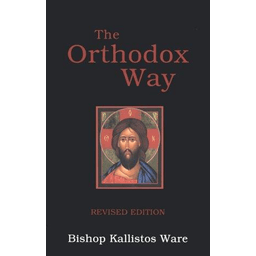 The Orthodox WayKallistos Ware's modern guide to Eastern Christian faith and practice - the contemporary companion to a Father like Athanasius.
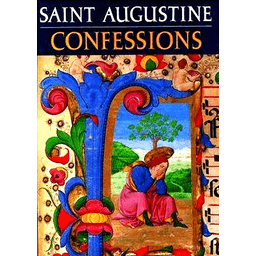 ConfessionsAugustine's spiritual autobiography, c. 400 - a patristic peer to Athanasius, personal and prayerful where On the Incarnation is brisk and argumentative.
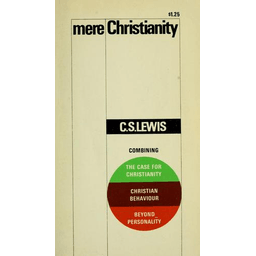 Mere ChristianityC.S. Lewis's modern classic - Lewis wrote the famous introduction to the popular edition of Athanasius, and this is his own most-recommended book.Ancient Faith MinistriesPodcasts, blogs, and books from an Eastern Orthodox ministry - a good next stop for readers who want to keep exploring the patristic world.
Frequently asked questions
Who was Athanasius, and when did he write On the Incarnation?
Athanasius of Alexandria was a 4th-century theologian who later became bishop of that city and one of the most influential figures of the early Church. He wrote On the Incarnation around AD 318, young - probably in his early twenties and very likely before the Council of Nicaea in 325.
Is On the Incarnation hard to read?
Less than you would expect for a 4th-century text. It is short, it pursues a single question, and Athanasius writes to be understood. A good modern translation reads smoothly. The main difficulty is a handful of passages that assume 4th-century philosophy, which a lightly annotated edition smooths over.
What is the famous line about God becoming man so that man might become God?
It comes from section 54: the Word became man so that human beings might be raised into a new and shared life with God - often paraphrased "He became what we are that we might become what He is." Different traditions hear it in their own vocabulary: theosis or deification in the East, glorification and adoption elsewhere, and Latter-day Saints find resonance with their own language about human destiny.
Do Latter-day Saints read On the Incarnation?
Yes. Like other early-Church texts that predate the later divisions of Christianity, it is read across traditions, and Latter-day Saint readers in particular find the section 54 language about being lifted into a shared life with God resonant with their own teaching about human destiny.
Why does the C.S. Lewis introduction get mentioned so often?
The popular St. Vladimir's Seminary Press edition opens with an essay by C.S. Lewis, "On the Reading of Old Books," arguing briefly and memorably for why beginners should read old books like Athanasius rather than only modern ones. For many readers that introduction is the reason they pick up the book at all. It is not in the free public-domain versions.
Which edition should I read?
For the cleanest experience, the St. Vladimir's Seminary Press paperback (~$16) pairs a fresh, readable translation with the C.S. Lewis introduction. If you just want the argument and do not mind older prose, the text is free in the public domain online (e.g. ccel.org). Kindle (~$10) and audiobook (~$10-15) editions exist too, including free public-domain versions.
Where should I go after On the Incarnation?
Augustine's Confessions is the natural next read - a patristic peer that turns from argument to spiritual autobiography. For a modern guide to the Eastern tradition, Kallistos Ware's The Orthodox Way is widely recommended, as is the library at Ancient Faith Ministries. And C.S. Lewis's own Mere Christianity is a fitting follow-up given that Lewis introduced the popular edition.
Sources & further reading
More Orthodox Christian Books
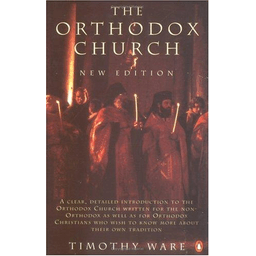 The Orthodox ChurchThe Penguin paperback that has introduced more English readers to Eastern Orthodoxy than any other single book - half history, half doctrine, and still the first title nearly everyone names.The Orthodox WayThe slim companion to The Orthodox Church that trades history for the lived path - Kallistos Ware walking a reader through God as Mystery, Trinity, Creator, Man, Spirit, and Prayer, in fewer than two hundred pages.
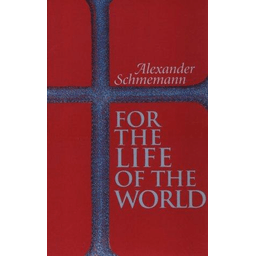 For the Life of the WorldAlexander Schmemann's slim, much-loved meditation on sacramental theology - the book that taught a generation to see the whole world as a gift to be received and offered back in thanksgiving.
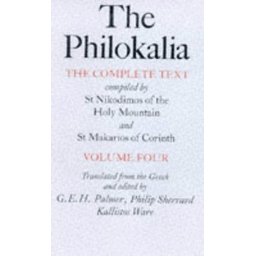 The PhilokaliaThe great Eastern Orthodox anthology on inner watchfulness and the prayer of the heart - eleven centuries of monastic teachers, compiled on Mount Athos, and still the master text of the Jesus Prayer.
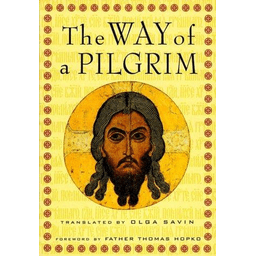 The Way of a PilgrimThe anonymous 19th-century Russian classic that taught the modern world the Jesus Prayer - a wandering pilgrim, a worn copy of the Philokalia, and one short sentence repeated until it never stops.
 The Ladder of Divine AscentThe thirty-rung monastic classic from 7th-century Mount Sinai that has shaped Eastern Orthodox spiritual life for over a thousand years - read in monasteries every Lent, demanding by design, and unlike anything else on the shelf.